Q&A: Nobel Prize winner Fred Ramsdell on scientific exploration, research journey
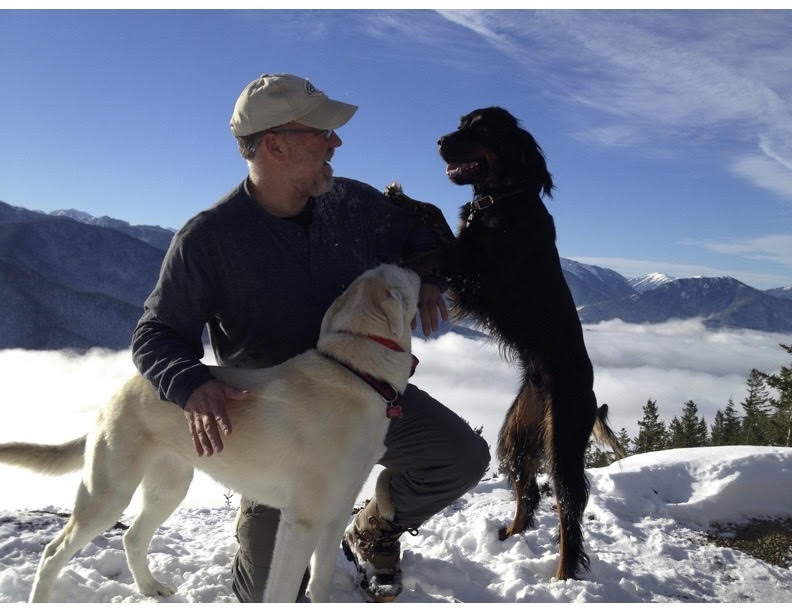
Ramsdell is pictured with his dogs.
(Courtesy of Fred Ramsdell)

By Leilani Krantz
Nov. 11, 2025 5:21 p.m.
This post was updated Nov. 16 at 9:57 p.m.
Fred Ramsdell, one of the recipients of the 2025 Nobel Prize in physiology or medicine, sat down with science and health contributor Leilani Krantz to discuss his journey with scientific exploration and the importance of foundational research.
Ramsdell was awarded for his co-discovery of the Foxp3 gene. The gene functions in the differentiation of regulatory T-cells, which are specialized immune cells that prevent the body from becoming overactive and attacking its own tissues, according to the scientific journal Nature. This research laid the groundwork for the development of cancer and autoimmune disorder treatments. Ramsdell earned his doctorate in microbiology and immunology from UCLA in 1987 after graduating with a bachelor of science in biochemistry and cell biology from UC San Diego in 1983.
This interview has been edited for length and clarity.
Daily Bruin: When did you really consider research as a career? Is this something that started in your undergraduate years?
Fred Ramsdell: I started my undergraduate career, actually, as a theater major. That lasted about three months when I realized I would never make a living doing that. So my fallback was science – I always loved science. I went to Foothill Community College for the first two years, then I transferred to UCSD.
I was a biochemistry and cell biology major in San Diego. I took a class in immunology – and I really got hooked. Because in those years, there was still so much that was unknown, but the tools were being developed to figure things out. I had this naive perspective – which turns out to actually be correct – that the immune system is involved in so many aspects of our biology that you can study almost anything. It could be heart disease, it could be neurodegeneration. There’s lots of things where the immune system is either causal or is an important player in the process. That, to me, was fascinating, and so I just got hooked. I really liked the puzzles and the questions and trying to figure stuff out. Compared to when I started, we have logarithmically grown our understanding of the immune system.
DB: So you didn’t participate in undergraduate research – one immunology class is what propelled you to pursue the field?
FR: It’s funny, because I was talking to a Nobel laureate who I just met a couple of weeks ago, and he was talking about the fact that he couldn’t wait to get into the lab, and he worked in the lab as early as possible, and he was a lab rat at 15 years old and loved doing this stuff. And I’m like, “Nah, that was absolutely not me.” I mean, I got good at working in the lab, but it was not one of these things where I felt like I had to do it. No one in my family had gone to college, so I didn’t have that perspective. I wasn’t maniacal about this at the age of 15, 16, 18 – that was not what I was focused on.
DB: Most of your career has been within the biotechnology sector. Why did you decide to pursue research in this environment?
FR: I went to the NIH (National Institutes of Health), which was – and still is, but at that time in particular – an amazing place for immunology research. And so when I went out looking for jobs, I looked for both academic jobs and I looked for jobs in the biotech sector, which was still pretty young. I realized my training, both at UCLA and the NIH, were really good. I mean, I had given seminars in front of all these people who were amazing. I realized if I could do it for those guys, I could do it for a university anywhere, which turned out to be true.
I went into biotech because I really liked the collaborative nature of biotech and the fact that some of the technologies were getting specific, and I was never going to be an expert in molecular biology. I was never going to be an expert in protein production. Could I do some? Sure, but I could surround myself with people who did it all the time and invented new stuff and were really good at it. You’d form teams to do stuff, and so we worked on a whole bunch of programs.
When I went to Immunex, we worked on a whole bunch of programs, and my job was to figure out how these things work, and how we can use them to manipulate the immune system. I worked and helped clone a bunch of things that are important, some of which have gone on to become drugs. To me, that was the really fun part. It wasn’t the drug development part that was the most interesting. It was figuring out what you should make a drug against, what that drug should do, and what it’s going to do, the biology and how that’s going to change things. And then other people can do their bit and go on. To me, science is a team sport – and so I really like the ability to have great teammates. I’ve been fortunate to be surrounded by great teammates my whole, whole career.
DB: What was your graduate study at UCLA like?
FR: It was a really interesting environment, because I got to get exposure to the surgical oncology team. My advisor, a guy named Sidney Golub, had a joint appointment in surgical oncology. The surgeons would come in, and they were treating melanoma patients and a bunch of other people. They would do a lab rotation, and I would teach them how to do basic lab functions, which they didn’t know how to do. By accident, or by osmosis, I really learned about what it was like to have melanoma. And at that point, there were zero treatments that were any good for melanoma. All their patients were going to die in six months. It was just a terrible environment, and one of the things that made me not do oncology research. It just didn’t seem like a fruitful thing to keep people alive but not really be able to address their disease.
I studied fundamental ways the immune system worked and tried to figure out how natural killer cells, which were things that could theoretically attack tumors and people were trying to use them, how they develop, what their properties were. I worked with people in different departments and different groups and different settings, and so I got a lot of perspective, and that turned out to be far more valuable than I appreciated at the time.
It was a long time ago that, the way you do science, just all the processes and things, were totally different. It was back in the days when HIV was just being identified, but we would take pipettes full of human blood and put them in the regular garbage, and the regular janitor would put them in the regular landfill. So things have changed a lot and gotten a lot better. But, it was a lot of fun too. It was a dynamic environment. It was a lot of work, but it was like drinking from a fire hose.
DB: Your work seems to focus on basic research – uncovering the foundations of processes which provide the basis for future discoveries. With high-profile funding cuts to foundational research, do you think the U.S. still values this kind of science?
FR: Do I worry about the cuts? Sure, I have a lot of friends and colleagues who are far more worried than I am – and for good reason – but I worry less about that than I do the sentiment that I get that the U.S. doesn’t trust or value fundamental research. If you don’t trust the people who do it, you’re certainly not going to put any value on it, and you’re not going to fund it. My bigger concern is ensuring that we, as Americans, actually state that we recognize some of these long-term things will produce value. I’ve benefited enormously, and I think lots of other people have benefited enormously, from supporting basic science research that will eventually be converted into something valuable.
When you get to that point, plenty of people will put money into it. You don’t need the federal government to support drug development – but you do need them to support the science that underpins that drug development. So I really worry long term about people valuing that. The U.S. has led this for generations. It would be unfortunate for us as a country, and just as unfortunate for the global population, if we don’t continue to try to support that. Not that other countries don’t do a great job – they do. But we have, uniquely, the capability to do that, because we have the resources and we have the history and the mindset and the approaches to do that. I don’t think that’s true in a lot of other places. So, I think as a country, we will lose out in this too. It may take decades for something to be useful. But if you don’t put effort into it now, it will never be useful.
DB: Do you feel your UC education gave you a unique perspective or method of doing science?
FR: At UCSD, which most people will say is a science school, it’s really focused on the sciences – they have a tremendously great theater program. There are these orthogonal programs and activities that UC intentionally fosters, which give a little perspective to people – and I think that is really valuable as you go forward. Having appreciation for other things, even if you don’t do them and you’re not good at them, is really valuable. UCLA certainly had a large geopolitical focus – still does, right? That exposes you to ideas and perspectives you wouldn’t otherwise get. To me, that’s just incredibly valuable. It’s one of the values of going to a larger university – you get these disparate perspectives. You may not get as much hands-on time, but you get the diversity.
DB: What advice would you give young scientists who are just starting out?
FR: I hate giving advice, because I feel like it’s overrated. But the one thing I tell people is to pay attention. Often that means turn off your phone – but whatever you’re doing, just be in the moment. Even if it’s with friends out doing something, be in the moment. Don’t be in the next moment. Don’t be in the last moment. Don’t think about how I’m going to do X when I get back to Y. Just be in the moment, and pay attention. It’s true in science as well. Pay attention to what you’re doing.
(Alexander Fleming) was looking at a bunch of plates that were growing bacteria, and he had one where it was gone. He said, “That’s funny,” and he put it aside. That’s penicillin. That’s paying attention to what’s going on.