Q&A: UC Student Regent Miguel Craven outlines goals for his upcoming tenure
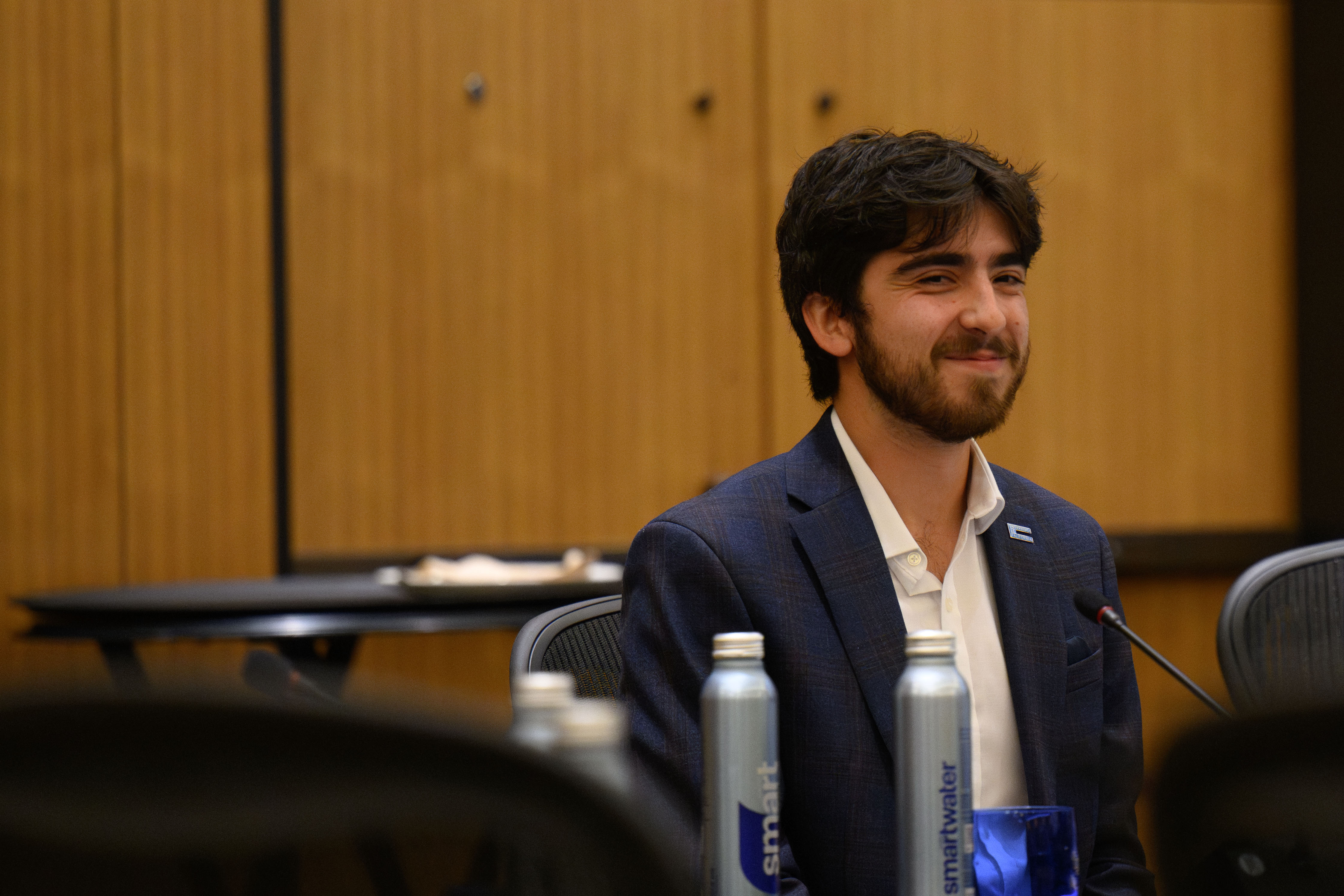
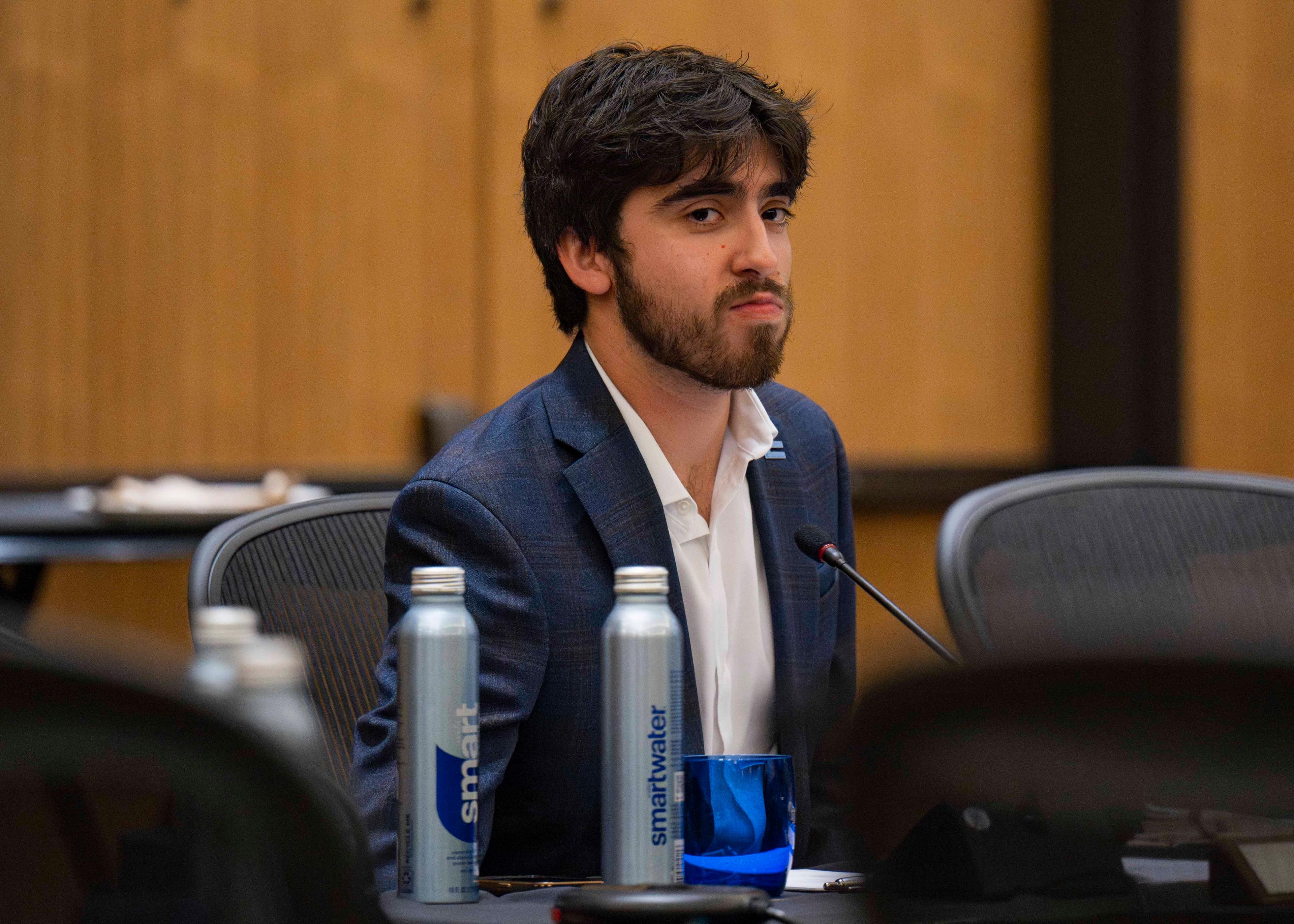
Miguel Craven is pictured. Craven, the 2026-27 UC student regent, spoke with national news and higher education editor Josephine Murphy to discuss Craven’s background and goals for his tenure. (Zimo Li/Daily Bruin senior staff)

By Josephine Murphy
Sept. 18, 2025 9:51 p.m.
Miguel Craven, the 2026-27 UC student regent, spoke with national news and higher education editor Josephine Murphy to discuss Craven’s background and goals for his tenure.
Craven, an incoming energy systems master’s student at UC Davis who graduated from UC Merced in the spring, will be the first student regent with an engineering background. He previously served as the student body president at UC Merced for two years, as well as the student observer to the UC Board of Regents’s committee on finance and capital strategies.
This interview has been edited for length and clarity.
Daily Bruin: Why did you decide to apply to the role of student regent?
Miguel Craven: It was a natural progression, but also wanting to just do more was the biggest thing. I was in student government for three years – it was something I didn’t ever expect to do, and is an amazing opportunity that I’m extremely grateful for, because I would have never anticipated having it. While I was there, I served as the student body president for my final two years – my junior and senior year – and was a senator during my sophomore year.
Once I got to the president role, I decided to do a lot more systemwide stuff and focus on my campus. But that was also, as we saw, the start of the conflict in the Middle East, which made for a very eventful, exciting and also difficult time to navigate as the student body president. As we saw across the entire UC, really great expression from students on wanting to express their values and what they believe in. But it was a mix of that and then sitting as a student observer for the regents for the finance and capital strategies committee that really gave me great insight as to what the regents were and who they were. That was the foundation for giving me this stage at the regents’ table – whether it was an item related to my own campus, whether it was related to another’s campus or if it was something system wide. That was the really big platform that really encouraged me to feel confident being able to pursue this role.
Then, it was all the students I was working with across the system, of people that I made friends with and people that I met. They’re the ones that really empowered me to apply for the position and feel that I could do a great job just representing them and making them heard at the regents’ table – at least, that’s what I hope I can do.
DB: How do you think your role as student body president at UC Merced will influence your leadership as the student regent?
MC: It was such a fun experience. I look back on it and I’m extremely grateful for every moment of it. There were definitely hard times – plenty of moments of feeling like, “Oh, I’m not fit for this role,” or just feelings of disappointment in myself – a lot of crying. But, at the end of the day, it was really rewarding to be able to see the outcome of all my effort and working with students, that was definitely the most rewarding part of the job.
Outside of being a leader, one of the unique things that I found at UC Merced was really finding the balance of how to work with students on the ground while also facilitating a conversation with administrators and with staff. That’s when I could bring in students – after the fact – and have them give their cases, or I would be able to speak for them based off their point of view. I really loved being that person and being able to represent people.
It was unique to me being at UC Merced, because UC Merced, as far as student body president goes, it’s the only campus that doesn’t have an office of the president. It’s just the president, and they work alongside the students on our campus and along with their senators and the other executives. But it’s one where the president really just works individually, and it’s up to them to craft how they want to serve the role. It prepared me a lot for student regent, because as the Student Regent Designate, it’s just you and your student regent – or if you’re the regent, you and your designate. So it really prepared me in that aspect of knowing how to make a team around me, how to make a sense of community and to be able to represent these people.
DB: Having previously served as the student observer to the UC Board of Regents committee on finance and capital strategies, what challenges did you notice impacting students across the UC most significantly, and how do you think you will be able to address these in your goals?
MC: The two that I always saw students speaking up about a lot were housing and basic needs. Housing has been an issue for so long that it feels like it’s gotten nowhere.
I’m really appreciative of the student regent that just left, Josiah Beharry, because he’d done this group effort of getting some campuses that he felt were important to present to the UC on housing issues. So he collected students from Merced, Irvine and Santa Cruz present to CFO Nathan Brostrom, along with some other administrators from UCOP and some regents. We all went and worked within our campuses to find information about how much does on-campus housing cost, how much does housing cost off-campus, and how does that compare to other campuses, or all sorts of things. We were each just presenting on our own campus, and that was a really excellent conversation that I was able to tell that a lot of the Office of the President staff, and then some of the regents, they all really appreciated the information.
DB: The UC, and UCLA specifically, have been facing the major challenge of the federal government’s withholding of research grants. As Student Regent-Designate and as Student Regent, what do you think your role should be in helping navigate these challenges?
MC: I have a very important role in these conversations, because they’re oftentimes in closed session. They’re small rooms, and when you’re looking at the entire board, there’s only two of us that are there as student representatives. We’re the only two to be able to speak to the board on what the reality is for students, so it’s highly important for us to be able to support the board and support the UC – in this case of how can we support from the student end, and how can we mobilize students to be able to advocate for the UC, for their federal funding, to be able to show how much the UC does in California, across the US and what their impact is.
The reality behind the UC is that a lot of people think of the UC as just “Okay, it’s a university that’s where people go to get their college degree, and that’s about it.” Or a lot of times once you go out of California, it’s even harder where people don’t even know exactly what the UC is. They just know “There’s UCLA and you have Cal and like, UC Santa whatever, right?” They recognize the letters and the acronyms, but they don’t actually know what’s behind those letters, right? It’s important for us to be able to showcase what the UC actually does, because it’s so much more than just higher education. The medical enterprise is a huge portion of the UC with UC Health. We’re one of the largest employers in the state of California. Our research goes across all fields, whether that’s in the booming tech industry and setting a lot of standards within tech going forward in the future, to doing agricultural research, and helping farmers and being able to improve their crop yields or making new varieties of crops that are resilient to climate change.
The UC does so much that a lot of people don’t recognize, and it’s important for us to stand together across the entire UC, with all of our staff, with all of our students, with all the administrators, with our alumni. You see so many students as undergraduate researchers or doing specific projects that really hit close to home for them and wanting to make a positive change in the world.
DB: What has been done so far by the incumbent student regent, as well as by yourself, and what do you hope to do going forward?
MC: What’s been done by us, at least between me and Sonia, is that we’ve been meeting with student leaders across the UC system. The difficult part is that it feels very hard to navigate, and I think that’s with everything right now across the country, is that everything feels very difficult to navigate with new policies getting enacted. Every day – all these executive orders – things change, everything just feels up in the air. So the difficult part is that a lot of times when students are finding out stuff and seeing stuff on the news, I’m finding it out sometimes at the same time as other students.
So if UCOP has a strategy that they’re working on and they need our support in mobilizing students or getting specific testimonies or specific stories from students to be able to share how the UC has made an impact in their life and their field of work. We’re there to support them and when students just feel burdened and feel like they’re not being heard, or just feel distraught, which is completely reasonable – it’s hard to navigate this time – we’re here for them just to be able to speak and listen.
My goal going forward is just being here to listen. It’s all about wanting to educate the board, wanting to educate others around us, what the students are going through. I just want to be here for students, to be able to listen to them, hear their concerns and just offer them support in whatever way I can.
DB: It has been emphasized that you will be the first student regent with an engineering background. How will this impact your goals and perspective coming into the role?
MC: I’m very happy to be able to be in the space, especially from the underrepresented background of just STEM in general. When the long list of student regents that there have been in the past, very few of them are from the STEM field, and especially at this time right now where our research – a lot of them in the sciences and within STEM – are being attacked, it feels all the more important now than ever before. I just feel honored to be in the role and being able to support my peers and speak on their experiences and even upon my own experiences of how federal funding has supported me throughout my journey in STEM and getting my engineering degree.
A lot of people think of engineers as just people that are very dedicated to things in mechanics, whether you’re looking at cars or at planes or working on AC or HVAC systems. People think of them in that role, but the stuff that you really learn in the degree, the underlying part of it, is just how to be a problem solver. I’m extremely grateful that I pursued this degree, that I have this love for engineering, not only in the traditional sense of mechanics and the actual technical aspect of practicing these engineering practices, but also just knowing that I’m here as a problem solver, and it’s just ingrained in my mindset to be able to think, “Okay, how can I contribute to the solution to this problem? One, how can I address this problem? And then two, what are the next steps to trying to find the solution and being able to outline that?”