Project Esther repercussions may stifle Jewish voices, harm united UCLA community
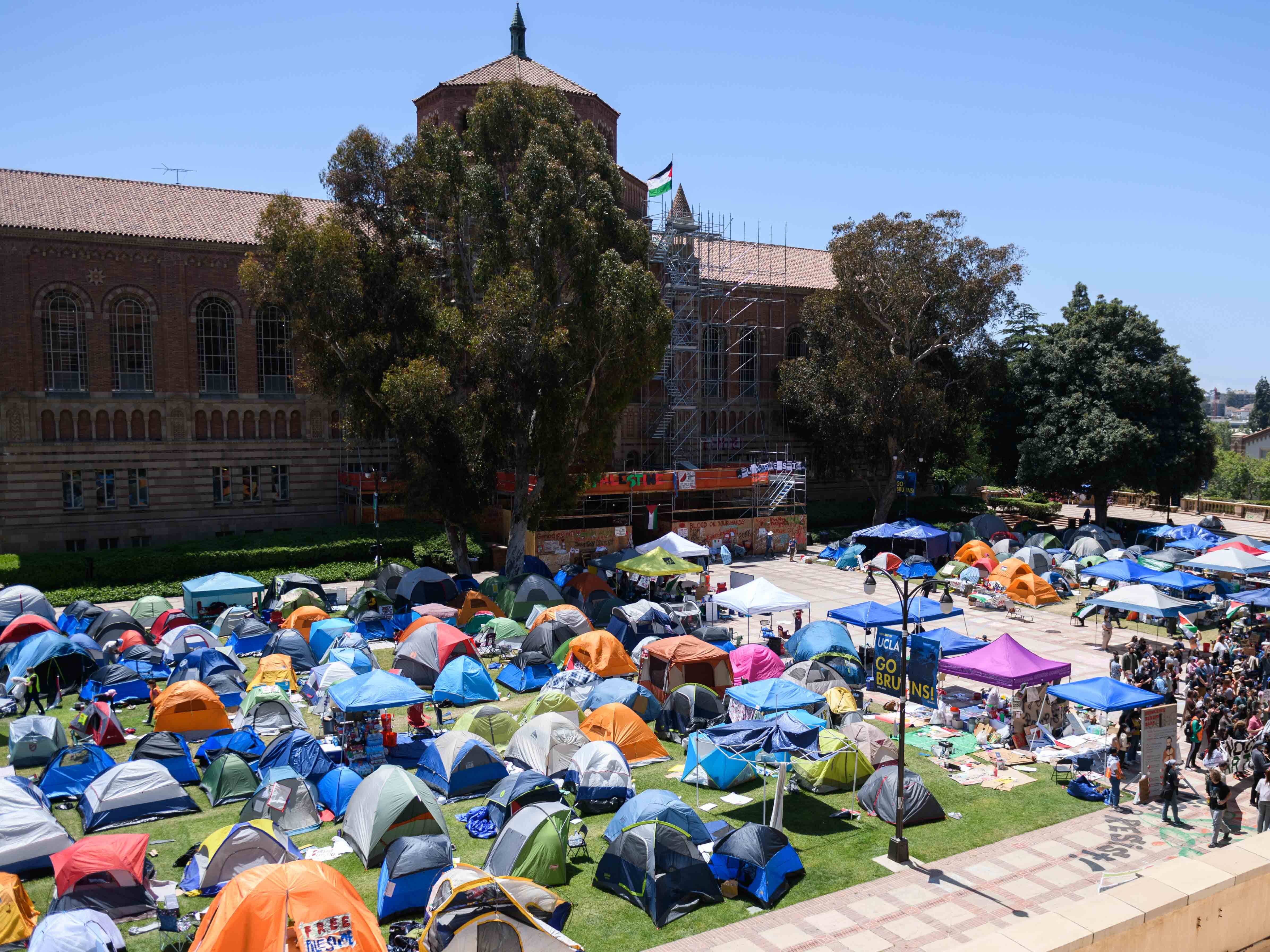
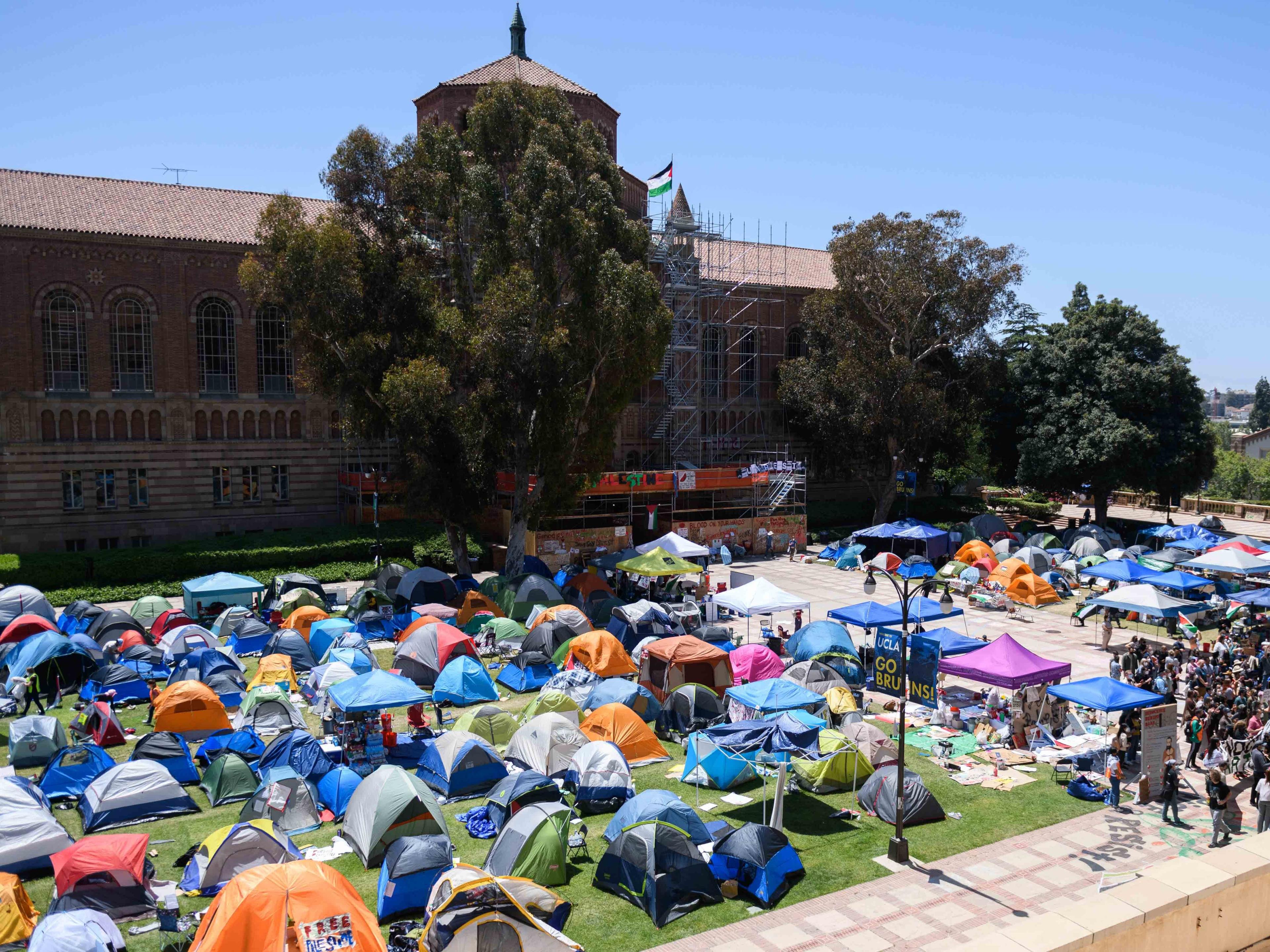
The 2024 Palestine solidarity encampment is pictured. Leonhardt warns students to be skeptical of Project Esther and argues its impact will ultimately harm Jewish students. (Karla Cardenas-Felipe/Daily Bruin staff)

By Lilly Leonhardt
Aug. 17, 2025 8:22 p.m.
This post was updated Aug. 24 at 4:55 p.m.
Project Esther, a little-known plan using strategies frequently employed by the Trump administration to combat antisemitism, may spread its influence to UCLA.
While, at first glance, the administration seems devoted to protecting Jewish students, its concern may be disingenuous. In reality, through the tactics suggested in Project Esther – created by the Heritage Foundation, the conservative think tank behind Project 2025 –the Trump Administration may foster an environment for hate to thrive – including hate toward Jewish students.
Jews at UCLA come from a variety of ethnicities, countries and backgrounds, holding multitudes of political and religious perspectives. The stories listed in this article hardly speak for all Jewish Bruins. For some, however, the Trump administration is making their experiences worse.
Simon, a recent UCLA graduate granted partial anonymity out of fear of retaliation, said he did not feel particularly protected by measures taken to allegedly combat antisemitism.
Simon participated in the 2024 Palestine solidarity encampment in Dickson Plaza. Simon added that, due to his participation, he was stalked, harassed and verbally assaulted by counter-protesters who claimed they were trying to put a stop to antisemitism on campus.
Little did the perpetrators know Simon was also Jewish.
Their actions contribute to a vicious cycle of distrust and discrimination that puts Jews in a challenging position – from UCLA to the White House and beyond. This individual story highlights that Project Esther is not a one-size-fits-all solution.
The first issue with Project Esther is that almost none of its authoring organizations were Jewish.
“It reads to me as a work of conspiracy theory written by people with relatively little understanding of the history of Jews, the history of Jews in the United States and the history of antisemitism,” said David Myers, a UCLA distinguished professor of Jewish History.
Project Esther’s core authors were, in fact, Evangelical Christian groups – and there has been scant support for the project from Jewish organizations.
Considering this, the definition of antisemitism itself is potentially misrepresented in the text of Project Esther. It identifies pro-Palestine movements as “anti-Israel, anti-Zionist, and anti-American,” connecting pro-Palestine movements in the United States as part of a broader “Hamas Support Network.”
This broad definition can make antisemitism difficult to call out and make allegations surrounding antisemitism meaningless, Myers said.
“It’s like ‘The Boy who Cried Wolf,’” Simon said. “When everything becomes antisemitism, then it’s like, well – what really is and isn’t?”
There has been an increase in antisemitism since the Oct. 7, 2023, attacks on Israel by militant group and Palestinian political party Hamas. Broadening the definition of antisemitism, however, may trivialize true antisemitic acts.
The Trump administration exacerbates this issue. It pushes forward with its devastating attacks on UCLA’s funding – considering these actions to be punishment for UCLA’s alleged lack of support for combating antisemitism.
These cuts range from millions of dollars lost in research funding, to a nearly seven million dollar settlement over the pro-Palestine encampments – all under the claim of preventing antisemitism on UCLA’s campus.
“The settlements that the administration has attempted to impose on universities is part of that battering ram whose ultimate goal is not to protect Jews or Jewish students,” Myers said.
UCLA Hillel Executive Director Dan Gold said that the Jewish community will always be appreciative when politicians try to fight antisemitism. He added that it was unfair Jews be blamed for actions of the Trump administration in the name of fighting antisemitism.
Even if the administration claims fighting discrimination is their top priority, these initiatives hurt universities, hurt workers and hurt Jews themselves.
At UCLA, for example, funding cuts based on antisemitism irrevocably damage research – a pivotal part of the university’s mission and purpose.
Dove Kent, director of the Diaspora Alliance, an organization, that, according to its website, “fights antisemitism and its political misuse,” also said that people may lose their jobs as a result of Project Esther. When people’s livelihoods are put at risk, the emerging figure to blame will be Jews – perpetuating antisemitic scapegoating.
Sometimes those with the intention of protecting Jews can end up participating in discriminatory practices. This may be true of the Trump administration’s efforts.
Project Esther has created – and will continue to foster – a world of hurt for all students at UCLA.
It is paramount to note that Jewish students, including those who currently claim support of the initiative, will perhaps feel its effects most acutely when antisemitism is frequently misidentified.
Opposing Project Esther is not the same as opposing policies that combat antisemitism. Rejecting the actions of the Israeli government does not indicate a rejection of Jews. It is key to support strategies to combat antisemitism that are endorsed by Jews and exhibit a balanced, contextual understanding of Jewish history and culture.
This is why it is imperative for UCLA students and faculty to condemn this plan. They must vote, protest and make their voices heard.
“This is not a time to assume that someone else will stand up for your rights. The people who will be most affected by this erosion of democratic institutions and norms will be college-aged students,” Myers said. “They are the ones who will suffer the consequences of this erosion over the long term – and therefore they have a responsibility to stand up and be heard.”