UC Regents shifts to bypass approval for increasing professional program tuition
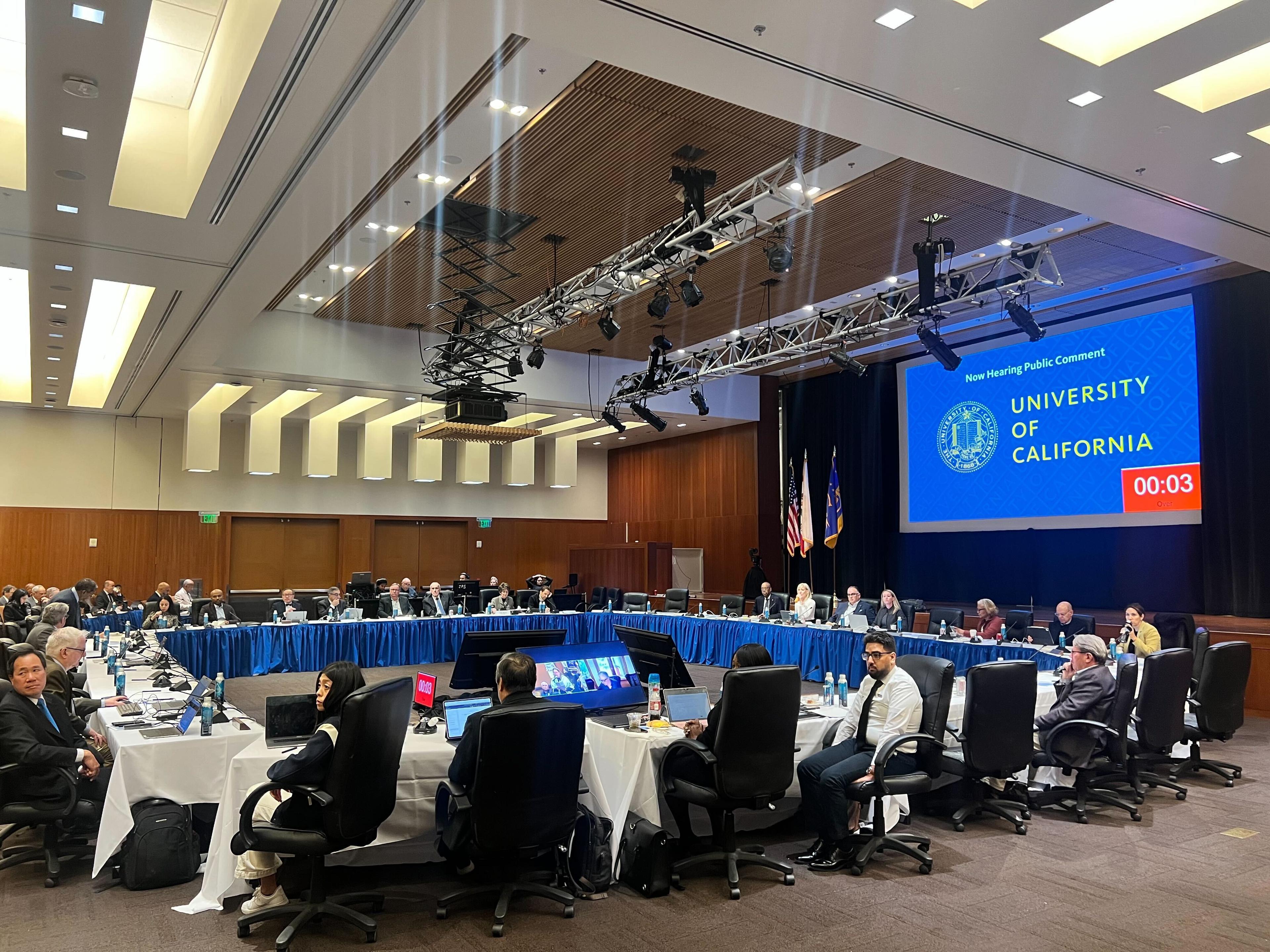
The UC Board of Regents meets at UCLA. Amid rising costs and deferred state funds, the UC Board of Regents weighed key financial decisions – including a shift that bypasses full board approval for tuition increases in professional programs – at its bimonthly meeting Wednesday. (Zimo Li/Daily Bruin senior staff)

By Vivian Stein
July 18, 2025 10:44 p.m.
Amid rising costs and deferred state funds, the UC Board of Regents weighed key financial decisions – including a shift that bypasses full board approval for tuition increases in professional programs – at its bimonthly meeting Wednesday.
The finance and capital strategies committee, academic and student affairs committee and national laboratories committee met during the UC Board of Regents’ July meeting to review a variety of financial proposals for the UC. The board held its bimonthly meeting Tuesday to Thursday at UCLA.
During the finance and capital strategies committee meeting, members examined the final state budget for the 2025-26 fiscal year, which rejects previously proposed budget cuts to the University and includes a deferral of $129.7 million in base funding to the 2026-27 fiscal year. The budget also provides $46.8 million in one-time support for various programs – including a journalism fellowship at UC Berkeley and social media research at UCLA.
[Related: Gov. Gavin Newsom, California State Legislature reach final state budget agreement]
Nathan Brostrom, the UC’s executive vice president and chief financial officer, said that, while he is grateful for the deferral, deeper projected state budget shortfalls – including a $17 billion deficit next fiscal year – could pose financial challenges for the University moving forward.
“We need to approach the coming years with caution and also by trying to leverage all of our other revenue sources,” he said.
Caín Díaz, the UC’s associate vice president of budget analysis and planning, said he believes the University must remain flexible in its financial planning given that each UC campus has unique needs and operating structures.
The Systemwide Budget Management Workgroup – which offered guidance on hiring, reviewing non-academic programs and improving budget transparency – plans to release its full report on budget management strategies later this summer, he added.
The workgroup was established in response to state budget plans to reduce funding to the University, which have since been rejected, according to the California Legislative Analyst’s Office.
Following the state budget discussion, the academic and student affairs committee approved a policy change allowing the UC president to approve multi-year tuition increases for certain graduate programs, which Katherine Newman, the UC’s provost and executive vice president of academic affairs, said is intended to streamline the review process for professional degree fees.
Former University of Texas Chancellor James Milliken will fill the role of UC president following the exit of current Michael Drake on Aug. 1.
[Related: ‘A Man of Action’: UC Board of Regents appoints James Milliken as UC president]
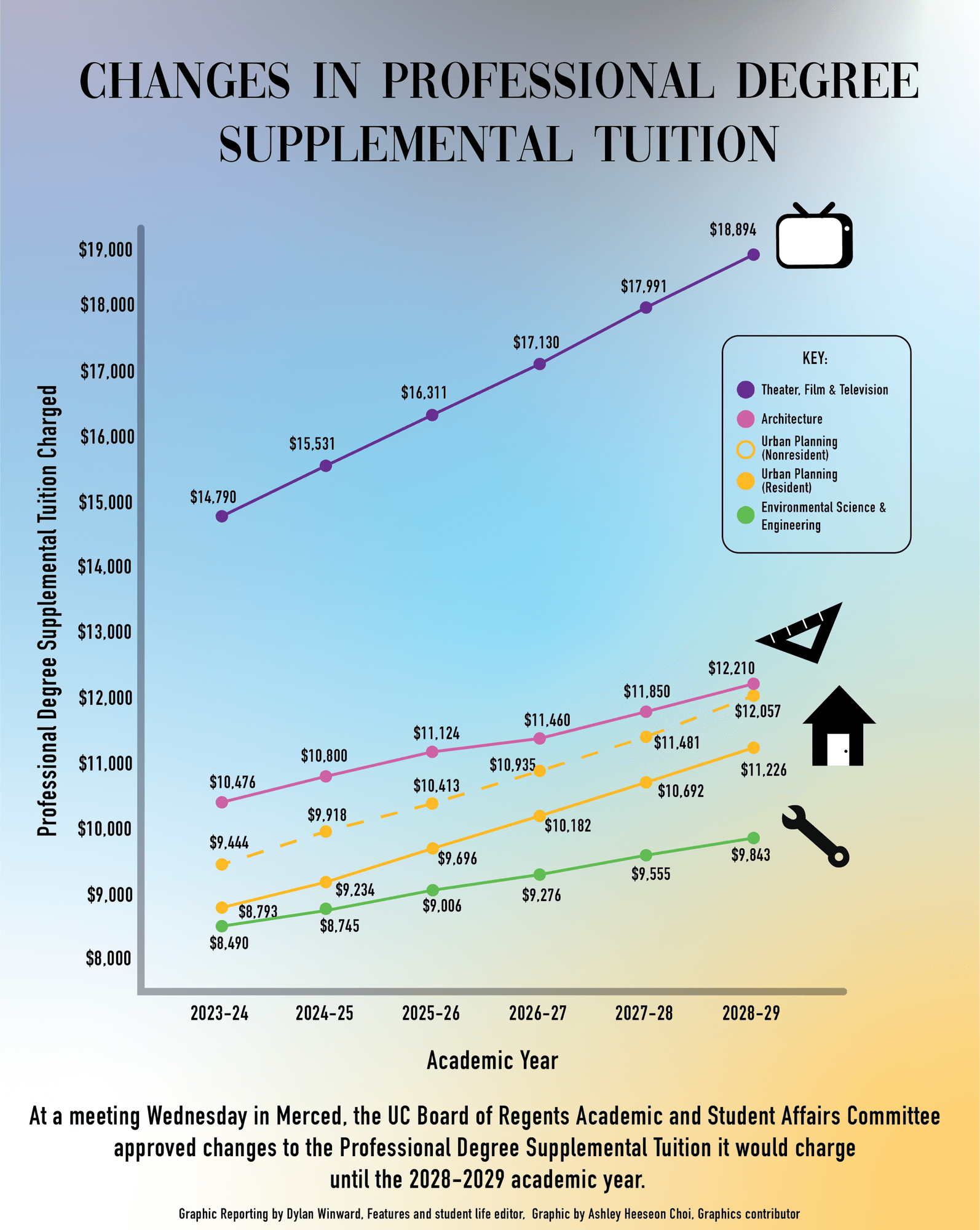
All proposed increases to Professional Degree Supplemental Tuition – which are extra fees charged by graduate programs such as law, business and medicine – previously required direct approval by the UC Board of Regents, according to the item.
Under the new policy, tuition hikes – which are capped at 3% for California residents and 5% for nonresidents – can now be approved by the UC president without a full board vote, according to the item. Programs proposing first-time fees or increases above those thresholds will still require full review by the UC Board of Regents.
Newman said all proposals, including those now delegated to the president, will continue to undergo the same “highly iterative” review process to ensure PDST levels do not undermine the University’s commitments to “excellence, access, inclusion and affordability.”
Regent Lark Park said she will not support the policy, as she does not believe these programs should have tuition increases at all.
“We’ve had a lot of interest, and, are we serving the students we think we ought to be serving through these programs?” she said. “I do worry that all of that will be out of view in terms of this delegation.”
Regent Jay Sures said he believes the new policy includes adequate checks and balances, adding that the tuition increases are “modest.”
The national laboratories committee also approved a plan to distribute $30 million in income the University expects to receive next year for its role in managing federal nuclear research labs.
Each year, the UC receives fee income from two limited liability companies that oversee operations at Los Alamos and Lawrence Livermore National Laboratories. For the 2025-2026 fiscal year, that money will fund a variety of operations – including oversight costs, research fellowships, reserve funds and campus partnerships – according to the item.
The regents unanimously approved the item, allocating the full projected $30 million as recommended.
“The state budget – while it’s still concerning regarding the deferrals that are included – it certainly was much better than a number of the proposals that were made along the way,” said Regent Michael Cohen.