Theater review: ‘The Reservoir’ brings frequent laughs, which sometimes overshadow dramatic themes
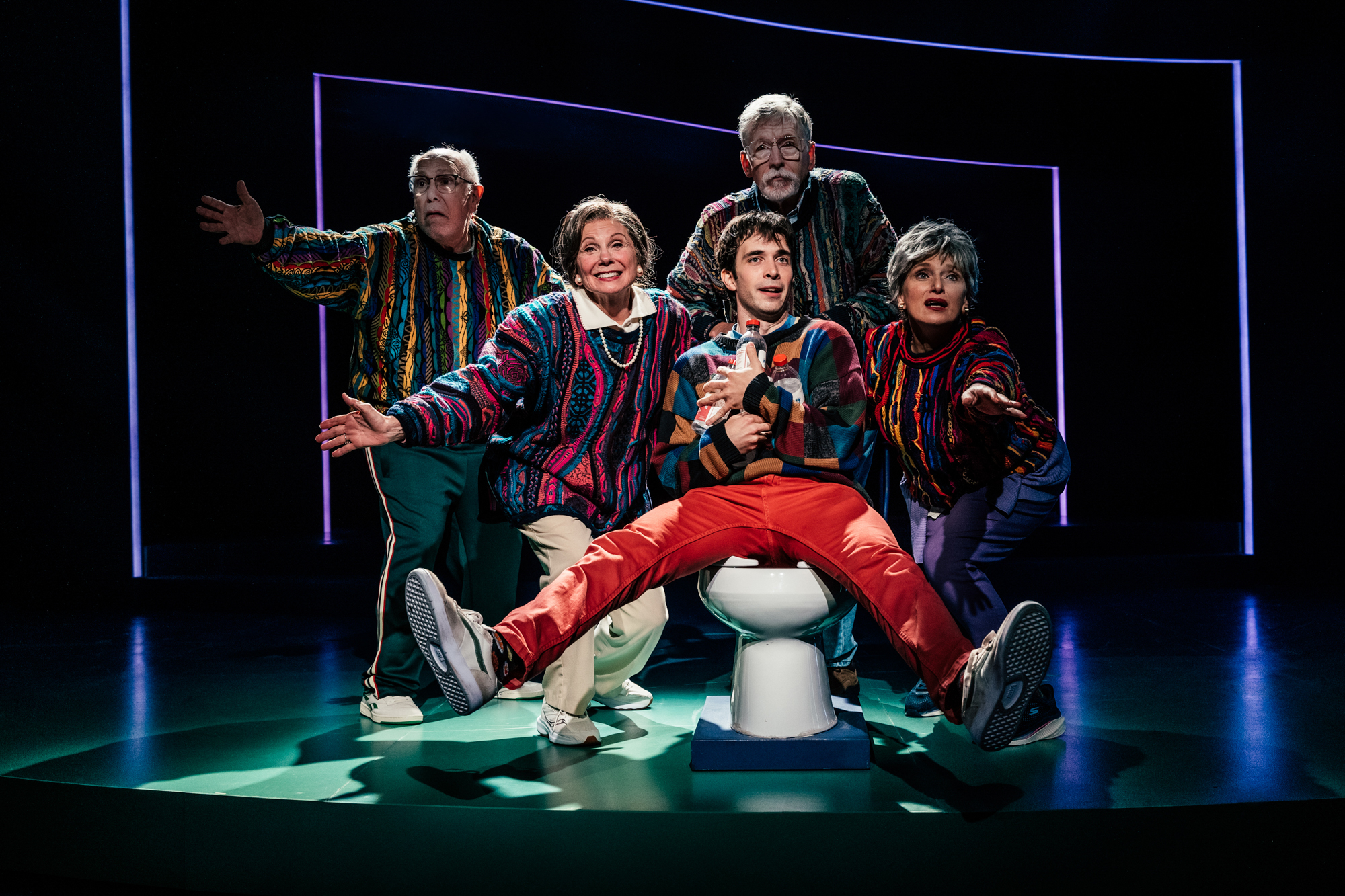
The protagonist of “The Reservoir,” Josh (Jake Horowitz), is surrounded by his four grandparents clad in brightly striped sweaters as he sits on a toilet. The play will remain at the Geffen Playhouse until its final showing July 20. (Courtesy of Jeff Lorch)
“The Reservoir”
Shelley Butler
Geffen Playhouse
June 26 - July 20


By Eleanor Meyers
July 9, 2025 5:21 p.m.
This post was updated July 13 at 1:57 p.m.
Comedy might be the best remedy, but how many jokes can be made before the well runs dry?
Since its arrival to the Westwood stage June 26, “The Reservoir” has entertained audiences with its lighthearted humor and heartfelt intentionality, despite unfortunately skimming over devastating topics. Written by Jake Brasch and directed by Shelley Butler, the eccentric dramedy follows the precarious New York University student Josh as he awakes from a vicious spiral of poor life choices and decides to make amends and start anew. The play – which will remain at the Geffen Playhouse until its final showing July 20 – is performed Wednesdays through Saturdays at 8 p.m. and Sundays at 7p.m., with additional matinee times on the weekends. Strongest in its charismatic staging, unique narrative dialogue and sarcastic one-liners, “The Reservoir” has the thematic potential to leave an impact, yet it can’t quite seem to tap into its creative reserve.
With a relatively simple plot, the play delves deeper into the interpersonal dynamics between the characters, which primarily include college student and misdirected alcoholic Josh (Jake Horowitz), his struggling-in-silence mother Patricia (Marin Hinkle) and his two sets of grandparents. The show, which runs for 2 hours and 15 minutes, including an intermission, begins with Josh rising from a drunken stupor at the base of his hometown’s reservoir in Denver. As the story goes on, the audience watches as the protagonist attempts to use his 12-step journey to sobriety as a coinciding technique for healing his grandparents’ Alzheimer’s disease.
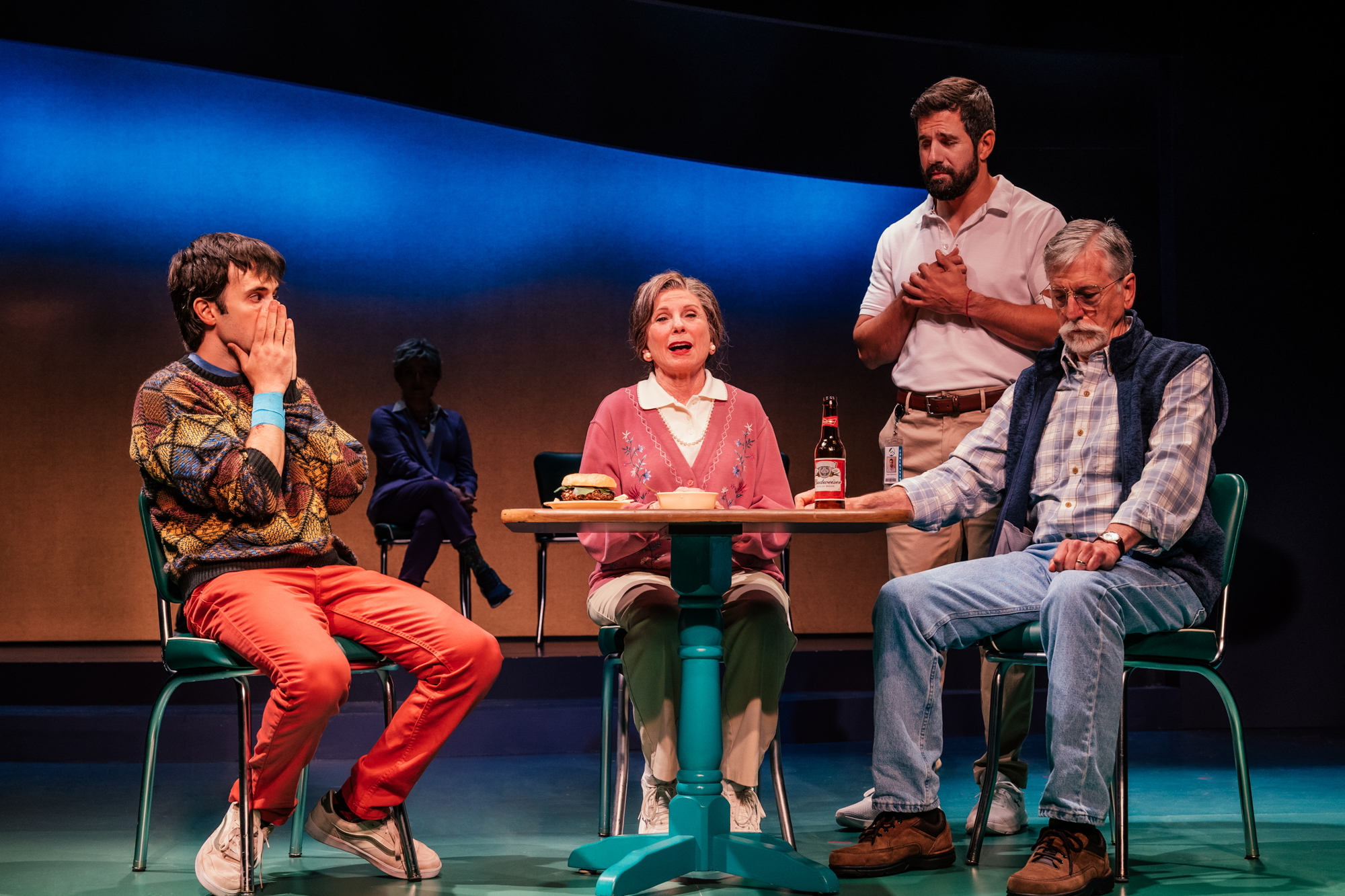
Horowitz plays a fantastically bewildered young adult whose desperation to preserve both his personal childhood and his grandparents’ memories ultimately convolutes his understanding of what it means to overcome sickness. The actor is exceptional in his presentation of long-winded monologues and emotional breakdowns, transitioning from a fourth-wall-breaking narration for the audience to dialogue with nearby characters with seamless ease. The rhythm of Horowitz’s cadence has an ebb and flow that successfully expresses the character’s mental fragility – each step forward is always followed by two steps back.
Josh’s interactions with his family – Shrimpy (Lee Wilkof) and Beverly (Liz Larsen) on his nonexistent father’s side, and Irene (Carolyn Mignini) and Hank (Geoffrey Wade) on his fretful mother’s side – follow a similarly snappy pattern in which the dialogue is fast-paced and the jokes are a bit overpopulated. Throughout the play, this abuse of humor develops into one of its defining faults, in which the relatively mediocre comedy takes away from the critical weight of the topics at hand.
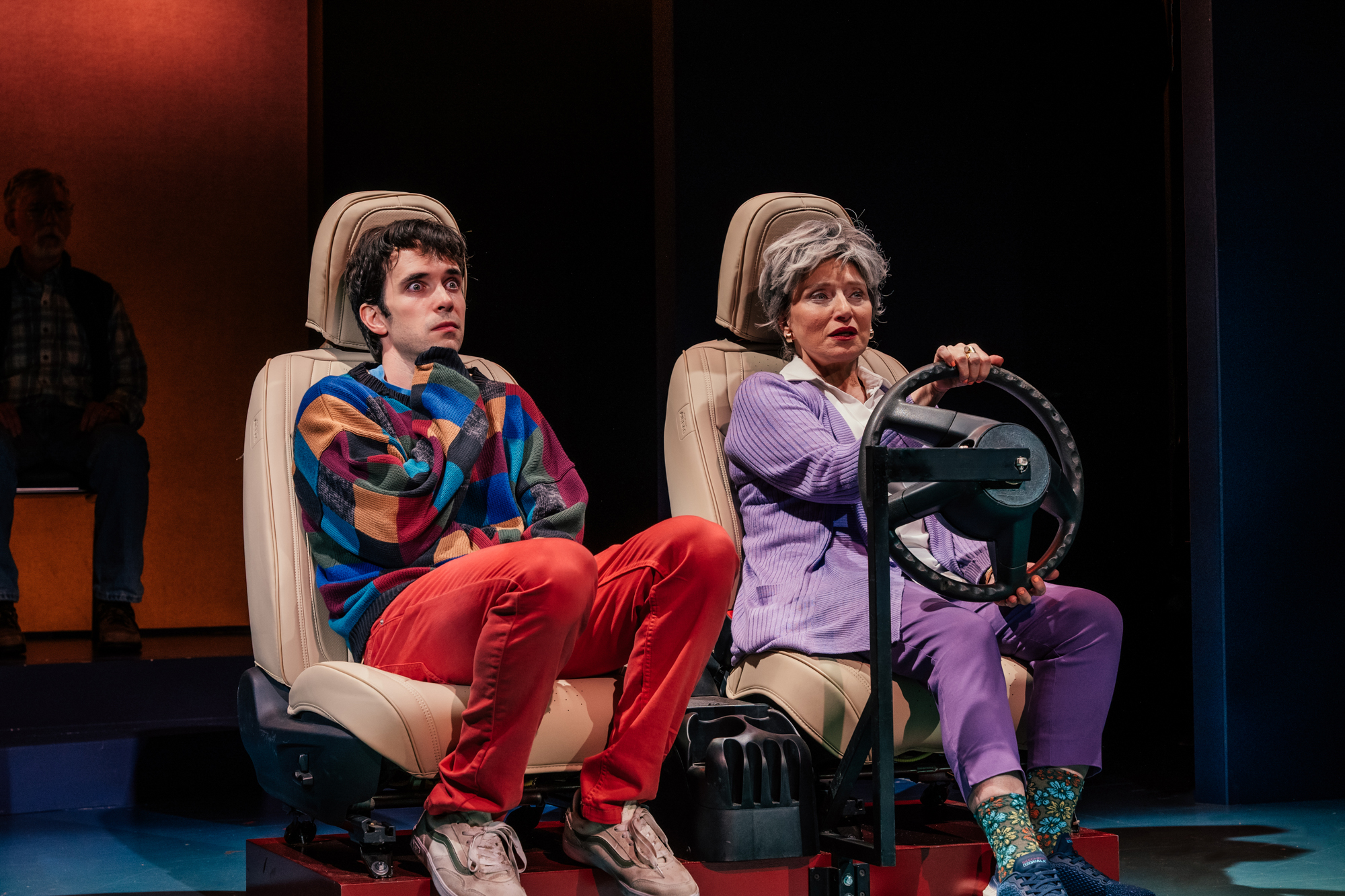
Even when Josh is practicing Hebrew with Shrimpy to help him with his memory, or when recently deceased Irene appears to Josh in a dream, the play does not linger long enough on the severity of its sentiment. It is disappointing and underwhelming at points when the discussion of both Alzheimer’s and alcoholism is greatly overshadowed by unnecessary farce and sexual innuendo. While it would be unreasonable to say the topics were handled without respect, they lost their crucial, bitter heaviness when spoon-fed to the audience as a mouthful of sappy sarcasm.
When Josh reaches a full year without alcohol – working at a local independent bookstore and making progress on his plan to cure his family’s Alzheimer’s – misfortune strikes and some things, unsurprisingly, fall to the wayside. The death of Irene sends Josh into a full-force relapse, and this scene preceding the intermission is the best example of the show’s dichotomous impression: Horowitz, as Josh, delivers an incredible monologue, pouring his heart out in a stream of fear, rage, despair and surrender, and this release is supplemented with incredible sound and lighting effects, which strobe and flash as his emotional reserve spills over. The set design, by Takeshi Kata, and lighting design, by Jeanette Oi-Suk Yew, are some of the most impressive parts of the play. Conversely, the predictability of the plot – especially the loss of Josh’s closest grandparent and his subsequent setback – greatly weakens the show’s poignance.

This is not to say that “The Reservoir” did not have sentimentality – in fact, its themes were beautifully developed overall and the play excelled greatly at synthesizing the boundary between intimacy and universality. The play handled both diseases with care, and touched on matters such as memory, insomnia and forgiveness in uniquely appropriate ways. Instances such as when Beverly reminds Josh that he doesn’t “let things be simple and beautiful” in the way he should, or when Josh explains in return that he often dissociates in order to “go to a place where he can make sense of it (life),” are genuine examples of the play’s touching approach to comprehending hardship.
On the whole, the small cast of seven was well-equipped to present the full-fledged production with style and expertise. Working with very few stage props and minimal costume changes, the characters kept the audience captivated, with members of all ages howling from their seats at various well-timed jokes. On a lesser level, the play also touched on themes of grief and LGBTQ+ representation – insisting viewers reflect on the importance of accepting things they cannot change and see harmony between sexuality and religion rather than resistance.
A tale of family and recovery with a lethal Jazzercise routine to boot, “The Reservoir” shies away from depth but perseveres in its visual and comedic merit.