






IN THE NEWS:

Gallery: Women’s March Los Angeles


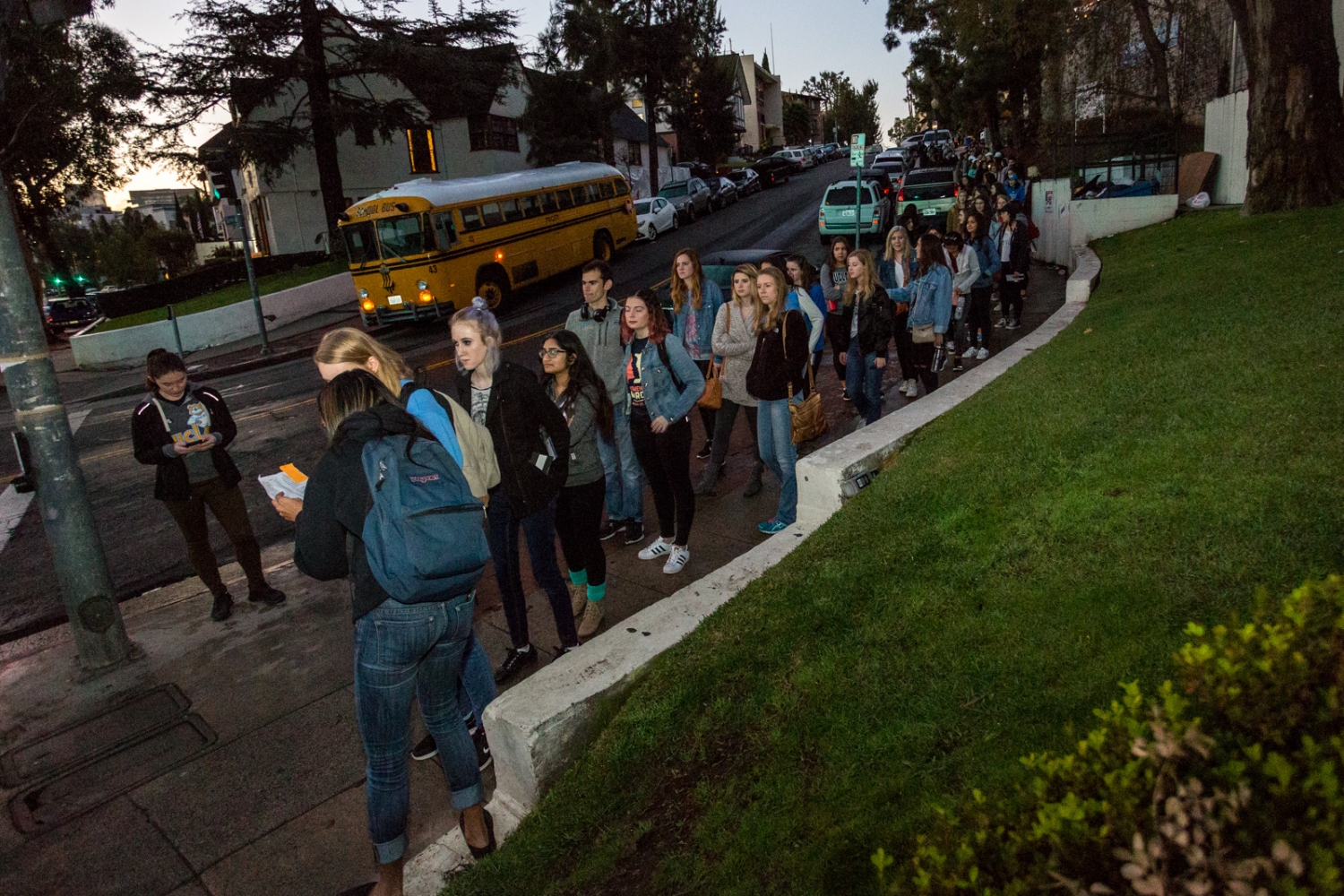
Hundreds of students lined up early Saturday morning to catch buses organized by the Undergraduate Students Association Council to attend the Women’s March in Los Angeles. USAC chartered more buses than originally planned because of high student demand.
(Jintak Han/Daily Bruin)
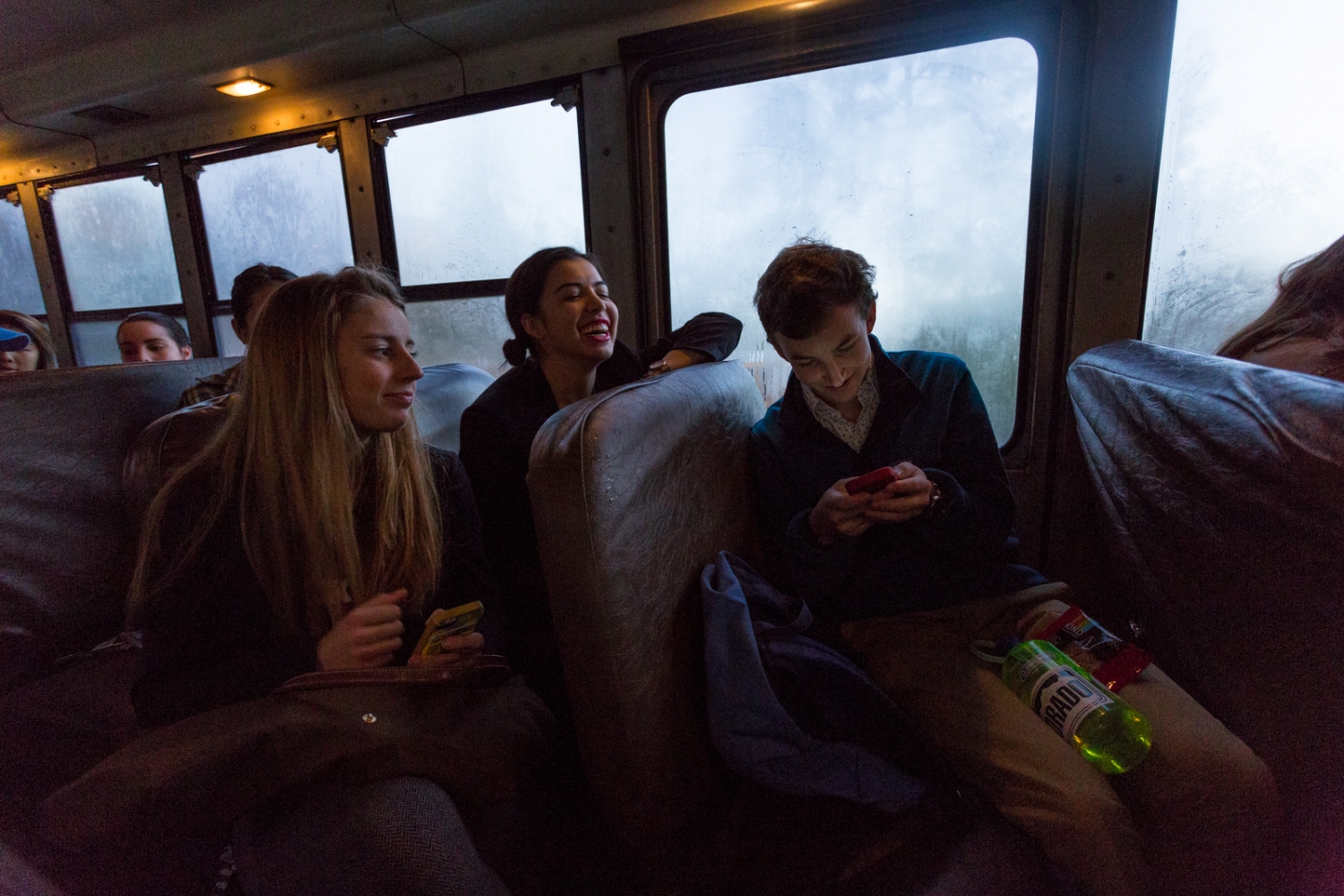
Left to right: Bridget Poisel, a first-year political science student; Audrey Magsig, a first-year neuroscience student; and Austin Bond, a first-year biology student ride the bus chartered by USAC to the Women’s March. "I want (the March) to be one of the largest women's rights movements that we've ever seen," Bond said.
(Jintak Han/Daily Bruin)
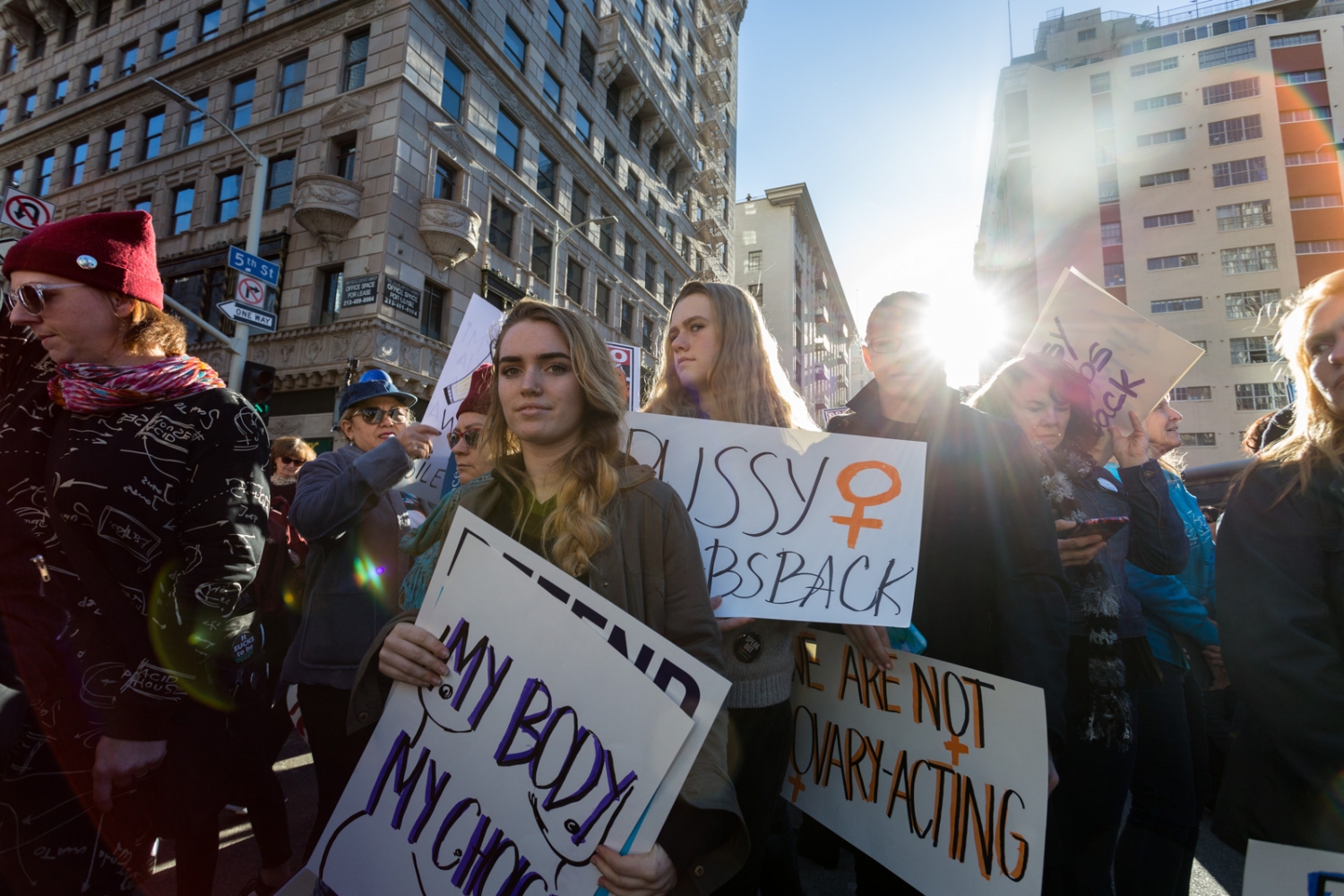
Demonstrators show their creativity and feminism through signs about women’s rights to their bodies. Some were made in response to the recording of President Donald Trump in which he admitted to groping women, and others to the anti-abortion views promoted by Trump.
(Jintak Han/Daily Bruin)
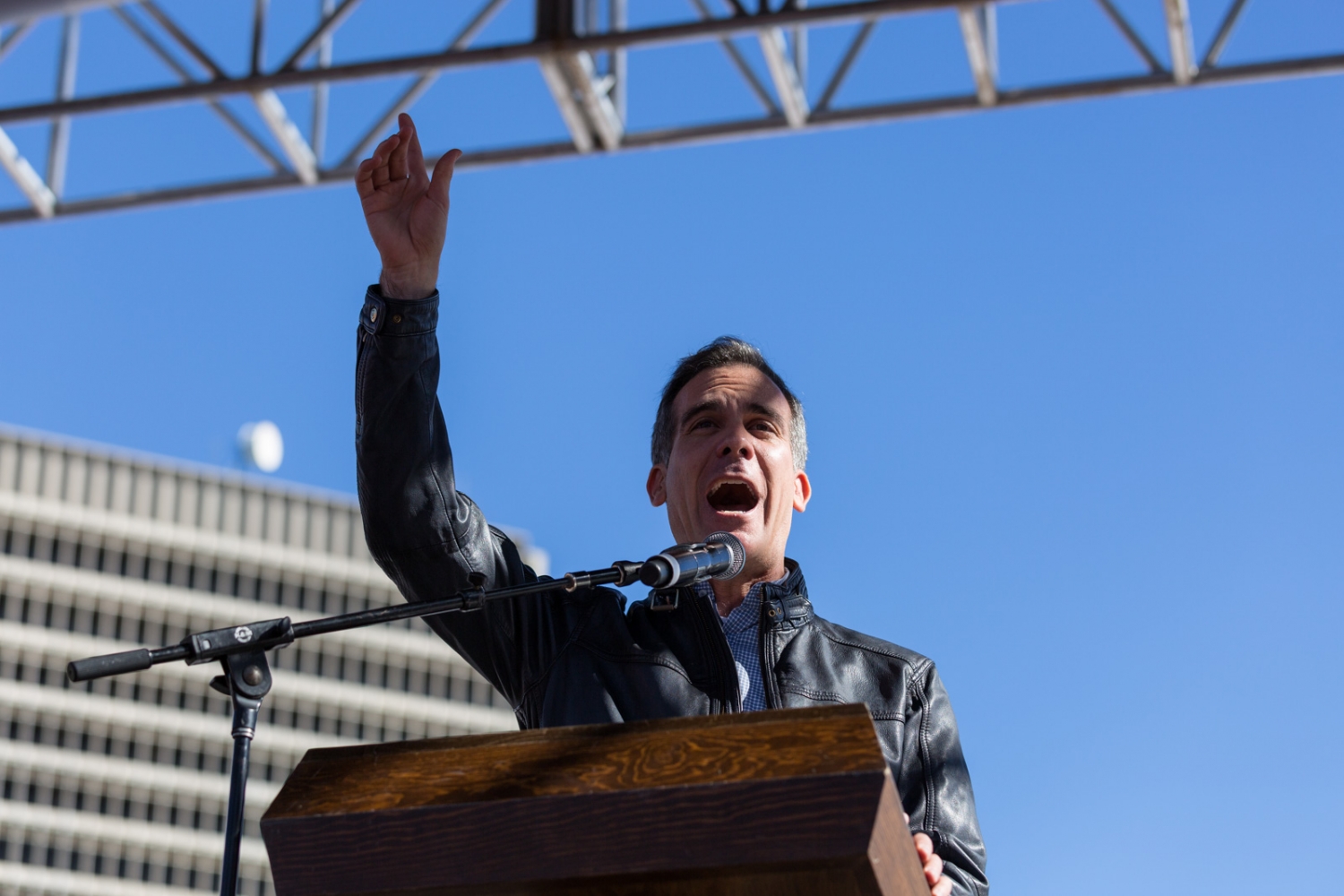
Los Angeles Mayor Eric Garcetti publicly denounces Trump in front of the crowd at Los Angeles City Hall.
(Jintak Han/Daily Bruin)
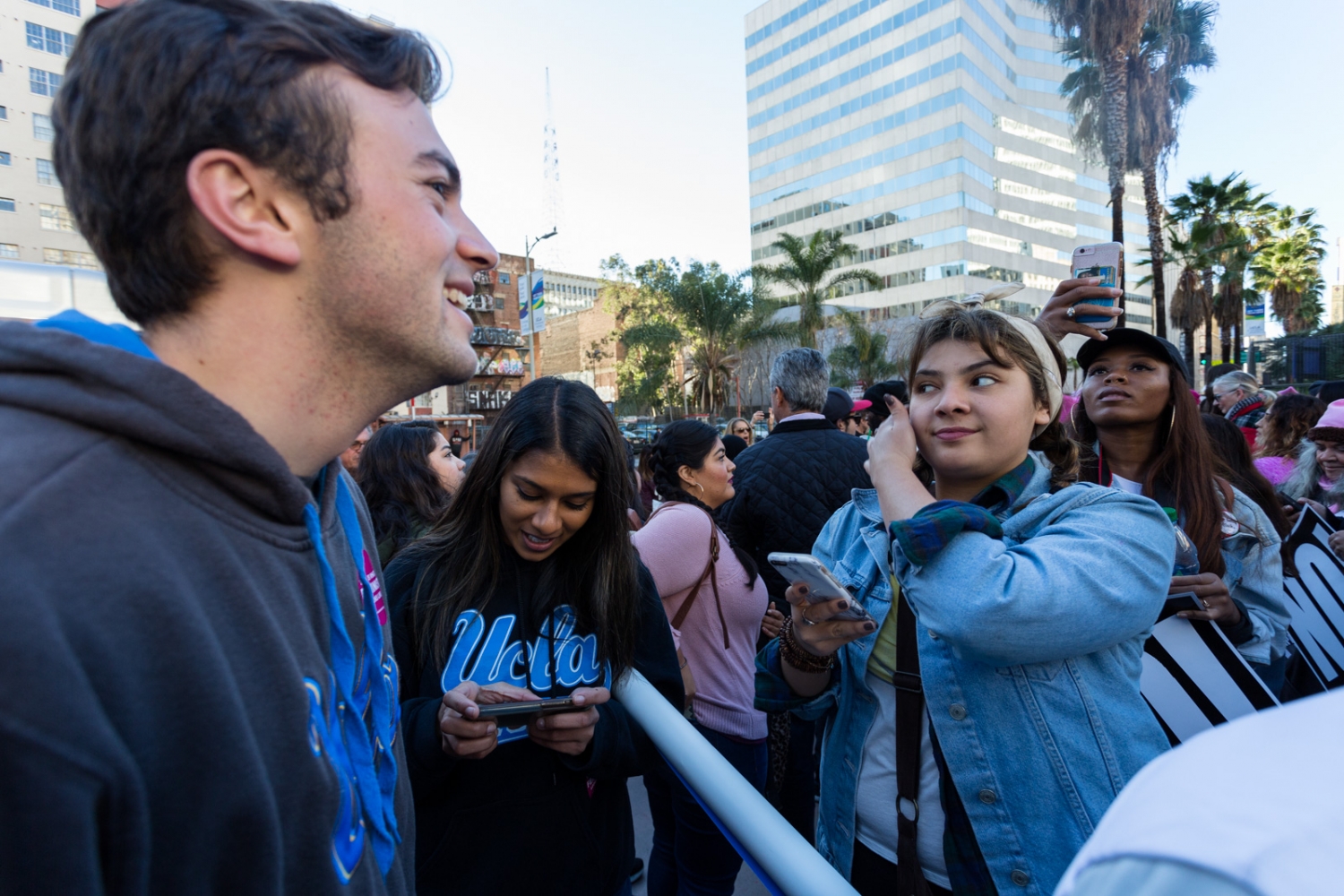
USAC External Vice President Rafi Sands and Academic Affairs Commissioner Ashly Mohankumar attended the Women’s March alongside fellow UCLA students.
(Jintak Han/Daily Bruin)

Roofs of bus stops provided natural platforms on which demonstrators could stand above the crowd. Protesters also stood on trash cans, ledges, newsstands and parked vehicles.
(Jintak Han/Daily Bruin)

Thousands of men and women gathered at Pershing Square waiting for the march to begin. Artist Shepard Fairey, famous for creating the iconic "Hope" poster of Barack Obama, along with 18 other artist released a set of images named "We the People."
(Miriam Bribiesca/Daily Bruin)
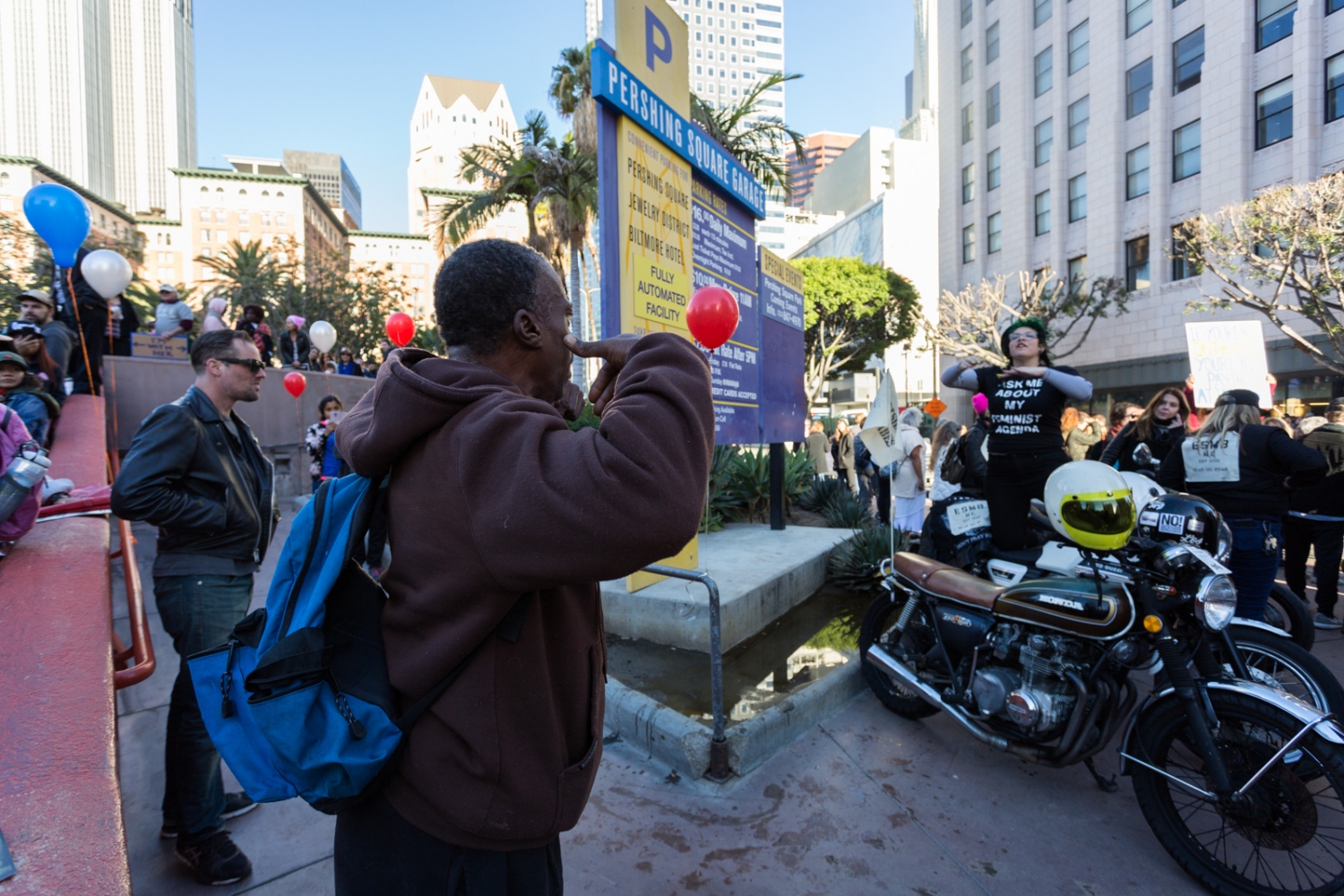
A Trump supporter clashes with a member of East Side Moto Babes, a female-only motorcycle club, in Pershing Square. The biker responded to xenophobic remarks by chanting, “There’s more of us,” until she lost her voice.
(Jintak Han/Daily Bruin)
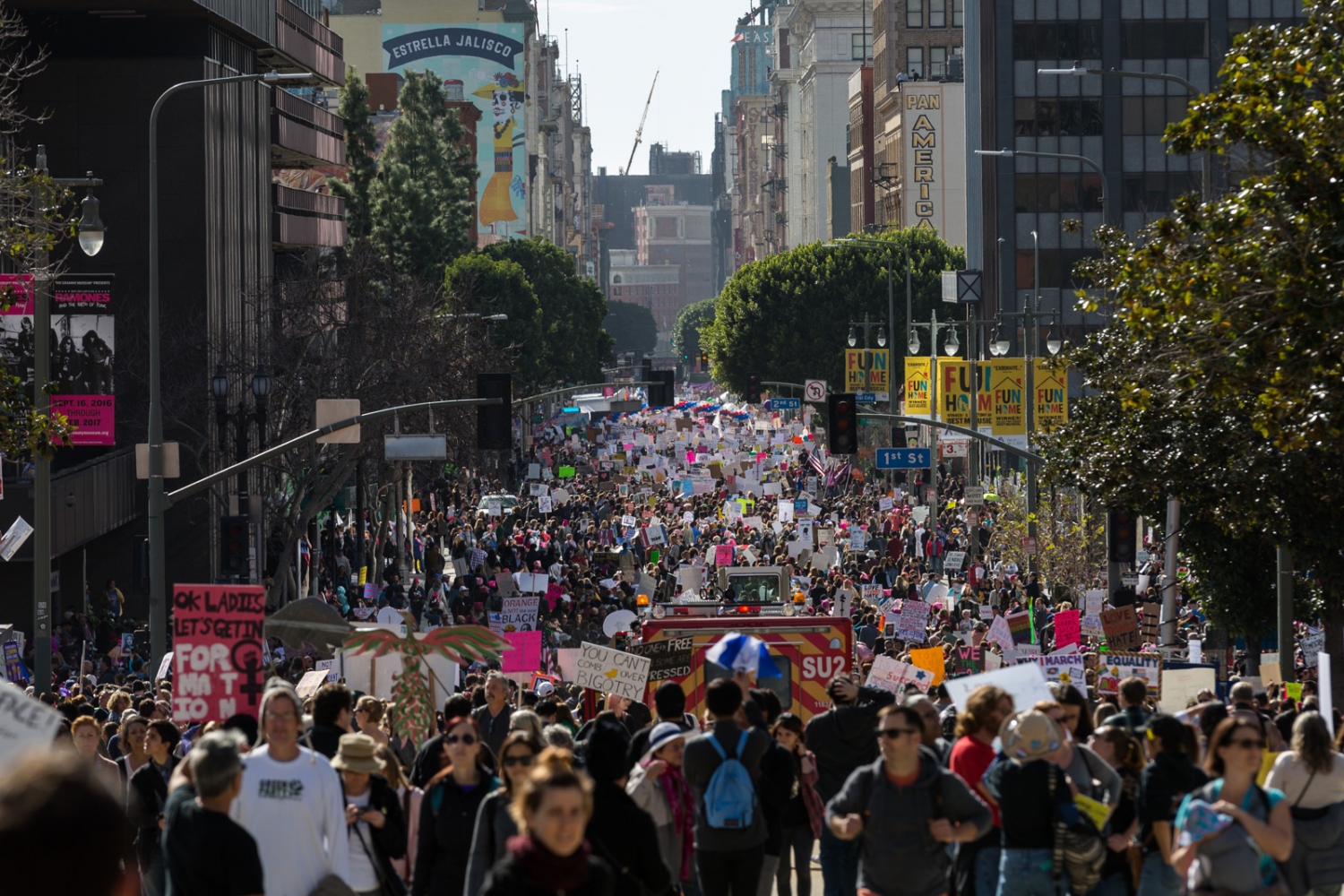
More than half a million people attended the Women’s March in Los Angeles, held in solidarity with the larger Women’s March on Washington. In all, millions of protesters attended women’s marches nationwide.
(Jintak Han/Daily Bruin)
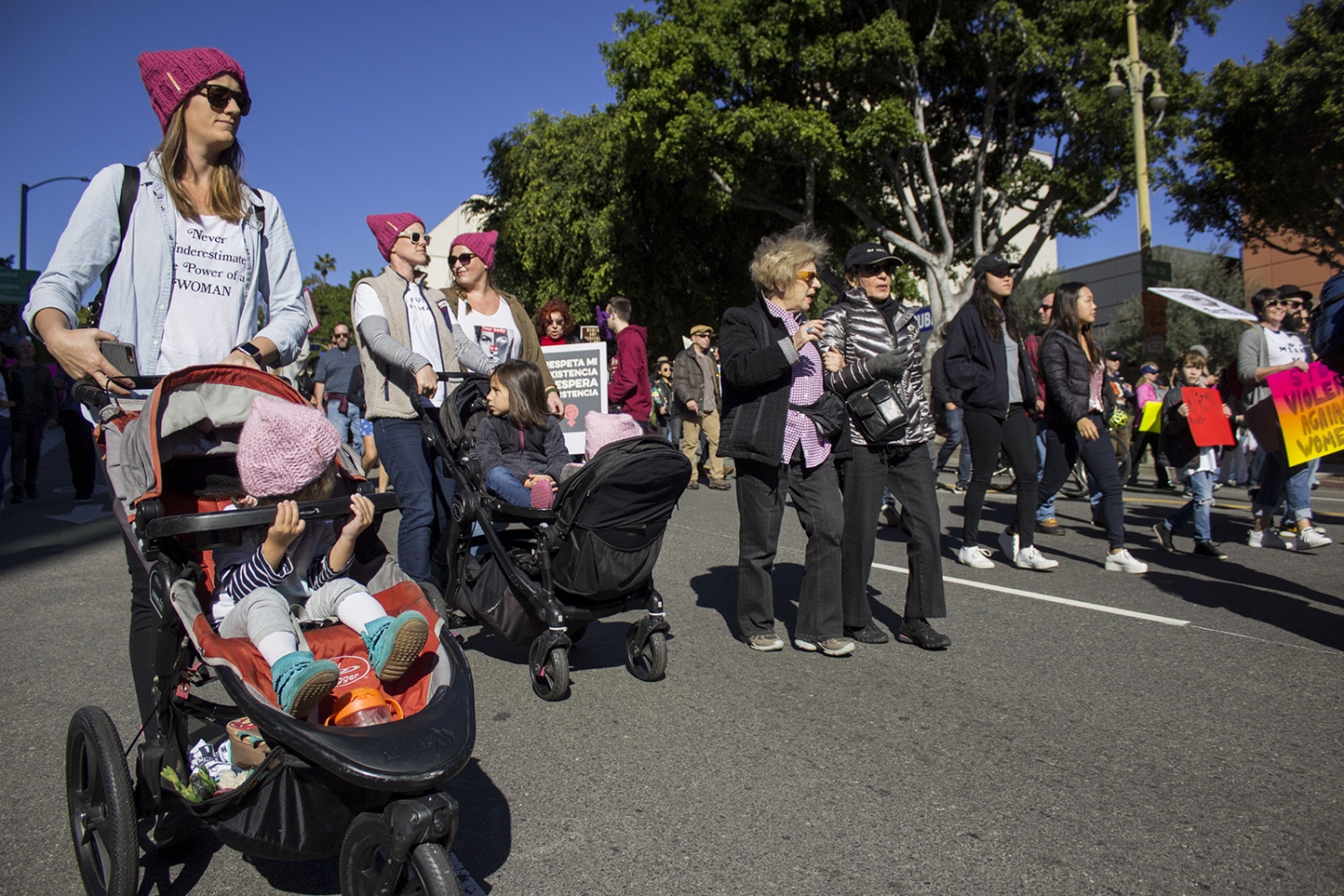
Women of all ages join the march in downtown LA. Many of them brought their young children in strollers despite the heat and large crowds.
(Alyssa Dorn/Daily Bruin)
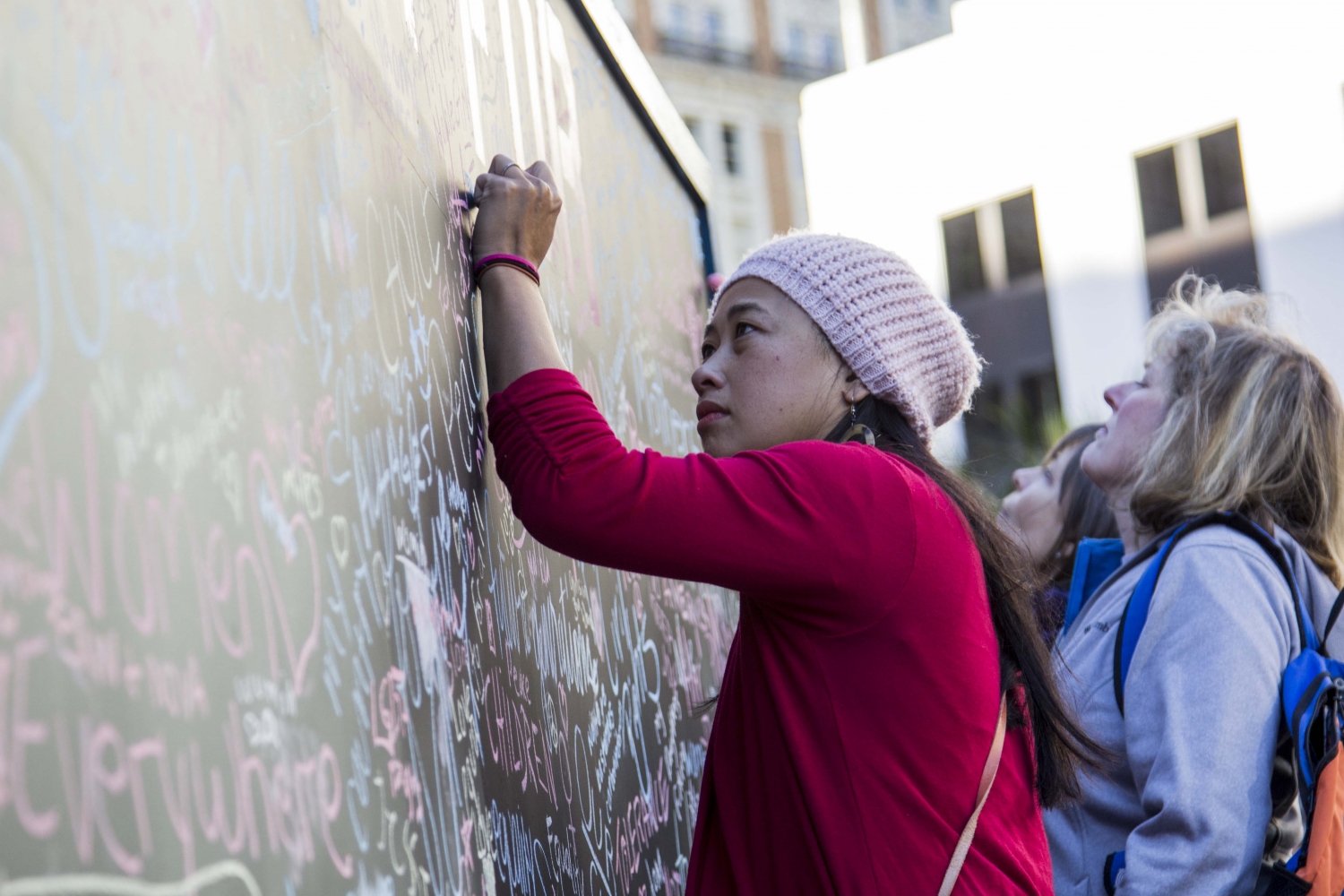
During the protest, hundreds of women used chalk to write on a blackboard titled, "I march for..." highlighting the reasons for their participation in the march.
(Amy Dixon/Daily Bruin)
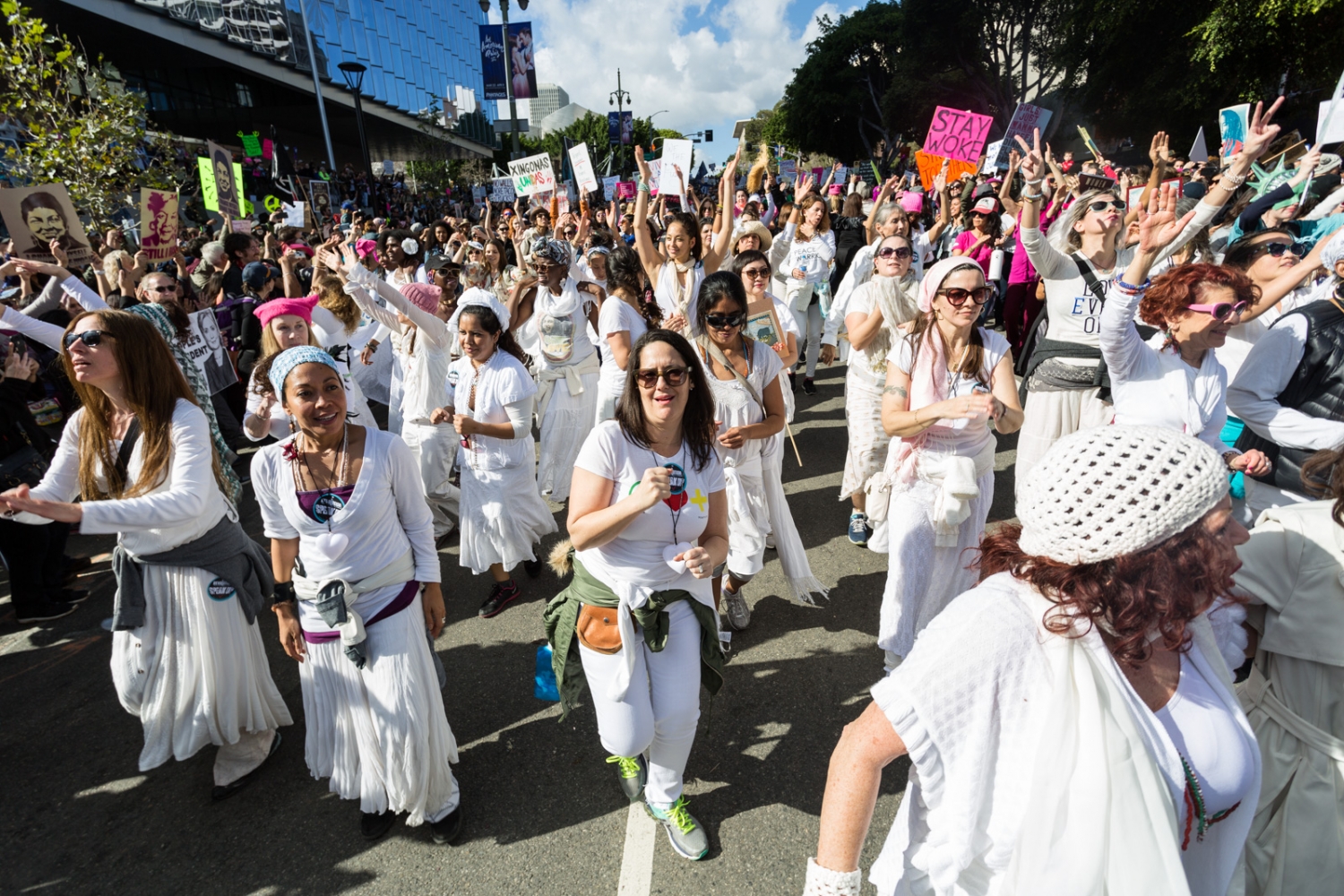
Cultural groups assembled a Brazilian samba line, which marched down West 1st Street accompanied by a drum line.
(Jintak Han/Daily Bruin)

Women stand together as they wait for the march to begin. The attendance was so much larger than expected that protesters remained stationary until about 11 a.m.
(Ken Shin/Daily Bruin)

The Los Angeles march was held in solidarity with the main Women’s March on Washington, D.C. Sister marches with millions of people were also held in New York, Boston and Chicago, among other cities.
(Miriam Bribiesca/Daily Bruin)
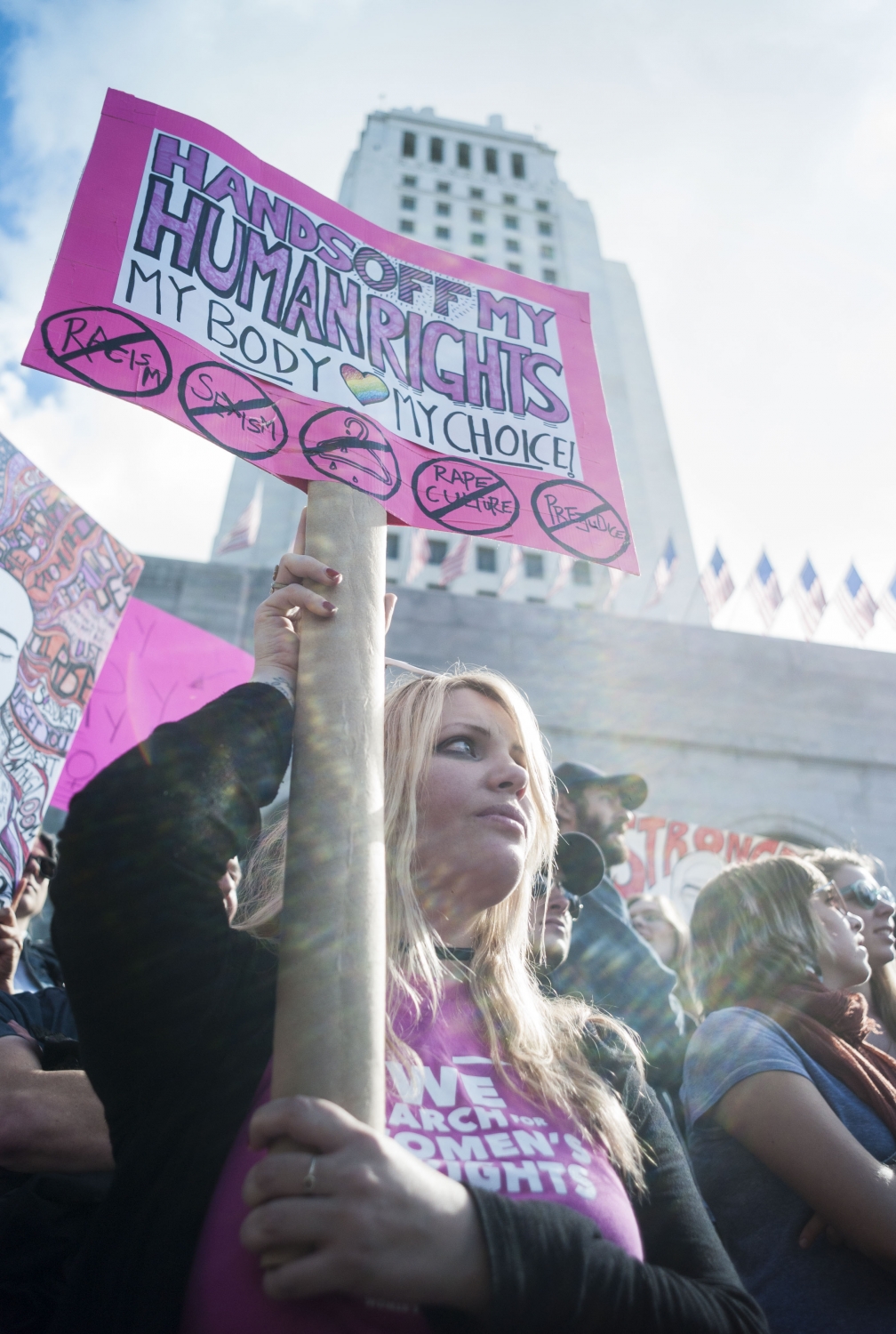
A woman stands outside of the Los Angeles City hall in protest of the inauguration of President Donald Trump.
(Ken Shin/Daily Bruin)
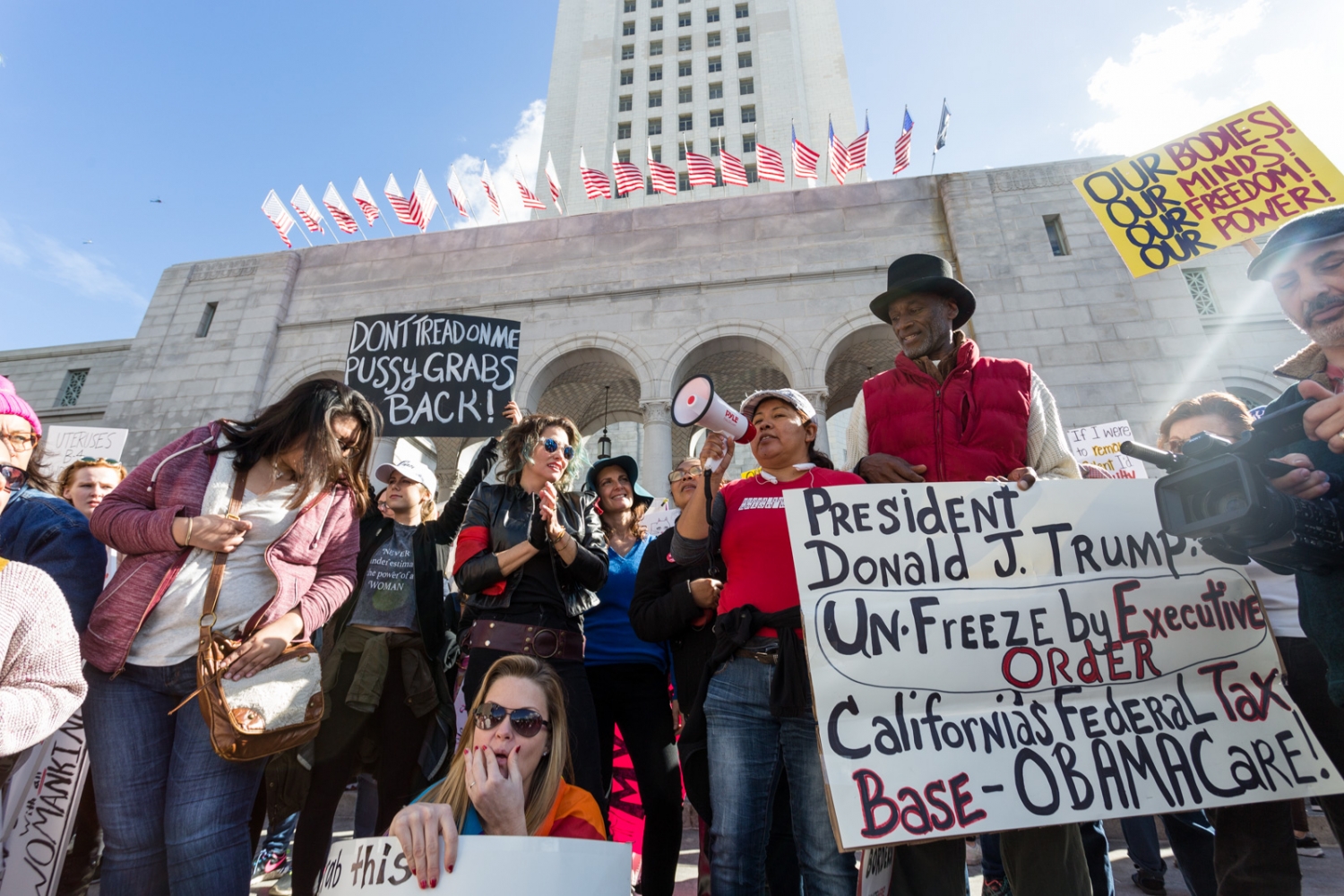
Marchers occupy the city hall steps in protest of Trump’s presidency and policies.
(Jintak Han/Daily Bruin)

Marchers get creative with signs, using their words as powerful and sometimes humorous statements.
(Miriam Bribiesca/Daily Bruin)
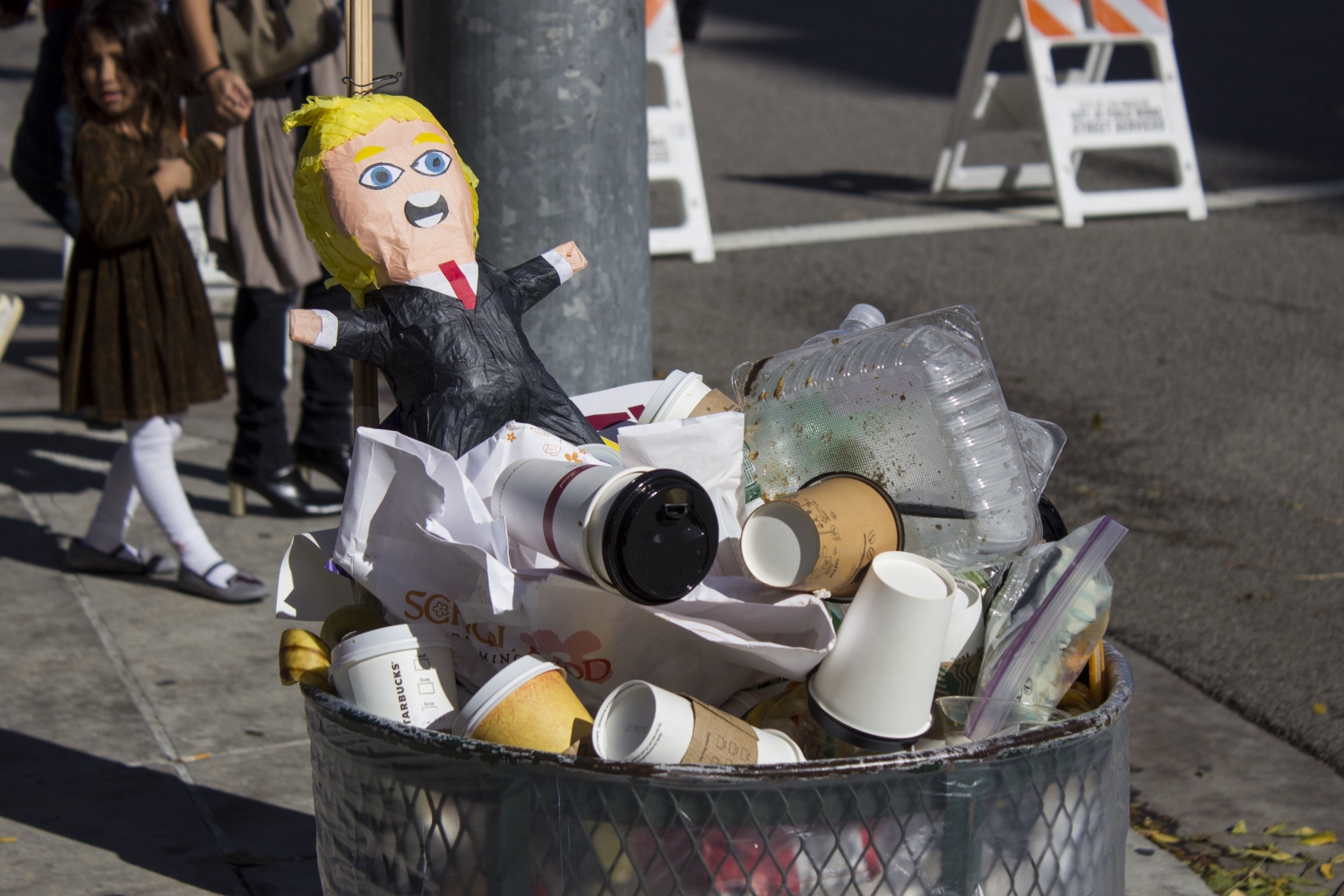
A small Donald Trump piñata is carefully placed inside a nearby trashcan.
(Alyssa Dorn/Daily Bruin)
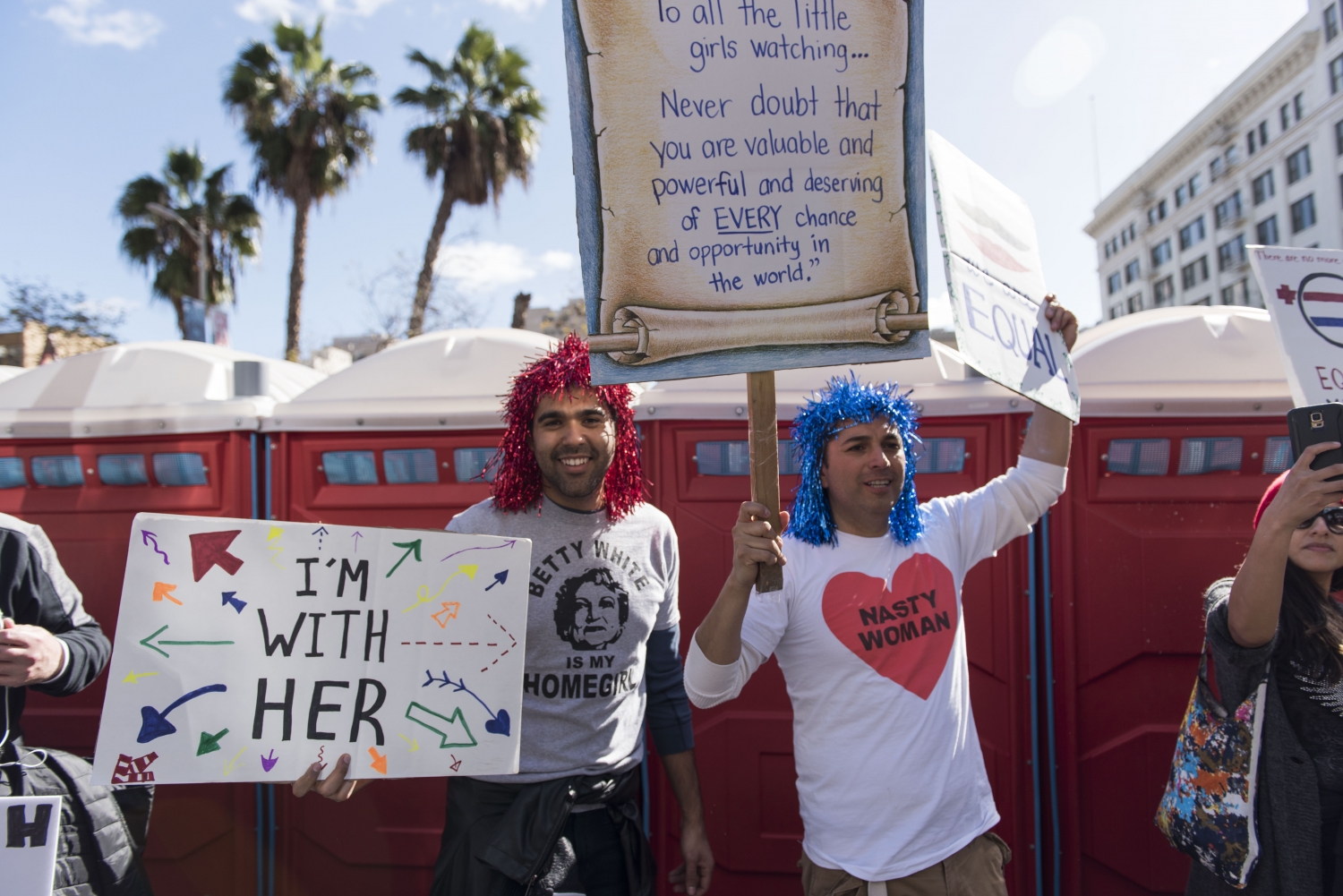
Countless men joined the march and stood in solidarity with women. Some of them displayed the popular "Nasty Women" slogan on their shirts.
(Miriam Bribiesca/Daily Bruin)

Aly Dembry (left), a second-year aerospace engineering student, and Emma Campher, a second-year psychology major, march together as friends in the streets of downtown LA.
(Alyssa Dorn/Daily Bruin)
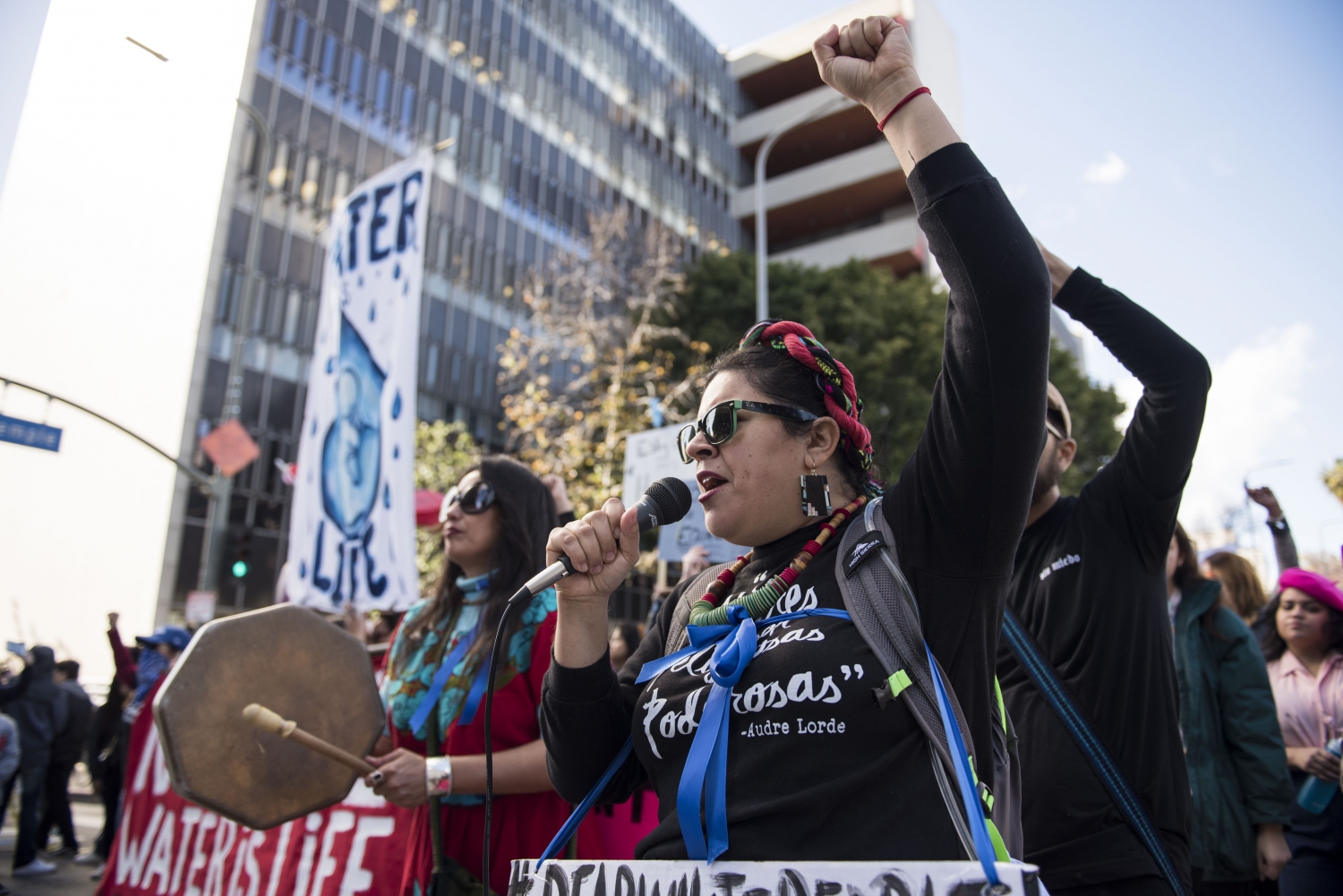
Hundreds of thousands of people participated in the Los Angeles Women's March Saturday.
(Miriam Bribiesca/Daily Bruin)
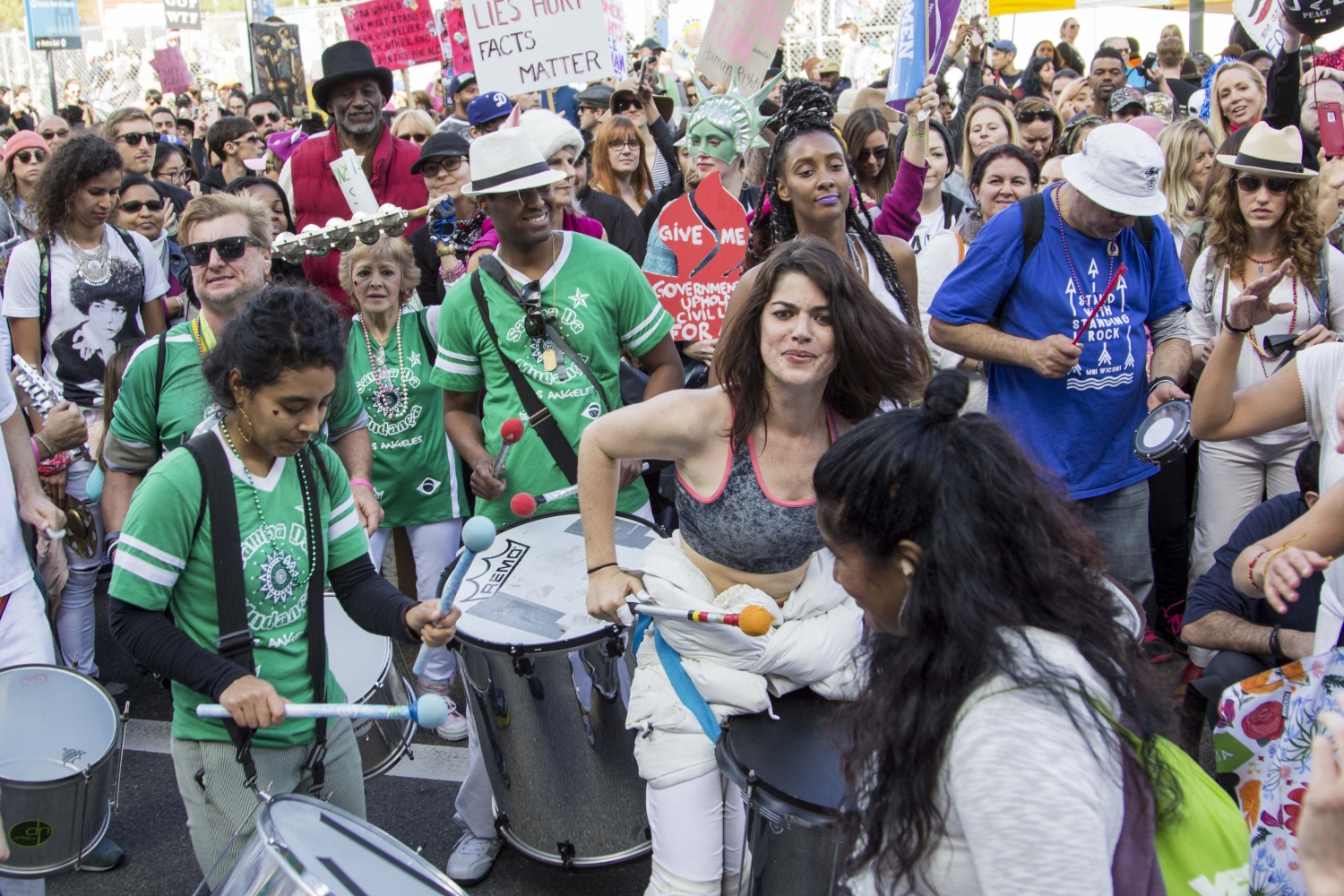
Marches of all ages and ethnicities rejoice together and dance to beat of the drums played by an artist group.
(Amy Dixon/Daily Bruin)
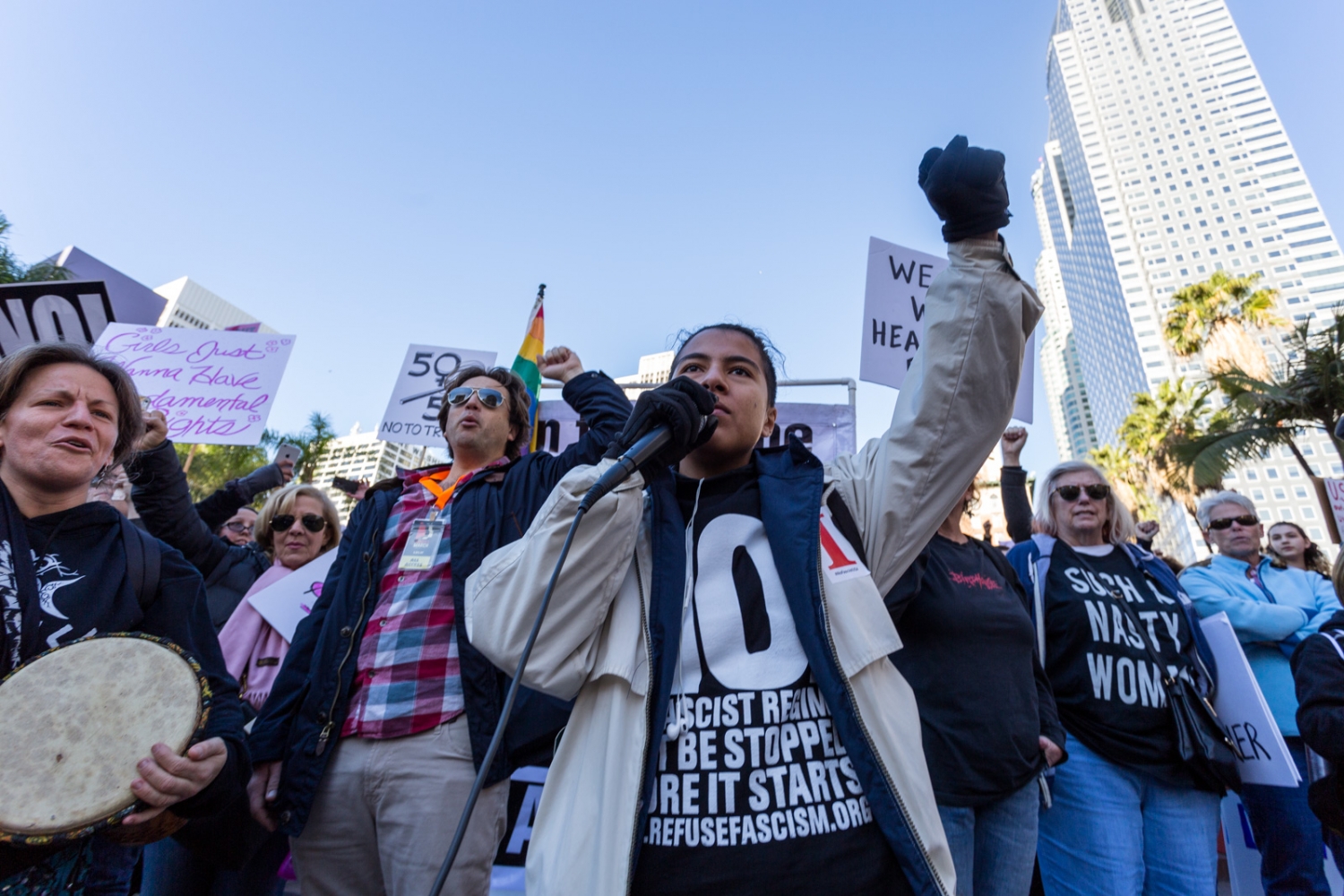
Tala Deloria, a fourth-year geography student and a member of Refuse Fascism, leads cheers for protesters who arrived early before the march began.
(Jintak Han/Daily Bruin)
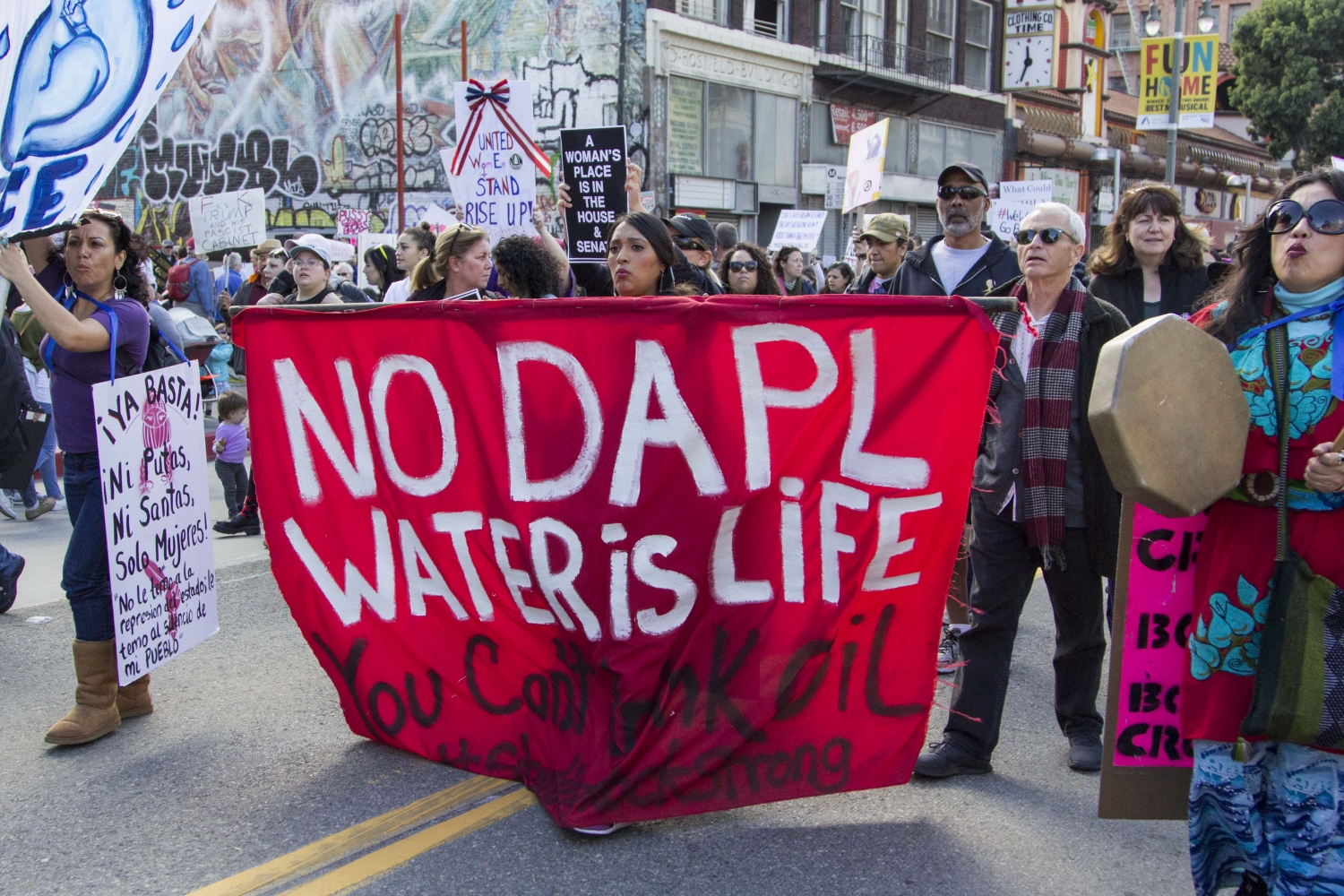
Native women march the streets of Los Angeles advocating against the Dakota Access Pipeline.


