






Brad Carter launches Kickstarter campaign to record album after his brain surgery video goes viral
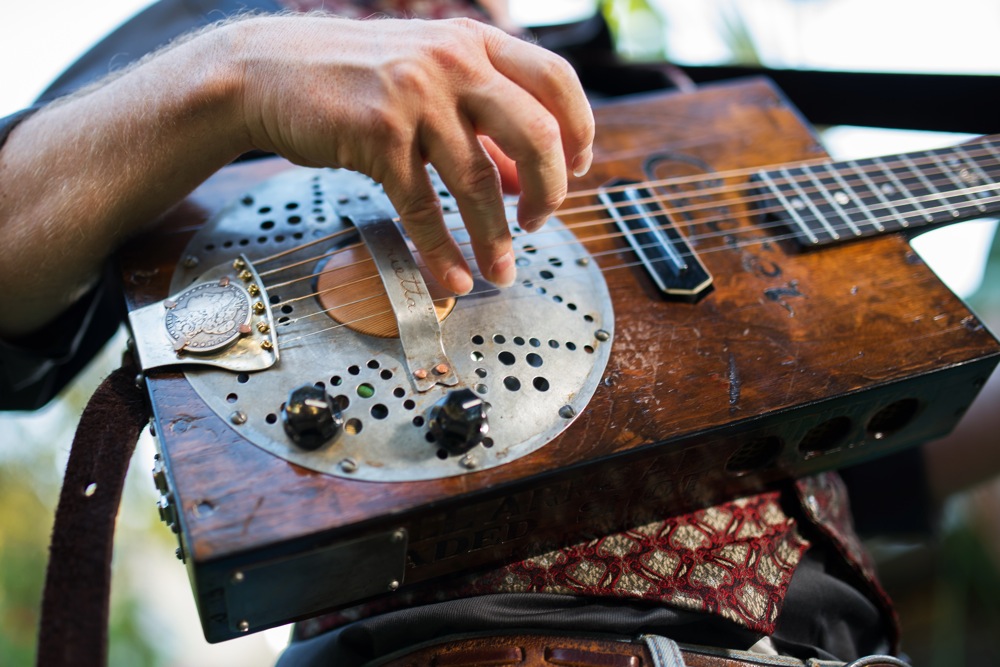
Carter uses a fingerpicking style inspired by flamenco and classical guitar styles he learned at an early age. The effect that his disease had on his playing technique influenced him to find treatment immediately.

By Asher Landau
Sept. 9, 2013 1:37 a.m.

Dr. Nader Pouratian, a neurosurgeon at Ronald Reagan UCLA Medical Center, probed Carter’s brain with an electrode, hoping to pinpoint the spot that would stop Carter’s tremors. All the while, Carter tried to focus on playing and withstood the uncomfortable sensations that accompanied the surgery.
“You can’t imagine how it happens,suddenly you can’t talk and it feels like Darth Vader is across the room choking you,” Carter said.
Carter underwent deep brain stimulation on May 23 to ease the symptoms of essential tremors, a disease similar to Parkinson’s disease that has plagued him for seven years.
The procedure was the 500th deep brain stimulation performed at the UCLA medical center, and the hospital decided to commemorate the occasion by filming the surgery, live-tweeting it and placing the video on Vine.
The video quickly went viral, garnered millions of views within the first day and attracted the attention of media outlets like NBC’s “Today” show andDiscovery News.
Peter Leinheiser, a friend of Carter’s who was present at the “Today” interview, said the main attraction to Carter’s story was his musical ability.
“The interview was boring until he started playing and you see how his hands move,” Leinheiser said. “He has great mechanical skill, and I’m amazed at what medical science can do.”
However, Carter said what matters most to him is not fame, but maintaining his musical ability in the face of the disease.
This drive prompted him to create a Kickstarter campaign after his surgery to release his first album, as he worries the surgery will prove ineffective and exacerbate the shaking.
“At the rate the disease is getting worse, I have a short shelf life and I will never get back my former dexterity,” Carter said. “If it keeps up I don’t know how much longer I can keep playing.”
Carter said this was heartbreaking for him because he has been involved with music since an early age. He got his first electric guitar, which he used to teach himself the basics of playing the instrument, by trading a roll of quarters with a friend in middle school.
Eventually, Carter took to studying flamenco and classical guitar, which he said led to his distinctive fingerpicking style that he describes as a mix between folk and hillbilly-stomp.
This style of fingerpicking is especially encumbered by essential tremor, which Carter said led him to seek immediate treatment.
The surgery, intended to increase Carter’s motor control, took seven hours, six of which he had to remain awake to help the doctors position the electrode.
Carter said inserting the electrode felt like a bomb going off in his brain. Despite this, he tried to stay lighthearted by telling jokes throughout the surgery.
The treatment is an ongoing process, requiring multiple surgeries and check-ins with his doctors, so he said the album is important to preserve his songs and musical style.
Carter’s Kickstarter campaign has attracted support from celebrities such as Tony Hawk, Lance Krall and “The 40-Year-Old Virgin” actor Gerry Bednob, who have donated rewards for contributions to the cause.
“The reason this campaign attracts so much attention is that anybody with a creative bone in their body can relate to losing the ability to express their self,” said Jason Charles Miller, a musician who has recorded with Carter. “If indeed he cannot play later in his life it’s important to get it done now so he can perform uninhibited by disease.”
The album promises to feature Carter’s signature style as well as some of his favorite musicians, including Sean Watkins, Tom Brosseau, and actress Mary Elizabeth Winstead.
The downside to the Kickstarter campaign, Carter said, is that he must raise his $45,000 goal by Sept. 12 or he will get none of what he has raised.
In the near future he must also undergo further readjustment surgeries in hopes of minimizing the tremors but he said he no longer takes his skills for granted.
“Nothing lights a fire under you like having your skills taken away, so now I know not to waste a second,” Carter said. “The only thing that counts is that I do it and do it for me.”


