






Columnist explores Natural History Museum of L.A. County and Exposition Park Rose Garden
Before you Go:

By Lauren Roberts
Oct. 18, 2011 11:24 p.m.

This week, I ventured a little farther outside of my navigational comfort zone, leaving the familiarity of West Los Angeles for the foreign territory that is USC’s backyard.
My decision to explore the Natural History Museum of Los Angeles County and the Exposition Park Rose Garden provided a little more of an adrenaline rush than anticipated (nearly getting my car impounded and narrowly escaping a night on the other side of town has that effect).
Close calls aside, the museum and garden offered a surprising dose of afternoon serenity mere miles from the smog of downtown L.A.
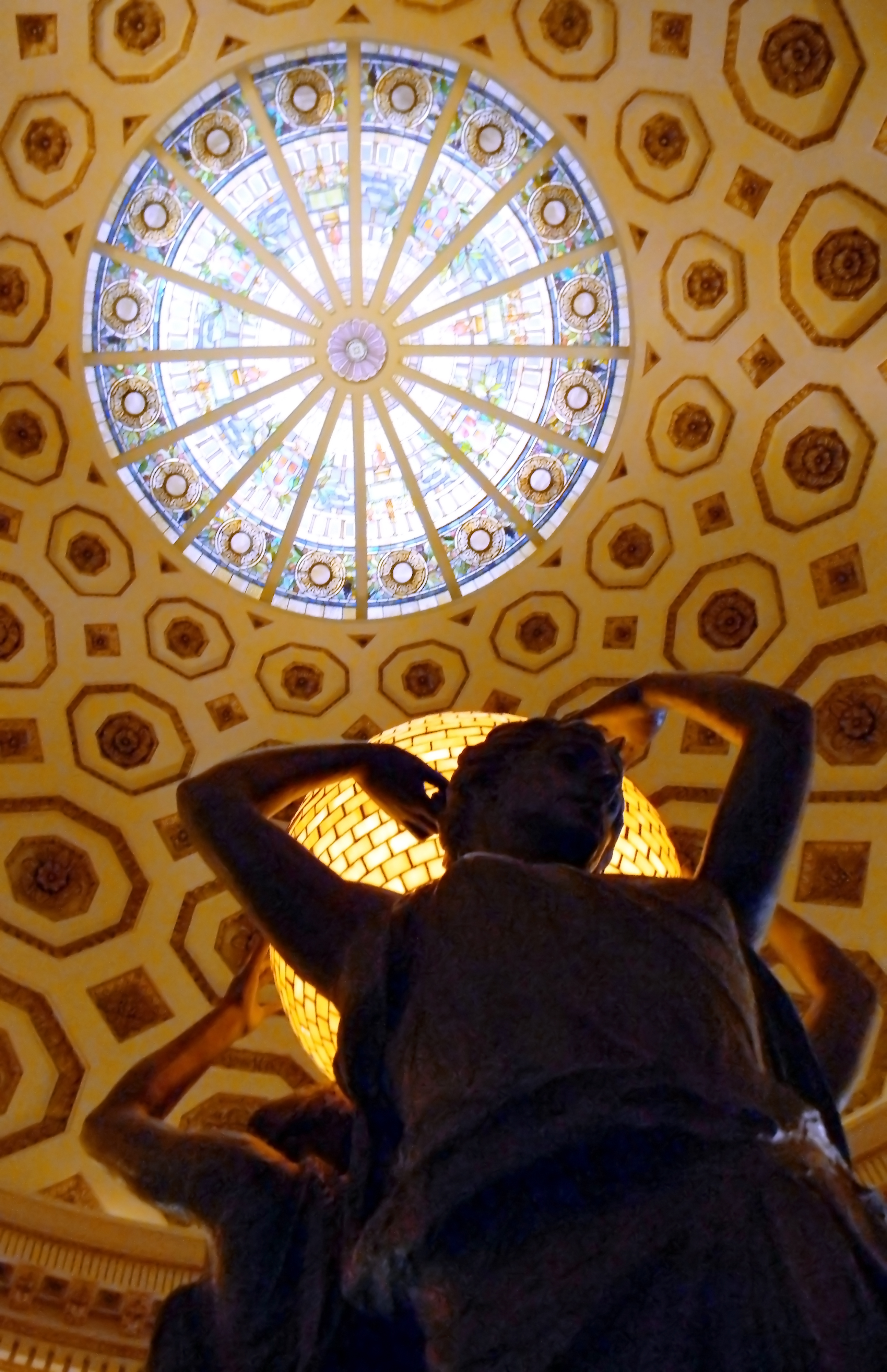
Even amid ongoing renovations, the Natural History Museum has an elegant character of its own. The museum’s recently restored 1913 central rotunda is as awe-inspiring as its paleontological artifacts.
Looking up, a circular stained-glass skylight filters the speckled green and red light of floral patterns at the top of the rotunda’s vaulted ceiling. This ornate splendor is mirrored in marble columns surrounding the room, drawing the viewer’s eyes to the room’s focal point, Julia Bracken Wendt’s “Three Muses,” a 1914 bronze Beaux-Arts sculpture depicting the muses of science, history and art supporting a spherical mosaic light.
The museum’s collection is rather daunting, covering several billion years of history and housing an extensive collection of artifacts and dioramas to show for it. And while I may have been the only visitor in the museum without an accompanying chaperone twice my height, exploring the museum’s exhibits was both interesting and educational.
One of my favorite highlights was a preserved 14 1/2-foot “megamouth,” a rare deepwater shark caught off the coast of Catalina Island in 1984 and still used in studies. Seeing its peeling skin and wide-mouthed jaw under moist glass, coupled with the faint scent of preservatives, was enough to send chills up my spine.
I spent much of my time on the museum’s first floor in the new Dinosaur Hall and habitat dioramas. The Dinosaur Hall features recently reconfigured Tyrannosaurus rex, triceratops and stegosaurus skeletons, and a 65-million-year-old T. Rex toe bone that visitors are welcome to touch.
The Halls of African Mammals and North American Mammals proved most entertaining, if only for the questions that the realistic hunting displays sparked. I overheard quite a few chaperones educating their children when the confusion of what exactly the displays were eating was met with the horrific realization that the model coyotes were, in fact, devouring bunnies.
However, my favorite part of the museum was actually its front yard, Exposition Park Rose Garden.
The garden spaces are filled with fragrant roses in colors as varied as their creative titles. Small pink buds called “Marmalade Skies” and large blossoms of rich orange called “Living Easy” are among the flowers that grow in the neatly kept grounds .
Few other visitors occupied the grassy walkways on my late afternoon visit as I watched the sun lower in the sky from the ledge of the park’s water fountain. But as I enjoyed the quiet, aromatic breath of fresh air in the garden, my car came close to being locked away for being the only one left parked in the museum lot an hour past closing.
Lesson learned ““ don’t get too caught up in those roses. Security guards are more intimidating than dinosaurs.


