






Cinematographer in Residence Richard Crudo holds workshop series to pass on industry know-how
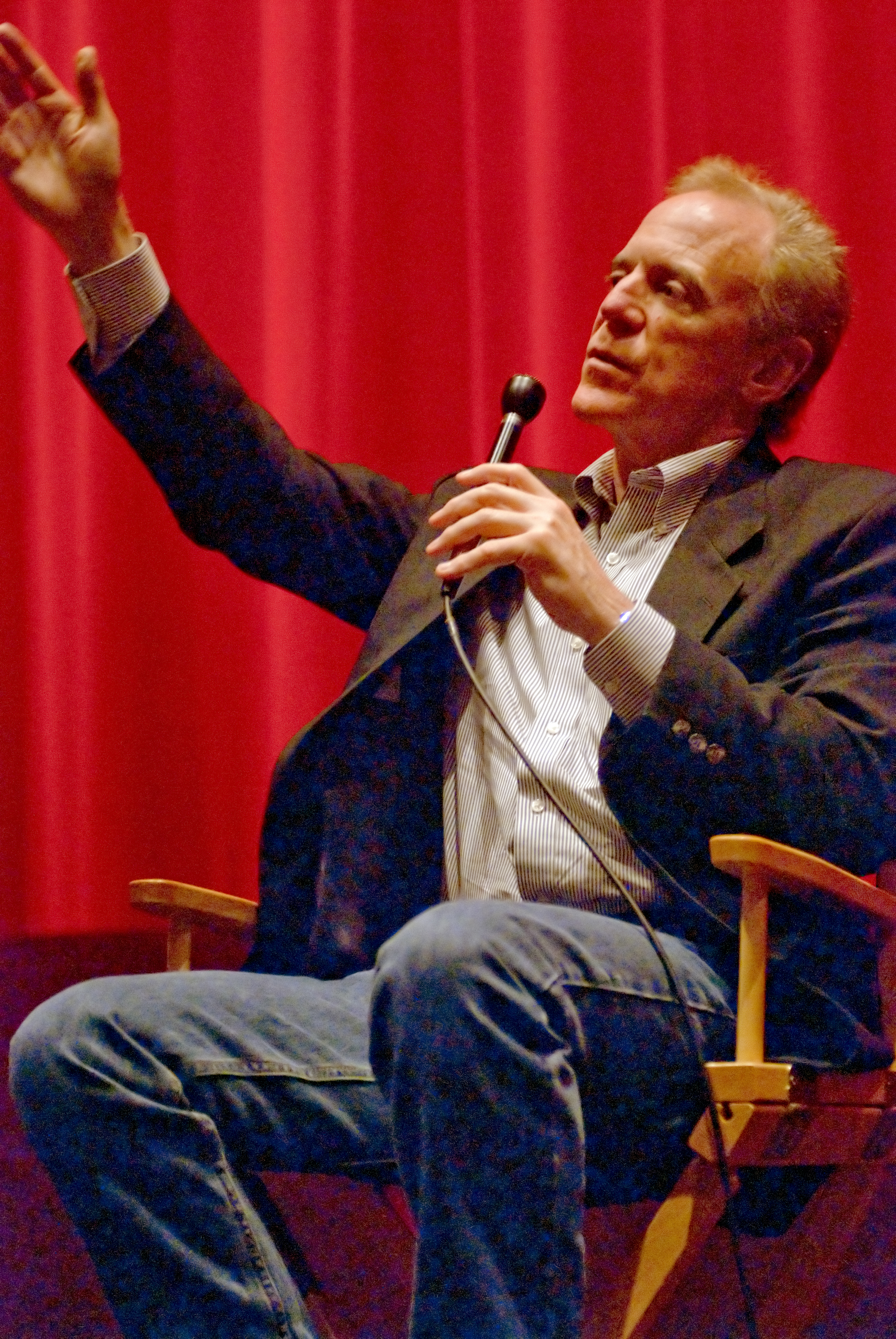
Cinematographer Richard Crudo speaks at a question and answer session after the screening of his film “American Buffalo” on Monday at James Bridges Theater.

By Mette-Marie Kongsved
April 20, 2011 11:45 p.m.

Richard Crudo (left), this year’s 2011 Kodak Cinematographer-in-Residence, takes questions at Monday evening’s Q&A session following the screening of his film “American Buffalo.” Bill McDonald (right), UCLA professor and head of the Cinematography department at UCLA, moderated the event.
He was behind the camera when Jason Biggs got it on with an apple dessert in the 1999 hit “American Pie.” He made sure Chris Rock was properly lit for his resurrection in the 2001 comedy “Down To Earth.”
And this spring quarter, cinematographer Richard Crudo will pass on his know-how and tricks of the trade to UCLA students as the 2011 Kodak Cinematographer in Residence.
Bill McDonald, head of the cinematography program, said UCLA is the only film school in the United States that offers a cinematography workshop series such as this, in which students will have the opportunity to learn from an established industry professional through one-on-one sessions, workshops and screenings over a 10-week period. Two of the sessions will be open to all UCLA students, on April 29 and May 13. McDonald said he has already received numerous emails from students who were impressed by Crudo after the first workshop session on Friday.
Jason Knutzen, a second-year graduate student of cinematography who is taking Crudo’s workshop series, said Crudo is particularly interesting because he has done a lot of comedy work. According to Knuzten, comedies are not usually recognized for great lighting and outstanding camera work.
“Cinematographers don’t really get trained to do comedy,” Knutzen said. “But if you land a job on a comedy film, the director is going to expect you to nail it ““ you can’t experiment with their time and money. That’s why opportunities like this where we get to learn from one of the masters of shooting comedy in a low-stress environment are really invaluable.”
Knutzen said he and his fellow cinematography students were especially excited for the hands-on lighting workshops, which Crudo will teach in one of the soundstages at Melnitz Hall later in the quarter.
“It’s fine having someone up at the front of the room and tell you how they do stuff, but it’s another thing to see them do it, and actually participate in it,” Knutzen said. “That’s really how you learn about cinematography ““ by doing it.”
Crudo said he was honored to conduct this year’s Cinematographer in Residence program, which has previously been taught by acclaimed cinematographers whose credits include “True Grit,” “My Best Friend’s Wedding” and “The Untouchables.”
“I’ve been very fortunate to have had a lot of great people I learned from, among who are some of the best cinematographers in the world,” Crudo said.
In particular, Crudo named Gordon Willis, the cinematographer behind “The Godfather” and “Annie Hall,” as one of the people who taught him the most in his own career.
“I learned so much from Gordon, just as he himself learned from the people before him. Now it’s my turn to pass it on,” Crudo said.
McDonald said he initiated the residency program in 2000 in order to merge the professional world of cinematography with the academic world through this sort of mentorship program.
“When I was a student the two worlds were very separate, and as a student I found that extremely frustrating,” McDonald said. “There I was in Hollywood among the best image-makers in the world and, yet, somehow being a student, I wasn’t able to access these folks in any regular way.”
McDonald said he believes Crudo is an especially interesting teacher because of his involvement in and fierce advocacy for the art and craft of cinematography.
“Richard is not only a brilliant craftsman, he is also a fighter and a protector of our craft, which was really important to me,” McDonald said.
According to McDonald, during the transition from film to the digital media in the ’90s, a lot of the popular press had been trying to blame cinematographers for the fact that the digital films appeared to be of lesser visual quality than movies shot with film cameras.
“The technologies were not good enough to match film yet, and cinematographers were being blamed,” McDonald said. “It was so contrary (to what was actually happening), and Richard was there as the president for the American Society of Cinematographers, fighting a good fight.”
Crudo said if he could assert one important point from his teaching it would be to illustrate to students that technology is only a tool.
“I hope I can make them understand that what you’re doing is not about the means, it’s about getting the feeling inside of you onto the medium so someone else can have a look at, and hopefully respond to it,” Crudo said. “Many people get caught up in the technology.”


