






UCLA Billy Wilder Theater to open series ‘Paint It Black’ with screening of ‘Baadasssss’ film
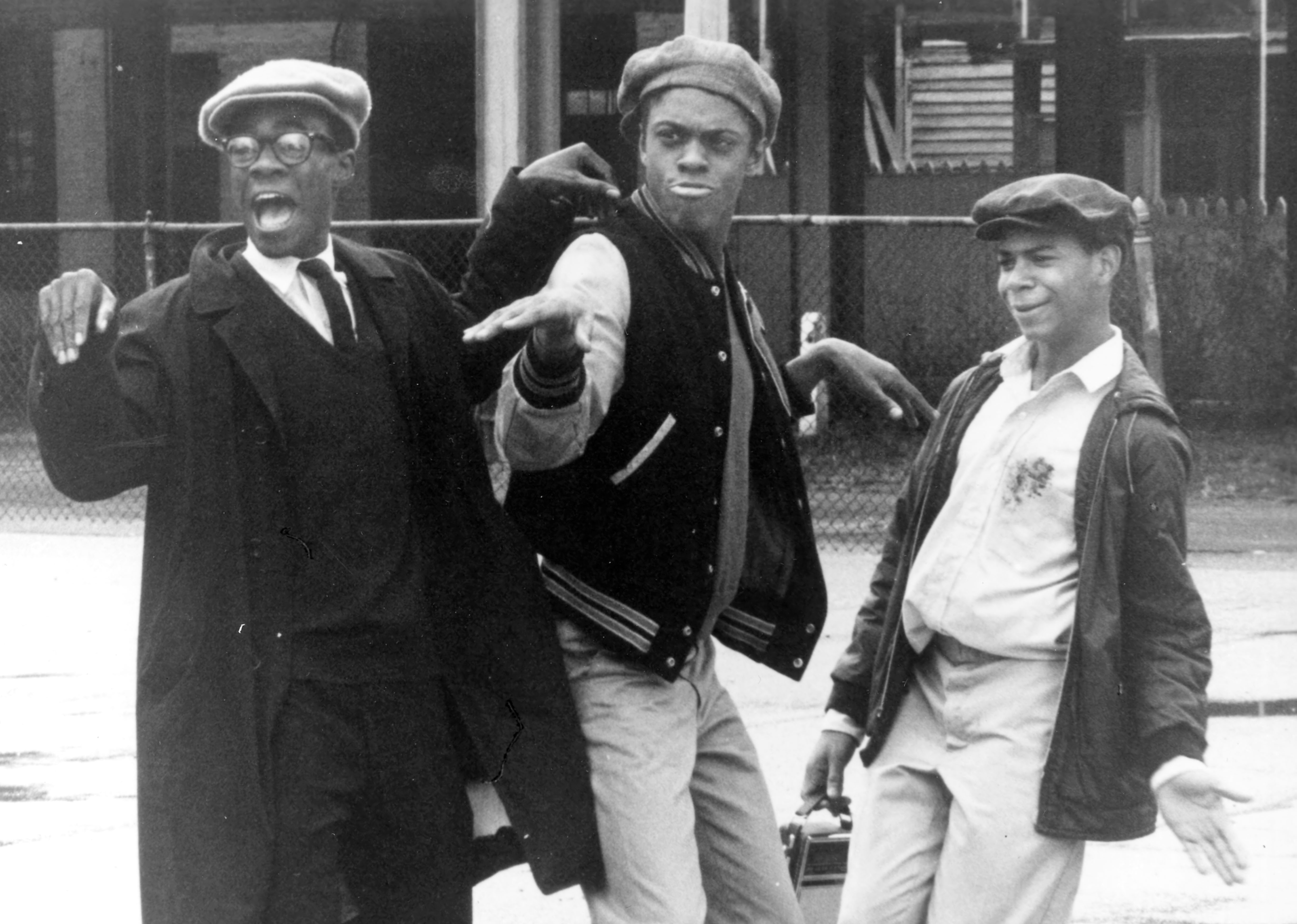
A still from “Cooley High,” a 1975 film that will be included in the UCLA Film and Television Archive series “Paint it Black: Revisiting Blaxploitation and African American Cinema of the 1970s.” The series begins tonight with a screening of “Super Fly.”
UCLA FILM AND TELEVISION ARCHIVE
"Super Fly,"
"Sweet Sweetback's Baadasssss Song"
Tonight, 7:30 p.m.
Billy Wilder Theater, $10

By Arit John
Oct. 1, 2010 1:51 a.m.
When a film made for around $50,000 about a male-prostitute-turned-political-radical earned almost $20 million dollars and became required viewing for the Black Panthers, Hollywood noticed.
In 1971, Melvin Van Peebles “Sweet Sweetback’s Baadasssss Song” did just that.
The UCLA Film and Television Archive will open its series, “Paint it Black: Revisiting Blaxploitation and African American Cinema of the 1970s,” today with a screening of the film at the Billy Wilder Theater. The series’ name addresses the debate among critics about whether or not the explosion of black urban dramas in the 1970s was a celebration of black culture or an exploitative trend dominated by a glorification of drug and prostitution culture.
“These films are not just what have been labeled blaxploitation, but also films that challenge the definition of blaxploitation and challenge the stereotypes that are prevalent in blaxploitation,” said Allyson Field, the series’ co-curator and an assistant professor in the UCLA School of Theater, Film and Television who focuses on issues relating to African Americans in film history.
The common trait amongst these films, regardless of whether or not they are truly blaxploitation, is that they fulfilled a need for black audiences to see black actors in films made by African American directors.
“Blaxploitation films were a new phenomenon in the sense that they took traditional genres of film and populated them with black characters, black themes and black day to day experiences,” said Dr. Darnell Hunt, director of the Ralph J. Bunche Center for African American Studies, one of the organizations working with the archive to host the series.
Throughout the month of October there will be screenings of everything from well-known (and parodied) films such as “Cleopatra Jones,” a film that will be shown on Oct. 17 about a kung-fu trained, female James Bond-character fighting against a major drug lord, to more serious films such as tonight’s “Sweet Sweetback’s Baadasssss Song.”
Directed, produced and starring Melvin Van Peebles, “Sweet Sweetback’s Baadasssss Song” follows the story of a black sex hustler who takes on the radical cause. Its amazing success is credited with introducing the idea of black-centric films to studios and launching the blaxploitation movement. Whether or not the film is actually a blaxploitation film is up to debate.
“(Sweet Sweetback’s Baadasssss Song) gets lumped into that category because of when it was produced,” Hunt said.
Once studios realized that the success of Peebles’ film and others like it could be translated into films specifically marketed toward African Americans, the demand for such films and people who could make them boomed.
“Never before or since have African American filmmakers had better work opportunities,” said Jan-Christopher Horak, co-curator of the series and director of the UCLA Film and Television Archive.
Between the 1920s and 1940s there was a small African American cinema made by black directors for black audiences, but until the late 1960s African American filmmakers in Hollywood were nonexistent, Horak said. Then came Peebles’ film, and soon after “Variety” coined the term blaxploitation.
“Most of the filmmakers I’ve talked to have sort of rejected that label,” Horak said, referring to directors whose films have been labeled blaxploitation. “(It’s controversial), just as hip-hop in the ’80s and ’90s was very controversial in terms of the African American middle class.”
Among critics, the controversy that divided “Ebony” and the Black Panthers still holds true.
“(The films) concentrated on drugs, pimps and hoes and not the reality of what African American life was really like,” Horak said.
At the same time, there are films about middle-class African Americans, like “Claudine,” Horak said, referring to the 1974 drama about a single mother of five and the man who loves her but won’t commit. Films such as “Claudine” defy the mold set by films more traditionally identified as blaxploitation because their approach to issues relevant to African Americans are deeper and more complex. In the historical western “Buck and the Preacher,” Sidney Poitier directs and stars in the film as Buck, a trail guide who leads emancipated slaves out west, while UCLA alumna Jamaa Fanaka’s “Emma Mae” portrays an average, not oversexed young woman from the country who learns how to handle life in the city.
“One of the things we wanted to do was proactively juxtapose these films, both so-called blaxploitation films and films that were part of the African-American film culture and put them in dialogue,” Field said.
And though these films are now being viewed in retrospect, their relevance to today is still evident.
“The myth is that blaxploitation ended in 1973-74,” Field said.
“But the truth is the tropes, the themes and the styles of these films have continued to the present day.”


