


UCLA sends cease and desist letter to ASUCLA over trademark licensing rights
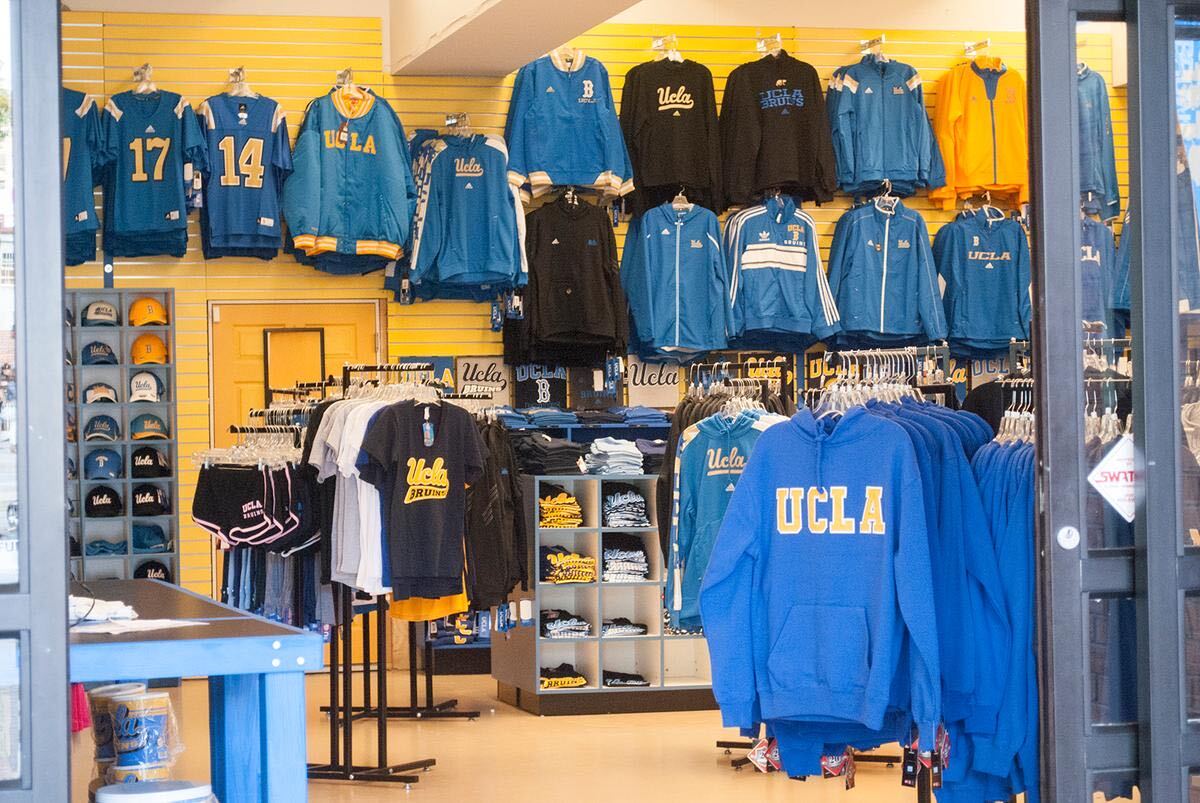
UCLA merchandise is on display in a store. UCLA sent a cease and desist letter to ASUCLA amid a monthslong battle over the trademark licensing rights of the university’s logo, a UCLA spokesperson confirmed Wednesday. (Daily Bruin file photo)

By Nicholas Mouchawar
Nov. 27, 2026 12:13 p.m.
UCLA sent a cease and desist letter to ASUCLA amid a monthslong battle over the trademark licensing rights of the university’s logo, a UCLA spokesperson confirmed Wednesday.
ASUCLA – a nonprofit organization independent from the university – has managed the licensing of UCLA trademarks to use on consumer products for over 50 years. However, UCLA transferred authority of ASUCLA’s trademarks on consumer products to the associate vice chancellor for business and finance solutions Aug. 6, said Monroe Gorden Jr., vice chancellor for student affairs, and Reem Hanna-Harwell, interim chief financial officer, in a Sept. 18 letter to the ASUCLA Board of Directors reviewed by the Daily Bruin.
The change aims to address ASUCLA’s accrued debt of $40 million to campus for payroll, unpaid bills and other expenses, Gorden and Hanna-Harwell said in an Aug. 6 letter to the board.
The UCLA spokesperson did not specify when it sent the cease and desist letter to ASUCLA. Chancellor Julio Frenk holds the authority to manage UCLA trademarks, according to university policy.
The board alleged in a Sept. 8 letter to Gorden and Hanna-Harwell that UCLA violated a 1974 Statement of Understanding between the university and ASUCLA, which requires prior discussion of policy changes that could adversely affect ASUCLA’s services and programs.
“It purports to fundamentally alter a business ASUCLA created, built, and has operated for more than fifty years and materially affects ASUCLA’s revenues, employees, contracts, operations, stakeholder relationships, and ability to support its student-serving mission and its four distinct entities,” the board wrote in the Sept. 8 letter.
However, Gorden and Hanna-Harwell disputed the board’s interpretation of the agreement, alleging that it does not pertain to delegating trademark authority. They alleged in a Sept. 18 letter that ASUCLA withheld contracts and other records needed to manage the trademarks and licensing program.
“ASUCLA’s refusal to provide this information has no legal, policy, or contractual basis, and your continued refusal is already materially harming UCLA’s ability to monetize its trademarks for the benefit of the UCLA community,” Gorden and Hanna-Harwell said in the Sept. 18 letter.
The change will not impact the operations of other ASUCLA entities, including the Daily Bruin, the Undergraduate Students Association Council and the Graduate Students Association, Gorden and Hanna-Harrell said in the Aug. 6 letter. However, they then added that if the new policy were to impact ASUCLA’s programs, the university would provide the entities with enough funding to sustain their core functions for “the next several years.”
An ASUCLA spokesperson said in an emailed statement that ASUCLA would need to make up the lost licensing revenue to continue providing jobs, programs and spaces for students. The revenue also helps support undergraduate and graduate student government, they added.
ASUCLA has not proposed a viable plan to repay its accrued debt, necessitating the decision, Gorden and Hanna-Harwell said in their August letter to the board.
“We recognize that this is a significant change to a longstanding practice here at UCLA, one that will require ASUCLA to revisit some of its established practices,” Gorden and Hanna-Harwell said. “It is part of a larger effort already underway across the campus to reevaluate and modernize our operations to best serve our community.”