Fixing e-scooter problems, creating accessibility need student and staff support
(Haley Park/Illustrations and Cartoons director)

By Calvin Ansley
Nov. 17, 2026 1:54 p.m.
In a 15-minute walk across campus, I found 15 e-scooters haphazardly scattered. Though I was able to avoid them all and make it to my destination without issue, that isn’t a privilege all students on campus have.
UCLA is crowded. The university’s population increased by 13.35% between the 2015-2016 and 2025-2026 school years, reaching 33,535 undergraduate students. Our crowded campus is also hilly, so it’s understandable that students use e-scooters to get around.
But students should consider the different needs of such a large and diverse campus. Some students require clear, unblocked walkways to navigate campus – walkways that are often blocked by discarded e-scooters.
The university’s e-scooter problem isn’t going to be a quick fix. But a little consideration from students can go a long way to create a more accessible campus.
There were 321,592 trips recorded on Bird scooters at UCLA in 2025. That’s an average of 881 trips per day.
The university is slowly but surely working toward more concrete solutions to increasing campus accessibility, said Raymond Knapp, the disabilities studies interim department chair.
For instance, the university has measures in place to report and collect improperly placed e-scooters. Despite this improvement, scooter collections are still few and far between, leaving many walkways and ramps dangerous and sometimes unusable. This makes students’ individual choices even more important.
“It makes it a lot harder to navigate, and it’s frustrating because it’s a hazard,” said Olivia Castillo, a fourth-year applied linguistics student who has vision loss.
The responsibility to fix this issue shouldn’t solely lie on students.
Jenny Lu, an assistant professor of disability studies, said UCLA should consider painting more scooter or bike lanes to create a buffer between people and scooters. This separation could create designated scooter drop-off locations.
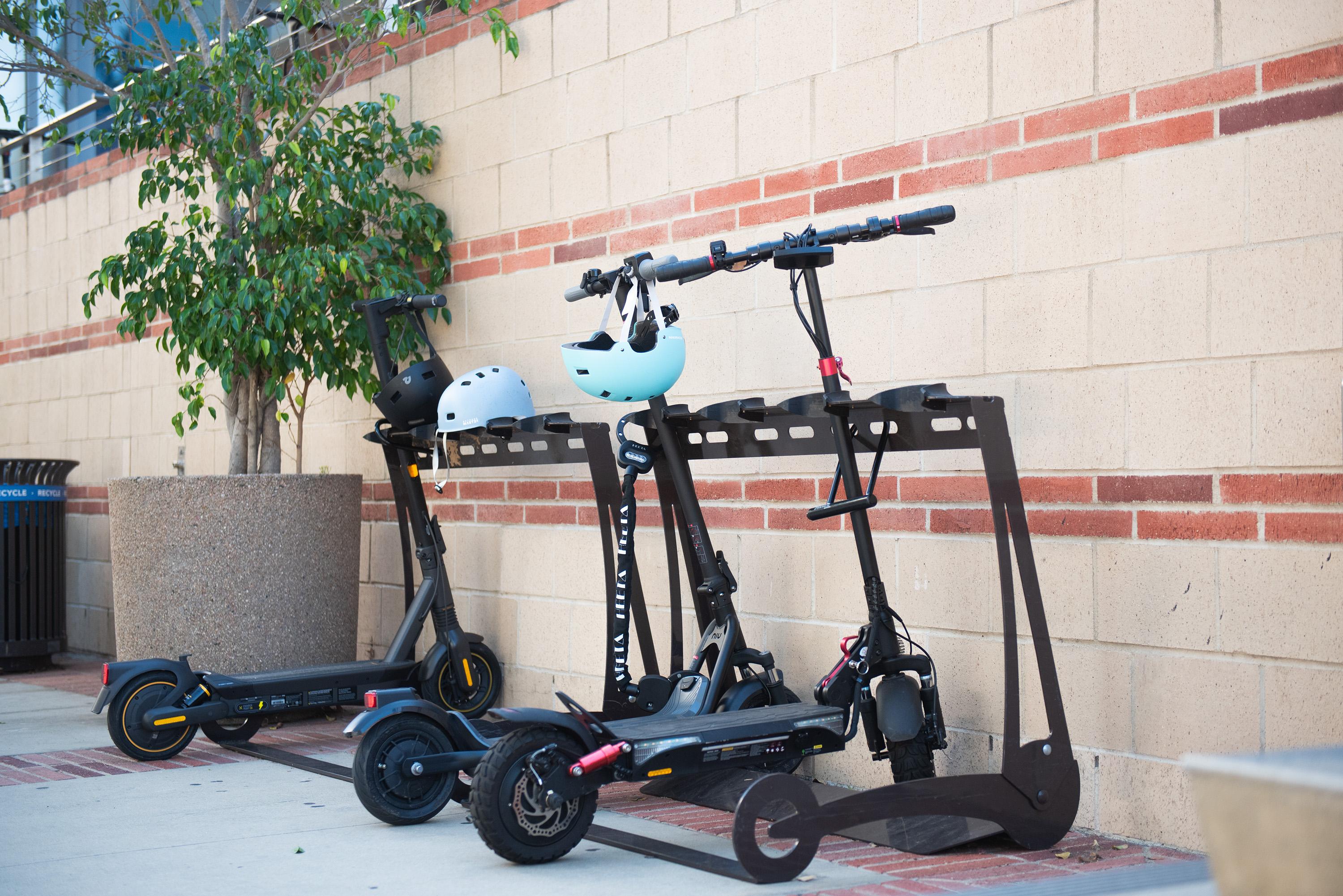
There could also be more assigned parking spots for scooters, similar to the ones in front of Ackerman Union, said Candy Arnold, a third-year biology student.
While Lu and Arnold are right that the university could do more, students should still remember the fight for accessibility isn’t out of their control. Something as simple as walking an e-scooter to a designated drop off area benefits everyone and is hardly an inconvenience.
“It’s a thing that takes two seconds,” Arnold said.
Admittedly, UCLA doesn’t make it easy for students to think about where they leave their e-scooters. When students are rushing to make classes across campus, it makes sense to drop their e-scooters where they are and run to class.
But it’s important to consider the needs of others. By not serving the needs of students with disabilities, students run the risk of doing a disservice to themselves – disabilities can happen to anybody, Knapp said.
What is minorly inconvenient for one student could ruin another’s day. Help your fellow Bruin by making the effort to place your e-scooter out of the way.