


‘At Eye Level’ exhibit reframes disability representation through self-expression
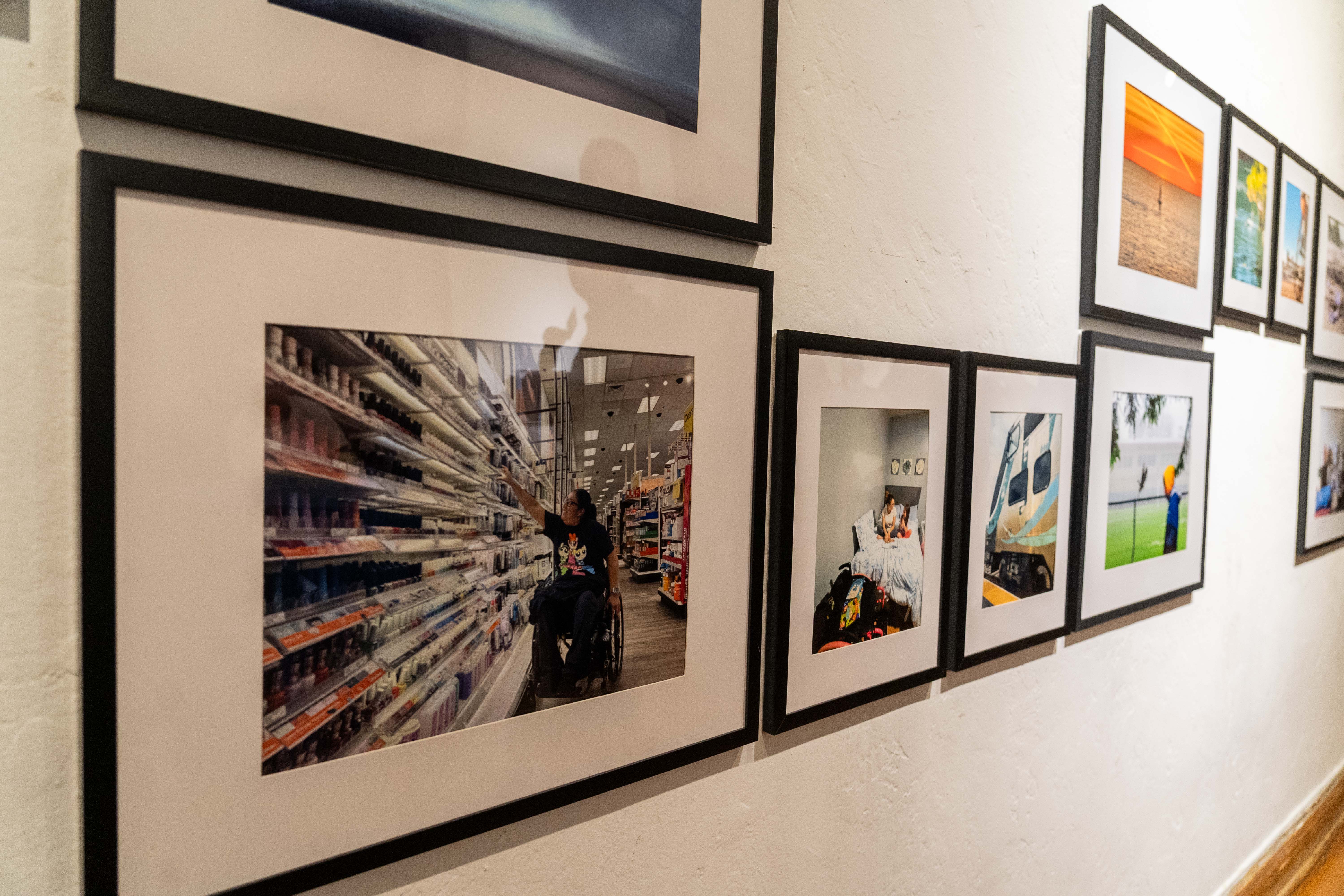
Photographs from the “At Eye Level” gallery are pictured. The photographs were hung in the gallery at eye level rather than at traditional gallery height to reflect a wheelchair user’s experience. (Sarah Lappalainen-Zhao/Daily Bruin)


Photographs showcasing the experiences of people with spinal cord injuries lined the walls of the Kerckhoff Art Gallery on Monday.
Six artists who use wheelchairs because of spinal cord injuries took the photos for the exhibit, titled “At Eye Level.” The photographs were hung in the gallery at the eye level of a wheelchair user rather than at traditional gallery height, said Can Açıksöz, a co-organizer of the gallery and an anthropology professor.
“We use photography in this project, but really it’s also a way to connect with self-expression,” said Walter Afable, the program director for the Rancho Los Amigos National Rehabilitation Center, a recovery and prevention program.
The exhibit was a collaboration between UCLA’s Disability Studies Inclusion Labs and the Rancho Los Amigos’ Violence Recovery and Prevention Program. The Heumann Community Partnerships Lab, an initiative that funds collaborative projects between UCLA professors and local activists, funded the event.
The gallery sought to provide a space for people with disabilities who may feel excluded from other places on campus, Açıksöz said.
“It’s a highly inaccessible campus,” he said. “It’s good to have these kinds of spaces available in campus for our students with disabilities, and vice versa for the community to have that kind of space in the university itself.”
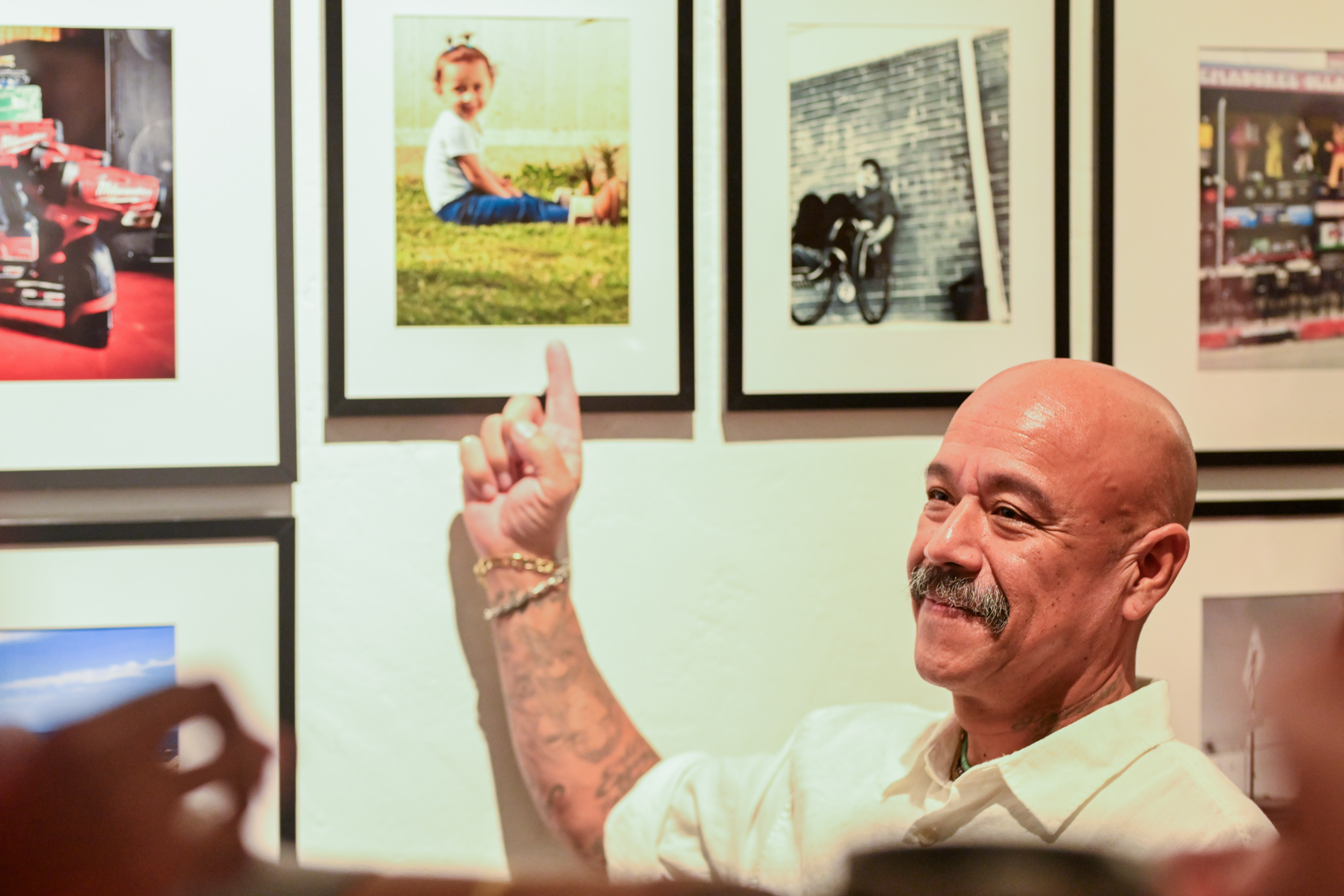
The exhibit showed photos that highlighted the artists’ personal interests rather than their disabilities, said Gladys Kwong, a fourth-year Southeast Asian studies student who visited the exhibit.
Charlie Uribe, one of the artists featured in the exhibition, highlighted his connection with his father by displaying a photograph of his construction tools, which Uribe said reminded him of the work his father would do around his home growing up.
Julia Medina, a fourth-year English student who visited the exhibit, said she often forgets how inaccessible everyday spaces, such as supermarkets, are to people with disabilities.
“It’s great to look at the different perspectives of it,” Medina said. “A lot of the time we forget about how disability comes in different forms.”


