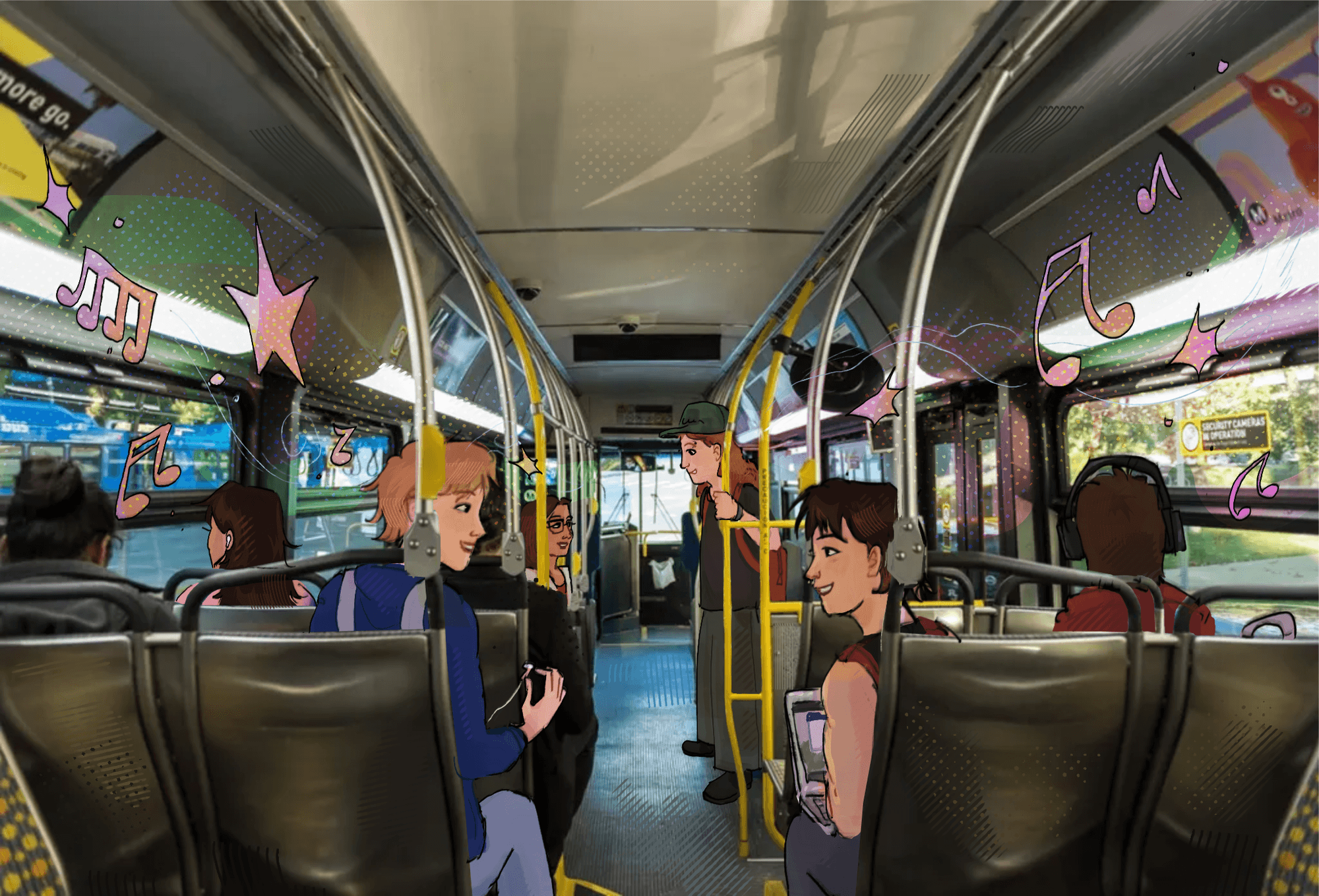
Highway to the Hill: The D Line makes LA feel like a metropolitan city. Bruins should take advantage
(By Cullan Bruce/Daily Bruin)

By Clarke Velasquez
Nov. 8, 2026 12:51 p.m.
“Highway to the Hill” is a column on public transportation created by Clarke Velasquez, an Opinion columnist and fourth-year English student. In it, he writes about the state of car-free transportation in Westwood and around Los Angeles. Bruins who take public transportation or have an opinion on LA transit are welcome to submit op-eds or letters to the editor to be published as part of this series.
Angelenos are more used to atmospheric rivers than to new Metro projects.
Whenever either occurs, there’s a feeling of disbelief and uncertainty. “We don’t get things like this,” we seem to say. We post about them online. We worry about what this means for us.
Then, once the clouds clear, we see our city with fresh eyes. The world has never seemed brighter than after the first extension of the D Line opened.
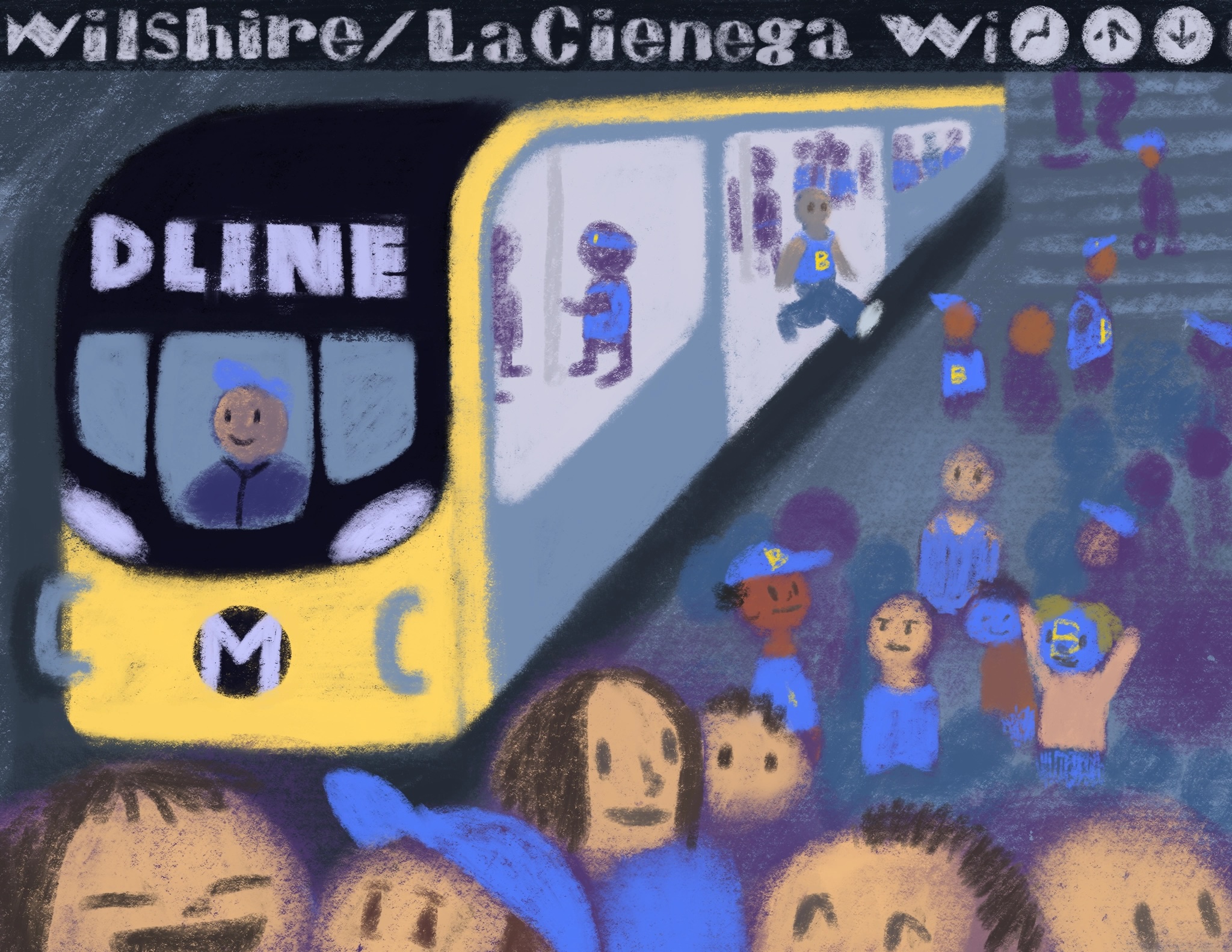
The three newest stations on the D Line – Wilshire/La Brea, Wilshire/Fairfax and Wilshire/La Cienega – are public transportation at their best. They show us that even LA can have fast trains and a true metropolitan life – but only if students keep riding the D.
Bruins should make an effort to explore the new line and the places it takes us. By doing so, we can create a true community in our city.
The D Line runs underneath Wilshire Boulevard, one of our city’s most traversed streets.
“The Wilshire Corridor is pretty ideally designed for heavy rail,” said Jacob Wasserman, the research program manager for UCLA’s Institute of Transportation Studies. “Just incredible density of both housing and jobs and other destinations, all in a pretty straight line.”
After decades of political games and delays, thousands living on the Westside can now enjoy connections to Downtown LA, the museums along Miracle Mile and the rest of the city through the D Line.
The magic of public transportation is that Angelenos from all walks of life can use it to go to the same places. The D Line can make a city as big as ours feel close-knit and community-driven.
“I do run into neighbors,” said Lilith Winkler-Schor, an urban planning doctoral student at the Luskin School of Public Affairs. “Those sorts of things really build a social infrastructure that you don’t have if it’s private house to private car to private event.”
Over the past few years, Metro has tried to make the system a part of our cultural fabric and give Angelenos a sense of belonging in new stations. The Station Activations Program uses spaces in and around stations to host farmers markets, cultural events and unique neighborhood amenities. Metro Art uses things like station-wide installations, docent tours and onboard posters to connect people, places and community.
Even though us Angelenos love our cars, we have to admit they aren’t always the best way of getting around a city of almost 4 million people.
“It was really exciting to go to Los Feliz on a weeknight and not have to worry about traffic or parking,” Winkler-Schor said, speaking about her experience taking the D Line.
Angelenos have spent so long living and dying by the car that we forget about the miles of railway snaking their way through LA. These new D Line stations are reminding us of that.
“I’m hopeful that this D Line Extension can cause a bit of a shift in the culture of LA in terms of how we get around and make the Metro system more visible,” said Riley Harrison, co-director of Bruins for Better Transit.
By riding the D Line, students can help create that shift.
Angelenos have voted time and time again to increase funding for public transportation. Transit advocates have spent years fighting for transit that slowly stitches together a city cut into pieces by highways. We’re finally seeing the results.
“We just feel like we’re in a real city now,” Winkler-Schor said.
There may be some storm clouds or project delays that roll in. But if students keep using new public transit projects like the D Line, our lives will be that much greener.