Dr. Nima Nassiri reflects on undertaking world’s first bladder transplant
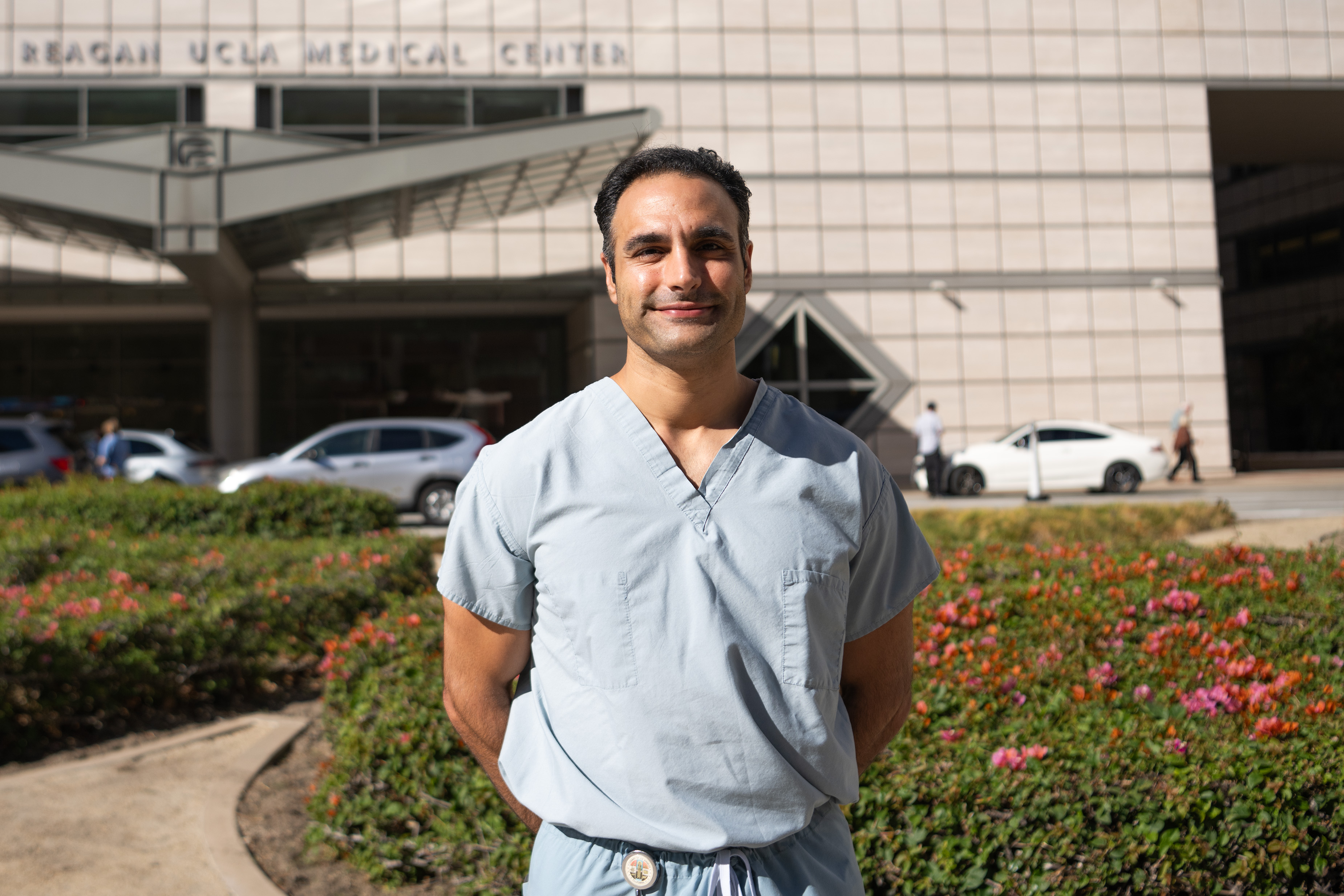
Dr. Nima Nassiri, a urologist and transplant surgeon, stands in front of Ronald Reagan UCLA Medical Center. Nassiri performed the first-ever bladder transplant in May 2025 at UCLA and said the patient recovered successfully. (Ruby Galbraith/Daily Bruin staff)

By Zoe Wolfers
Nov. 8, 2026 8:52 p.m.
This post was updated Nov. 8 at 10:14 p.m.
Dr. Nima Nassiri, a urologist and transplant surgeon, co-led the team that performed the world’s first human bladder transplant at UCLA in May 2025.
Nassiri, an assistant clinical professor of urology at the UCLA David Geffen School of Medicine and the director of the UCLA Vascularized Composite Bladder Allograft Transplant Program, sat down with Daily Bruin contributor Zoe Wolfers to discuss his role in the procedure and its continuing importance.
Nassiri graduated from the David Geffen School of Medicine, completed his urology residency at the University of Southern California Keck School of Medicine and returned to UCLA to complete a renal transplant surgery fellowship in 2023.
This interview has been edited for length and clarity.
Daily Bruin: It’s been over a year since you performed the world’s first bladder transplant. Looking back, what stands out to you most about the experience?
Nima Nassiri: A sense of gratitude that we had the support that we did here at UCLA and that, especially for the first one, everything went relatively smoothly. The patient had such a fantastic outcome. It really was a springboard for future cases, and it took a lot of hard work but a little bit of luck as well.
DB: Could you tell us about the first patient, what his recovery was like and how he is doing today? How has his quality of life changed since the procedure?
NN: I had actually known him for quite a while. His name is Oscar. He was initially a patient that I saw when I was a resident at LA County. At that point, he was on dialysis, so his kidneys had failed, and I was actually scrubbed in on the cases as a resident to take out both of his kidneys that had cancer. Then he developed a form of bladder cancer that required resection, and he was left with essentially nothing in terms of a bladder that would store urine.
So, he just happened to pop into my clinic when I became an attending at UCLA, and I recognized him immediately and thought that he might be a great candidate for this.
His surgery took about eight to nine hours. He had an infection that we had to take him back for, but beyond that, he did fantastic.
This was a guy who had no kidneys and no functional bladder and was failing dialysis. If you are unable to tolerate dialysis, then that’s kind of a death sentence. Now, he has a kidney that functions, is off dialysis and, most importantly, he is able to urinate fully.
His life has changed tremendously. Personally, he has a better relationship with his wife and kids now. He’s regained his health, and he’s kind of become a champion for bladder transplant as well. He’s a bit of a local celebrity in our field.
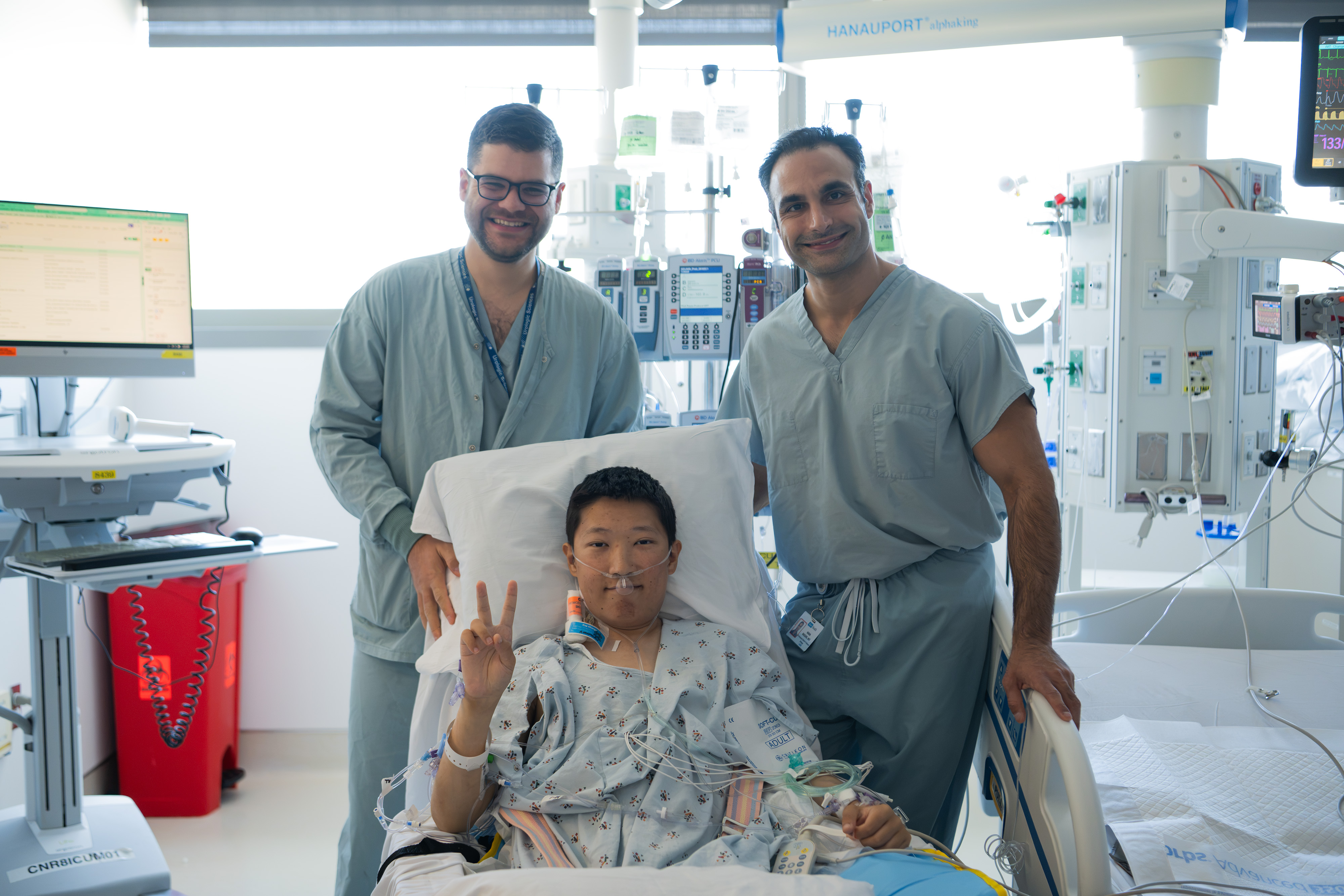
DB: Could you tell us about the clinical trial this procedure is part of, what it has been like to repeat the procedure and what you’ve learned so far over the course of the trial?
NN: This was done under a clinical trial for either bladder-only transplantation or combined kidney and bladder transplantation. We’ve learned a lot from the trial.
Every case, you glean further information that you didn’t know you needed to know. You have to be quite flexible and willing to change your approach.
DB: Could you discuss the risks associated with the procedure and how you would respond to critics who urge caution in interpreting its outcomes?
NN: We are our own biggest critics, and so at no point are we saying that this is a cure for bladder failure. We are highly, highly selective in terms of who would qualify for this trial, and we caution patients that everyone’s anatomy is different.
We welcome any kind of critique as well. If anyone has a valid claim as to why we should be more cautious, we are more than happy to hear them out.
Nevertheless, the results are undeniable. These are often patients who are not candidates for a kidney transplant because they have nowhere to put the urine. They are end of the road. We’re not offering this broadly to everybody, but for select patients, it’s a life-changing experience.
DB: What are your goals for this work moving forward, and what do you hope to achieve next?
NN: There’s a lot of pathways to go down, and we’re going down all of them in parallel.
The goal is that we don’t want to forever be the only center that does this – we want this to be broadly disseminated. How do you train people to do it, and how do you allow this to expand beyond UCLA to other transplant centers?
In the short term, we’re hoping to finish the clinical trial by the end of the year, ideally. Then, hopefully, the floodgates open a little bit more, and we’ll be able to ramp up once the clinical trial is done.
DB: Is there anything else you’d like to add to this interview?
NN: I’m very grateful for UCLA. I am a relatively early-career attending, and for them to entrust me with such a large endeavor and to have my back speaks volumes to the training and institutional support that I received.
And the donor. Talk about a gift that that donor gave: If I’m not mistaken, a heart, lungs, both kidneys, pancreas, liver and bladder. Imagine the number of lives that this one donor saved. It’s a really devastating process for the family, but what a silver lining in terms of the impact that they could have on other people.