‘November is what matters’: UCLA football prepares to face Minnesota
Defensive linemen junior Sahir West (right) and Aiden Gobaira (left) stand next to each other as West holds out the ball. Both transferred to UCLA from James Madison. (Chenrui Zhang/Daily Bruin staff)
Football

By Zach King
Nov. 6, 2026 6:21 p.m.
This post was updated Nov. 6 at 6:58 p.m.
While The Great Minnesota Get-Together is long gone, No. 8 UCLA football (8-0, 5-0 Big Ten) will have the opportunity to play whack-a-gopher at Stadium Village when they face Minnesota (5-3, 3-2 Big Ten) on Saturday morning at Huntington Bank Stadium in Minneapolis. The conference-leading Bruins are in the driver’s seat of their own Big Ten championship destiny as they charge into the hole of a nearly ranked Gopher team – currently ahead of Oregon, Michigan, Wisconsin and Penn State in the conference standings.
Charging has been a hallmark of first-year coach Bob Chesney’s football program on both ends of the field.
Offensive line coach and run game coordinator Chris Smith’s unit has a 13.7% stuff rate and gains 5.4 yards per carry – both top-15 in the nation. With one of college football’s most varied uses of personnel, highlighted by James Madison offensive lineman transfers senior Riley Robell and fifth-year Carter Sweazie, UCLA is first in the Big Ten in rushing yards per game and third in total yards per game – 219.5 and 427.6 yards, respectively.
Even with some recent injury struggles, a similarly varied running back room will look to continue its ground game dominance against a Minnesota defense that has allowed just 126.1 rushing yards per game this season.
Fifth-year running back Wayne Knight hasn’t just found himself in the end zone every single game so far, but his 680 yards and 12 rushing touchdowns on 110 carries have put him in First Team All-American conversations. He’s outpaced, however, by fellow fifth-year running back Anthony Woods, whose 6.6 yards per carry is tied for second in the Big Ten alongside his 495 rushing yards and six rushing touchdowns on the year.
Senior Jaivian Thomas rounds out the running backs room with 270 rushing yards and four rushing touchdowns, and has been a consistent recipient of Wildcat touches that could be seen against a stout Gopher defensive line starring defensive end Anthony Smith and linebacker Maverick Baranowski.
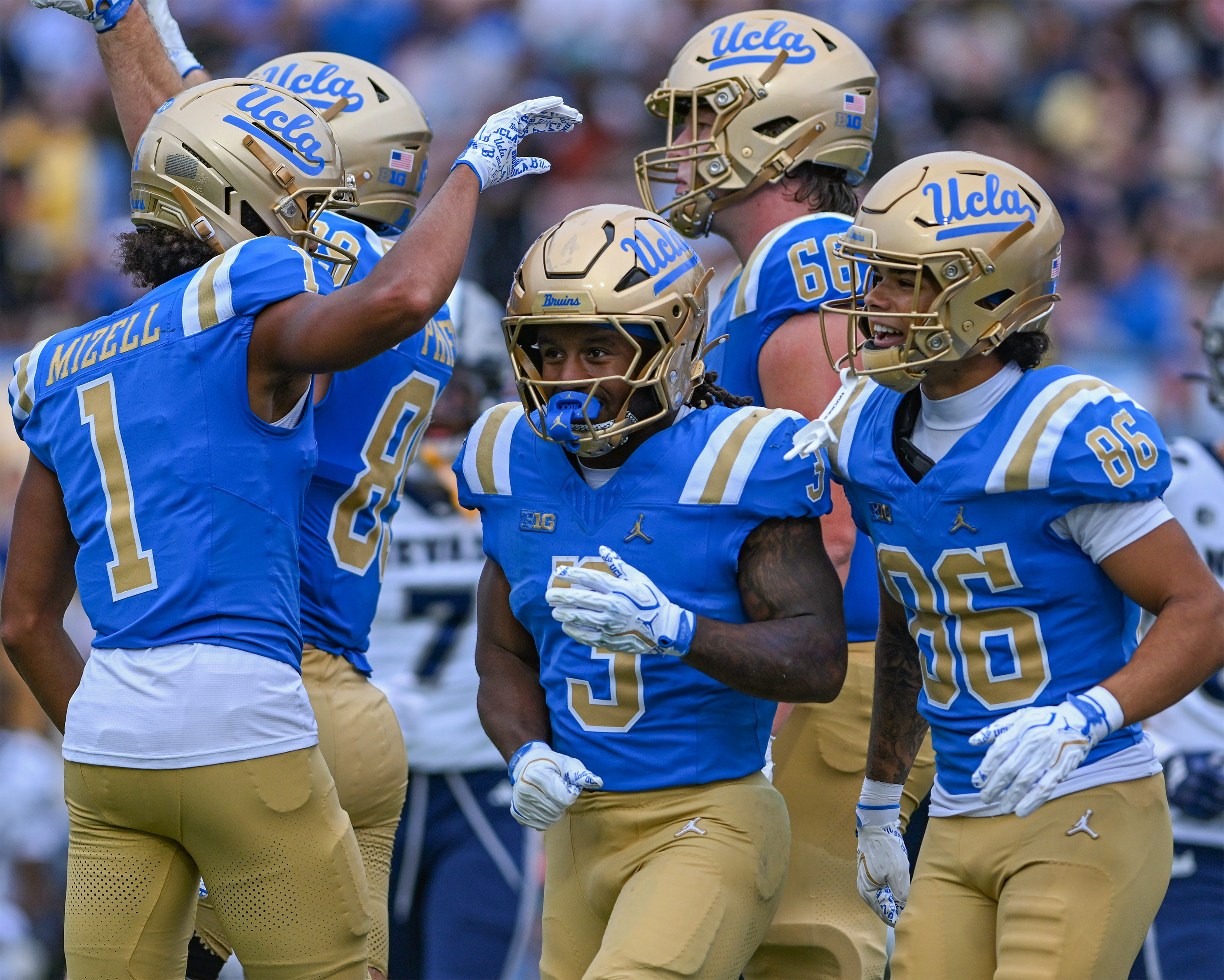
“He is as physical as can be,” Chesney said. “He’ll tackle everybody he sees. He can cover. “He’s just a warrior. You watch him out there – he’s what you want on your football team.”
UCLA’s own defense is tied for fifth with 13.4 points allowed per game, seventh with 260.8 yards allowed per game and first with both 48.9% opponent completion and 26 takeaways. Individually, senior linebacker Sammy Omosigho’s 56 total tackles, 5 sacks and 9 tackles for loss and senior defensive back Ta’Shawn James’ 41 tackles and four interceptions both got them mentions in midseason All-American discussions.
“Obviously, it always starts up front,” said defensive coordinator Colin Hitschler. “And if you’re playing a team that’s trying to move the ball down the field in a run game and an approach that’s extremely physical – whether it’s run, pass, screen – they’re tough and nasty, right? And we have to match that intensity.”
That front contains former 2025 Sun Belt Freshman of the Year junior defensive lineman Sahir West, fifth-year defensive lineman Aiden Gobaira and sophomore outside linebacker Scott Taylor, who have all combined for 16 tackles for loss and 8.5 sacks on the year.
In the secondary, senior defensive backs Scooter Jackson and Malik Hartford – who ranks fifth on the team with 30 tackles – have helped opposing quarterbacks throw for just 173.5 per game and contributed to 16 total team interceptions, good for second in the country.
And last, but certainly not least, has been the complementary play of fifth-year linebacker Jalen Woods, who has made an impact as a linebacker, defensive end and cornerback. His 2.5 sacks, six tackles for loss and two interceptions have reflectioned how versatile this Bruin defense is.
This year, Minnesota coach P.J. Fleck’s squad has seen a rollercoaster of a season. Minnesota defeated No. 19 Iowa on a walk-off field goal and beat Michigan to win the Little Brown Jug back for the first time since 2014, but also lost 38-13 to Mississippi State at home. The Golden Gophers snuck past the Washington Huskies in Seattle and nearly upset Indiana in overtime.
Minnesota ranks in the bottom 10 in the FBS in total yards per game and rushing yards per game. Although the Golden Gophers do have a silver lining in their passing game – averaging about a national average 209.5 passing yards per game on a 62.5% completion rate – quarterback Drake Lindsey has thrown for over 140 yards just once in his last four games and sports an average QBR of 23.1 in his last two matchups against Iowa and Indiana.
A Saturday morning shootout is statistically going to be difficult for both Lindsey and senior quarterback Ty Dieffenbach. However, while the Calabasas local has not had to fill up the stat sheet for the Bruins to win, offensive coordinator Dean Kennedy’s game plan has showcased flashes of touch and accuracy in Dieffenbach’s play-action passing abilities.
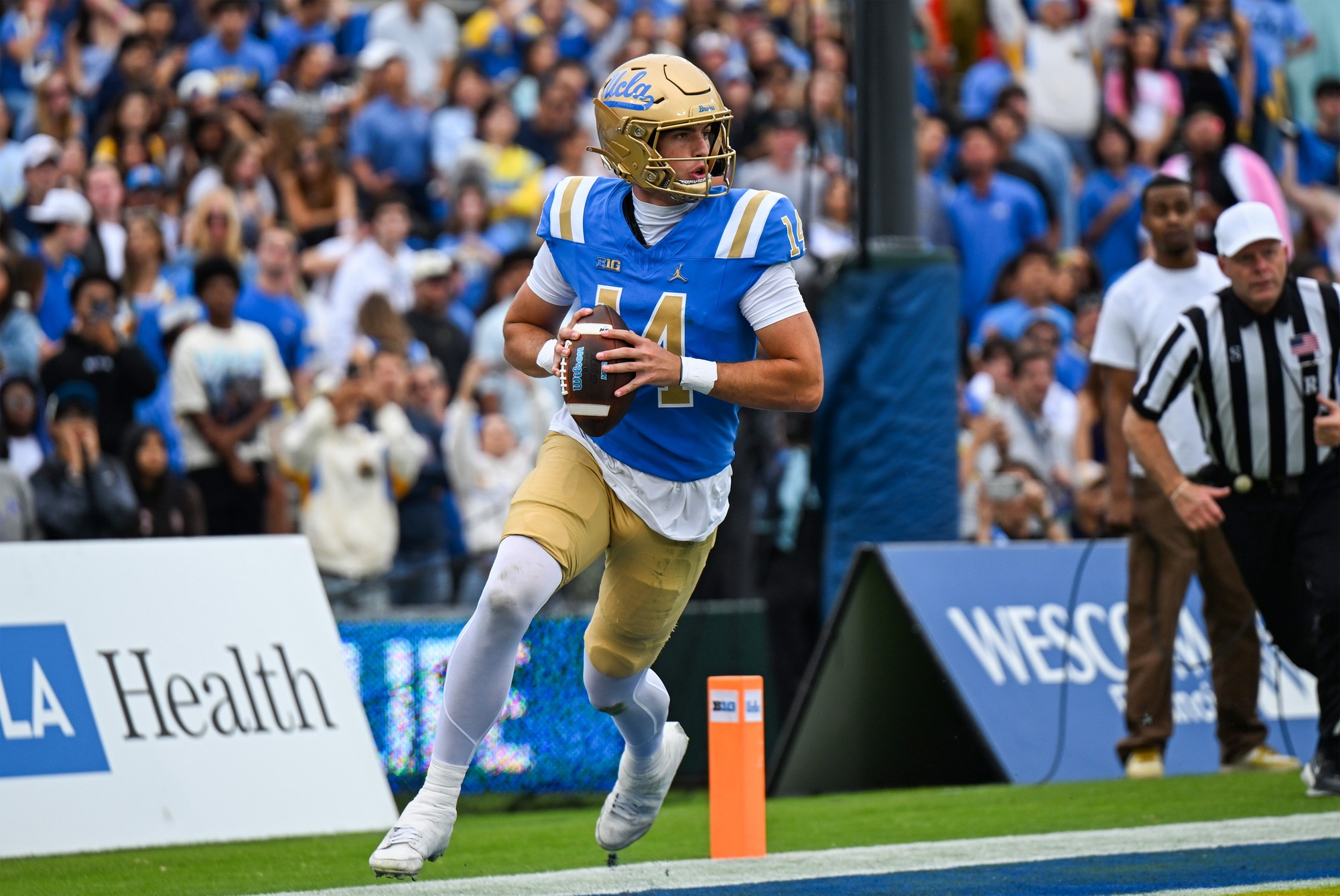
Whether it be senior wide receiver Landon Ellis in a flat or senior wide receiver Semaj Morgan on a wheel or deep crosser, Dieffenbach has found paydirt in the air three times and logged 683 yards on 59% completion with an ability to connect on explosive plays, even in tight spaces. Dieffenbach could once again be given the green light, facing a Minnesota defense trapped between stacking the box and hanging back in deeper coverage.
“You talk about his accuracy, and the ball placement has been really good,” Kennedy said. “That’s been the biggest thing: just his accuracy of understanding the coverages, where the ball should be.”
The Bruins’ second cross-time zone trip of the season comes at a unique moment, especially with every opponent left having won five-plus games so far.
However, if UCLA can remain confident, composed and continue to use its winning formula, the team is poised to cash out its tickets for some postseason prizes come December.
“I told them the two most meaningless statistics in all of college sports are the score at halftime – that’s 1A – and 1B is your record going into November,” Chesney said. “November is what matters.”