Behind the science are stories. UCLA students launch LENS journal to tell them
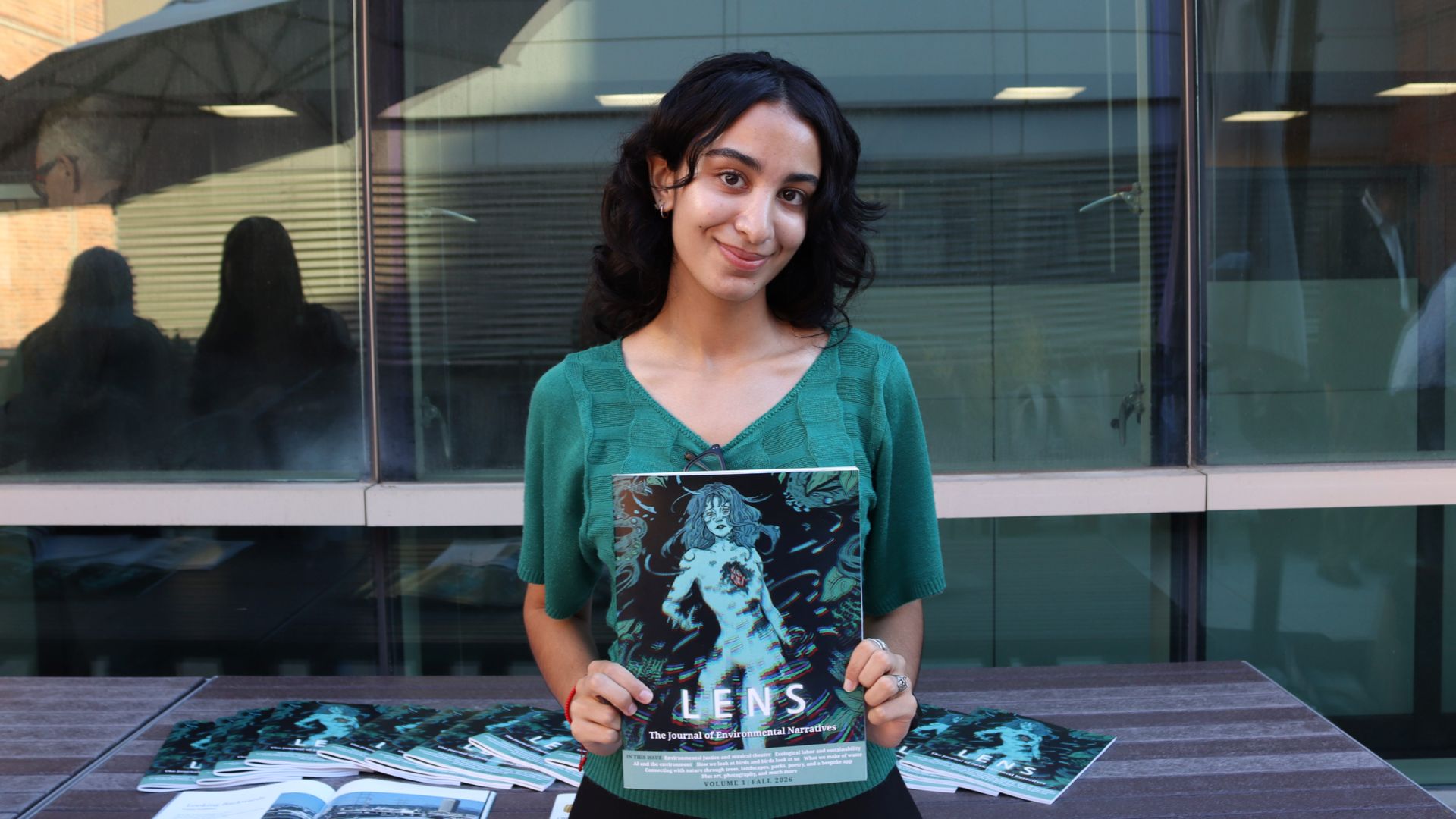
Julia Awad, the LENS journal’s editor-in-chief and a fourth-year English student, holds a copy of LENS. She said the journal’s mission is to advocate for storytelling as a way to understand the present, past and future of the environment. (Charlie Hamilton/Daily Bruin senior staff)

By Darren Tran
Oct. 27, 2026 10:30 p.m.
UCLA students launched a new publication Monday that aims to raise awareness about environmental issues through storytelling.
Written, edited and peer-reviewed entirely by undergraduate students, LENS: The Journal of Environmental Narratives allows students to display their creative and scholarly environmental work at the Institute of the Environment and Sustainability. Students held a launch event for the first issue at La Kretz Hall on Monday at 5 p.m.
The first issue includes 15 pieces, including short stories, critical essays, poetry, artwork and photography.
“We realized that there was not yet an official forum at UCLA through which undergraduates, in particular, could display their eco-creative work,” said Julia Awad, the journal’s editor in chief and a fourth-year English student.
The journal’s mission is to advocate for storytelling as a way to understand the present, past and future of the environment, Awad said.
“It’s not just a passive reflection of environmental knowledge,” she said. “Storytelling actively generates knowledge of the many environments that we inhabit.”
The Laboratory for Environmental Narrative Strategies – a group in the institute that publishes the journal – marked its 10-year anniversary this year, said Jon Christensen, director of the laboratory.
An endowment from a donor helped fund the journal, which is available in both print and online formats, Christensen said. The journal, which plans to publish issues annually, draws from scientific research and humanizes narratives, he added.
“Numbers numb, and stories stick,” he said.
Story topics range from artificial intelligence to the relationships between humans and animals to science fiction, Awad said. Qualitative social sciences analyze how people and cultures interact with the environment, she added.
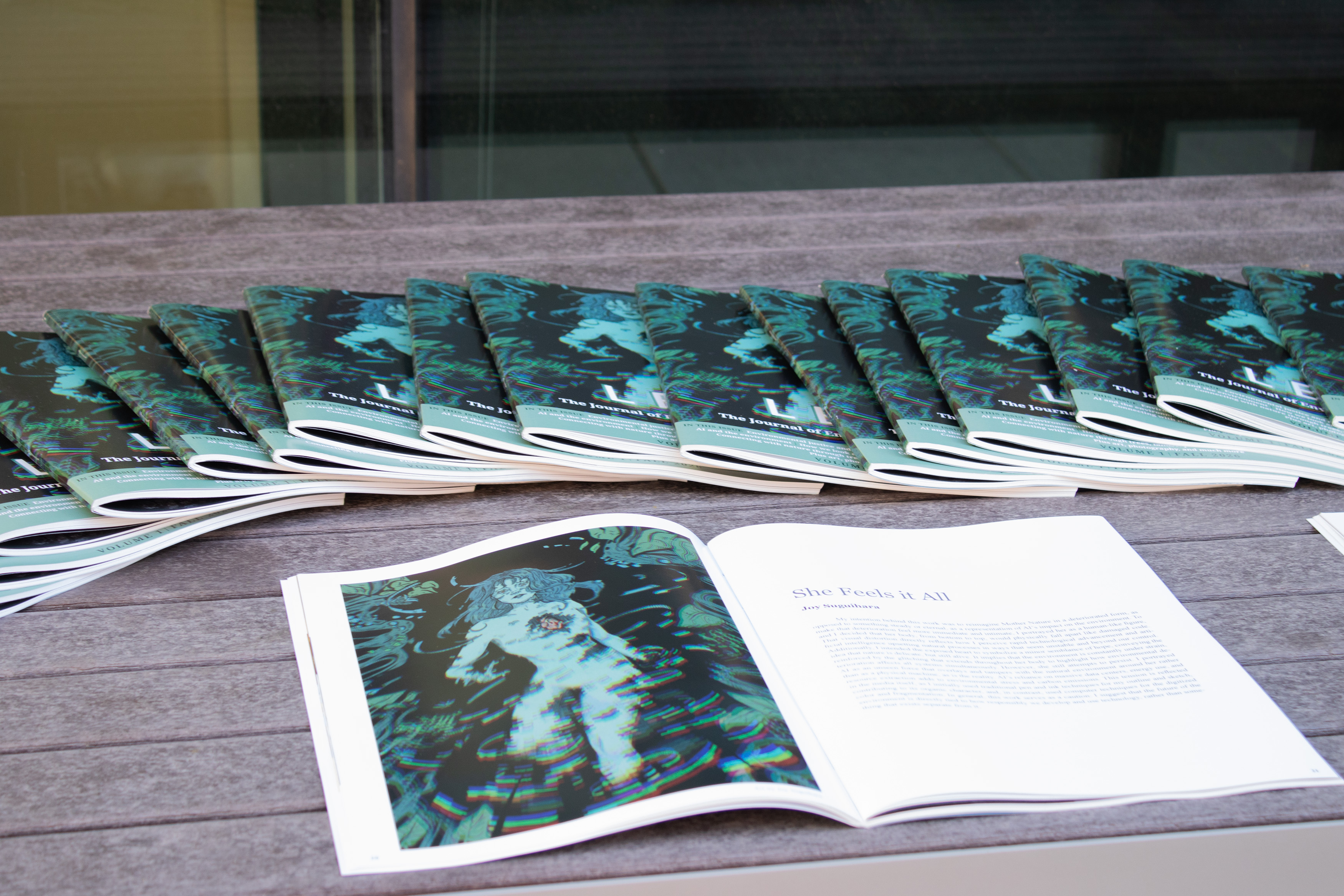
Abigail Hsu, a third-year cognitive science and economics student, wrote a story entitled “Rooted,” an excerpt from a longer story she is writing. It is told from a tree’s perspective. In the full story, she said, the tree starts out optimistic about humanity and slowly loses faith after witnessing war, death and humans’ harsh treatment of the environment.
The laboratory gave her a way to complete the story amid schoolwork and exams, Hsu said.
“I wanted to bring awareness to that because I think humans – for us, it’s so easy to be caught up with what we are doing, and we forget about the nature around us,” she said.
Kiara Velez, a third-year English student, wrote “My Creature,” a story about a dark-eyed junco that was raised in a lab and released into the environment. She added that her coursework is mostly literary analysis, so creative writing was an enjoyable change.
For Hsu, seeing her story in print was surreal. She added that seeing the other contributors’ photography, poetry and nonfiction works has inspired her to continue being creative.
Awad said she learned how students across humanities and STEM majors tackle different environmental issues through the journal. The team is planning the next issue and is looking for more student contributors, she added.
Velez encouraged students who are unsure about whether their writing belongs to the journal to submit an entry.
“It absolutely counts, and it absolutely belongs in a journal,” Velez said. “If you have a piece that you think needs to be out in the world, you should submit it.”