

UCLA Health addresses healthcare accessibility issues for Spanish speakers
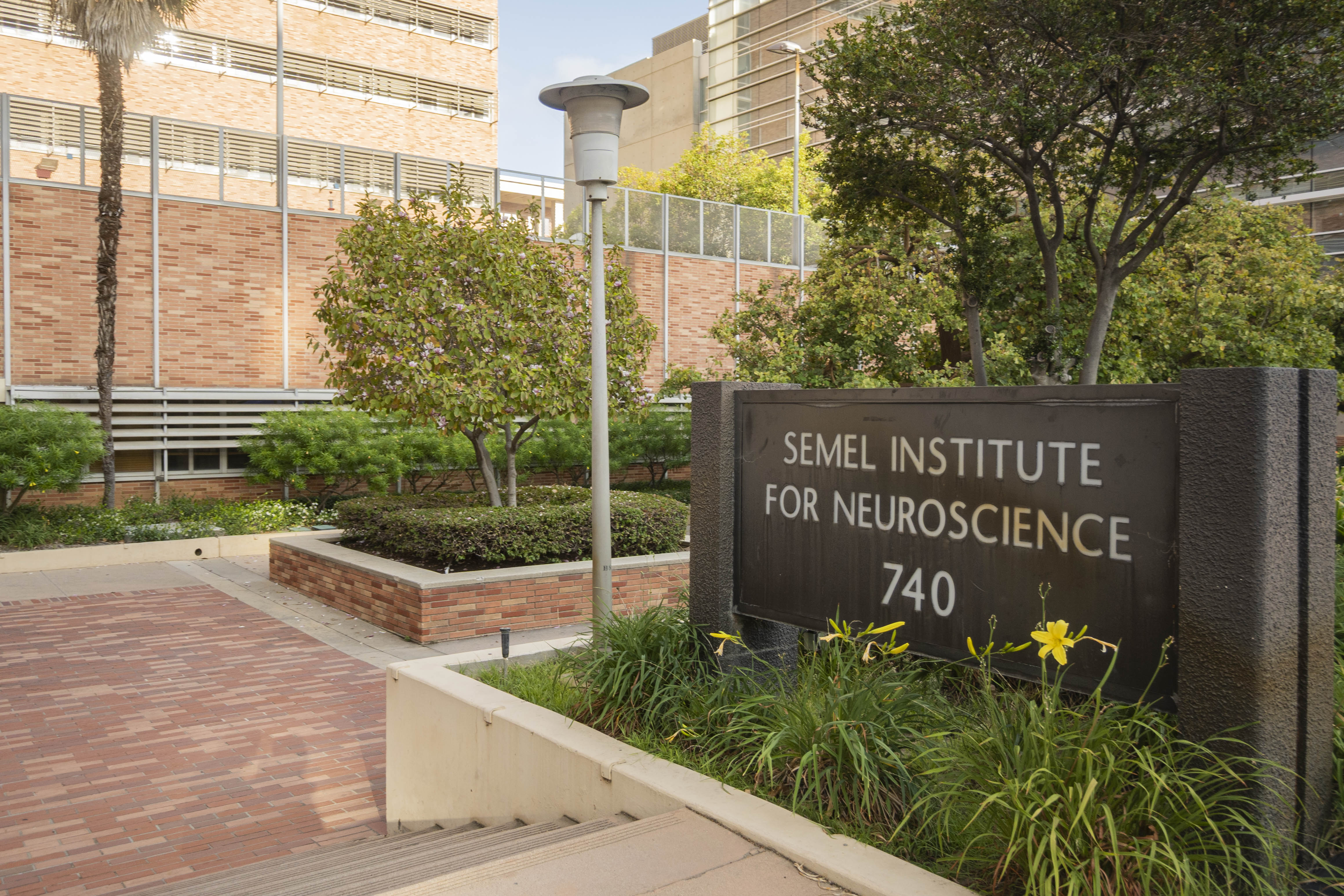
The UCLA Hispanic Neuropsychiatric Center of Excellence – located in the Semel Institute for Neuroscience & Human Behavior – supports Spanish-speaking patients, including those whose families have been impacted by heightened immigration enforcement in Los Angeles. The HNCE along with two other UCLA Health initiatives are working to make quality care more accessible for Spanish speakers. (Andrew Ramiro Diaz/Photo editor)

By Lauren Trautenberg
Oct. 15, 2026 7:31 p.m.
Three UCLA Health initiatives are working to make healthcare more accessible for Spanish speakers across Los Angeles.
The UCLA Hispanic Neuropsychiatric Center of Excellence, the Equity for Latinx/Hispanic Healthy Aging and the Lifespan Assessment Through Integrated Neuropsychology Clinic address disparities in healthcare by offering bilingual training for medical professionals and conducting testing in patients’ native language.
“At the core of HNCE is not only patient care delivered by people who are Spanish-speaking, bilingual, able to meet patients and their families where they are, but also incredibly thoughtful about the context that the patients are coming from,” said Dr. Helena Hansen, the interim director of the Semel Institute for Neuroscience & Human Behavior.
HNCE is focused on supporting patients whose families have been impacted by heightened immigration enforcement in LA, Hansen said.
The federal government deported nearly 15,000 of the people arrested in LA by United States Immigration and Customs Enforcement from 2025-26, according to the Deportation Data Project. Immigration enforcement officers conducted large-scale raids in LA starting June 2025, though the raids have since slowed down.
“You can imagine the level of traumatic experience that they’ve been through,” Hansen said. “It’s something that affects not just the individual, but the family and the larger community. HNCE has been able to take an approach that’s very holistic.”
Language barriers uniquely affect elderly Hispanic and Latino patients, who often depend on family members for translation and involvement in their care, said Dr. Mirella Diaz-Santos, the founder of the ELHA lab. She added that she founded the lab to support Spanish-speaking patients who have Alzheimer’s disease.
Diaz-Santos said she founded the lab to honor her grandmother, who had dementia.
“After almost 20 years after her passing – every time that I talk with Spanish-speaking Latino, Latina, Hispanic communities here in Los Angeles County – they were still resembling my grandmother’s story,” Diaz-Santos said. “I created my lab in order to fill that gap.”
Though technology and research surrounding Alzheimer’s disease has become more advanced, she added, patients with limited English fluency who are concerned about being misunderstood by doctors face setbacks.
Paola Suarez, a clinical assistant professor of psychiatry and biobehavioral sciences and director of the LATIN-C clinic, said bilingual patients are often inaccurately tested, because hesitations stemming from switching between languages are sometimes attributed to cognitive symptoms.
“When I’m with my Spanish speakers, there’s that sense of belonging and commonality where there’s respect, there’s trust, and it feels lighter,” Diaz-Santos said. “They’re also extremely grateful to have someone with them explaining things in their language with their culture.”