UCLA researchers help create pendant for early Alzheimer’s, dementia detection
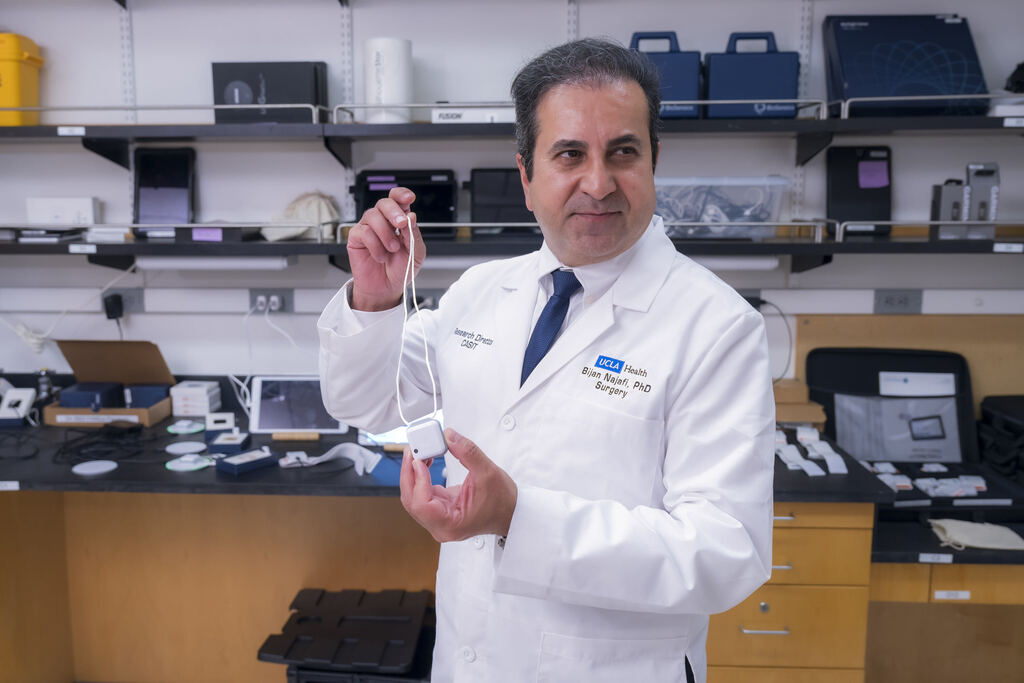
Bijan Najafi, a principal investigator on the grant and a professor of surgery, is featured. Najafi and other researchers are working with biotech company BioSensics to create a device that simultaneously tracks movement and speech and may help doctors diagnose dementia patients early on. (Courtesy of Bijan Najafi)

By Emilio Lois
Aug. 30, 2026 11:25 p.m.
UCLA researchers are partnering with a biotech company to test a wearable pendant that could detect early signs of Alzheimer’s and dementia.
Researchers from the UCLA Center for Advanced Surgical and Interventional Technology will conduct a year-long joint study with biotech company BioSensics. The study – which researchers received a $2.5 million grant from the National Institutes of Health to conduct – will give 50 adults with mild cognitive impairment and 50 healthily aging adults a wearable pendant that tracks their walking and speech patterns.
The project will help make dementia care proactive instead of reactive, said Bijan Najafi, a principal investigator on the grant and a professor of surgery.
Over one year, participants will wear the pendant for one week every three months to track subtle shifts in the way they walk and speak. The pendant can simultaneously track movement and speech said Najafi, the research director of CASIT.
“The idea is to see that whether by tracking those subtle changes, we can see the deterioration in memory and cognitive function, and whether we can better predict some of the consequences of these cognitive decline,” he said.
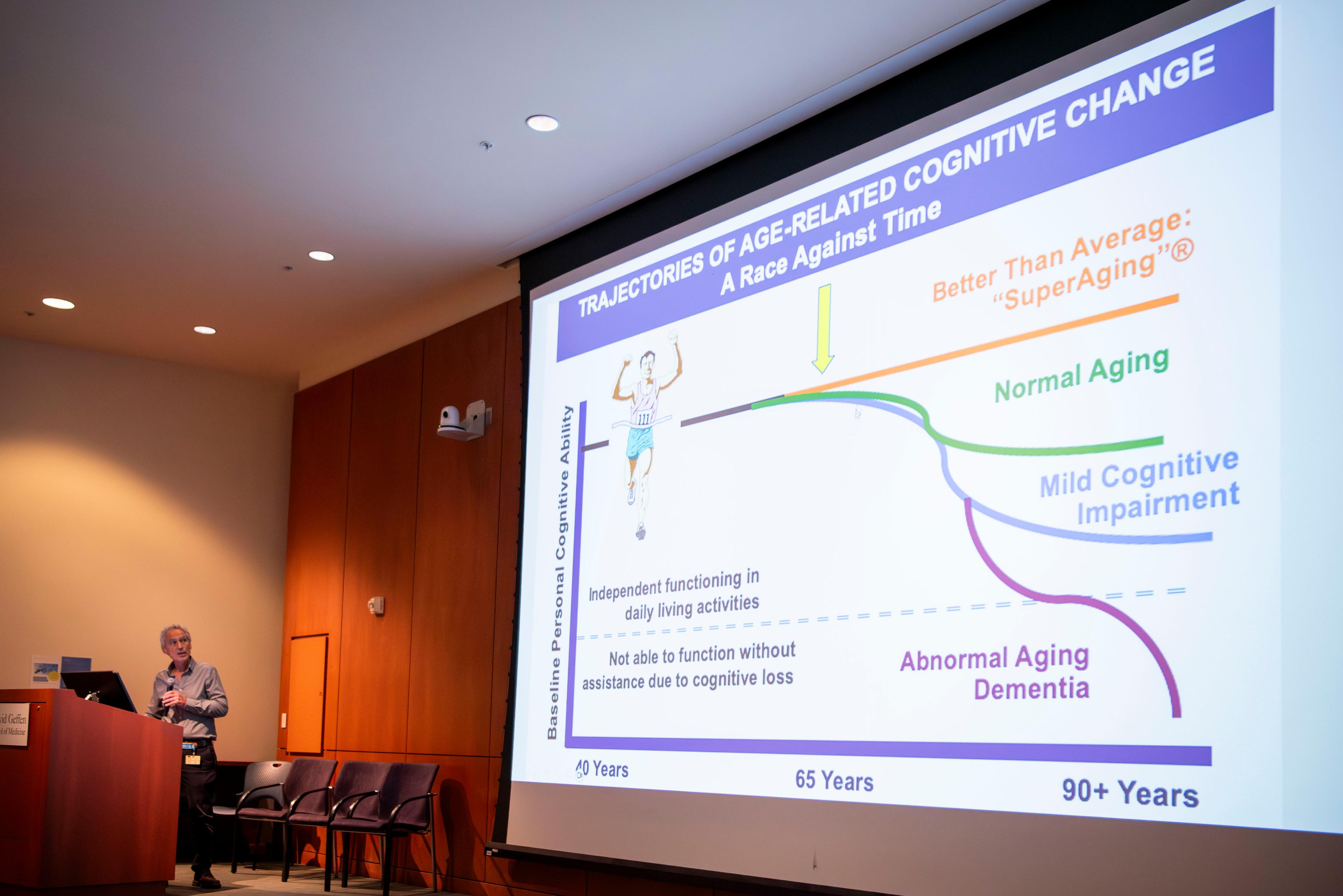
Difficulty in multitasking – such as walking while talking – is one of the first signs of cognitive decline but is often overlooked by patients, said Dr. Linda Ercoli, the interim director of the UCLA Longevity Center and a co-investigator on the project.
The pendant stands out from other BioSensics products because it continuously monitors signs of cognitive decline rather than making infrequent assessments, said Dr. Ashkan Vaziri, the CEO and founder of BioSensics.
That approach could help doctors diagnose patients early on, he added.
“We are hoping that at some point we’ll be able to transition this to clinical care, to facilitate diagnosis of dementia and enable remote monitoring,” Vaziri said.
The Center for Advanced Surgical and Interventional Technology helps facilitate collaboration by bringing experts in multiple disciplines together, he added.
“At CASIT, we try to connect industry, clinicians and engineers under the same umbrella, and then find out a solution that can make a true impact,” Najafi said.
The early detection of cognitive decline is crucial to slow down the progression of the disease, Ercoli said. Early diagnosis can help manage a patient’s memory loss or balance issues before it escalates into a serious fall or injury, she added.
“The sooner you can start to treat, the better,” Ercoli said. “The idea is to intervene early, slow the decline and prolong the good years of life.”
Solutions similar to the wearable pendant are becoming increasingly important in an aging society, Ercoli said. She added that the study will help bring attention and resources to the study of aging, an often overlooked field.
“People are living longer, and quality of life is important,” Ercoli said. “Our society is saying, ‘How are we going to manage with a bigger chunk of our population aging now more than ever before?’”