Individuality and connection combine to define UCLA football’s 2026-27 strategy
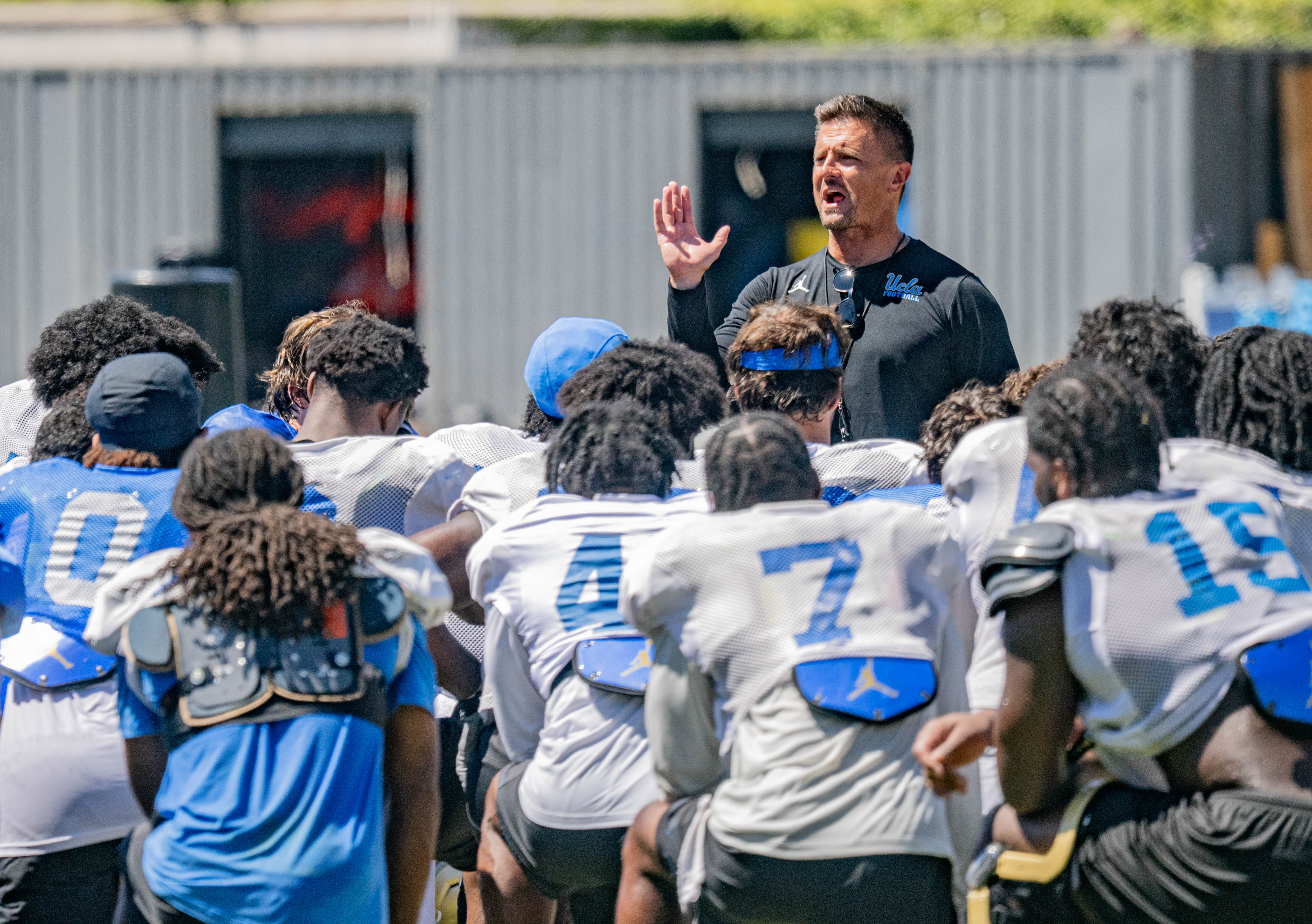
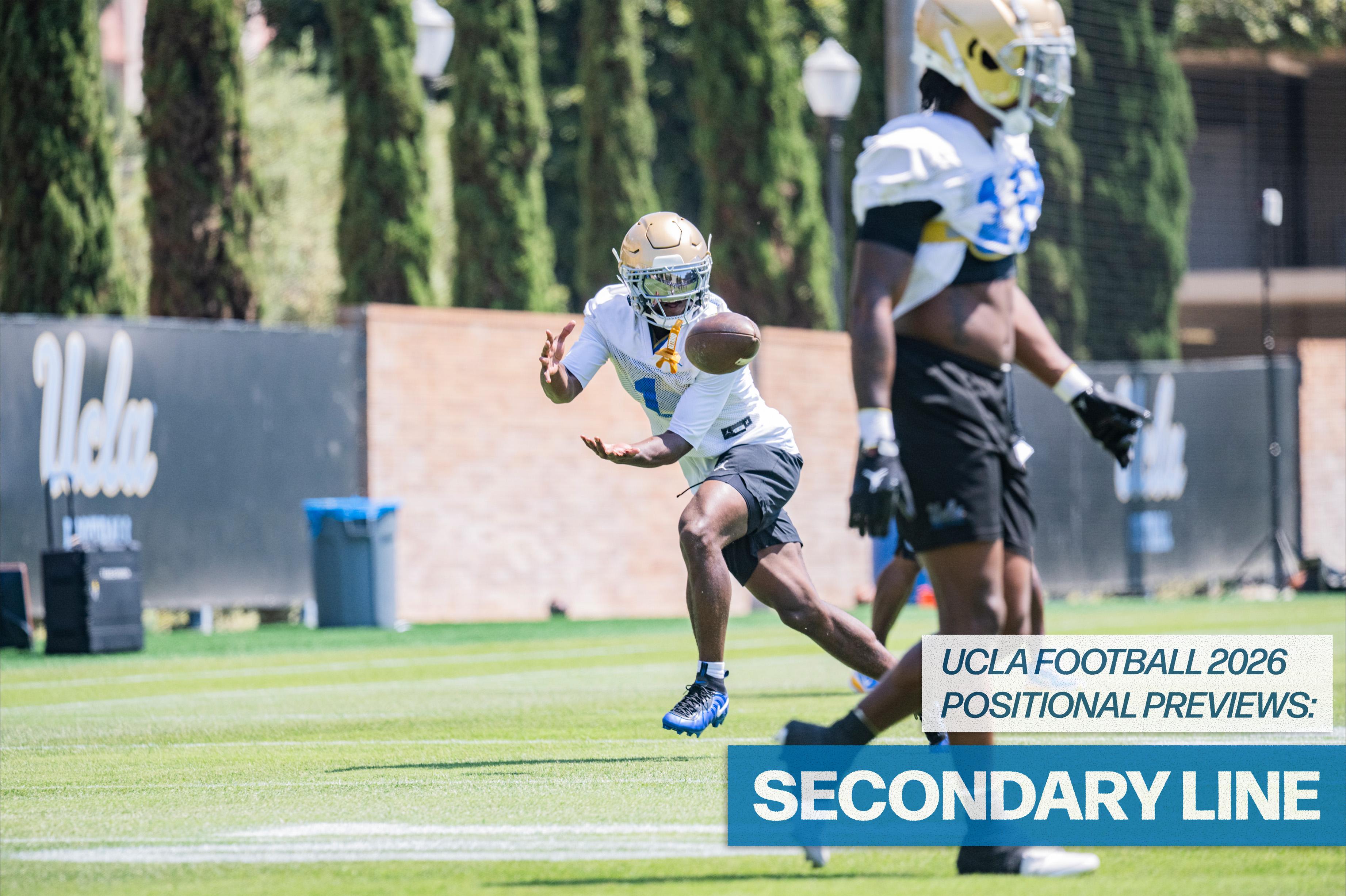
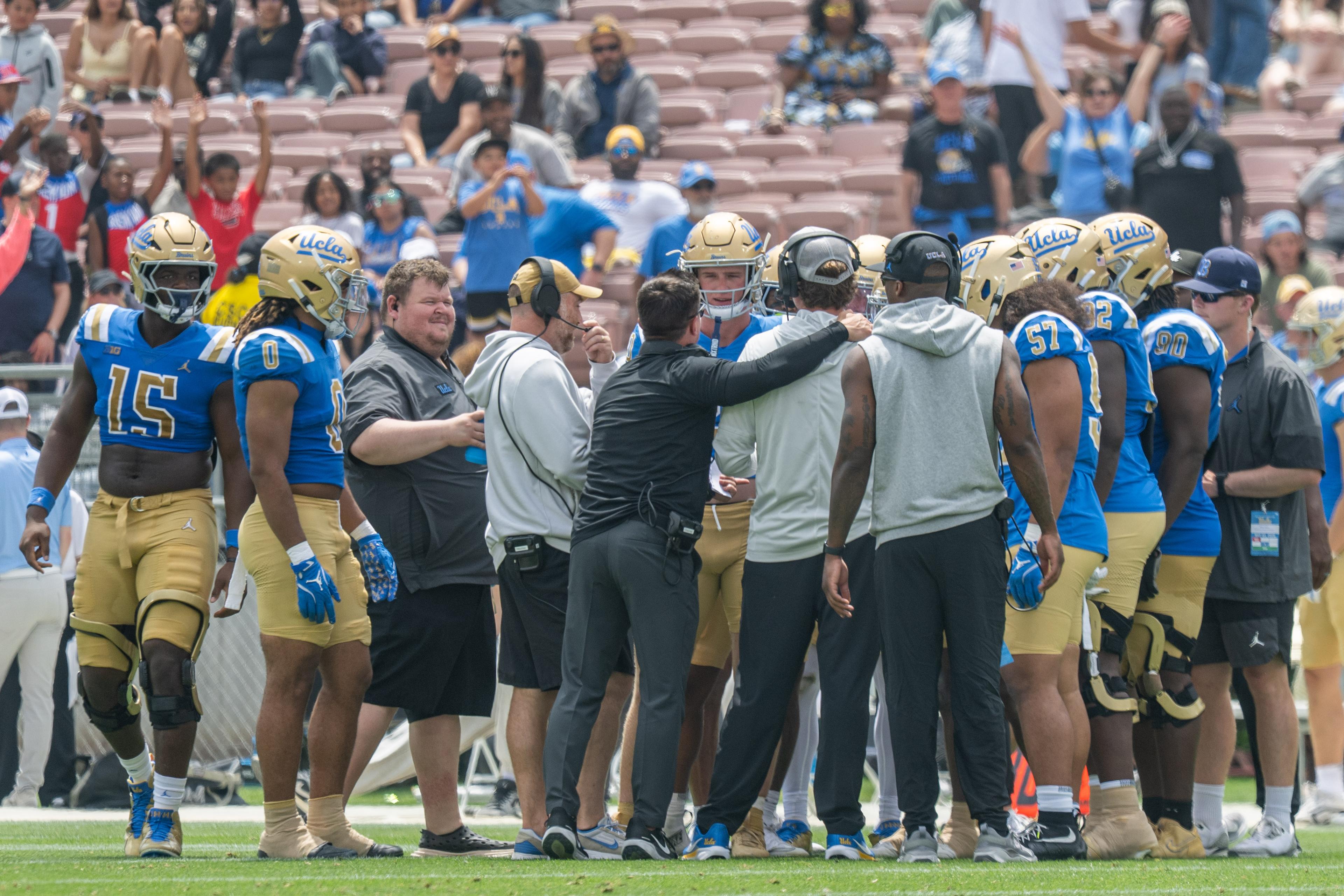
UCLA football coach Bob Chesney talks to his team after practice at Spaulding Field on Aug. 17. The Bruins open the 2026 campaign on Sept. 5 against California. (Kai Dizon/Assistant Photo editor)

By Zach King
Aug. 21, 2026 12:57 p.m.
This post was updated Aug. 23 at 8:51 p.m.
With a roster featuring 55 new players and 19 new coaches, including both top coordinators, creating a sense of camaraderie and connection among the new faces of Westwood is at the forefront of head coach Bob Chesney’s first fall camp.
Bouncing back from two years during which the Bruins have won the smallest number of games in their new conference, creating close bonds within position groups, between coaches and players and throughout the program has been crucial in forming a cohesive team before kickoff in Berkeley on the first weekend of September.
From FIFA to Serbian language classes, the Bruins have found more than just football to bond over.
This week at the Bruins’ fall camp, coaches emphasized that each player focus on how to get better individually – and thus, become better as a unit and a team.
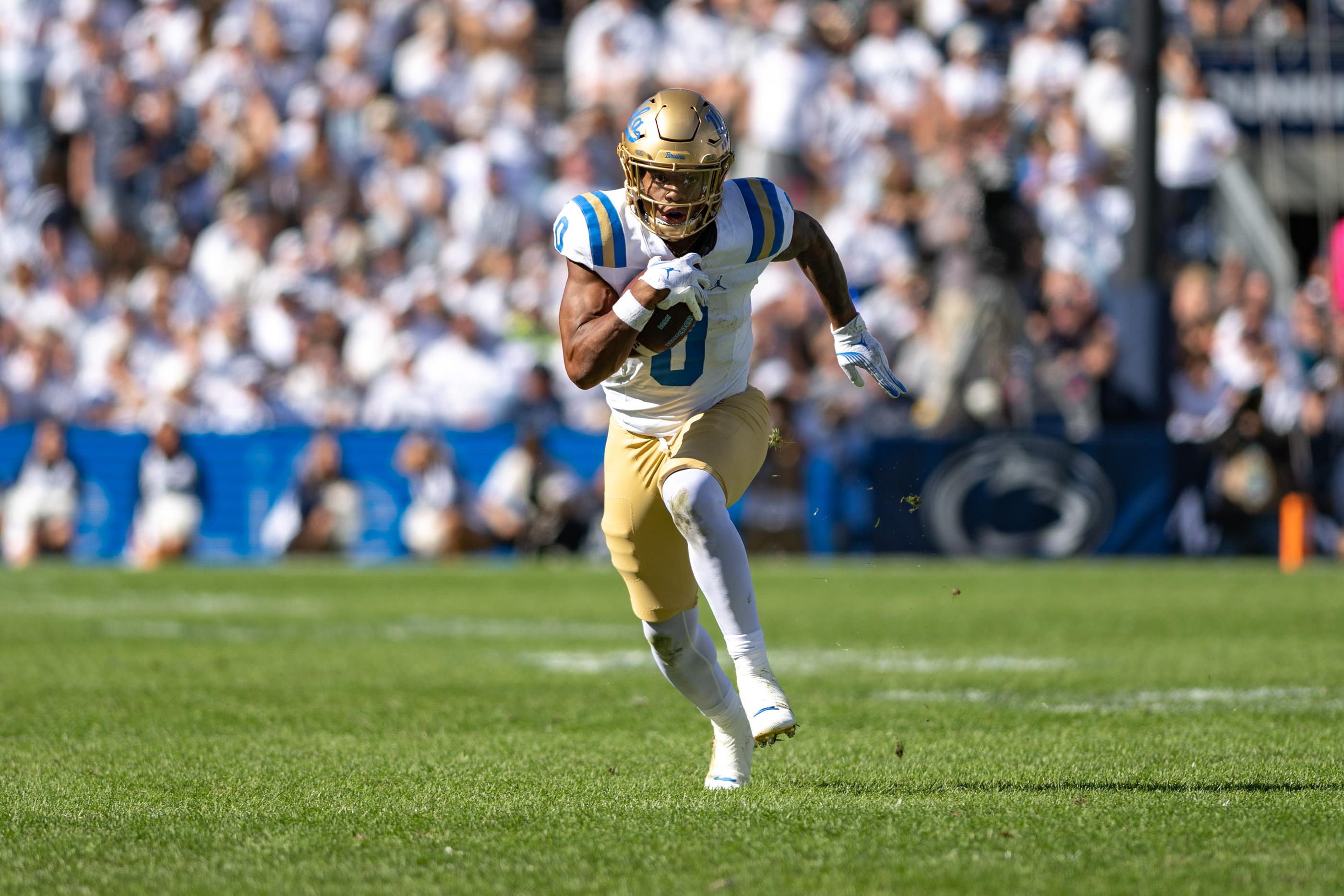
That individuality may shine brightest in a backfield where UCLA doesn’t just expect – but is excited to enjoy – a ground game scheme that refuses to live and die with any one player.
With a running back room that returns experienced players while adding another wave of versatile options, the Bruins have spent fall camp searching less for a singular workhorse and more for a way to take advantage of the different pieces at their disposal.
“If one guy goes down, or if another guy goes down, the offense will still be the same,” said senior running back Jaivian Thomas. “I feel like we all have similarities.”
The Oakland local said he is excited to return to his old stomping grounds on the field. His fellow backs have built their identity less through individual attributes and more on how they work alongside one another, he said. Under running backs coach A.J. Steward – a holdover from the DeShaun Foster era – the group has embraced competition that asks each back to find his own role without separating himself from the rest of the room.
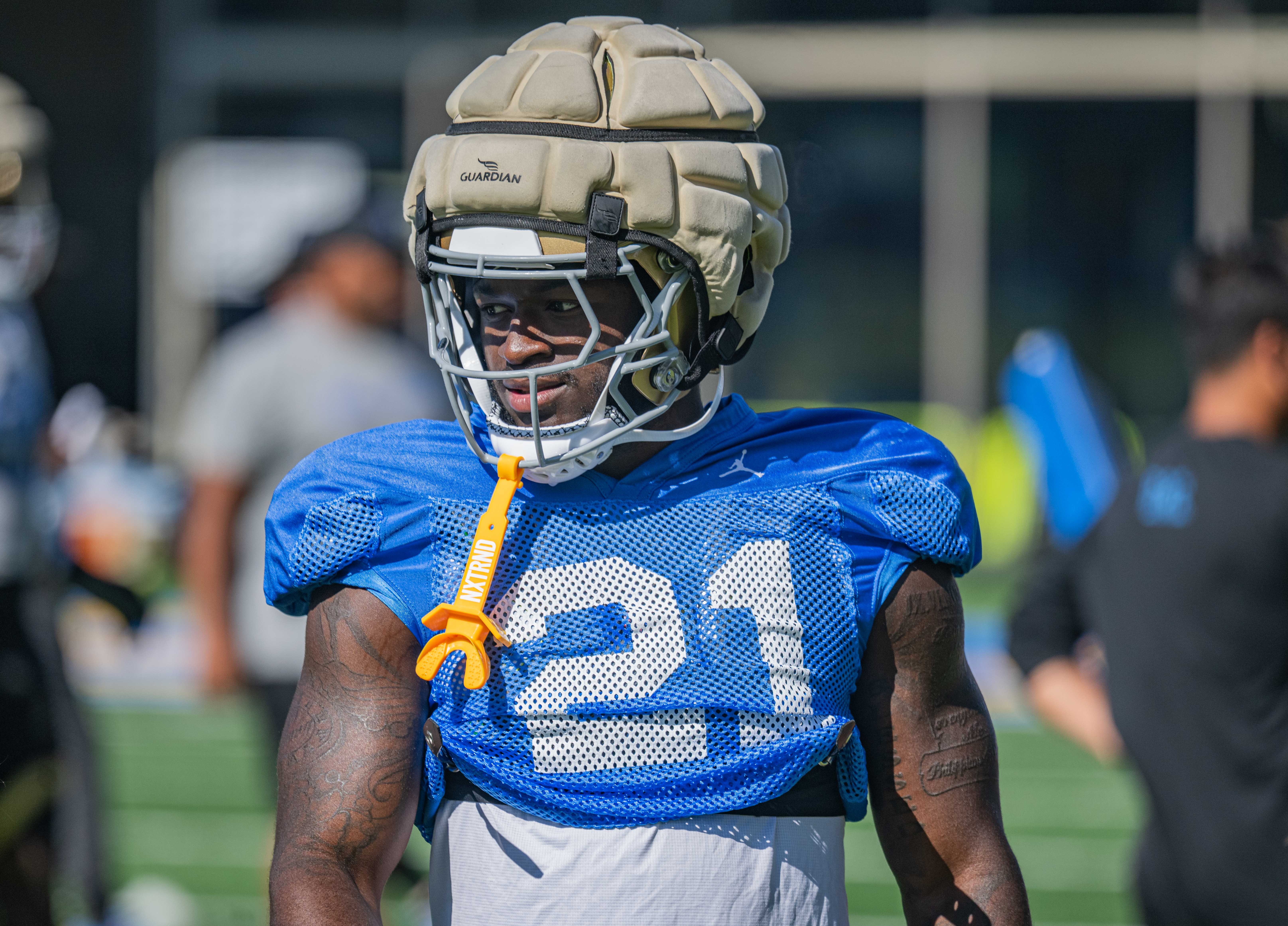
“Running backs, we do everything together,” Thomas said. “We’re one of the most laid-back groups when it comes to saying words and stuff like that, but the way we practice or the way we attack the weight room, the way we do things is what we build and how we bring guys along.”
And while the Bruins’ collection of backs gives offensive coordinator Dean Kennedy options behind senior quarterback Nico Iamaleava, he made no effort to hide where he thinks establishing UCLA’s offensive identity needs to begin: the trenches.
Fifth-year Julian Armella said Kennedy has taken reps at multiple positions along the offensive line at camp. Returners and newcomers are battling for positions that remain far from set in stone, Armella said.
“The competition in the room, it breeds excellence because it allows us to push each other more and more and more,” Armella said. “Not one person’s spot is necessarily locked down.”
Yet even as linemen compete for five starting spots – the fifth-year, who played in all 12 of the Bruins’ contests last year, primarily at right guard, said competition hasn’t turned teammates against one another.
With the new staff challenging UCLA’s offensive linemen to understand the reasoning behind their assignments, players with previous experience in the system have become resources for those still learning it, Armella said.
The emphasis on individuality within a cohesive unit isn’t limited to just the offense either.
For defensive coordinator Colin Hitschler, building a strong defense hasn’t meant stripping his players of what made them successful before arriving in Westwood.
“It’s our job as coaches to figure out what our guys do well and put them in positions to do those things,” Hitschler said.
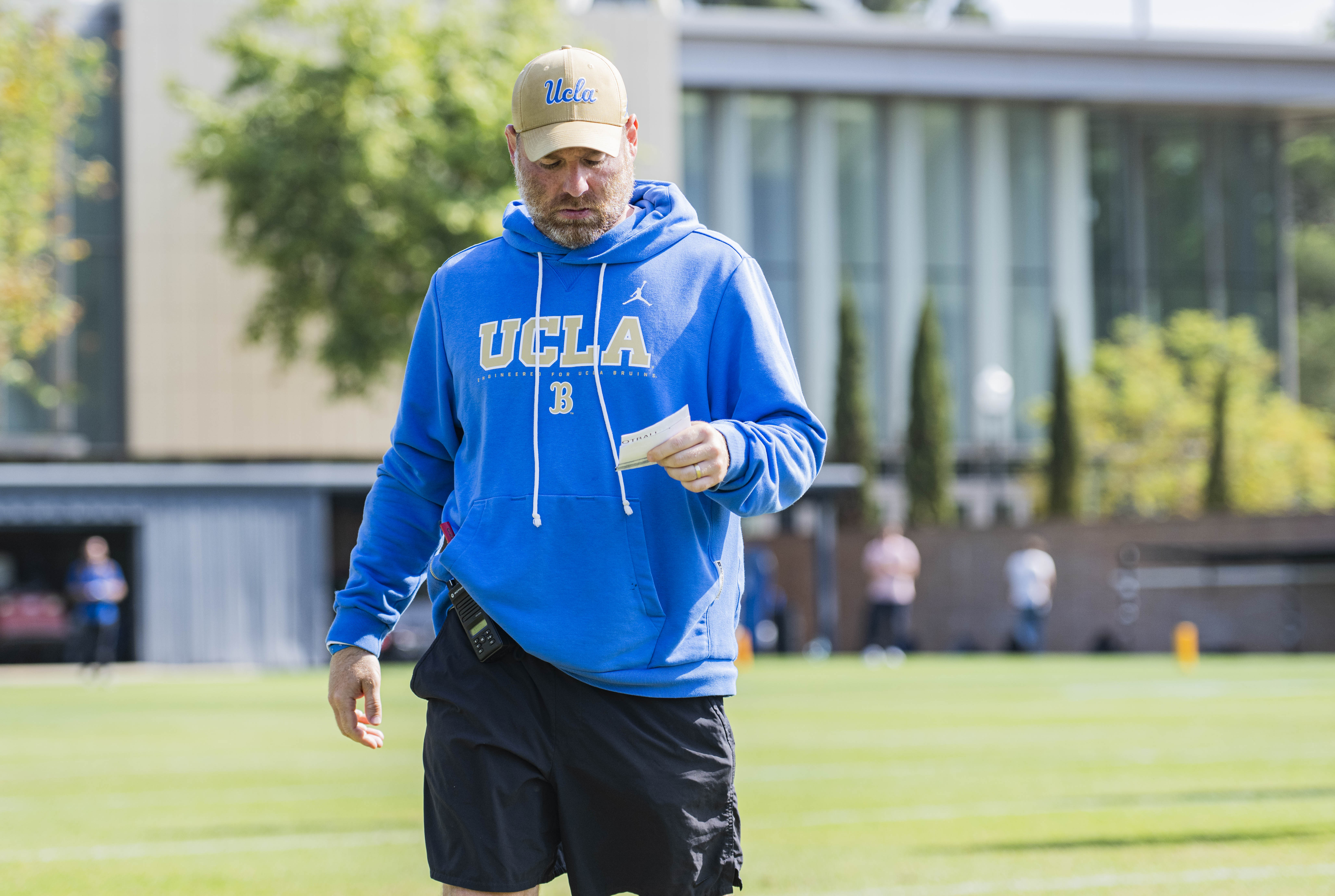
Utah transfer Tao Johnson arrived in Westwood with years of experience in a top-ranked secondary, but Hitschler’s system has demanded more than simply memorizing assignments, he said.
Rather than relying on Hitschler to guess the perfect call for every offensive look, Johnson said UCLA’s defenders are being taught to recognize what’s in front of them and solve problems themselves.
“He’s not going to bail us out and try to guess the perfect call,” Johnson said. “Sometimes you just have to play base, elite defense and play one step ahead based on what they’re showing you.”
That freedom places an even greater premium on trust. And with so many new players entering the building at once, Johnson said developing that trust has gone beyond just learning each other’s names or sitting beside one another in meetings. It’s been about connection and vulnerability, he said.
Nowhere will that balance between individual brilliance and group cohesion be more visible than behind center. After beginning his career more than 2,000 miles from home in Knoxville, Tennessee, Iamaleava returned to a program undergoing as much change as he was. Now, instead of simply learning another offensive scheme, Iamaleava has been tasked with becoming one of the figures responsible for holding everything together.
Kennedy has experimented with shifts, motion and quarterback movement and expressed excitement at having a collection of running backs and receivers that can be deployed in different ways. Given Iamaleava’s ability to create both within and outside the structure of a play, Kennedy said he’s focusing on finding another layer of creativity without making designed quarterback runs the foundation of the offense.
For all the new faces, new terminology and new expectations scattered throughout Wasserman Football Center during fall camp, UCLA’s reconstruction has not asked for players to become indistinguishable pieces of a Big Ten First-Team squad.
Instead, Chesney has asked each player to understand what they do best, sharpen it and trust that the player beside them is doing the same with similar intensity, if not more.
Come Sept. 5, 55 newcomers will no longer have the luxury of simply learning how to play like Bruins – they’ll have the first chance to prove that individuality and cohesion do not have to exist at opposite ends of a roster.