2 students honored with Don T. Nakanishi Award for AAPI community research, activism
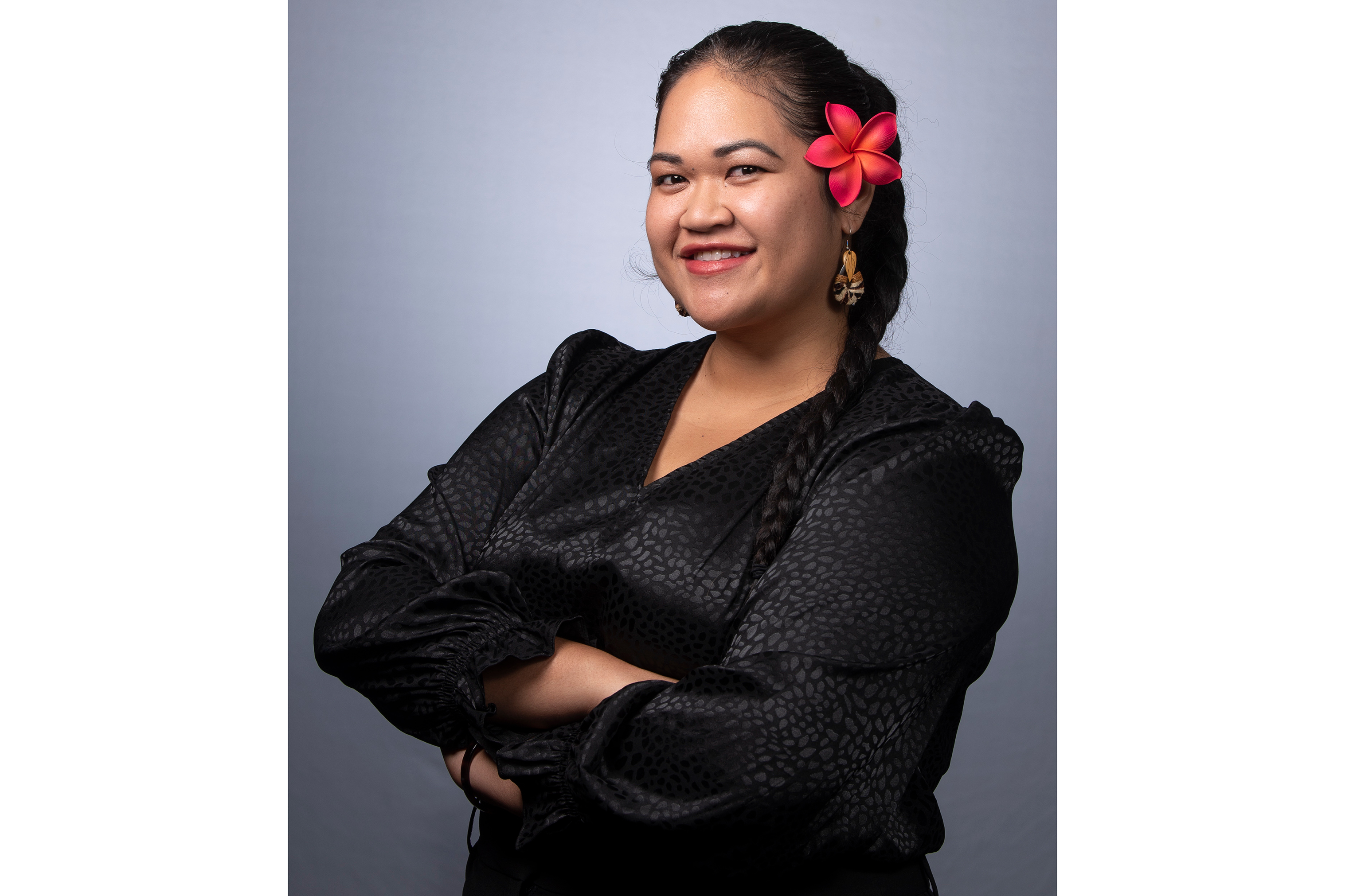
Corina Penaia, the graduate student award recipient, is featured. Penaia conducts research on health and data equity in Native Hawaiian and Pacific Islander communities. (Courtesy of Corina Penaia)

By Amanda Xi
Aug. 14, 2026 7:49 p.m.
Two students received the 2025-26 Don T. Nakanishi Award for Outstanding Engaged Scholarship in Asian American and Pacific Islander Studies last month for their community research and activism.
The award honors Don T. Nakanishi, a UCLA professor of education who directed the Asian American Studies Center for 20 years, said Melany De La Cruz-Viesca, the center’s deputy director. Samantha Leong – the undergraduate recipient – and Corina Penaia – the graduate recipient – each received $2,500.
Penaia researches health and data equity in Native Hawaiian and Pacific Islander communities, De La Cruz-Viesca said. Leong, a rising fourth-year Asian American studies and political science student, is involved in advocacy for increased Asian American representation in local government.
During the COVID-19 pandemic, high infection and mortality rates among Native Hawaiian and Pacific Islander communities motivated Penaia’s team to create the NHPI Data Policy Lab at the UCLA Center for Health Policy Research, she said in an emailed statement. The policy lab works with community-based organizations to publicize health data during the COVID-19 pandemic that can be used to advocate for their communities’ needs.
Penaia, a health policy and management doctoral student, said in the statement that she plans to use the $2,500 award to conduct further research on strategies to increase Native Hawaiian and Pacific Islanders’ participation in studies.
“I value the community’s input, whether from community leaders or community organizations, which helps guide the work that I engage in,” she added.
Penaia said in the statement that she was inspired by her grandfather, who served as a district medical officer in Samoa and worked on public health initiatives that aimed to mitigate infectious diseases.
“I do my best to be intentional with the research I conduct in order to ensure it meets the needs of NHPI communities and contributes to advancing public health and policy,” she added.
Leong, on the other hand, is involved with the Center for Asian Americans United for Self Empowerment, which focuses on increasing civic engagement and voter access among Asian American communities.
“I’ve been very fortunate to be within these API communities that are really focused on helping young people be able to be involved in these spaces and to really have a seat at the table,” Leong said.
Leong also worked for state Sen. Ben Allen’s office and on state Assemblymember Jessica Caloza’s campaign – which she said was especially meaningful because of Caloza’s impact as the first Filipino woman elected to the California State Legislature.
Receiving the award was unexpected and particularly meaningful because of Nakanishi’s impact on UCLA and the broader community, Leong said.
During his time as the center’s director, Nakanishi expanded its research initiatives and community engagement, including by co-founding the Amerasia Journal and AAPI Nexus, two academic journals that were later published at the center.
Students from any department are eligible for the award, De La Cruz-Viesca said. Reviewers consider candidates’ research, publications, educational work, internships and other efforts focused on uplifting underserved Asian American and Pacific Islander communities, she added.
The center created the award to recognize the intersection of academic research and community outreach, De La Cruz-Viesca said.
“We’re trying to show an alternative perspective to how we could do research,” she said.
The award reflects the Asian American Studies Center’s focus on producing research that addresses knowledge gaps in overlooked Asian American and Pacific Islander communities, De La Cruz-Viesca said.
“What’s important about all this work that we do is that we’re creating research for our community and by our community,” she said.