2026 Big Ten Preview: Michigan State
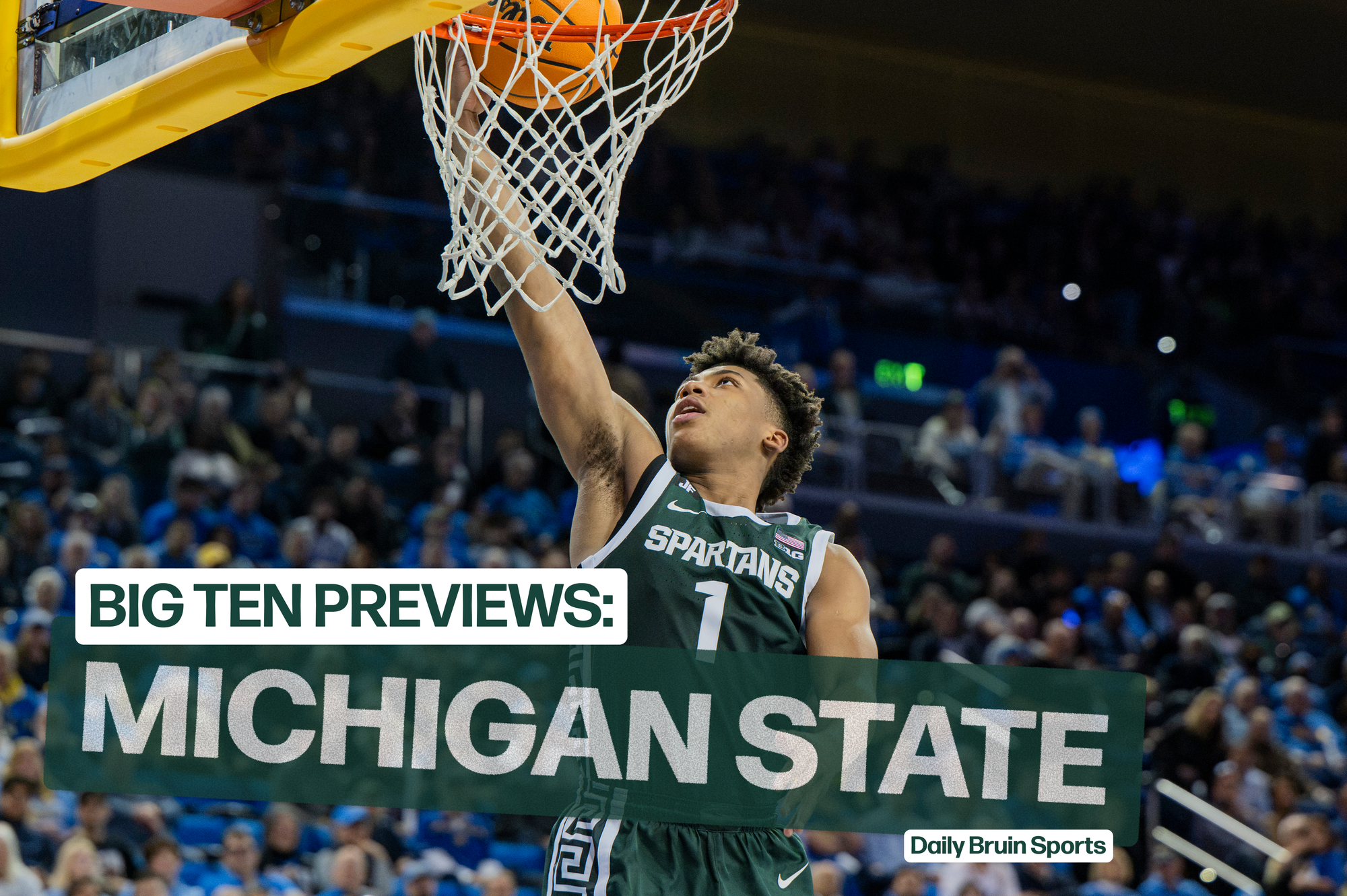
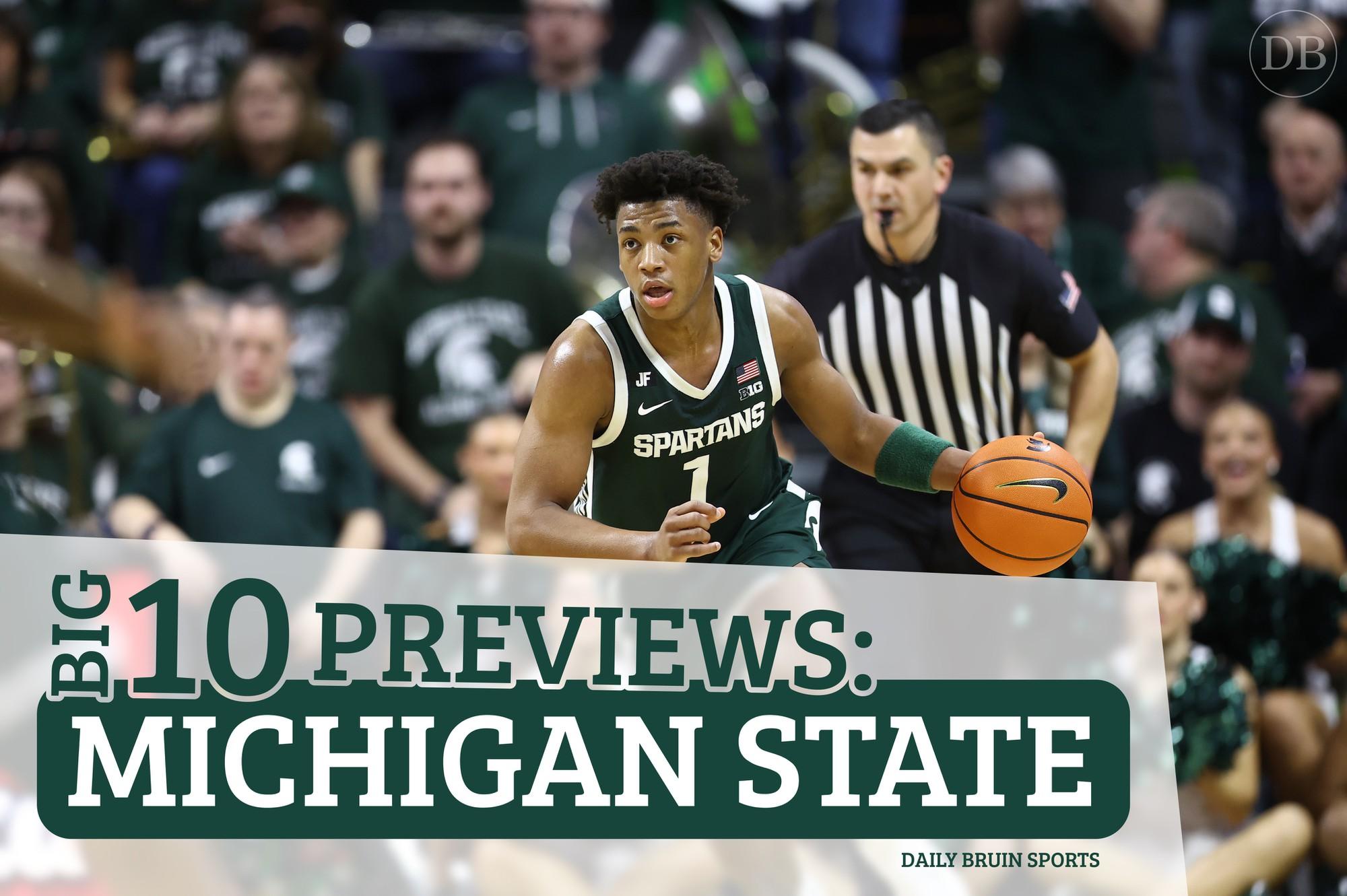
Guard Jeremy Fears Jr. rises at the rim for a basket. Fears will return to Michigan State for his rising junior season after leading the country in assists per game. (Photo by Michael Gallagher/Daily Bruin senior staff, Design by Armaan Dhillon/Assistant design director)

By Connor Dullinger
July 12, 2026 3:34 p.m.
This post was updated Sept. 6 at 12:54 p.m.
UCLA is set to enter its third season in the Big Ten, following a sophomore campaign in which the program captured three NCAA championships – the most of any Big Ten school. The conference as a whole earned 11 different national titles in the most recent cycle. Daily Bruin Sports has broken down the top programs of UCLA’s Big Ten rivals.
Football
2025 record: 4-8, 1-8 Big Ten
Coach: Pat Fitzgerald
Player to Watch: Alessio Milivojevic
Little went the Spartans’ way last season.
After sweeping its nonconference opponents to begin the year, Michigan State lost eight consecutive games by a combined 110 points, including an 11-point defeat to in-state rival Michigan at Spartan Stadium.
The Spartans’ lone conference victory came in the final contest of the season against Maryland, which also finished 4-8 and 1-8 in the Big Ten. And Michigan State’s dismal season was punctuated by the firing of former head coach Jonathan Smith, who lasted just two seasons in East Lansing, Michigan.
Michigan State has just two 10-win seasons in the last decade and compiled its last winning season in 2021. The Spartans brought in newly minted head coach Pat Fitzgerald to spearhead the program’s revival.
The new head honcho, who coached at Northwestern from 2006 to 2022, led the Wildcats to three of their five 10-win seasons in program history. One of the winningest coaches in conference history, Fitzgerald led his Wildcats to 10 bowl games, five AP Top 25 finishes, two Big Ten championship appearances and two Big Ten Coach of the Year nods, including the Dodd Trophy Coach of the Year.
However, Fitzgerald is faced with a tall task in revitalizing a program that has won just nine conference games in the last four seasons.
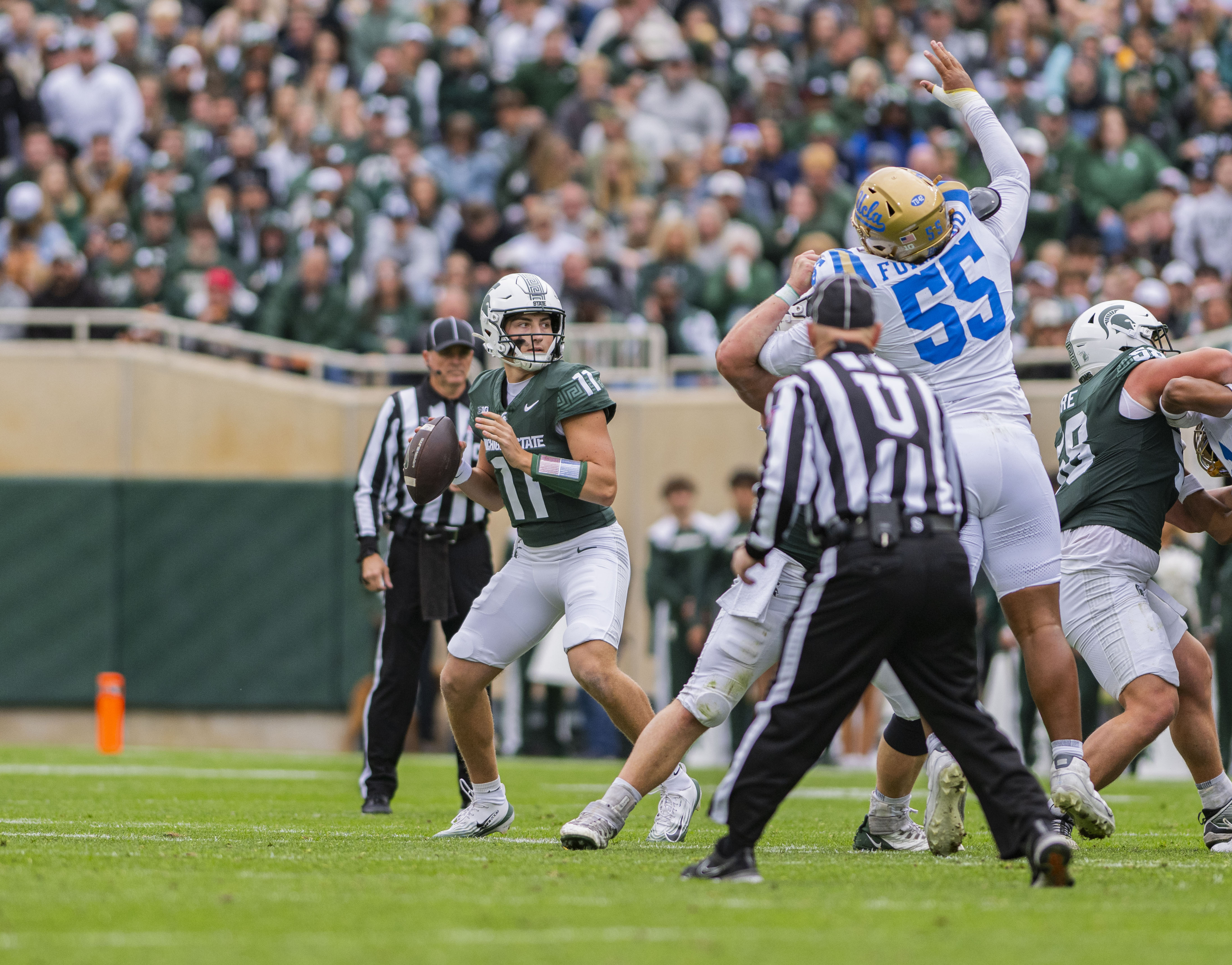
Fitzgerald will have to rely on quarterback Alessio Milivojevic to lead his new offense. The rising redshirt sophomore played in nine games last season, often replacing starting signal-caller Aidan Chiles, but started the last four games of the season and will likely be the No. 1 option in 2026.
Milivojevic recorded 986 passing yards and seven touchdowns on a 65.4% completion percentage through the final four games of the 2025 campaign and will look to build on his first year as a starter with revamped skill position rooms.
After the departure of the Spartans’ top three pass catchers from 2025 – Omari Kelly and Jack Velling to the NFL and Nick Marsh to Big Ten adversary Indiana – Fitzgerald had to reconstruct Milivojevic’s weapons.
And the head honcho made quick work in the portal, adding Notre Dame transfer KK Smith and Michigan transfer Fredrick Moore. The former saw little production in South Bend, Indiana, garnering 161 receiving yards and two touchdowns over two seasons. Moore sports similar numbers, collecting 160 receiving yards and a score over two seasons in Ann Arbor.
However, both receivers can blossom with little position group competition and a new environment in East Lansing with Fitzgerald. The wide receiver group is rounded out by returner Chrishon McCray, who logged 330 yards and three touchdowns in 2025 – the most production outside the departing trio.
The Spartans’ tailback room is also headlined by transfer Cam Edwards, who ran for 1,240 yards and 15 touchdowns at UConn last season and could do even more damage on a bigger stage in the Big Ten.
Similar to its offense, Michigan State’s starting defense figures to be a whole new crew after a down year. The Spartans revamped their secondary, adding Tre Bell and Charles Brantley at both outside corner spots and Michael Richard at the nickel spot.
Bell tied a team-high two interceptions in eight starts at Iowa State and added three pass breakups to his resume. Brantley brings experience, entering his sixth season of college football, and saw his most productive year in 2024 in East Lansing, where he logged three interceptions and seven pass breakups in just nine games, before transferring to Miami for one season.
Rounding out the cornerbacks, Richard spent three seasons at Louisiana Tech, where he combined for 104 tackles, three interceptions and 11 pass breakups, and could see even more impact in the slot for the Spartans with Bell and Brantley.
While new faces comprise Michigan State’s defensive backs, the squad retained one of its most impactful pieces in middle linebacker Jordan Hall, who notched 88 tackles, 2.5 sacks, three forced fumbles and an interception to lead the defense last season.
Hall will be imperative to fortifying a new-look defensive front that boasts two transfers in defensive tackle Eli Coenen and defensive end Kenny Soares Jr. The former played in all 13 games last year for Illinois but saw little production with just 12 tackles and 1.5 sacks. He could see an expanded role in East Lansing. The latter compiled 80 tackles and 0.5 sacks at NC State last season and will play opposite Isaac Smith on the line.
It will take a major revival from Fitzgerald to turn the Spartans’ ship around completely in 2026, but his experience could lead to an improvement from the one conference win they boasted last season.
Men’s basketball
2025-26 record: 27-8, 15-5 Big Ten, NCAA Tournament Sweet Sixteen loss
Coach: Tom Izzo
Players to Watch: Jeremy Fears Jr. and Coen Carr
No program may be more different from Michigan State football than its men’s basketball program.
Legendary coach Tom Izzo has steered the Spartans to a national championship, 11 regular-season conference titles, eight Final Four appearances and a Big Ten record 27-consecutive NCAA tournament appearances while garnering eight National Coach of the Year honors of his own over his last 30 seasons at the helm.
There is no telling how many seasons Izzo has left with the program, and the 2026-27 roster may give him his best chance at hoisting a trophy in the past several years.
Most importantly, Michigan State is returning point guard and AP Second Team All-American Jeremy Fears Jr. The rising redshirt junior is highly regarded as one of the best true point guards in the country after posting a nation-high 9.4 assists per game last season.
But Fears is not just a facilitator; he also led the team in scoring, averaging 15.2 points per game on 43.1% and 32.1% shooting from the field and 3-point line, respectively. Fears is joined by another key returner in forward Coen Carr.
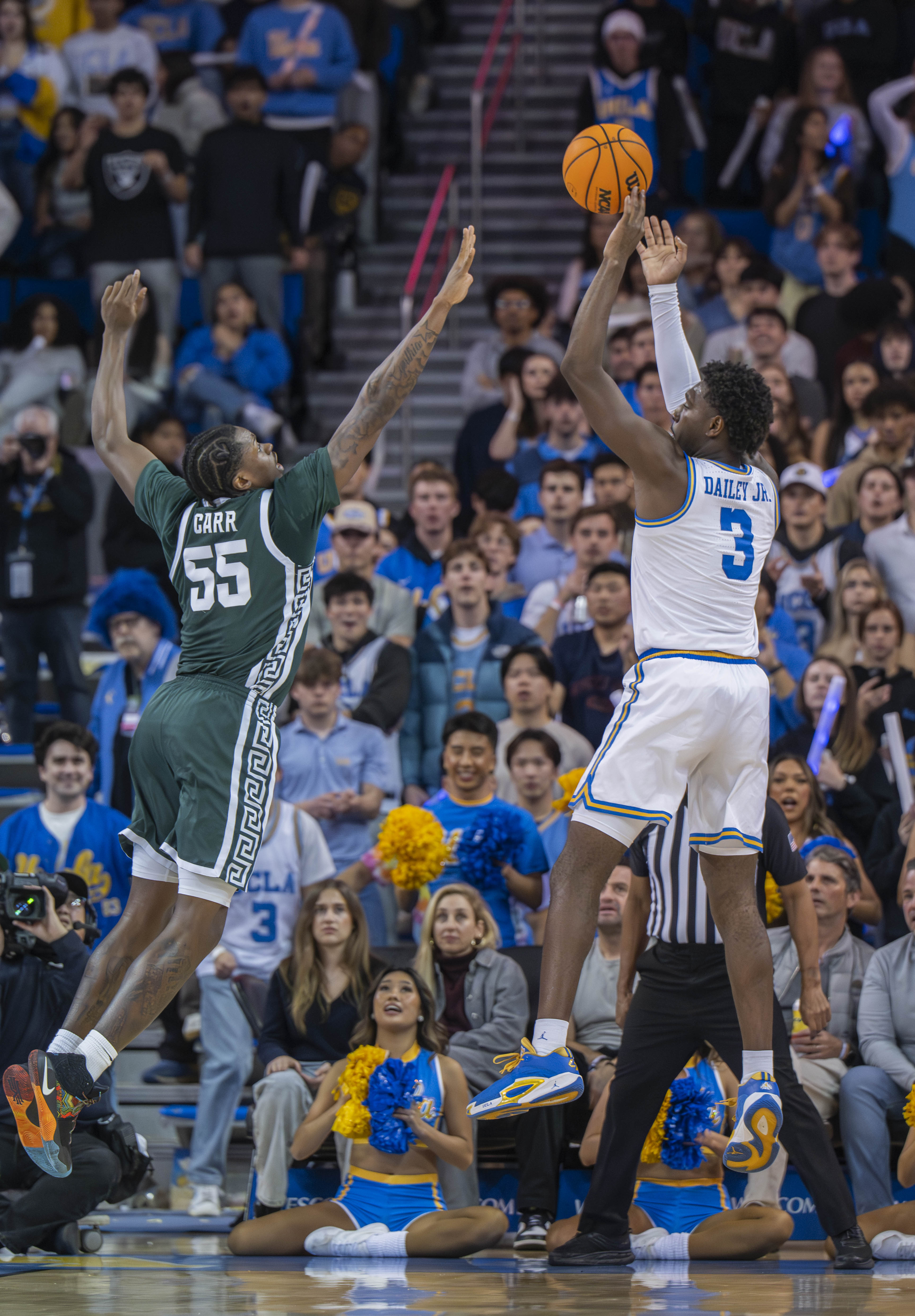
Carr – known for his crowd-popping and thunderous dunks – boasts incredible athleticism that allows him to dominate in transition and on the interior. He finished third on the team in points and rebounds per game with 12 and 5.4, respectively, and could see even more production in both departments with the departures of power forward Jaxon Kohler and center Carson Cooper.
Izzo replaced Cooper with Charlotte transfer Anton Bonke – one of the most highly lauded big men in the portal. Bonke averaged 10.6 points, 8.3 rebounds and 1.5 blocks through 25.6 minutes per game last season. He was also uber efficient, going 57.6% from the field and 34.2% from beyond the arc.
Bonke struggled to see the court during his first season of collegiate basketball at Providence but proved his impact in the frontcourt during his sophomore season at Charlotte and now has the chance to take on a bigger role in East Lansing. Bonke remains the lone transfer brought in, with Izzo returning a good part of the Spartans’ depth.
Fears, Carr and Bonke are likely everyday starters, but the remaining two spots – at the two-guard and power forward positions – will be battled for by guards Kur Teng and Divine Ugochukwu, as well as forwards Cam Ward and Jordan Scott.
At shooting guard, Teng averaged the most points of the Spartans’ returning depth, averaging 7.3 points per game on 38.1% from beyond the arc, while Ugochukwu averaged 5.1 points per game on 44.2% shooting from deep.
While the latter was less impactful on the scoring sheet, the rising junior started eight more games than Teng last year while missing the last 13 games of the season, making it more likely he will start in the backcourt alongside Fears.
Of the two rising sophomores competing for Kohler’s vacant position, Scott is most likely to get the nod after starting the final 13 games of the season and logging the fifth-most minutes on the roster. He averaged 5.8 points and 3.1 rebounds per game, giving the Spartans long-range shooting – going 37% from beyond the arc last season – and two-way impact – blocking 18 shots and ranking second on the team with 26 steals.
Izzo’s squad fell to UConn in the Sweet Sixteen, which ended up falling to Michigan in the national championship by just four points. It could go even further in the tournament next season, given the depth, star-studded prowess and familiarity returning to the roster for what could be Izzo’s last run.
Women’s basketball
2025-26 record: 23-9, 11-7 Big Ten, NCAA Tournament Second Round Loss
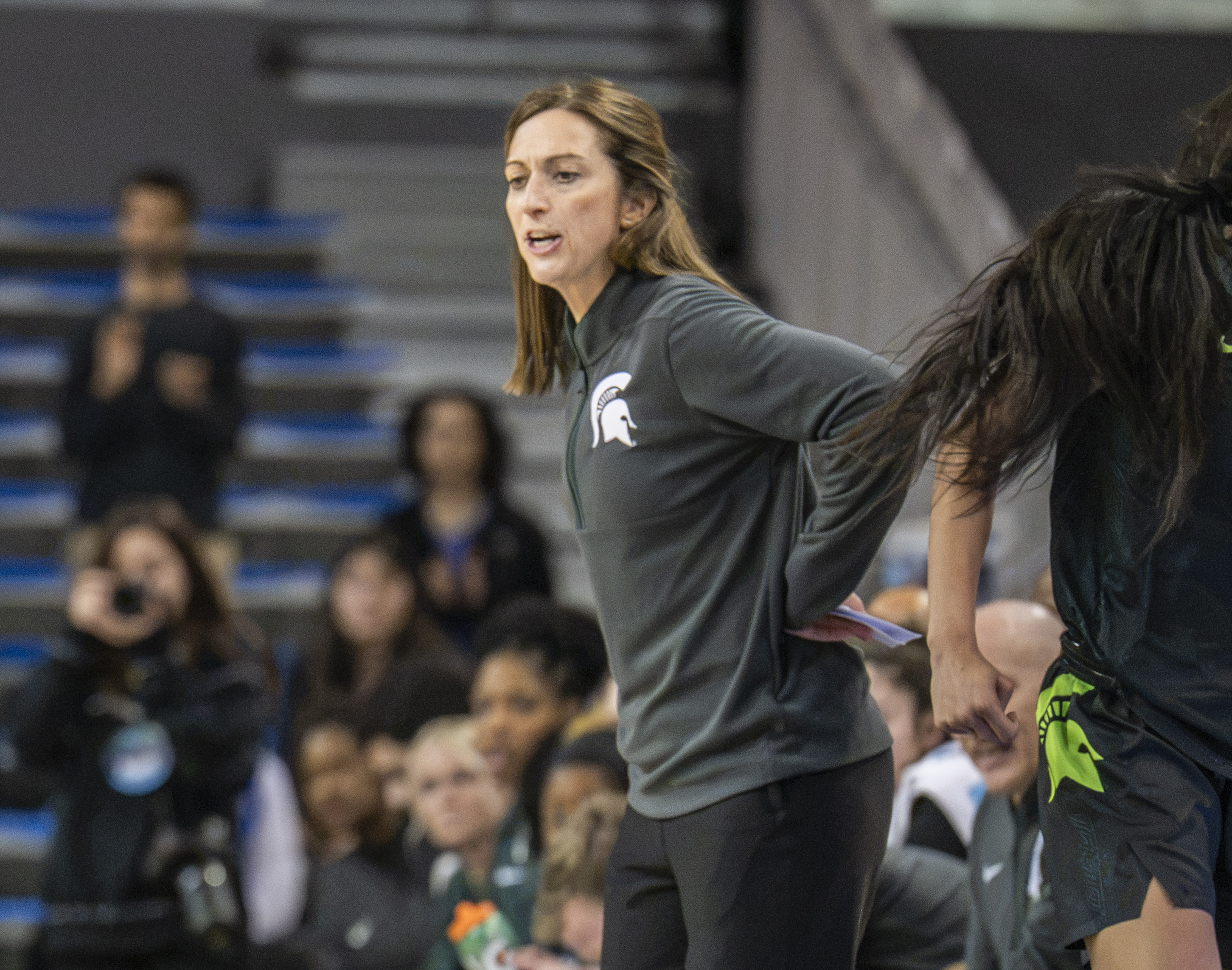
Coach: Robyn Fralick
Player to Watch: Kennedy Blair
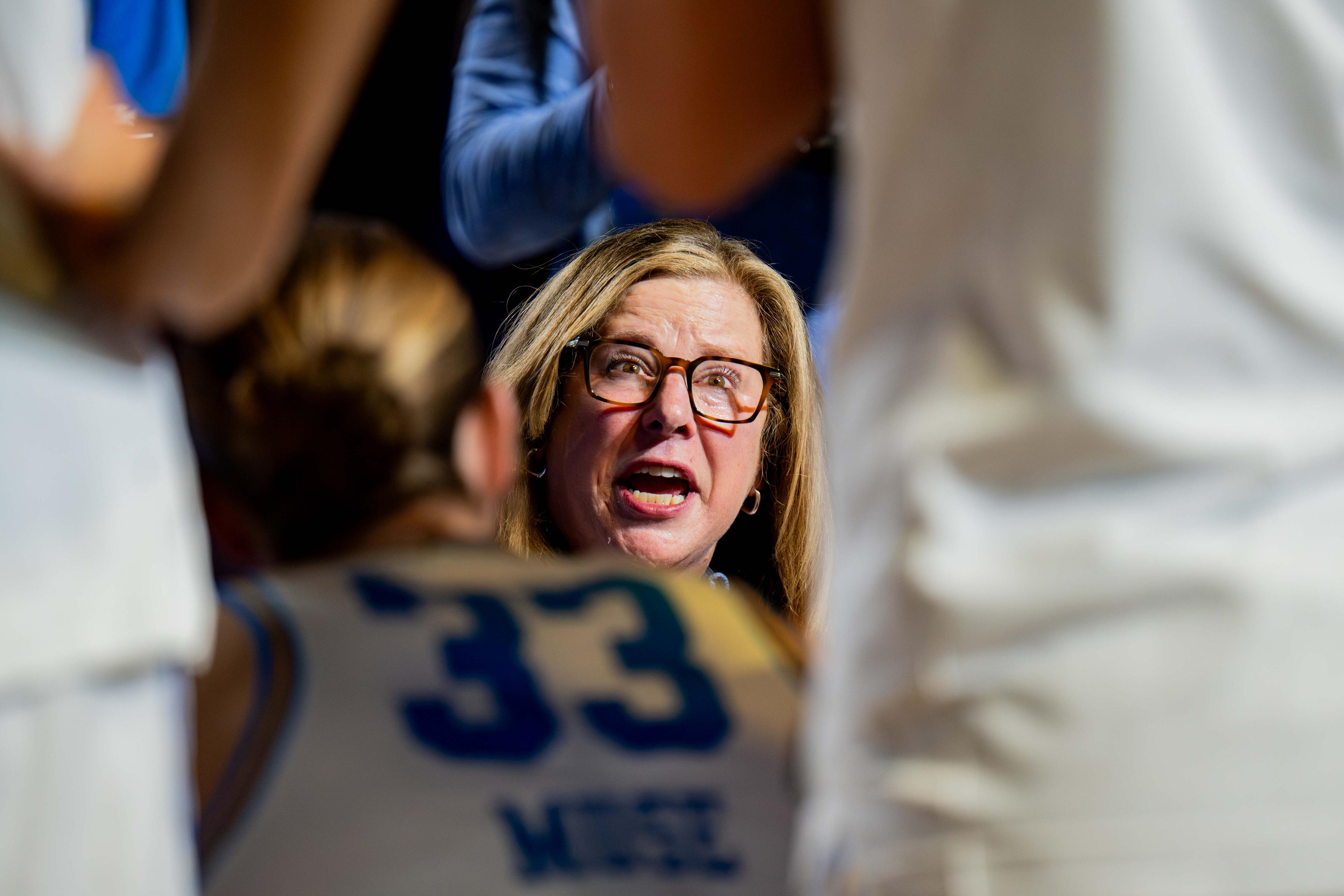
Robyn Fralick’s impact at Michigan State cannot be understated.
The head coach is responsible for three of the Spartans’ five 20-plus-win seasons over the past decade, reaching that mark and the NCAA tournament in each season she has spearheaded the program.
But she may be entering her most challenging season yet, losing four of her top five scorers, including leading scorer and Second Team All-Big Ten selection Grace VanSlooten.
Despite the loss of VanSlooten, the Spartans will retain their starting backcourt in Kennedy Blair and Theryn Hallock.
Blair – who joined VanSlooten as a Second Team All-Big Ten selection – started all 32 games as a redshirt sophomore, averaging 14.5 points, 7.1 rebounds and 5.2 assists per game while shooting 50.3% from the field.
The guard also shows her impact on the defensive end of the court, ranking third in the conference in steals with 2.38 per game.
Blair is joined by Hallock, who played in just eight games last season due to injury but averaged 10.6 points across those outings. Hallock saw her most productive campaign during the 2024-25 season, in which she averaged 13.3 points per contest.
Fralick took to the portal to replace the Spartans’ other departures across the roster and picked up four new players, headlined by West Virginia transfer Carter McCray. The forward started in 29 of 30 games last year, averaging 10.6 points and 7.1 rebounds per game. She also logged five double-doubles and 16 double-digit scoring games.
The former Mountaineer should be able to play either forward spot and fortify the Spartans’ rebounding efforts. Prior to West Virginia, McCray averaged 11.2 boards per game at Northern Kentucky, and she should help a Michigan State team that ranked No. 12 in the Big Ten in rebounds per game.
Joining McCray in the transfer class are Colorado forward Tabitha Betson and Butler guard Anna Wypych. The former started in 29 games and averaged 5.1 points and 3.7 rebounds per game across the last two seasons.
The Melbourne, Australia, local was the 2024 Big 12 Preseason Freshman of the Year and a McDonald’s All-American honoree, and her pre-college pedigree could better translate into production in a new environment at Michigan State. Betson will join forward Isaline Alexander in the rotation and could fortify the Spartans’ frontcourt presence after the departures.
Wypych joins the backcourt tandem of Hallock and Blair after 6.5 points per game on 37.9% shooting from beyond the arc through just 17.1 minutes per game. The rising true sophomore should be a solid depth piece for the veteran backcourt.
Rounding out the group is Wisconsin transfer Alie Bisballe, who appeared in 36 games across two seasons for the Badgers but struggled to see significant playing time, averaging no more than four minutes per game during her sophomore and freshman campaigns.
The 2026-27 season could be challenging for Fralick as she pieces together her newly constructed team. But if the fourth-year head coach is going to make her fourth straight NCAA tournament, then she will have to rely on the transfer additions and growth in her returning backcourt.