Opinion: The Iran conflict deserves more attention from informed UCLA students
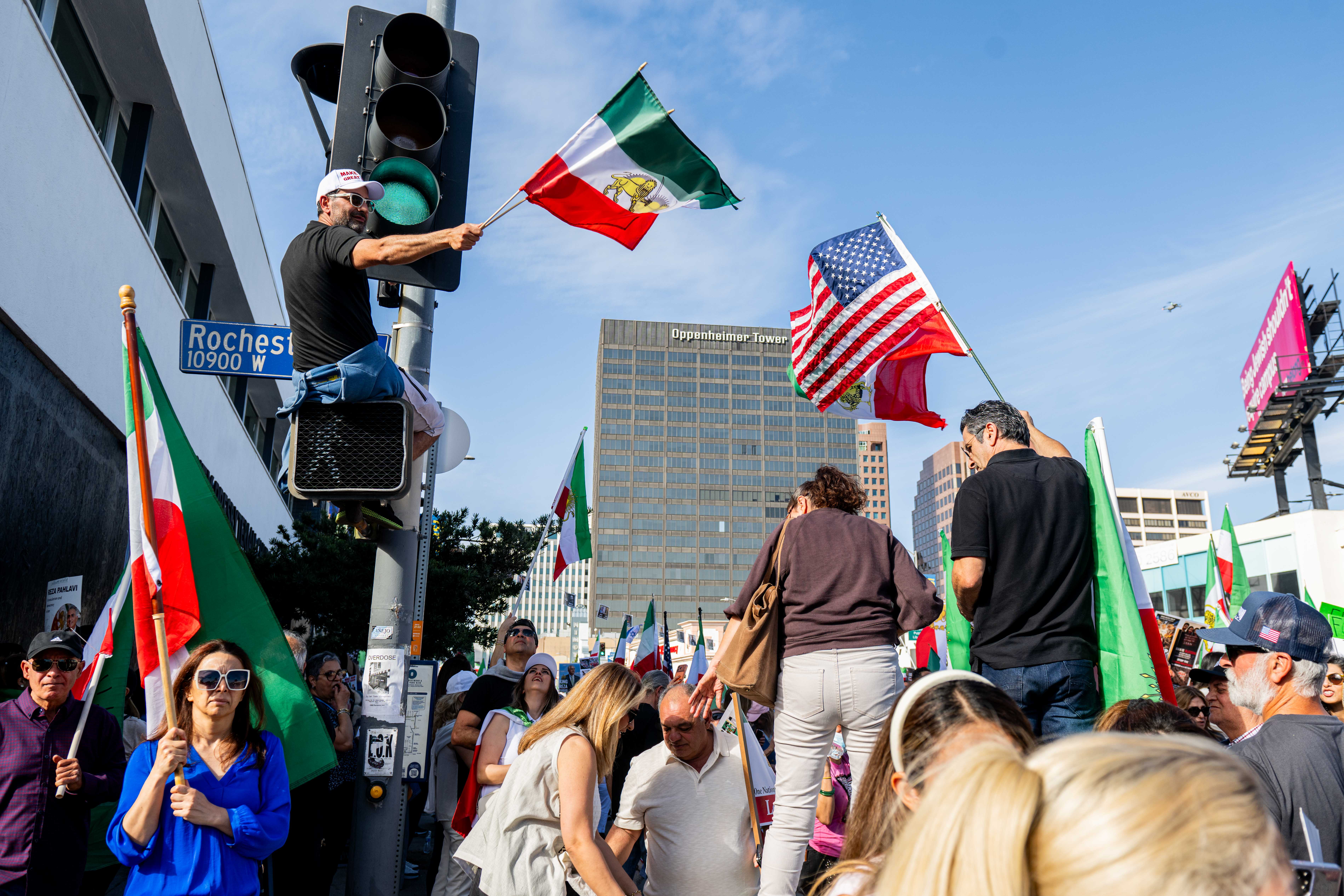
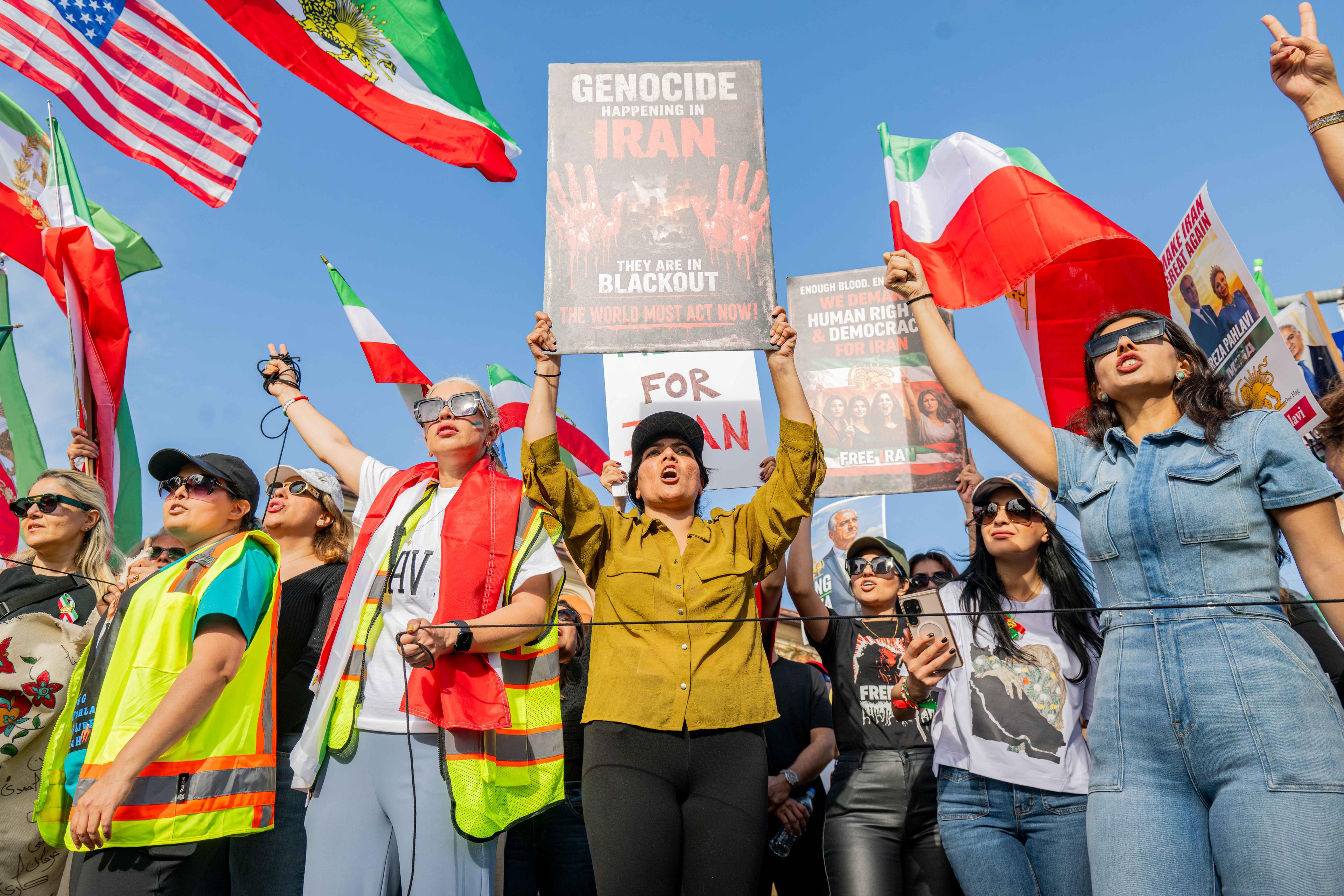
Demonstrators protest conflict in Iran. Columnist Angelina Alkhouri argues that UCLA students should stay informed while key geopolitical events unfold, especially in Iran. (Andrew Ramiro Diaz/Photo editor)

By Angelina Alkhouri
July 3, 2026 11:36 p.m.
This post was updated July 4 at 12:25 a.m.
There are two types of UCLA students: those who protest and those who walk by protests.
Some feel motivated to speak out. Others may be hesitant because they do not know the full story or feel overwhelmed by a range of differing perspectives.
In 2024, UCLA students and community members organized the Palestine solidarity encampments, which advocated for UCLA’s divestment from companies that invest in weapons manufacturing for the Israeli military and called for a permanent ceasefire in the Gaza Strip.
Students can feel powerless when issues are halfway around the globe.
But the Palestine solidarity encampments proved students often do care and understand the impact of geopolitical issues.
The conflict in Iran should be no different. Students should make a more concerted effort to educate themselves about the United States-Iran conflict. They must engage in multiple perspectives and news sources to ensure they have an informed understanding.
The war has been devastating, and even with peace talks, much remains uncertain.
“What happens in other parts of the world, especially the Middle East, given the large population of those who are from or otherwise connected to the Middle East, has an impact on students and people that live in LA,” said Benjamin Radd, a senior fellow at the UCLA Burkle Center for International Relations.
And, to be sure, some students already have background knowledge – or a personal connection – to the topic.
“What I’ve seen of those protests, a lot of them are student-led. … And I’ve seen people post about conflicts on social media,” said Jiaa Bartake, a rising third-year human biology and society student. “Students like to stay really informed, and they do seem to care.”
For students who feel disconnected or uninvolved, it may seem easy to get information on social media. But searching for more credible information is vital.
“(Many students) don’t have a full understanding of both sides of the story, and are currently misguided,” said Gabriella Ebrahimi, a rising fourth-year psychology student with a Persian background. “The media tries to portray the situation as one-sided.”
Students can’t ignore the tangible impacts from the conflict in Iran that manifest in our daily lives. For example, gas prices have risen by $1.10 per gallon from February to June because of the Iran conflict, which has created the largest supply disruption of the global oil market historically, according to Gov. Gavin Newsom’s website.
Fuel prices skyrocketed worldwide due to the closure of the Strait of Hormuz and the war, said Radd, a lecturer at UCLA School of Law.
Prices have fallen since peace talks began, but gas is still expensive. California has diversified fuel sources due to clean air laws and the development of state refineries. However, the Trump administration has not been open to using alternative energy sources, causing the country to increasingly depend on the global petroleum network.
Beyond economic impact, students must properly educate themselves on the war to be effective voters during elections. Students need to vote for leaders that understand the complex geopolitical issues at hand.
“The leadership does not have a concrete understanding or plan,” Radd said. “You have decision makers who are not well versed in the geopolitics of that part of the world, who don’t understand the culture and the history.”
It is overwhelming to make these distinctions, especially since the conflict is changing by the hour. Trump has claimed numerous times to have achieved military objectives despite significant losses, while Iranian officials denounce his claims.
Some believe these wavering statements are meant to confuse people, but it appears that the officials themselves are the ones confused or disorganized, Radd said.
UCLA students have effectively attracted attention to geopolitical issues in the past. We are capable of demanding change.
“Only then, when you are better informed, can your advocacy be meaningful,” Radd said. “When you’re listening to an echo chamber, I think advocacy becomes more performative than it becomes substantive. And if it’s performative, it’s not helping anybody.”
Students must continue that tradition by informing themselves and speaking out on the Iran war.