Q&A: GSA president discusses support for graduate students, plans for 2026-27
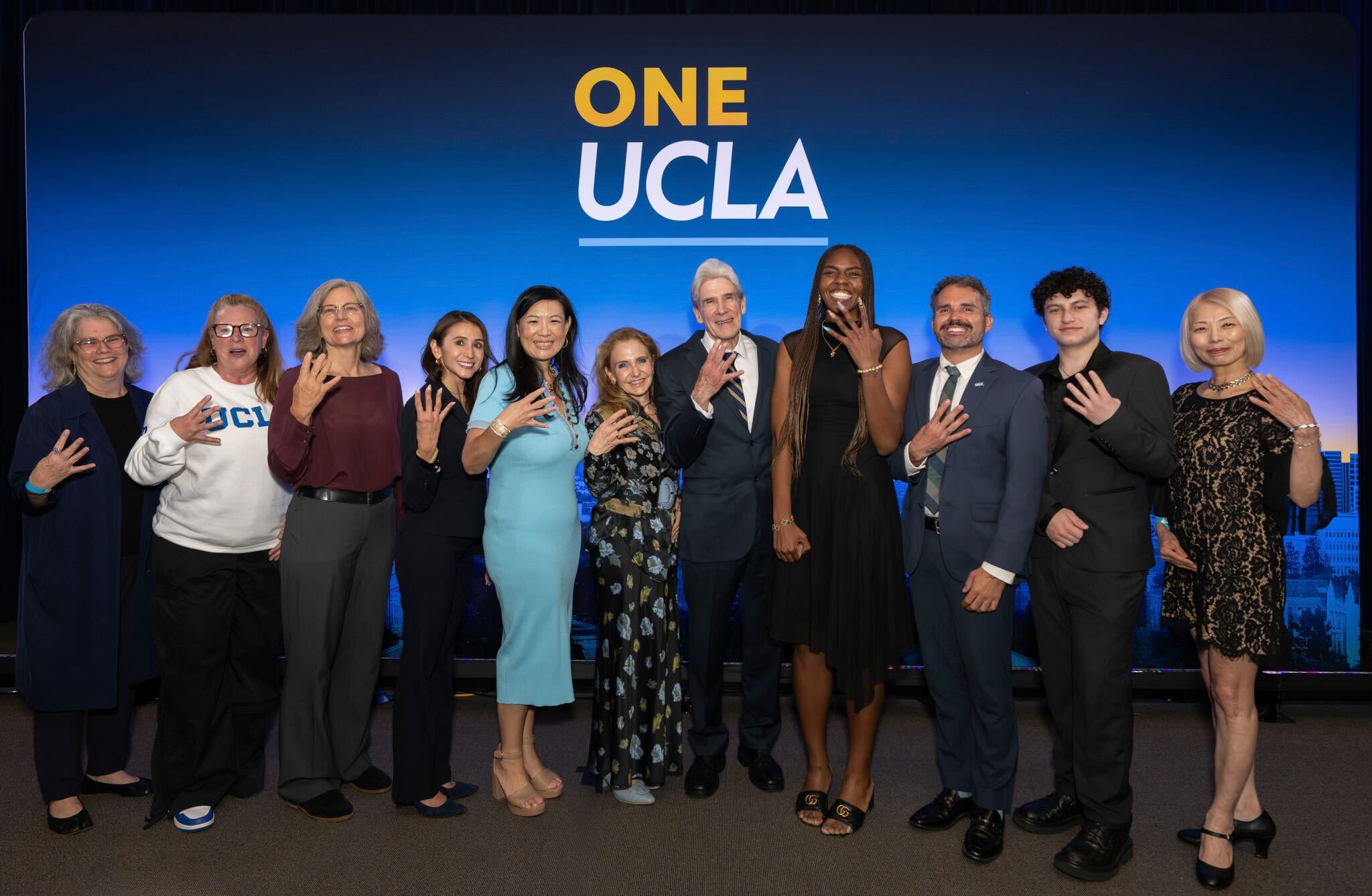
Naomi Hammonds, a graduate student in public health, stands on stage alongside UCLA administrators. Hammonds also served as the GSA president during the 2025-26 academic year. (Courtesy of David Esquivel)

By Nicholas Mouchawar
June 7, 2026 1:44 p.m.
Naomi Hammonds, the president of the Graduate Students Association, called for more support for graduate students following a year of research funding cuts, basic needs delays and housing changes in a conversation with campus politics editor Nicholas Mouchawar.
Hammonds, a graduate student in public health, served as the GSA president during the 2025-26 academic year and was reelected to the position in May. She previously served as the Undergraduate Students Association Council president for the 2023-24 academic year.
This interview has been edited for length and clarity,
Daily Bruin: What issues mattered the most this year to graduate students?
Naomi Hammonds: This school year has been filled with a lot of uncertainty, and that starts with the beginning of the year – during the summer – when research funding was first under attack, given this political administration. We saw a lot of grad students lose their funding for their projects, or just because their projects may have mentioned diversity, equity or inclusion, or mentioned a specific group that you were interested in, get cut out of the blue. That led to funding issues because we survive off of our research, off of being able to produce scholarships.
Other things that came up were basic needs, especially when we heard that CalFresh was going to get disrupted. I remember the havoc of just seeing at CPO – our Community Programs Office – the amount of people that were in line, seeing the response from our basic needs center at Strathmore and how many grad students they had coming in.
The Weyburn move‑out was affecting a lot of grad students, and that’s still going to continue over the next two years as they continue to phase out all the Weyburn into now the undergrad housing. In those conversations, we’ve seen a lot of prioritization of the undergrad experience, but sometimes we forget about grad students and where our voice fits in.
We’re the backbone of the institution. We do a lot of the teaching. We do a lot of the research. We do a lot of all the things to make sure that the university continues to run smoothly and efficiently.
DB: What are you most proud of that GSA accomplished this year?
NH: Community. Coming back to UCLA as a graduate student, one of the first things I noticed is that being a double Bruin, I had such an easy time coming back and navigating the space. But for a lot, this is their first time in Westwood.
To be thrown into an institution that is so big with so many resources, we see a lot of people struggle to navigate those. So one of my biggest things has been, ‘How do I make sure that a grad student feels like they belong here?’
We’ve been able to do a lot of community‑building events across disciplines, in specific disciplines and then bringing folks together through our collaborations with Student Affairs and other departments.
DB: What did you learn about graduate students’ specific needs after becoming president or just becoming a grad student this past year?
NH: Just how hard it is to survive in LA. For a lot of folks, as costs continue to rise, we’re even seeing that now with gas prices. We had a presentation at our last forum meeting that the parking permits are going up again next year.
That’s a cost that most people have to spend, because not only do we go here as grad students, but we also work here. I teach three times a week, so it made the most economic sense for me to buy the quarterly permit pass. But if that continues to rise, my paycheck didn’t rise with that. What else do I have to sacrifice?
One of the things that we passed at our last meeting was additional support from GSA to go to parking permit grants, so that’ll be available to grad students next year to help offset some of the costs.
We’re also going to be working a ton with our basic needs centers across campus. Basic Needs at Strathmore does a food market, bringing fresh produce for people to come and grab, and that’s usually a biweekly event. We will push their stuff in our newsletter to make sure that folks know that this is for you, too, because that’s also sometimes a misconception. Sometimes grad students say, ‘Oh, this is only for an undergrad,’ but no, you can come and get this.
DB: GSA passed a lot of changes this year during the election, namely approved changes to the constitution. Why were those changes needed?
NH: With GSA, what I run into a lot is that we haven’t made a lot of changes in the past couple of years. When I came in, for instance, we would only meet every three or four weeks. Coming from USAC, where we meet weekly, I was like, ‘If I’m only meeting with you once a month, I need more touchpoints with the folks that I’m representing.’
One of the first things I asked was, ‘Can we meet biweekly?’ We did that, and I think it’s been really successful. It’s something that we’re going to continue into next year, and that was one of the things we wanted to formally update in our constitution and bylaws.
DB: They (GSA and graduate student voters) also passed a lot of student fees this election cycle. What would you say to students that initially maybe had concerns about them?
NH: We wanted to make sure, if this fee passes, how is it going to tangibly help students?
With the ASUCLA Bruin Gold referendum, we’re going to give academic travel scholarships. There’s a plan for it that we’re going to work on over the summer to make sure that it’s fully executable by fall quarter, because that’s when we’re going to start having people be able to apply and get scholarships to go to their conferences and present their work.
Money’s going to go toward orientation planning. We’re going to have a one-day orientation that’s going to include both Student Affairs and the Department of Graduate Education and all of the workshops and resource fairs.
Some people did have concerns about the fee prices and the increased rate. Bruin Fresh was originally going to be a $10-15 fee, and that came down to $5 per quarter. I believe the ASUCLA fee was higher, as well. When they came to our forum meetings, that was something that was mentioned. They said, ‘Let’s go back to the drawing board.’ The people proposing these referendums being able to receive that feedback and make adjustments helped in making it pass as well.
DB: We were talking about administrators, having you guys (the GSA) in the conversation. What is that relationship like with the administrators?
NH: Sometimes grad students just aren’t given a seat at the table. Because the undergrad population is so much larger across the various institutions – the various UCs – they forget about grad and professional students. I had to edge my way into the room, which I don’t think should have been my responsibility.
How do we continue to ensure that grad student input is there? That’s been a big thing. We have these committees, we have these representatives to make sure that there is a student voice at the table. But it shouldn’t only be an undergrad student voice.
I’m not getting pushback on it. It was just, unfortunately, an oversight.
One thing that we have worked on and partnered with administration, specifically with Student Affairs, is our first Leadership Academy. We got over 100 applications, and unfortunately we only had 50 spots. We demonstrated that the need is there. After that successful weekend, we’re going to do it again next year. We just have to not be afraid to try something new to support our graduate and professional students.
DB: You were actually reelected for another term. What made you want to run again?
NH: There was unfinished work. One thing that has been a big pain that we need to fix is our website. Our website last year around this time was shut down for reconstruction by a previous director. That led to delays in people being able to file for reimbursements and purchase orders that they needed to do through Student Government Accounting.
Our website since that relaunch has still been missing information that people need to plan events, to program, to do their job and to find out how to outreach to somebody in GSA. That’s something that I want to fix this summer.
Another thing is folks have had concerns with our Student Government Accounting that we’ve been working to address with them about delays in getting reimbursed. That’s something that we also want to do going into next year and be able to streamline those processes.
I also just want to do more events. Now that I have my bearings and now that I’ve seen grad students be successful throughout the year with the events that we’ve done, I know what we want to focus our energy into and what we want to add.
There’s a series that I want to do next year called the “Lecture on Tap” series, where folks rent out a bar and come up and present their research, present their topics. That’s really good not only in a professional sense, but also in a networking sense. Grad students can meet other grad students that are presenting their work, and they can prepare for research conferences and academic conferences that they’re eventually going to.