What’s popping: Exploring club pop-ups on UCLA’s campus
(Daily Bruin file photo)


For the 2025-26 academic year, UCLA has 1,523 campus organizations registered with the Student Organizations, Leadership and Engagement office. Nearly 100 new organizations registered in spring quarter alone.
These student organizations range from academic to social, with one of the largest categories being service-based clubs. Many of these organizations fundraise and recruit throughout the school year on Bruin Walk.
Tabling on Bruin Walk
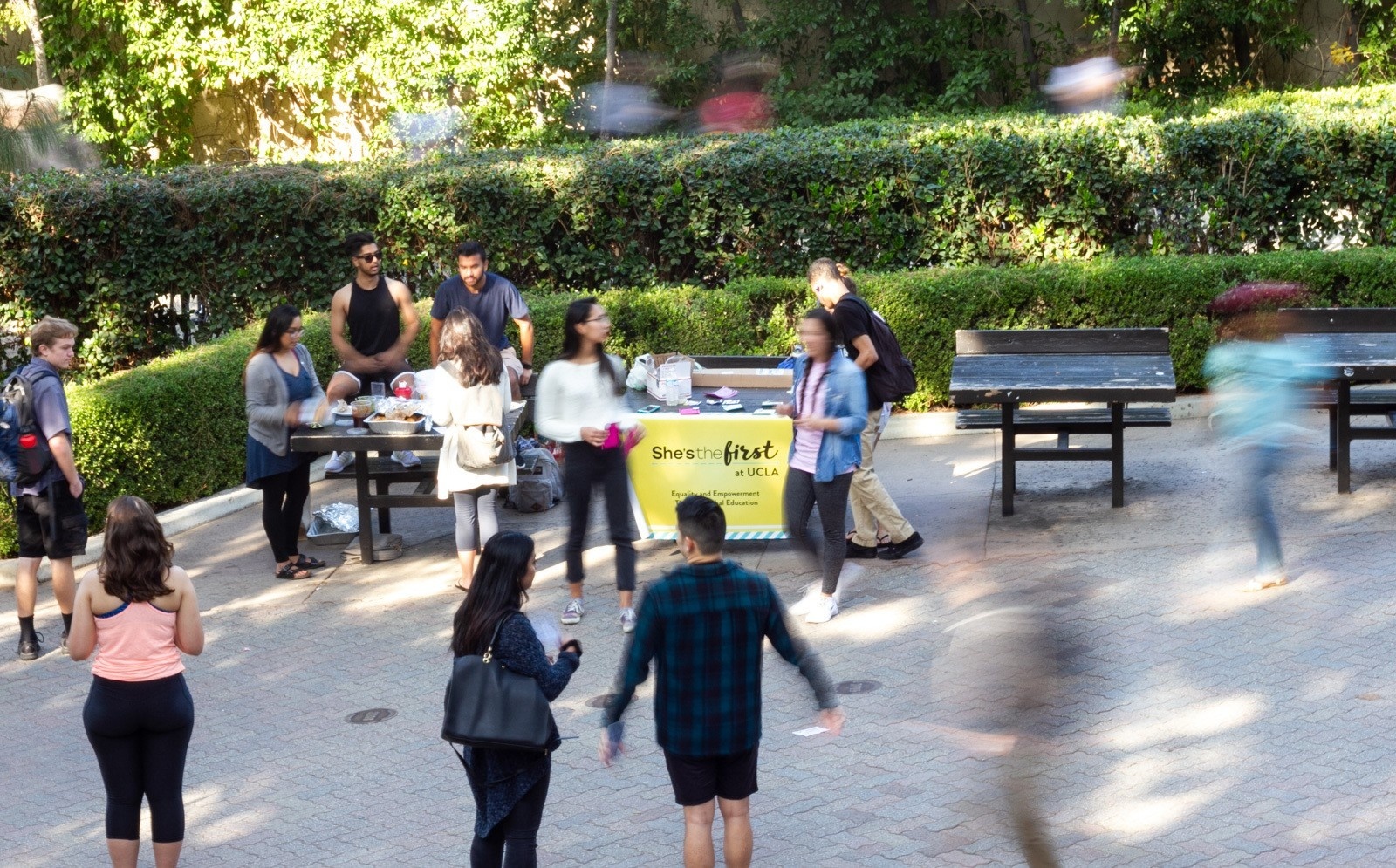
Bruin Walk is a central hub for advertising, fundraising and promoting events. Campus organizations can use the tables lining Bruin Walk to flyer or recruit on a first-come, first-served basis. Selling food, however, requires a SOLE sales permit.
SOLE only issues these permits for the distribution of baked goods, according to SOLE director Mike Cohn. Items that must be kept at a specific temperature cannot be sold.
Owen Stapp, a fourth-year English student who has tabled for HOOLIGAN Theater Company on Bruin Walk, said it is not difficult to get a permit for food sales, so long as a given club agrees to abide by the rules.
“We’ve had problems in the past – we’ve had a tower of food, and then we would use napkins and hand it out, but then we got in trouble for that – so that’s why we have to individually package stuff,” Stapp said. “But overall, it’s been okay as far as getting a permit from it (SOLE).”
Winter Quarter 2026 Bake Sale Permit Breakdown
The Stack obtained records for SOLE’s winter quarter bake sale permit allocations.
In weeks three to five, Cultural/Ethnic/Social student organizations were most actively selling baked goods. In weeks six through eight, however, Academic/Career organizations took the lead, averaging about six permits per week. Throughout the quarter, service clubs were most consistent in hosting bake sales.
Students often engage with clubs differently depending on the week, said Timothy Ha, a second-year electrical engineering student and member of the Christian fellowship Grace on Campus.
“At the beginning of each quarter, people seem more interested in coming up and talking or arguing,” Ha said. “But later on in the quarter, it’s more about being a hub … to come up and ask that question of who Jesus is.”
SOLE officials periodically check in on Bruin Walk tables to ensure that every group selling food has a permit. Christy Leung, a second-year psychobiology student who has helped with tabling for GlobeMed at UCLA and Asian Pacific Health Corps, said her clubs have had to delay fundraisers because they did not have permits.
Leung added that, although the clubs must obtain permits to sell food, she is still wary of eating the items.
“I know they’ll touch money and also touch the food, or they won’t have napkins, or they’ll keep the food open,” she said.
Advertising a Booth
Even when a club secures a spot on Bruin Walk, the success of its tabling efforts is not guaranteed. Arushi Gupta, a third-year cognitive science and statistics and data science student, said clubs should present a unique selling point to gain students’ attention. She contrasts giveaway booths she has helped at in the past against a recent Dubai chewy cookie fundraiser.
“I think something that was unique about this one (the fundraiser) was that it was so, so popular and viral. I think that’s the reason it did so well, because we grabbed it at a very good time,” Gupta said.
Clubs should use different platforms – such as social media – to advertise their booths beforehand, Leung said. However, she noted that generally, only a club’s followers see its social media posts, making it important to advertise in communal channels as well.
One such channel is the Freebies on Campus GroupMe chat, started by UCLA alumnus Alexandra Sanabria in September 2024. Students use the chat to post about free resources or giveaways occurring on campus so other students can take advantage.
“Someone could have gotten a free meal because of this,” Sanabria said. “They could try out a new free product, and who knows? Maybe it’ll become their favorite product, and they’ll buy it in the future.”
Gupta is working with a team of students through product development club DevX to create UCLA BLink, an app for students to post about club and brand pop-ups. Brands, in addition to clubs, often host temporary shopping events on campus.“My freshman year, I missed pretty much every pop-up on campus, and I was kind of frustrated about that, because … we are just so lucky that we’re in an area where (brand) pop-ups like this do take place,” Gupta said.
Student Sentiments about Pop-Ups
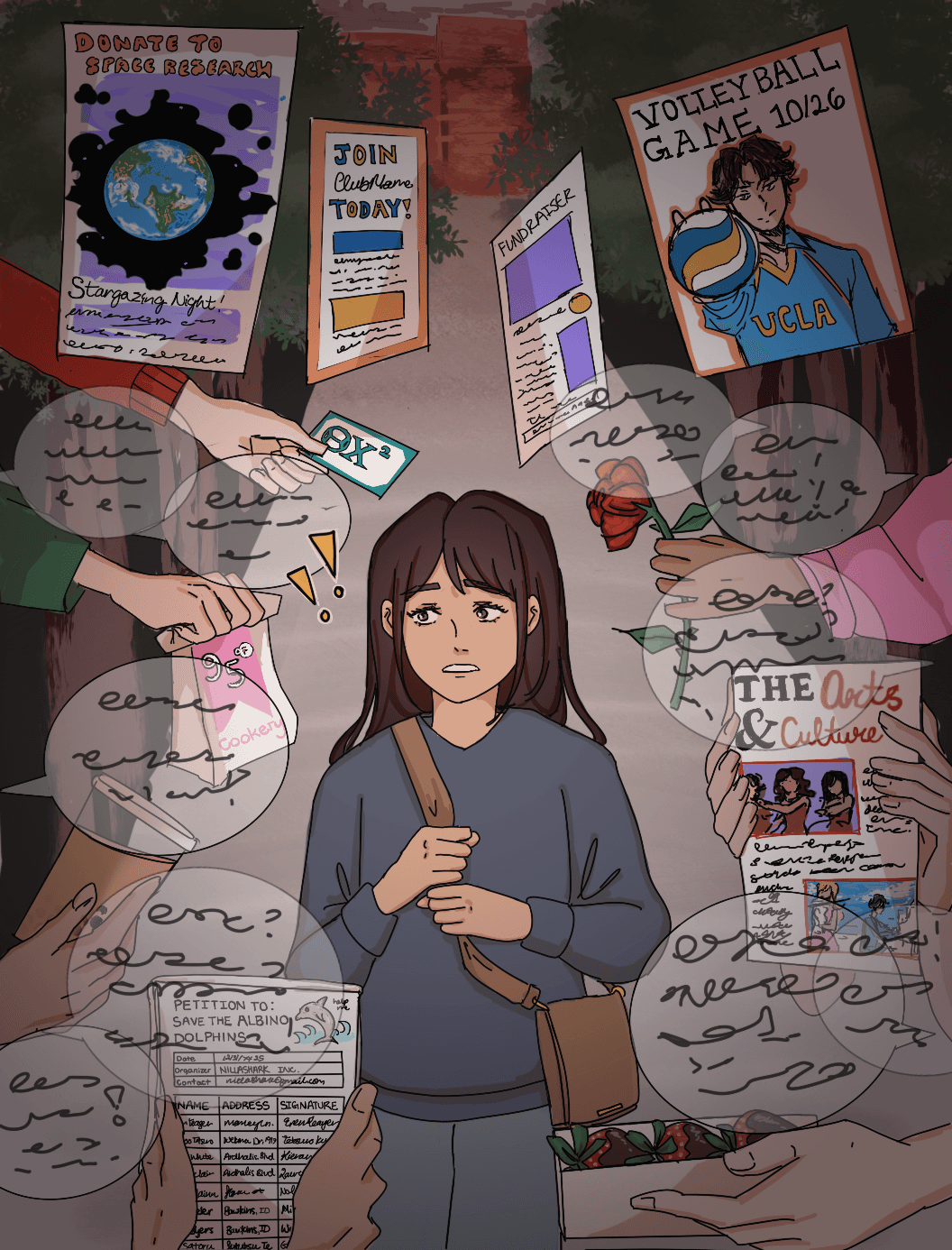
Leung said Bruin Walk – where club representatives often call out to or approach students – is often overwhelming to walk down. These interactions might even deter students from joining a given club, she added.
“I’ll be completely zoned out, walking as far away from (a) group as possible, and they’ll still come up to me and shove the flyer in my face,” Leung said.
Emily Shen, a second-year cognitive science student, said she also believes that over-the-top campaigning can sometimes be counterproductive to a club’s success.
But for Gupta, Bruin Walk tabling is an integral part of campus culture.
“It’s such a unique part of campus,” Gupta said. “You can support your fellow classmates (or) actually buy things that you aren’t able to buy super often.”