Medical professionals, club emphasize CPR, AED skills amid national awareness week
(Mikaela Kwan/Daily Bruin)

By Zoe Wolfers
June 4, 2026 8:29 p.m.
This post was updated June 6 at 8:56 p.m.
Most people learn CPR in case of a once-in-a-lifetime medical emergency.
But for Tazan Gallardo, a senior emergency trauma technician at the Ronald Reagan UCLA Medical Center, performing CPR is a daily occurrence that allows him to help save lives.
Gallardo said the emergency department performs CPR an average of two times per shift, and he has saved the lives of two strangers and a loved one outside of work hours. To Gallardo, knowing CPR and how to use an automated external defibrillator – a portable device that can revive someone – is essential, he added.
“Initiating CPR right away likely changed the outcome of their lives and of their families’ lives,” Gallardo said. “Instead of having to mourn their loved one, they’re able to celebrate more years with them.”
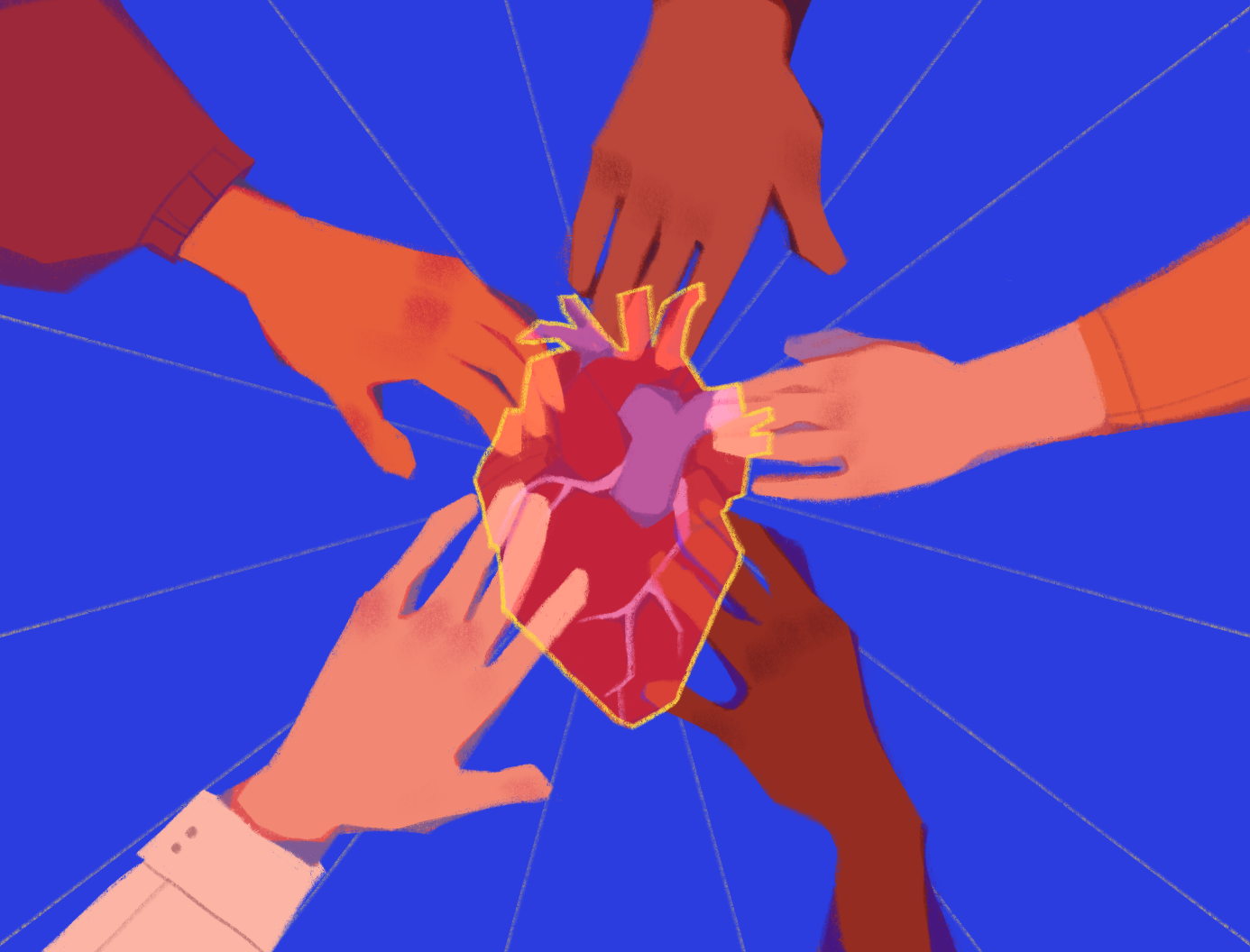
CPR – cardiopulmonary resuscitation – is a lifesaving technique used to revive someone when their heart stops beating. The goal of CPR is to compress the chest to keep blood and oxygen flowing to the brain and other essential organs until the heart restarts, according to the American Heart Association.
June 1-7 marks National CPR and AED Awareness week, a time dedicated to highlighting CPR and AED skills – and how having them can save lives.
“The most important interventions in cardiac arrest are not medications or fancy treatments that can be done at a hospital – it’s bystander CPR and it’s getting electricity to the heart as quickly as possible,” said Dr. Gregory Hendey, the inaugural chair of the department of emergency medicine at UCLA.
CPR makes an astronomical difference in one’s chance of survival, Gallardo said.
CPR can also limit damage to the brain that can occur during cardiac arrest, he said. A person begins to suffer brain damage between two and four minutes after their heart stops, and that damage can become permanent after six minutes, Gallardo added.
In most cases, a person becomes medically dead after 10 minutes pass, he said.
“The reality is, most people are not going to use this on a random stranger,” Gallardo said. “It will most likely be someone they know and love, so just having that basic skill of CPR and knowing how to apply an AED and follow the prompts could save the life of the person you love most.”
Hendey said, while EMS systems are fast, it can take at least five minutes for EMS to arrive on-scene. Chances of survival go down every minute the heart does not beat, so it is important that someone performs CPR as soon as possible, Hendey added.
Bystander CPR, along with using an AED, doubles or triples chances of survival, Hendey said.
It is relatively easy for people with no medical training to use AEDs, which shock the heart with electricity to restart it following cardiac arrest, Hendey said. He added that AEDs do not cause additional harm because they will only shock the heart when appropriate.
The CPR and First Aid Program at UCLA – a student-run organization that offers low-cost certifications in CPR, first aid and basic life support – teaches classes in Ackerman Union and conducts outreach beyond UCLA’s campus, said Nathan Dang, the club’s incoming co-director.
“Learning the bare minimum of CPR can take 30 minutes to an hour, but it can make all the difference in saving someone’s life,” Dang said. “That’s one regret that you won’t ever have if you choose to take the time to learn on your next coffee break.”
Ryan Dickerson, a general member of the club, said she joined the organization because she has a history of heart disease in her family, adding that she hopes to use the skills to support her loved ones in case of an emergency.
Students often join the club feeling nervous about doing CPR incorrectly, but the skill becomes much less intimidating through practice, Dickerson said. The organization seeks to help students feel comfortable when stepping in and working under the pressure of an emergency, she added.
“Teaching CPR, first and foremost, gives people the confidence to act in emergencies instead of freezing,” ryDickerson said. “It honestly makes communities safer because people know how to respond before EMS arrives and it gives victims more of a chance of survival.
Vignesh Neerathalingam, a fourth-year psychobiology student, underwent CPR training while obtaining his certification as an EMT, he said. It is important that organizations teach CPR on university campuses so students can use the lifesaving skill after graduation, he added.
“Don’t be shy,” Hendey said. “It’s far better to try to do CPR on a cardiac arrest victim than to wish you had jumped in.”