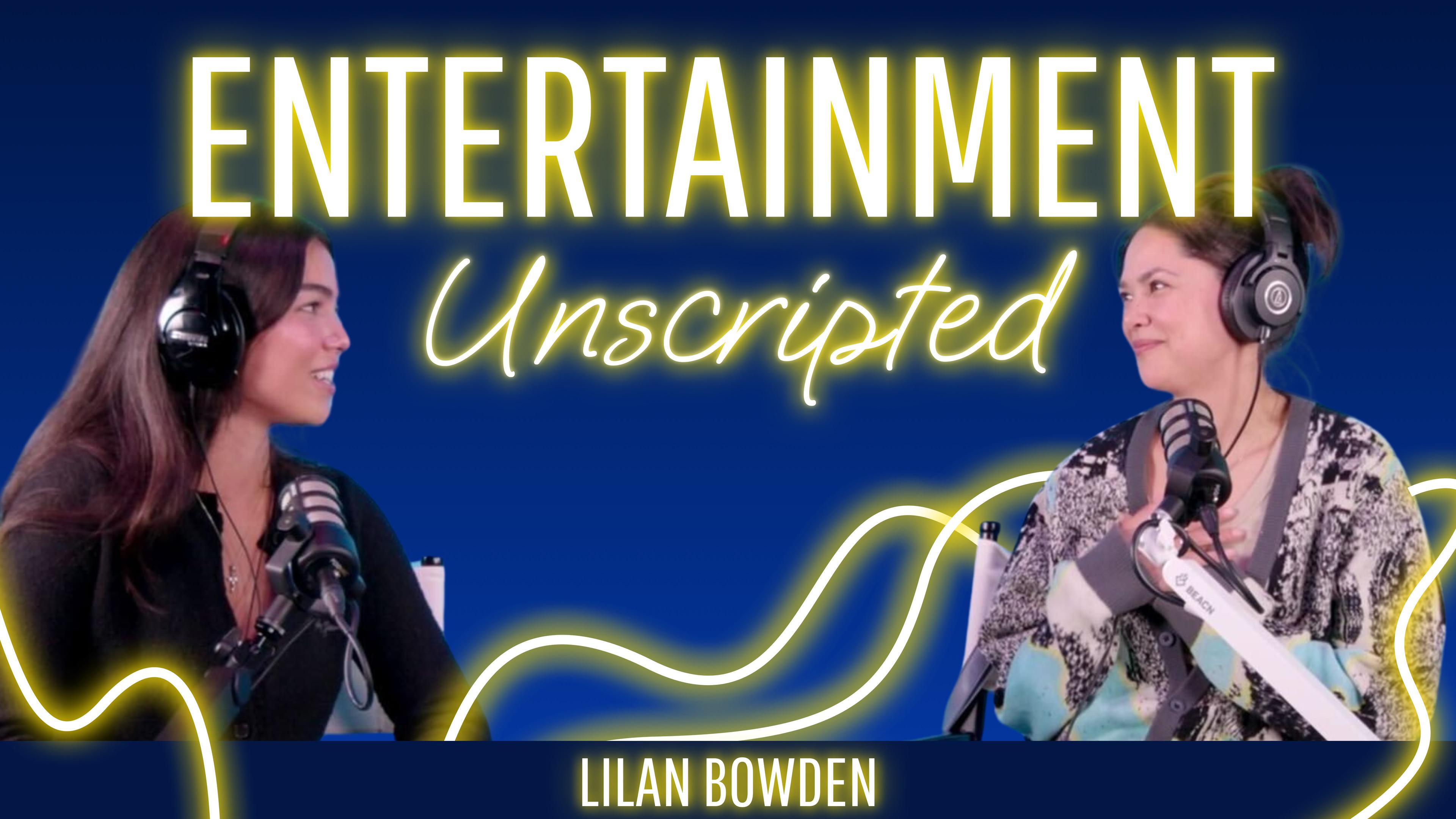
Entertainment Unscripted: Marialena Lamprianidis


By Alik Artinian
May 26, 2026 12:35 p.m.
Listen to Marialena Lamprianidis share her story from just starting out her career in entertainment after UCLA to working at Zero Gravity Management and Innovative Artists.
Alik Artinian: Hello everyone, and welcome back to Entertainment Unscripted. My name is Alik Artinian, and this is a series where we sit down with individuals in the media and entertainment industry to discuss their work and the field overall. Joining us today is someone who was in your shoes not too long ago. She’s a proud UCLA alum who has been part of the Hollywood world for a long time, from Zero Gravity Management to XYZ Films and to Innovative Artists. Enjoy my chat with Marialena Lamprianidis. Welcome Marialena, how are you?
Marialena Lamprianidis: Hi. I’m great. Thank you so much for having me.
AA: Thank you for coming.
ML: This is awesome.
AA: How was your day so far?
ML: My day was great. It was chill. I just got back from work. I’ve been looking forward to this chat. I’ve been thinking a lot about my time in entertainment. You were nice to say it was a long time.
AA: So this is going to be fun.
ML: Yeah.
AA: Could you tell me about your time at UCLA, and what made you decide to get into entertainment in the beginning?
ML: Yeah, so I entered UCLA 2020, COVID year, which was interesting. Everything was on Zoom, and I entered into the film program off the bat. I knew I wanted to do film. Honestly, in high school, I was mostly thinking law because I have the “I want to change the world” mentality. And, you know, social justice, the social justice of it all. And so I wanted to go into law, but I had this creative flair that I really wanted to address. I really, I was a writer, always, and I always, I wanted to combine the two – I wanted my craft to save the world, essentially. So that’s what helped me land in film. Applied to the film program, which was great, except it was COVID year, like I said. But that actually wasn’t too bad, because the film program, a lot of it is just theoretical prerequisites the first two years – which was very easy to do online – and then this last two years of the film program is when you’re really doing the hands-on work. You’re getting behind the camera, you’re out in the field, you’re making your own films. So yeah, it didn’t bother me too much. I loved my time at UCLA. Let me tell you, the professors are out of this world. They’re your best resource, and they’re actually also your best resource post graduation as well. It’s thanks to professors at UCLA that I got my first internship, which led to my second internship, which led to my job. And also the film program specifically, you’re in a fairly small cohort of people. You start with fifteen people first two years, and then we get fifteen more transfers, so we finish with thirty people. You get really close to the people on the program. Yeah, it’s cool. You’re always working on each other’s films and projects together, and then you’re growing side by side in the industry as well. It’s really funny, there are people that I was taking classes with and interning with, who I randomly bump into at jobs, or I have friends who are friends with them, and you really understand how insular and interconnected this industry is. No one is a stranger. You have one or two degrees of separation from anyone,
AA: Yeah.
ML: Which is really cool.
AA: What was the most surprising thing about your first three months after graduation, and was the real world of entertainment different from how you pictured it when you got your internship?
ML: Yeah, a little bit. I think what was, I guess it wasn’t surprising, in the sense that nobody ever tells you, “Entertainment is easy,” like, “You just go out and here’s a job and everything is hunky-dory,” but I think it was just kind of jarring. You’re just like, okay, I’m alone in Los Angeles. What do I do now? Yeah, so that was just kind of jarring, but I can’t say it was surprising, because you really are warned every step of the way. I remember sitting in classes and hearing multiple, multiple times: If you can see yourself doing anything else, do it because it’s, it’s hard and it’s weird. First three months post graduation, I did take a beat for myself, and then I dove headfirst into finding a job. I guess what was surprising is I was just applying everywhere, and then I realized: I think entertainment is a little different. You can’t just throw your application into the ether and cross your fingers. The way you have to go about getting a job is by building your network. A lot of careers are network based, but entertainment, I think, is just a different beast. I literally just stopped applying at some point. I was like, “I’m not playing these games anymore.” I’m not going to, I’m not going to try. And I was living with my parents at the time too. So it’s like, that was a privilege, for sure, because you don’t have the anxiety of like, okay, rent is due. I really have to lock in and find something. And so I was like, okay, instead of throwing my application into the ether and begging for a job on LinkedIn, what I’m going to do is, I’m just going to meet new people. I’m going to spend all of my time getting coffee with anybody who will answer me and agree to getting coffee. Reach out to everybody I know. So I guess, yeah, that was surprising that I had to really tap into socializing to find a job. But – and it works though – I’m happy to talk about that in a little more depth. If that makes sense at this point.
AA: Yeah, did you reach out through LinkedIn, or where did you find their emails?
ML: Yeah, good question. I reached out to everyone from peers to professors to cold emailing people to LinkedIn. I did a little bit of everything, I think, yeah, it’s about the degrees of separation. What I did first is, I went to people who I interned with whose contact information I already had, and I would either meet up with them, and after meeting up with them, be like, “Hey, is there anyone you can refer me to? Who you think would be good for me to talk to, who you think I would vibe with,” or, let’s say, initially, off the bat, I was thinking about becoming a screenwriter because writing was my passion. I think I was decent at it. Like that was, that was my direction I wanted to take. So I remember sitting down and talking to screenwriters who my professor put me in contact with, and then being like, “Who do you think I should reach out to based on my writing style and my interest?” I’m into comedy writing, so they would set me up with a comedy writer.
AA: Oh nice.
ML: Or I’d be talking about certain strengths of mine in meetings, and people would be like, “Oh, you know what? You’d actually be really good at this type of producing role,” or “You’d be really good at agenting,” or whatnot. “Let me connect you with this person.” So every time you meet with someone, always asking for a next point of contact I think really helps push the needle forward. And then another crazy resource, which I didn’t think was going to be such a resource, was my peers. I remember just reaching out to peers just to catch up. And then, when I decided that I no longer wanted to pursue screenwriting, and I wanted to go into the agency space, I remember just reaching out to a friend who I had met, I want to say, literally the last week before graduation. And I was like, “Hey, let’s get coffee. Let’s catch up. What are you doing?” No ulterior motives, no intentions. Like, I didn’t even check her LinkedIn to see that she was working at an agency. So we’re there getting coffee, and I was like, “Oh, you know, I’m thinking about going to an agency.” She’s like, “Oh, amazing. I’m at an agency, and I know we’re hiring,” and so she helped push my application along. And that’s not an isolated phenomenon. That’s how, actually, most people entering these entry-level positions do get their jobs, is they have a friend or a peer or someone they went to class with in the space who they just happened to connect with at the right time, and then they got them in the door.
AA: Nice. Was Zero Gravity your first internship in entertainment?
ML: Yeah, it was. So I was actually in Alex Franklin’s producing class, and at the end of the quarter, I can’t remember if I reached out to him for internship opportunities, or if he had reached out to a handful of students and was like, “Here are some internship opportunities available.” So don’t quote me on that. He essentially was why I ended up at Zero Gravity, which was great. Teachers are an incredible resource for connecting you with – our professors, I should say – are an incredible resource for connecting you with people in the industry just to chit chat with or opportunities that might be available. While I was at Zero Gravity, I made a lot of friends with the other interns that were there, and then we kept in touch, and that helped down the line. And then there were also assistants there that I connected with, that I got their LinkedIns, and then we went for coffee and drinks later, and that was, that was a great resource, because when I was on the job hunt, I would reach out to all these people, and they were like, “I have my ear to the ground. Whatever I hear, I’m letting you know.”
AA: Nice.
ML: And things, things did open up, and you know.
AA: But during those coffee chats, were there any awkward moments, you know, like, it’s the first time you’re meeting someone?
ML: Yeah, I guess it’s as awkward as you make it.
AA: Okay.
ML: I was of the philosophy, when you’re talking to these people, they know you are either going to be a grad soon, or you’re a recent grad and that you’re looking for a job. Like it’s no secret that you want something from them, or they’re a resource to you for some reason. And my logic was like, these people don’t owe me anything, and the fact that they’re even sitting down taking time out of their busy schedule – because, good God, being an assistant is a busy job – the fact that they’re giving me this time is a gift enough. So my logic was, what can I offer them? I’m not trying to ask for anything. I’m not trying to take anything. I’m trying to offer them an interesting conversation or flattery or whatnot. So I think the best thing to do, to not make things awkward and to keep the conversation flowing, is showing up prepared, in the sense that showing up having been up to date with what’s going on in the industry to discuss something interesting about that moment in time and what’s going on. And, “What are your thoughts on this merger, this acquisition, this script that was bought,” and whatnot, or doing research on them as a person. Oh, like, “You also went to UCLA, and I see that you’re an assistant, and you’re ending up at this role, this entry-level position that I would die to be in. How did you get there?” And honestly, another thing that I did, is I approached – especially when I was talking to people who were in these entry-level positions, or close to my age, even older. But the closer you are in age, the better is, I was walking into it like, “I want to make a new friend,” like, “I’m going to talk to you,” like, “I’m getting coffee with a friend and we’re going to hang out, and I want to know about your life, and what are your interests and your hobbies?” Because when you do make these actual connections, like I said before, it’s a very insular community, this entertainment industry, and you’re – I have bumped into people that I had these random coffee chats and just conversations with earlier, like I bumped into them, we’ve emailed each other at jobs later. So just building friendships also makes the job easier. It’s like we made this connection here, who knows, maybe six months down the line, when I’m employed somewhere, like, I can help you with something from my company. You might need a piece of information, and then again, you’re just making friends. Like, there’s a lot of people who have moved to Los Angeles, have uprooted their lives completely, who might be in a place that’s a little foreign or they don’t have the network that they did back home. Everybody’s just trying to build a network.
AA: Yeah.
ML: And if you’re, if it’s all just surface level and transactional, it’s not fun.
AA: Yes.
ML: Just making the friendships and the connections and coming at it from a very genuine place, I think, will only create benefit for everybody involved.
AA: You’ve also worked in the mailroom before.
ML: Yes.
AA: How was that experience, and what is an important soft skill to have in the mailroom, because you’re trying to get noticed, you know, by the big people.
ML: Yeah, the mailroom is awesome. I will say, internships are a great way for becoming just comfortable in the entertainment setting. So you’re not scared around, like execs, or just, it can be a very scary, intimidating space. So an internship is getting you familiar with the space, because you don’t really have responsibilities or major things that you’re contributing. So, the stakes are low; you’re just getting familiar. I think the mailroom, you have a few more responsibilities in terms of the tasks that you’re asked to do. It’s very, “You don’t really have to use your brain.” It’s very much like you are literally sorting mail. You’re sending mail, you’re setting up coffees for people, you’re checking in people at reception, you’re transferring phone calls. Like it’s a low lift in terms of your skills, I think where you can really shine is when to know, is knowing when to speak up and make yourself seen and heard, and when, like, when to participate in conversations and when to stay quiet. It’s going to sound really bad, but knowing your place, I think, is very important. If you’re in a type of mailroom where you’re, you are, greeting guests, and you’re working as a type of receptionist, I think being able to be really polite and professional and making people feel welcomed is really important. Like not being told when to do a task and how to be helpful, like thinking five steps ahead in terms of, “Okay, I know this agent has this meeting, and so I’m going to go early and set up this conference room and make sure it’s to their liking. I know they like their coffee this way, so maybe I’ll set it up like that,” things like that. Being proactive, but not being annoying, because sometimes you’re really excited and you do want to talk to, “Oh, I really like this agent, so I want to impress them. I saw that their client was in this movie, so I did a bunch of research,” and just the second I see them blurting out whatever, and trying to show that I did my research, it’s like there’s a time and place for that, because they might be busy, they might be in the middle of something and it might be actually insanely obnoxious and creating, not conflict, but, like, it might just not be the time and place for it.
AA: Yeah.
ML: I think knowing, but, but then if there’s a lull, or you see, okay, they’re hanging out in the lobby waiting for someone, you’re like, “Oh, by the way, I saw your client in this. Amazing job.” Like, awesome opportunity, this is going to be great for them down the line in terms of personal branding, because of whatever reason.
AA: Yeah.
ML: Like, not being too invisible, because when you’re too invisible as well, you get completely forgotten, but also not being too annoying. It’s a fine line.
AA: Yeah. So you started at the mailroom, at Innovative Artists, and then you got to digital creators coordinator. Could you tell me how that process was, and what did the day-to-day look like for you as a digital creators coordinator?
ML: Yeah, so actually, right after the mailroom, I became an assistant for the literary department and the strategic marketing and endorsements department. I really wanted to get on a literary desk, because at the time, I had really wanted to be a writer. As soon as I got into the literary department, and I kind of saw the business of it all, it made me realize that I’m actually not so inclined to pursue a career as a writer, it was just a little too unstable. And it’s also, it’s a peculiar time in the industry right now, and also where AI stands and how many writing positions are available. And I understand that there’s ebbs and flows, like there are always moments where there’s a plethora of jobs available, there’s opportunities everywhere, and then, of course, there are times where the industry contracts. For me, I wasn’t a fan of that kind of instability, so then I kind of turned my attention to the strategic marketing and endorsement desk that I was on that’s essentially to reduce – it’s a lot more than this, but to like, really reduce it – it’s kind of like doing brand deals for celebrities. And I really liked that. I thought it was the perfect combination of being creative, but it’s also a very lucrative space, and it just felt like the future of entertainment. Really, like any celebrity, some, some writers, even that were gaining traction, you could funnel more money toward them through marketing and endorsements. So I thought, “Okay, this is a really cool space to be in.” Now, the digital industry, the digital creators, TikTok, Instagram, that’s, that really is the future. Like you’re seeing digital creators who have more pull than some of the biggest celebrities have had, and they’re making way more money, and they’re doing these incredible campaigns that are captivating the world. So I also, I started turning my attention towards the digital space. I made my, I guess, position pretty clear to HR and some other agents. And I was like, you know, “Social media related positions open up like, please do keep me in mind.” I feel like my background was aligned well with it, because I did have a little bit of a digital marketing background, as well, going into the workforce, but essentially, you do have to make it known to the people who are in charge, like, “I’m here. I’m here to support you in this position that I’m at right now, but this is where I want to end up.” And if I did want to be a writer, I should have told the the literary department, “I’m here as an assistant, I’m going to crush it as your literary assistant, my long term goal is to be a writer,” because nobody can help you if they don’t know how you want to be helped. So I went to HR, and I was like, “Look, if any social media related roles open up, please let me know.” And then eventually, we did start a digital creators department, Innovative Artists. So they, they were, I was the first person they went to, and they were like, an agent is coming to lead the department. Would you like to assist them? So absolutely, yes. So then I began my transition from strategic marketing and endorsements and lit to just digital, and the workload was a lot more because the agent that was leading the department was the leader of the department, so it was just basically helping assist in terms of fleshing out what the digital department looked like. And then, I was helping with this agent who had a lot of clients and a lot of responsibilities, and, like, it was a very high volume desk, so the day to day kind of looked like, wake up, you go to the office, and the first thing you’re doing is you’re looking at all of the most pressing deals and email communications that needed to be addressed ASAP. There, another element of the job was signing meetings. So you’re also scouting talent. You’re reaching out to talent. Talent being digital creators, influencers, streamers, YouTubers, whatnot, scouting talent, seeing who’s viable, who makes sense for the brand. Because it’s not just, you could have the biggest social media following in a certain space, and you might not make sense for the agency and the agency’s goals or the particular agent, because there are some agents who will focus only on sports creators, only on gaming creators, on fashion creators. So it’s all about finding the alignment. They’re scouting talent. You get talent into the office, and then you’re in the room with them, and you have to essentially with, a part of signing is, for lack of a better word, like convincing them that you are the agency they want to be with. So being in those rooms and being helpful, however possible, doing research beforehand about them, following up after, and making sure that you’re not forgotten, and you’re at the top of their inbox always, and that when they’re ready for representation, that they want you and only you. What else? What else? There’s a lot more, because it’s a very busy day. Email communications. You’re executing brand deals. You’re communicating between the brand and the lawyers and making sure contracts are executed and redlined properly.
AA: So lawyers are also included in the work.
ML: Absolutely. You’re invoicing, and you’re working with the accounting department, too, and making sure everybody gets paid on time. You don’t want payments to slip through the cracks, and it’d be your fault as the assistant, like, that’s horrifying, and it was a long day.
AA: Yeah, wow.
ML: Like, there were some days where I’d go in at eight in the morning, and I’d leave at 8:30 at night, not every day, of course, but like, it was busy, for sure. I say that and it sounds like torture, but honestly, it was an incredibly cool experience, because I basically feel like I got an MBA. Like I got, I got a business degree in all things entertainment. I learned about the law side of things. I learned about the accounting side of things. I learned what it means to find good talent, what it means to retain talent and keep talent happy. Looking at industry trends, having a pulse on what brands are spending money, what brands are bad to partner with, and how to just overall improve. You’re also giving strategy to creators as well. And I’m talking about creators because that’s what I know best. But honestly, this is as similar to what a talent agent is going to coach their client on how to be the best actor or actress they can be in order to secure jobs, how to position themselves in the market, so that everybody benefits and makes money at the end of the day. It’s not just about getting them that next job. You also have to teach them what makes them a great candidate for that job. Yeah, I lost my train of thought.
AA: I actually had a question about signing new creators.
ML: Yeah.
AA: How do you balance, for example, their hard data, like followers and engagement with their actual, for example, talent, like their editing? They might be good in editing, like their videos are good, but they don’t have much followers. How do you guys do that, or do you guys have a threshold?
ML: It’s a case by case basis, and it honestly varies by company. So you have these major companies, like UTA (United Talent Agency), WME (William Morris Endeavor), CAA (Creative Artists Agency), and then you have the boutique agencies, and you have smaller digital agencies that focus on just digital creators and not any types of talent, any types of other talent. It’s going to vary. For example, like, CAA is not going to concern themselves with the creator who might be incredible at what they do and might show serious potential, but they have 100,000 followers. Like, that’s not of any interest to them. Innovative Artists sits not necessarily in the middle, like it has a very good reputation. So you do want to sign people who have potential, but it also has to be worthwhile. Like, the amount of time that you’re going to spend on an account making millions of dollars is probably going to be the same amount of time that you’re going to spend on an account that’s bringing in, like, a couple thousand dollars and so even though, if someone might have enormous or someone might have potential and be a great artist or great at what they do, and it’s really visually stunning, like it has to make sense to you as an agent to invest your time like that. You have the same 24 hours in a day as anybody else, so you don’t want too many developmental clients, because if you’re spending all your time building businesses, that’s time taken away from closing brand deals and making money. Does that make sense?
AA: Yes, yes. Got it.
ML: I don’t have a really concrete answer unfortunately. That’s the thing. Actually, the thing with this job, and just like being an agent, is the answer for everything is almost it’s a case-by- case basis.
AA: Yeah. What was the biggest challenge you’ve had to overcome while working in entertainment?
ML: I guess it’s a work – it’s a tricky work-life balance to get used to, especially if you have a high-volume desk. Obviously, as an assistant, you’re really moving the needle forward for your boss. But again, if you have days where you’re spending your from every waking moment till the moment you go to sleep on this job and like advancing someone’s career, again, let me tell you the benefits of that are unbelievable, like you really are getting, like, an insane education that will come handy down the line. But it can be frustrating in terms of, I feel like I’m not moving my career forward, and I would like to be working on my own clients or maybe side projects, or expressing my creativity in my own way. Actually, that’s, that’s a concern that I’ve heard from a lot of my peers of like, we all go into this wanting to become writers, directors, actors, agents, whatnot, but it’s a very intense field of work, being an assistant, being a coordinator and whatnot, and then you’re like, “Okay, and where is the time for my creativity?” Or maybe you go home at the end of the day and okay, you have a couple hours left. But it’s like, “Oh, my, all my brain juice has been drained. There’s nothing left for my craft.” So I think that’s what’s the biggest issue for a lot of people in these types of jobs.
AA: What was it easy to balance the you know, work-life balance for you or?
ML: I’m a particular case, because my commute to the office also ate like, three to four hours of my day at a time.
AA: Wow.
ML: So it’s like, all of my personal time was also just spent in the car. So for me, it wasn’t easy, but it definitely can be easy. Like I have friends who would wake up early, like hours before work, so they could write, go to work, and then they would keep writing after work. It’s definitely manageable for me personally, like any free time I had given the work hours in the commute, I was like, I need to invest this into, like, being a person in terms of, like, exercising and seeing my friends and family, so I don’t absolutely go crazy. That was, that was a deterrent for me personally, in the industry, in the entertainment industry as well, like there were just certain elements that I think didn’t make sense for me personally, and like my personal goals and like how I saw my future. But that’s not to say it’s not doable. It most certainly is doable. And then again, it depends on the desk you’re on. You might be on a low volume desk. I know someone who was on a relatively low-volume desk with an agent who really wanted to help push their career forward as a writer. So it’s, it’s just like it’s luck and circumstance.
AA: Yeah, yeah. And before we started recording, you mentioned that you’re shifting out of entertainment. Could you please tell us a little bit more about that and what made you shift out of entertainment?
ML: Yeah, you know, in the back of my mind, I’m always like, I haven’t completely ruled out entertainment as a career possibility. But again, for my personal goals, like, I don’t think it’s a lifestyle that makes sense for me. Yes, being an assistant is a grind, for sure. And I’m just talking about the agent path, because that’s the path that I would take in entertainment. It’s a grind as an agent too. Like you really are on 24/7 like we were taking calls and addressing fires. It would be like 10:00 p.m., 11 p.m. on a Saturday, like, there were nights where I was submitting things at like, three in the morning. I mean, it’s very, very rare, and it was, like, a choice, honestly, too, where I was like, I would know that this is so important, so I definitely do by setting that alarm and I’m sending it in so, like, it’s honestly no one’s fault but my own. But it’s a grind, and that’s not to say I don’t want to work. I certainly do, and, and it’s actually really boring when you’re not working and you’re just sitting idle. But like, for me, personally, family is really important, right? And, like, I see myself having a family down the line, and so I’m thinking, like, how does this make, how does this job fit into that kind of lifestyle? And don’t get me wrong, I know agents and managers who perfectly balance that work-life balance. Alex Franklin, for example, the professor. He’s a manager, he’s a professor at UCLA, he’s a husband and he has children, and he absolutely crushes it and finds a way to do it all and have the time to do it all and be calm and a nice, reasonable person, as well. It’s not impossible. But for the kind of career growth that I wanted, I – and especially in the digital space, it’s a grind and you’re always on. And so I was like, “I don’t think down the line that this is ideal or fits into the kind of future that I see for myself.” There was more to it. I mean, it’s really interesting work. But again, it was mostly, it was mostly the time commitment of it all, and it is these entry-level positions, like, it’s no secret, like, they don’t pay really well, so you really do have to be patient and hold out and hope that you will quickly get to that agent role where you are getting a decent salary and making commission. But I just, for me personally, just felt like too much of a sacrifice of, like, I’m losing all of my day in traffic. I’m not being, I’m not, like, able to take care of myself the way that I want to take care of myself. And I feel like my return on investment, yes, you’re getting an insane education, and I can’t tell you how grateful I am for that, because also these are very transferable skills, like these are skills that you can pivot into a multitude of industries. So by no means is it any waste of time, like it was awesome, but it was just a sacrifice that didn’t make sense for me personally. And it’s a very – it can be an insanely, insanely lucrative job. But again, like, to what extent is getting influencers, brand deals like that fulfilling to the soul? To some people, it surely, surely is and like, I see the value in it, but I also see myself as a very nurturing person, and I wasn’t hitting that “I want to save the world” element that I entered it for to begin with. And so, yeah, my transition out of entertainment is really random, because I’m going into nursing now, which is like, you got a whole film education and had all this experience, and like, going into nursing makes like zero sense on paper, I guess, but it just makes sense for me as a person. And again, I do feel like these skills are transferable, because you’re setting up a practice and you’re setting up a business as a nurse and whatnot, and you have to know how to deal with clients. And it doesn’t matter, it’s like client might be a patient and not an influencer, but you still know how to talk to them. You know how to scale your business. You know all the back-end things, and just in general, being a good negotiator, which is something that I honed in on at this job, helps you in all areas of your life.
AA: So for our last question, for UCLA students looking to get their foot in the door at a place like Innovative Artists, for example, what is the number one tip or advice you would give?
ML: Become friends with everyone, but genuinely. People know when you are shmoozing them, people know when you’re trying to get something out of them. If you can find it inside you to genuinely be curious about people and want to be friends with people and expand your network, that’s what you should be doing and investing your time in. The people who you’re taking these producing classes with, these entertainment classes with, those are the people that are going to be at these internships and these entry-level jobs with you. I promise you that, like it’s such a small world. So truly just make friends and maintain connections post graduation. “Let’s get coffee, let’s get lunch, let’s go shopping together. Oh, you like this climbing gym? I’m a climber, too. Let’s go for a climbing session together.” Stuff like that. And people are way more inclined to help someone out who they genuinely have a connection with versus someone who’s like, “Oh, I really need something and I know that you’re there, like can you please help me out?” Like, of course they’re going to help their friend first. And then again, having these friends makes it a lot less lonely and scary. Like when you’re having these moments where you’re like, “Oh my God, like I’m absolutely going to lose it, like I’m freaking out.” And they’re like, “You know what, I’m right there with you. Let’s go get drinks after work and vent about it together.” Oh, and also, stay in touch with your professors and help your professors, be a resource for your professors, talk to your professors, ask them. Peers and professors I think is where you should really be investing your time in. I cold emailed, cold Linkedin so many UCLA alumni and yeah I got a few responses, but it was all people that I had physical contact at some point at my academic career that I got the most results out of.
AA: Thank you so much Marialena.
ML: Of course, thank you.
AA: It was lovely listening to you and wishing you good luck on your future journey.
ML: Thank you so much and good luck to everybody. It’s doable. It’s not as scary as it sounds. Like there’s always opportunity in the industry.
AA: And if you want to learn more about the world of entertainment, make sure to continue to tune in to Entertainment Unscripted. You can listen to it on Apple Podcasts, Spotify, YouTube, dailybruin.com, and follow @dailybruin and @dailybruinpodcasts on Instagram to be the first to know when a new episode premieres. Thank you so much for watching.