Q&A: Jeffrey Saver discusses stroke symptoms, risk factors, treatment
(Ingrid Leng/Daily Bruin staff)

By Owen Mazzola
May 18, 2026 10:48 a.m.
This post was updated May 20 at 10:49 a.m.
May is national stroke awareness month.
Dr. Jeffrey Saver, a vascular neurologist at UCLA Health, discussed the basics of stroke prevention, treatment and awareness with Daily Bruin contributor Owen Mazzola.
Saver – who specializes in neurology, stroke and cerebrovascular disease – has been the director of UCLA’s Stroke Unit since 1995 and has a medical degree from Harvard Medical School. Saver has authored more than 870 research articles, three books and 40 book chapters. He was also recognized as a Southern California Super Doctor in 2024, 2025 and 2026 and was listed in the Los Angeles Times’ top doctors lists in 2018 and 2021.
This interview has been edited for length and clarity.
Daily Bruin: What are some signs far in advance or near the event that somebody may experience a stroke? How do certain factors like stress and diet play into risk?
Jeffrey Saver: We educate the public to use the mnemonic F.A.S.T. “F” is facial weakness – dropping of the mouth on one side. “A” is for arm weakness – holding up both arms and having one fall. “S” is for speech – having disturbed speech and language. If anyone is having these symptoms, it’s “T” time – to call 911. A larger, more comprehensive acronym is B.E. F.A.S.T., where the “B” stands for balance, and the “E” stands for eye problems or eyes not moving.
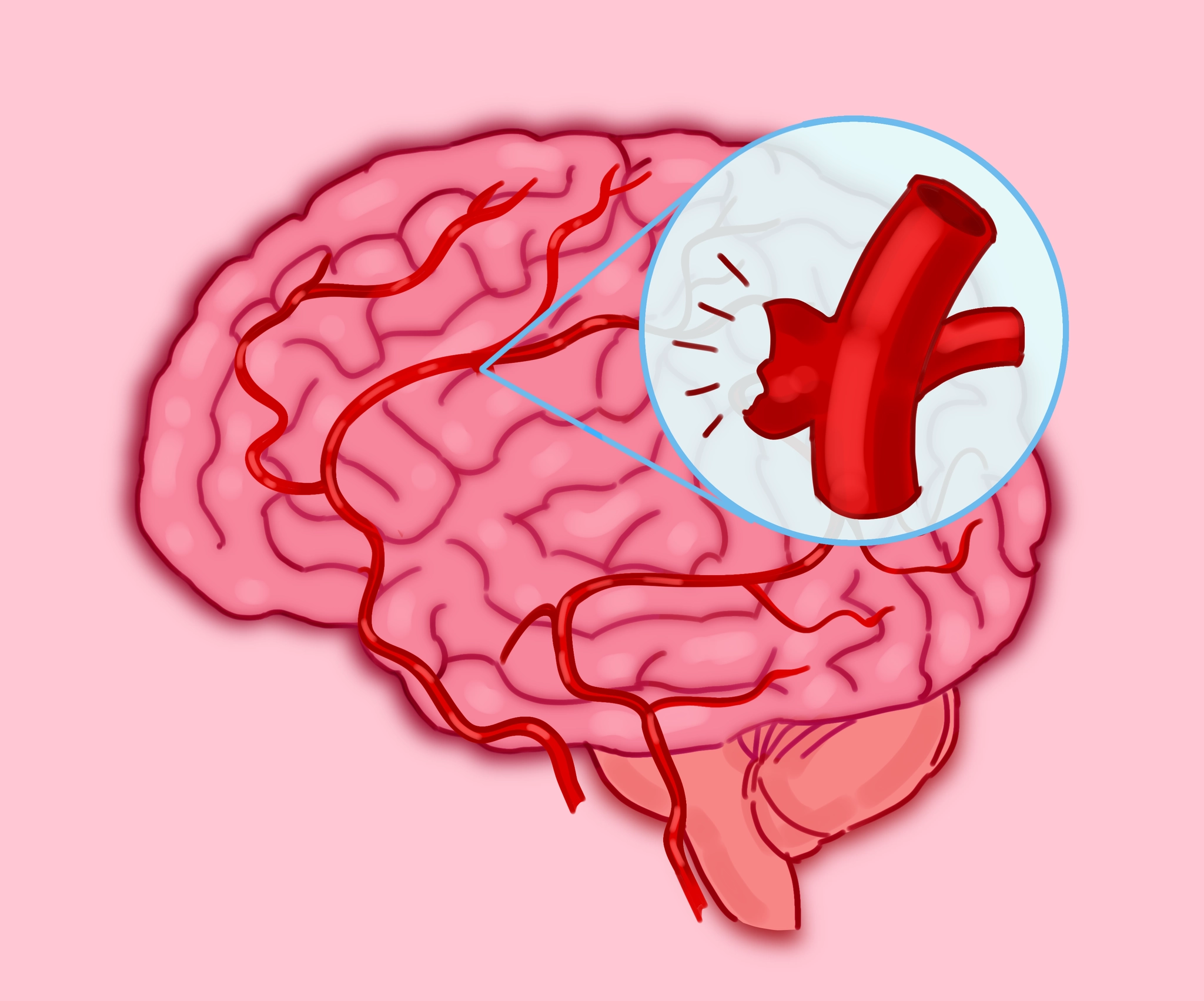
Stroke is injury to the brain due to blockage or a break in the blood vessels supplying the brain, and whatever the brain does can go wrong in a stroke. The leading symptoms – face, arm and speech – are present in about 90% of strokes.
Strokes are among the most preventable of all diseases – up to 80-90% of all strokes can be prevented by doing types of healthy things … be active and walking, non-sedentary. If you have high blood pressure, treat that, have your cholesterol level controlled, don’t smoke and do not drink alcohol in excess. If someone has an abnormal heart rhythm, treat that. Stress contributes slightly to stroke, but under stress, the brain is thinking and even when we are not under stress, the brain is thinking. It’s not like heart attacks, where the heart is working a lot harder under stress, so it’s only a minor risk.
DB: Are there certain communities that are disproportionately affected by strokes? What factors may contribute to these disparities?
JS: African Americans are more often affected, probably related to less access to medical care and living in food deserts with limited access to a blood-vessel healthy diet. To a lesser extent, Hispanic patients are at increased risk, in part for the same reasons.
DB: There’s a common phrase with strokes called “time is brain.” Can you explain how this is related to stroke and what that means in terms of treatment?
JS: It was work I did at UCLA that showed that every minute that goes by, two million nerve cells are lost in a stroke. So, it’s important not to ignore these symptoms and to come in right away. Often, strokes make the patient unable to report that they’re having problems. The stroke might cause them to not be able to speak, or they might have weakness and not be able to dial their cell phone. It’s often on-scene witnesses, family members or people in public, who can recognize someone is having the F.A.S.T. signs and call 911 to get the patient in quickly.
DB: What does modern stroke treatment look like? Are there any kinds of newer technologies being used?
JS: There are two major types of strokes. The first is the blockage type of stroke, where an artery is clogged and blood flow cannot reach a part of the brain, depriving it of oxygen and nutrients. This is called an ischemic stroke. The other type is the bleeding type of stroke, where an artery wall ruptures and blood escapes into the brain. That’s a hemorrhagic type of stroke. About four out of five strokes in the United States are the ischemic type, and one out of five are the hemorrhagic type.
The most common type, the ischemic type, has two major treatments. One is giving clot dissolving medications to reopen the blocked artery before more injury occurs. That is thrombolytic drugs, like Tenecteplase, that have a risk of causing bleeding but help many more patients than it might harm. The other treatment is thrombectomy, where the physician will insert a small tube wire in the artery in the leg, advance it through the vascular system, up to the artery in the brain, grab it (the clot) – either with suction or a metal stent – and pull it out. That’s the most effective treatment for acute ischemic stroke that was actually invented here at UCLA in 2004.
The one new treatment that is coming out this year is a new class of drugs called the factor 11a inhibitor drugs. This new class of medicines block the clots that form in the artery much more than they block clotting in the vessel wall. The risk-benefit trade-off is much better than the drugs we’ve had so far.
DB: Why do you believe the population should educate itself during May about stroke awareness?
JS: Stroke is the fifth leading cause of death in the U.S. and the leading cause of adult disability. One in four adults will have a stroke in their lifetime. It’s a disease that deprives people of their personhood and causes disability for patients and their families. It’s a highly preventable disease and a highly treatable disease. Because it’s common and can be prevented, it’s important to have a month like this where we call everybody’s attention to be aware of stroke.