UCLA club aims to widen Arab American representation in medicine
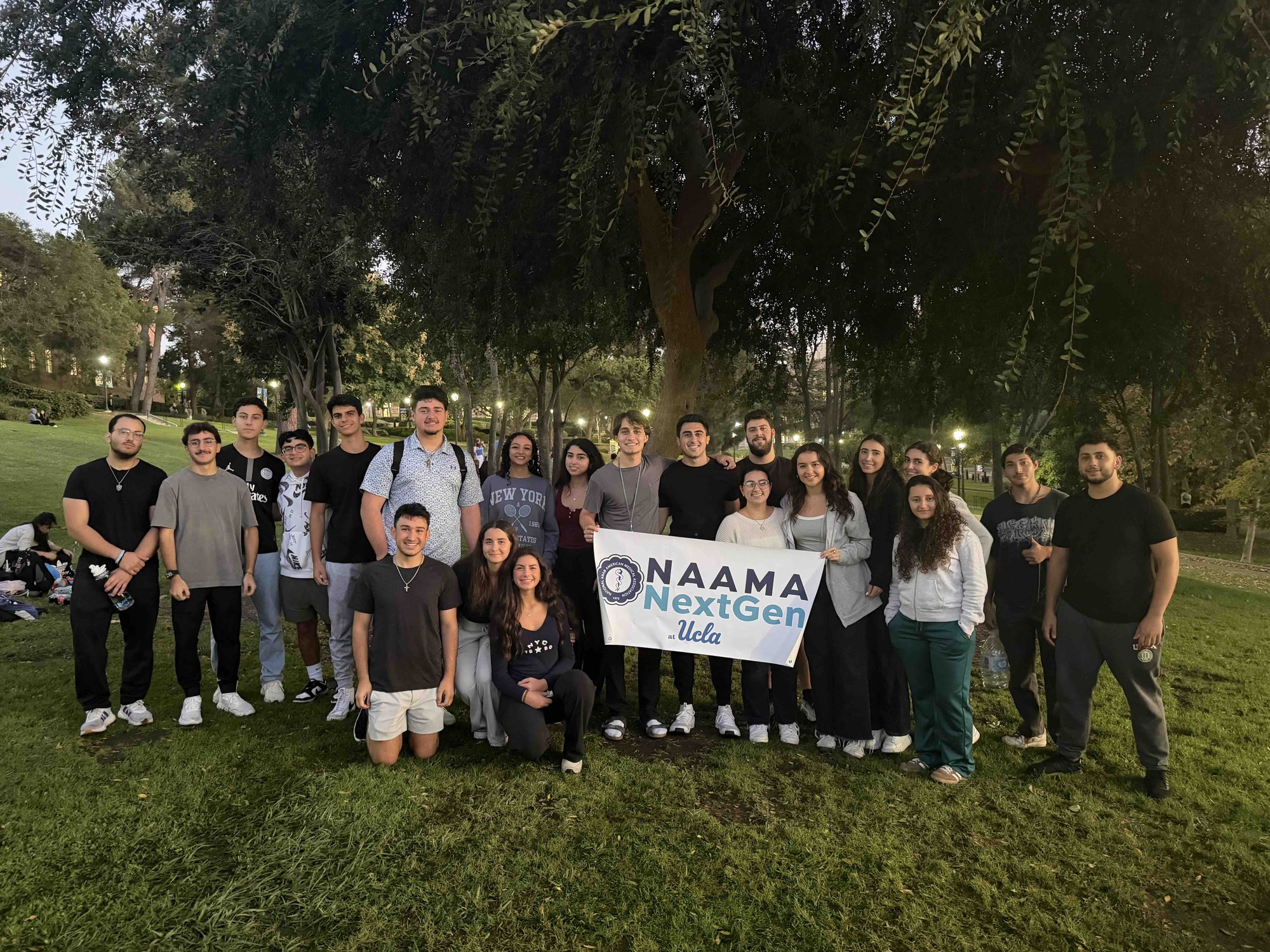
NAAMA NextGen at UCLA provides students with resources, events and advice on how to be competitive when applying for health-related graduate programs. (Courtesy of NAAMA NextGen at UCLA)


A UCLA club is offering support to Arab American students looking to pursue careers in healthcare.
UCLA’s National Arab American Medical Association NextGen chapter provides students with resources, events and advice on how to be competitive when applying for health-related graduate programs, said Alex Ottersbach, president of NAAMA. While NAAMA is a nationwide organization primarily composed of physicians, NAAMA NextGen serves undergraduate students aspiring to become healthcare professionals, he added.
Ottersbach said he attended NAAMA fundraisers, philanthropies, socials and galas in his hometown, which inspired him to co-found UCLA’s chapter in 2023.
“There is definitely a lot of stuff you have to do to make it to a competitive application,” Ottersbach said. “We try and pass that along and give them as many resources as possible.”
The organization is holding a May event that offers CPR or basic life support certification opportunities to members, said Ashton Zakar, NAAMA’s vice president. The certifications, which are granted through the American Heart Association, will allow members to apply for competitive clinical roles, such as emergency medical technician and medical assistant, added Zakar, a fourth-year physiological science student.
Zakar said it is sometimes difficult for students to access academic counselors because UCLA is a large public university. NAAMA has an alumni network, which members can use to receive career guidance, he added.
“This is a community of people that you can go to ask questions, … get some guidance,” Zakar said. “Then in the future, hopefully you’re the one doing that for them, like me.”
NAAMA also provides students with a sense of community through its social events, Ottersbach said. The club collaborates with other Middle Eastern student organizations, including the Lebanese Student Association, to provide students with a sense of home and help them adjust to college life, he added.
Rita Kamal, a fourth-year molecular, immunology and molecular genetics and psychobiology student, as well as NAAMA’s treasurer, said the club has allowed her to meet other Arab students through its social events and study nights.
Samy Benkirane, a second-year neuroscience student and NAAMA general member, added that the club helped him find peers with similar backgrounds and goals.
“I didn’t really know any other Arab people at all at this school,” Benkirane said. “It’s nice to know there’s a community of people like me.”
Patients often feel more comfortable when their doctor comes from a similar background, making Middle Eastern representation in medicine important, Ottersbach said.
Few doctors speak Arabic or other Middle Eastern languages in California, Zakar said. Communication barriers often deter people from going to the doctor, he added.
Many Arab American students’ parents are not fluent in English and are unfamiliar with the education system in the United States, Ottersbach said. Students from these backgrounds often do not have a support system helping them apply to graduate school, he added.
Kamal said as an immigrant herself, she struggled to access the academic resources she needed to prepare for medical school. However, her older brother taught her how to navigate college life in the U.S. – a favor that she plans to return to her younger sister, she said.
NAAMA provides the same kind of guidance to its members, Kamal said.
“It’s like a stepping stone,” she said. “You learn from people that have come before you.”
NAAMA aims to build both a professional network and a cultural presence on campus, helping students navigate careers in medicine and find a sense of belonging, Zakar said.
“Having no one to guide you, it’s very hard,” Zakar said. “But that’s where NAAMA came in. We just wanted to help people as much as we could, give them that sense of guidance.”