Opinion: Provider-patient communication is key to giving women more healthcare autonomy
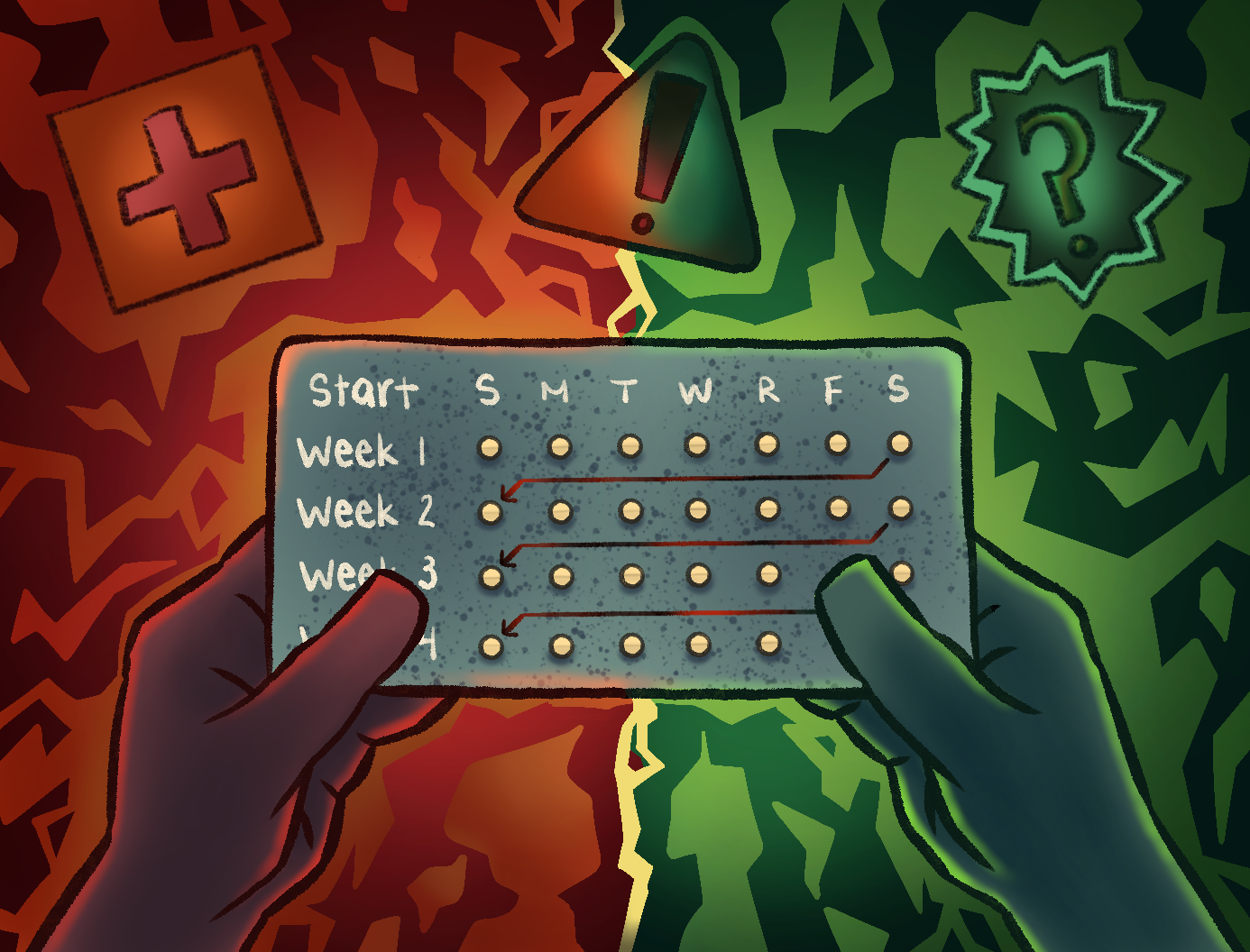
(Jeanelle Ocampo/Daily Bruin staff)

By Prisha Puntambekar
April 21, 2026 11:53 a.m.
This post was updated April 28 at 7:18 p.m.
So-called health specialists have established their influence across social media recently.
The result is a health and wellness realm flooded with constant misinformation.
Many women find themselves trapped between two unsupportive worlds: one of the misinformed wellness preachers of Instagram and the other of a dismissive medical environment.
The overflow of wellness information from social media obscures communication between patients and their providers. By projecting their personal medical experiences onto viewers, influencers neglect individuality in medical treatment.
To safeguard women from overgeneralized medical narratives, providers must prioritize transparent, streamlined communication with their patients.
Doctors often prescribe the birth control pill for noncontraceptive purposes, as it can help women handle hormonal and reproductive issues such as polycystic ovary syndrome or endometriosis. These types of issues can cause an array of symptoms, with irregular periods being among the most common.
“Your menstrual cycles are considered a vital sign of your body,” said Dr. Aparna Sridhar, a professor in clinical obstetrics and gynecology at the David Geffen School of Medicine. “Natural menstrual cycles happen every 28 to 35 days.”
Certain kinds of menstrual cycle abnormalities can place women at higher risk of other health complications, Dr. Sridhar said. When women do not ovulate regularly, their bodies have an excess of estrogen and lack of progesterone, putting them at greater risk of developing reproductive cancers.
“That’s why we recommend some sort of progesterone to bring in withdrawal bleeding every so often so that the body is not exposed to unopposed estrogen,” Dr. Sridhar said. “That’s where birth control or progesterone or some sort of hormone comes into the picture.”
Although the birth control pill can be useful for certain conditions, the costs and benefits of taking the pill vary across individuals. Krisha Vyas is one of many young women with PCOS who said she struggled determining her compatibility with the combination pill.
“Almost every morning after starting the pill, I would be very nauseous and very sick, to the point where I would have to miss a lot of school,” said Vyas, a third-year communication and political science student. “The doctor, when I addressed my concerns about this, kind of dismissed them as normal.”
Skepticism surrounding the pill ties to narratives about the pharmaceutical industry. The provision of medication is partially dictated by economic motives, given that the American healthcare system is capitalistic.
The distrust of the industry is understandable given its profits. The pharmaceutical industry contributes nearly $2.3 billion to the world GDP.
Americans are inclined to question whether Big Pharma has influenced a potential overprescription of the birth control pill.
As a result, patients often look to wellness products rather than turning to pharmaceutical means. But individuals must recall one fundamental piece of information – the global wellness market touted $6.32 trillion in profits in 2023. This makes the wellness industry significantly richer than Big Pharma.
Dr. Rashmi Mullur, director of integrative medicine education at the David Geffen School of Medicine, said she believes the wellness industry is as worthy of suspicion – if not more so – than Big Pharma.
“It’s important for people to realize it’s happening on the other side,” Dr. Mullur said. “Every second you’re watching someone online talk about Big Pharma and the problem with medicine, that person is collecting views and getting payments for their social media presence.”
Furthermore, although she acknowledged the pitfalls of the pharmaceutical industry, Dr. Mullur said the public should avoid overestimating the impact of Big Pharma.
“There was a time in medicine where the pharmaceutical rep was more present in spaces,” she added. “That is not the way we practice medicine today. They’re typically excluded from big academic practices.”
Regardless of the influence of the pharmaceutical industry, some women in the healthcare system still find their voices dismissed. They feel doctors are giving them a birth control prescription without discussing a personal cost-benefit analysis of taking the combination pill.
This is what leads many young women to turn to social media as a means of closing the information gap.
Si-Yun Ke, a third-year political science and sociology student, was put in a similar position when offered the choice to take the combination pill to treat PCOS.
“The information that my doctors gave me, honestly, was pretty limited,” Ke said. “I’ve seen a lot on TikTok about people’s experiences with birth control, and it’s very polarized. Everyone has different things to say. Everyone has different experiences. (I was) getting a lot of information at once and then, ultimately, I decided I wasn’t willing to take the risk.”
A heavy reliance on social media unintentionally sabotages a provider-patient relationship, with the internet discouraging women from pursuing a treatment option that may be beneficial for them.
Dr. Sridhar emphasizes the practice of “individualized medicine,” which is a medical approach that handles diagnostic and treatment processes in a personalized manner. Given that each individual is different from one another, the experiences shared on social media may not be applicable to all women.
Dr. Mya Zapata, an OBGYN provider with UCLA Health, said a lack of communication may explain the discrepancy between a provider’s medical approach and a patient’s understanding of their treatment.
“There is not necessarily the time and the resources to say, ‘Let’s investigate this more. Let’s have you talk to a nutritionist. Let’s have you talk to a wellness person,’” Dr. Zapata said. “I think some providers may come to the answer (the combination pill) to be efficient for the patient, but perhaps that’s not always the best answer for the patient.”
The whirlwind of information surrounding the birth control pill simultaneously enfranchises and disenfranchises women. While some reliable online sources provide clarity, social media’s fearmongering and misinformation can compromise personal treatment processes.
Ultimately, when exploring the noncontraceptive benefits of the pill, the decision lies between a patient and provider. But for this decision to be made in an educated and confident manner, providers must ensure their communication relays all relevant information to the patient.
When provider-patient communication is prioritized in the birth control prescription process, women are not pushed to search for solutions in potentially unreliable sources. The transparent relay of information remains a keystone of empowering women in their healthcare autonomy.
A decision that is intuitive to a professional may not be intuitive to a patient.
Dedicating time to thorough conversations is vital for a provider to create a truly transparent and patient-centered experience.