Op-ed: Make your USAC campaign about connecting with people, not passing out paper

By Keya Tanna
April 19, 2026 1:48 p.m.
This post was updated April 23 at 7:37 p.m.
Exactly a year ago, I decided to run for international student representative on the Undergraduate Students Association Council.
At the time, that decision felt both obvious and slightly unhinged. I was an international student, raised between Oman and Dubai, stepping into a space I had only observed from the outside – and one that, quite frankly, did not always feel built for people like me.
I didn’t have a slate. I didn’t even have a campaign team. And, as I was frequently reminded, I didn’t have “USAC experience.”
What I did have was a reason for being here – and a growing suspicion that most campaigns had forgotten theirs.
By spring quarter, you don’t need a calendar to know it’s election season.
You can feel it.
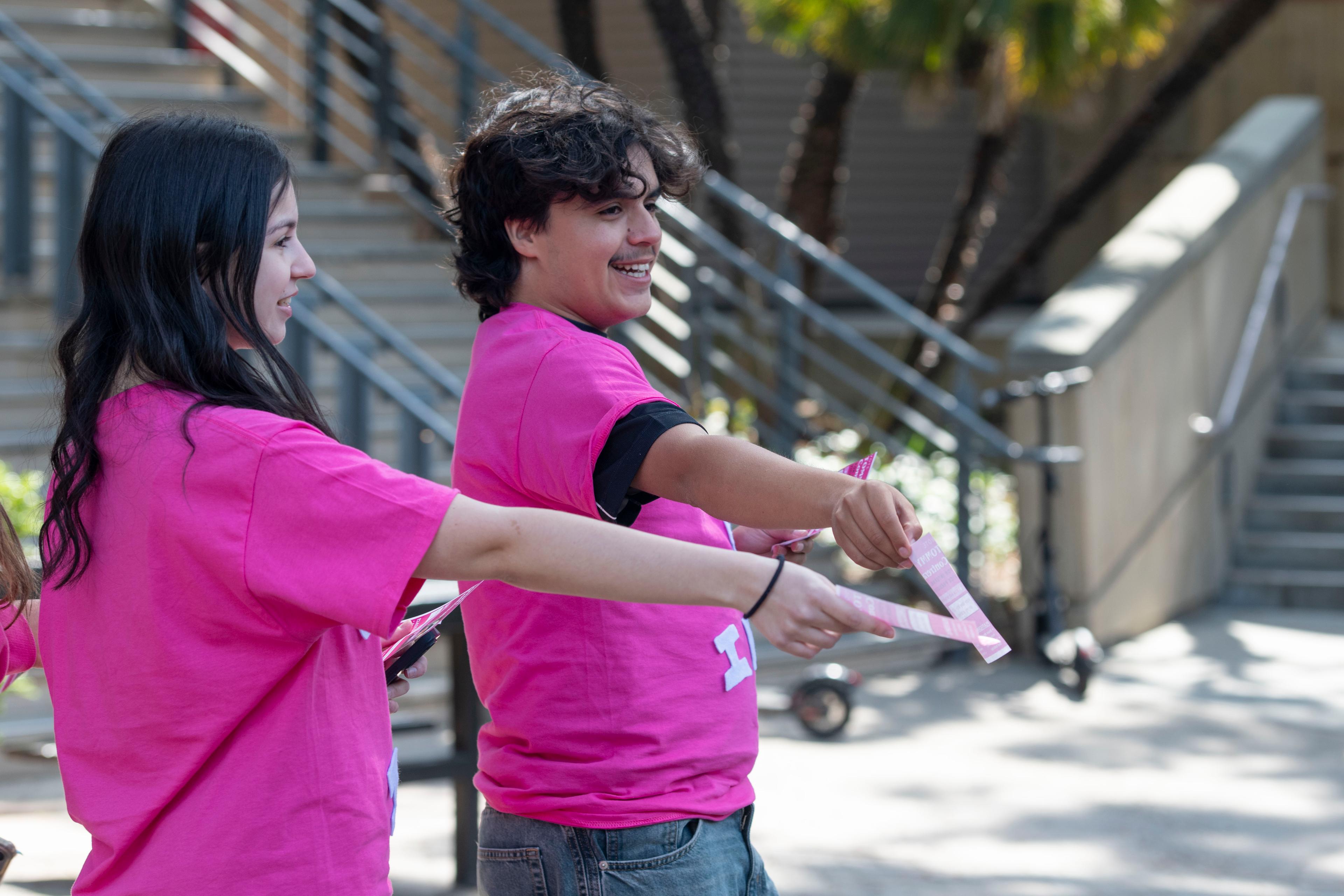
The flyers start coming at you from every direction, the same phrases echo every few steps and, suddenly, walking through Bruin Walk requires a level of agility you didn’t know you needed. At some point, “avoid Bruin Walk” stops being a joke and starts sounding like legitimate advice – if not for your schedule, then for your physical safety.
It’s almost impressive – the volume, the coordination and the sheer commitment to being seen.
But after the tenth flyer, the question isn’t who you’re voting for. It’s whether anyone is actually saying anything at all.
Campaigns begin to blur together. Not because candidates don’t care but because they’ve inherited a pattern – one that rewards repetition, polish and visibility. And over time, that pattern flattens intention.
When I first ran, one of the most common criticisms I heard was simple: “She doesn’t have USAC experience.”
At the time, I felt the weight of that statement. Now, after a year on the council, I see it differently. That lack of “USAC experience” may have been my greatest strength – and, perhaps, the system’s biggest blind spot.
I wasn’t tied to a script – and I didn’t feel obligated to repeat one.
While others printed stacks of flyers, I stopped after my first batch. They all looked the same – and frankly, ended up in the garbage bin. In fact, I watched a previous officer crush mine right in front of me.
So I asked myself a different question: What would it mean for a campaign to actually reflect my values?
First, I baked a chai cake – a nod to my dad’s chai and my mom’s baking, the small rituals that shaped how I understand care. I made Dubai chocolate from scratch, reconnecting with a place that I come from. On Bruin Walk, I invited students to contribute to a shared artwork about what “home” meant to them.
None of this was conventional and that was the point. Because a campaign should not just make you visible, it should make you understood.
And people noticed that. They could tell when they were being handed something versus when they were being invited into something.
Even the unexpected moments became part of that approach. When my banner was stolen from Tongva Steps, I didn’t turn it into an outrage. I turned it into a joke and kept going. Because if a campaign depends on optics to hold itself together, it was never built on the right things to begin with.
That’s not to say I didn’t do the work. Behind the scenes were sleepless nights researching policies, drafting proposals and mapping out exactly how I would implement my ideas if elected. I reached out to organizations not just for endorsements, but for conversations. I wanted to understand what students actually needed – and to be accountable to those students.
Without a formal campaign team, my friends showed up every day, standing with me on Bruin Walk. It was messy, imperfect and deeply human. And it worked.
But the real test began after the election.
My first council meeting came immediately after the Student and Exchange Visitor Program revocations affecting international students at Harvard. In that moment, there were no slogans to rely on – only responsibility I had promised. I authored and passed the first resolution of the academic year.
That distinction – between what is visible and what is meaningful – has guided my entire term.
Student government can easily become a space of constant talking. Statements, positions, responses – an endless stream of words, many of them unnecessary. It is very easy to sound engaged without actually being effective. My one piece of advice – don’t fall into that.
If you choose to do this work, make sure that when you do speak, you are unafraid of saying the hard things – the things that may not land cleanly and the things that don’t fit neatly into a campaign line.
And just as importantly: Listen. Closely.
Because you will be surrounded by performative politics and unnecessary talk. Your job is to resist that – to reframe what you are here for.
Over the course of my term, I focused on something less visible but more important than any single initiative: building an office rooted in intention and consistency. Growth wasn’t just about expanding programs – it was about setting a standard. One that would outlast me. Because the truth is, these offices existed before any of us and will continue long after we leave. What matters is not the title, but what you choose to build with it.
So to this year’s candidates: Resist the instinct to simply add to the noise.
Don’t ask what will make you most visible. Ask what actually reflects you. Don’t rely on repetition to carry your message. Let your intentions make it clear.
Because campaigns are not separate from leadership. They are the first indication of it.
Care and competence cannot be manufactured in a week of campaigning. They show up in the questions you ask, the work you do when no one is watching and the way you engage with the people you hope to represent.
Experience matters. But not all experience is equal.
Looking back, not knowing how it was “supposed” to be done may have been the point.
Keya Tanna is a fourth-year psychology student and the incumbent USAC International Student Representative.