Men’s basketball lost 6 players to the portal in 2025. How have they fared?
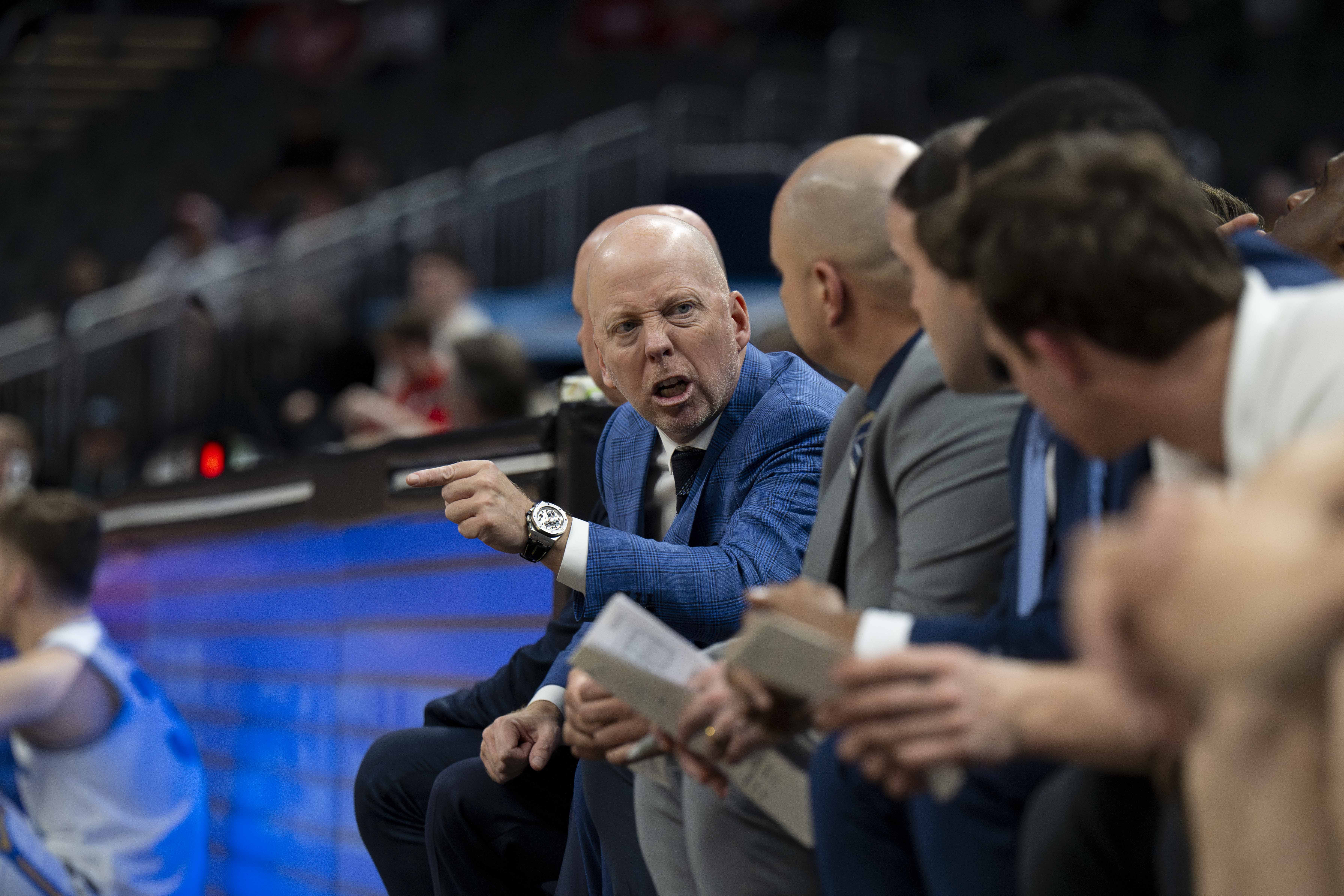
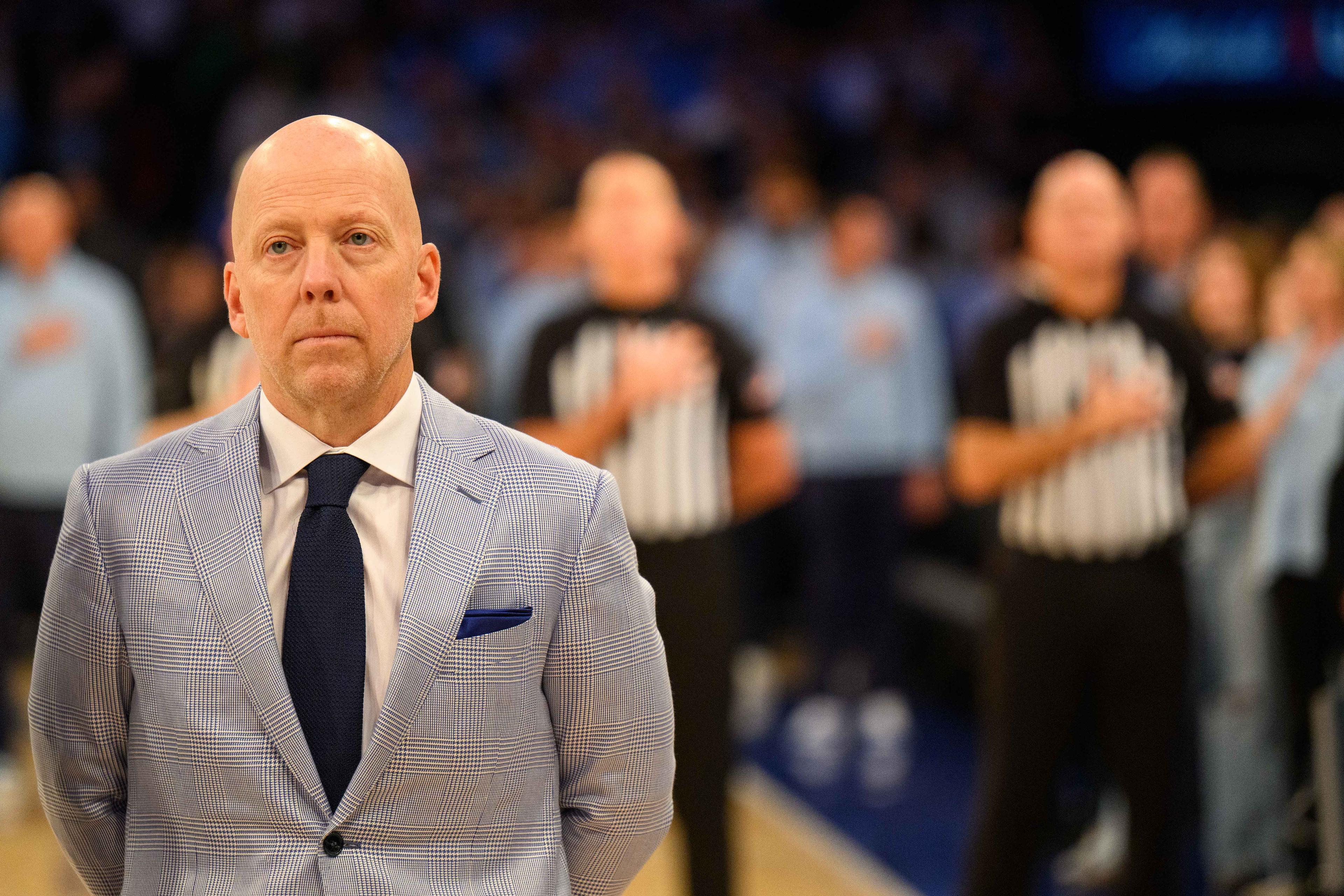
UCLA men’s basketball coach Mick Cronin talks to his coaches on the sideline. (Aidan Sun/Assistant Photo editor)

By Connor Dullinger
April 18, 2026 7:47 p.m.
UCLA men’s basketball may have seen its season end on March 22, but the 2026-27 season has already begun, as coach Mick Cronin turns to the transfer portal to retool his squad after the graduation of eight players from this season’s team. The Bruins have already added four new players to their roster for next year, and more will come as the transfer portal season continues. But before dissecting the new Bruin additions, Daily Bruin Sports editor Connor Dullinger will travel back in time to look at the UCLA players who left in the transfer portal last offseason and how they performed in a year outside of Westwood.
Aday Mara:
2024-2025 at UCLA: 6.4 ppg, 4.0 rpg, 1.6 bpg, 13 minutes per game
2025-2026 at Michigan: 12.1 ppg, 6.8 rpg, 2.6 bpg, 23.4 minutes per game
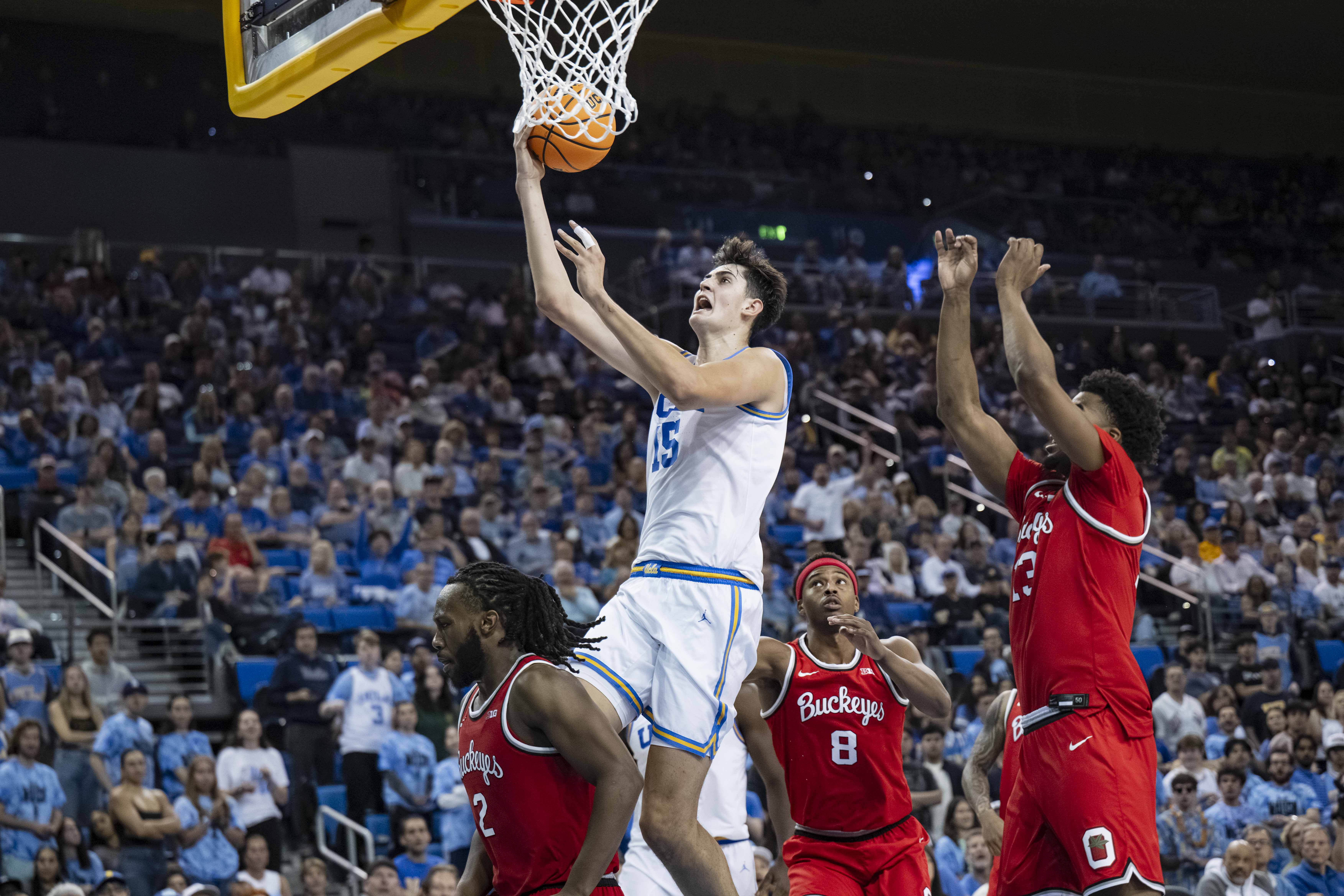
It is impossible not to start with Aday Mara.
Many thought that the Spanish center would stay in Los Angeles after spending two seasons under Cronin and breaking out late in his sophomore year.
But after a tumultuous exit, many UCLA fans knew that losing Mara – especially to Big Ten adversary Michigan – would be a devastating loss.
And it absolutely was.
Mara was essential to the national championship-winning Wolverines, scoring 12.1 points per game on 66.8% field goal shooting, all while dominating the offensive and defensive glass and serving as one of the best rim protectors in the nation.
The center earned First Team All-Big Ten honors and was awarded the Big Ten Defensive Player of the Year award at the regular season’s conclusion.
Mara’s play in March Madness – where he averaged 14.7 points, 5.7 rebounds, 3.2 assists and 2.3 blocks per game and notched 26 points and nine rebounds in the national semifinal – only made his departure from Westwood even more painful.
Fans and experts across the nation took to social media, questioning Cronin’s usage of Mara’s talent at UCLA, where the coach played him just 13 minutes per game and gave him just one start across 33 games.
While it may seem like the Bruin faithful were justified in thinking that way, Mara’s time as a Bruin was much more convoluted.
He struggled with injury, conditioning and adjusting to the type of play college basketball demanded, and only grew into his peak form at the end of his sophomore season – garnering seven double-digit scoring performances in his last 16 games as a Bruin.
Yes, Cronin definitely underused the center, and his late exit crippled the Bruins’ 2025-26 championship aspirations, giving them little time to find a replacement big man.
A traditional, 7-foot-4 center who grabs rebounds, converts at the basket at a high clip and can protect the interior is exactly what the Bruins missed all season.
I would argue that the Bruins would have been a Final Four team had they retained Mara, particularly when combining his interior talent with senior guard Donovan Dent’s proficiency in facilitation.
However, no situation is one-dimensional, and Mara not panning out at UCLA should not all fall on Cronin.
But that “what could have been” scenario will have to stay in the Bruin faithful’s dreams.
William Kyle III:
2024-2025 at UCLA: 2.9 ppg, 1.8 rpg, 0.6 bpg, 9.6 minutes per game
2025-2026 at Syracuse: 8.4 ppg, 7.1 rpg, 2.5 bpg, 28.1 minutes per game
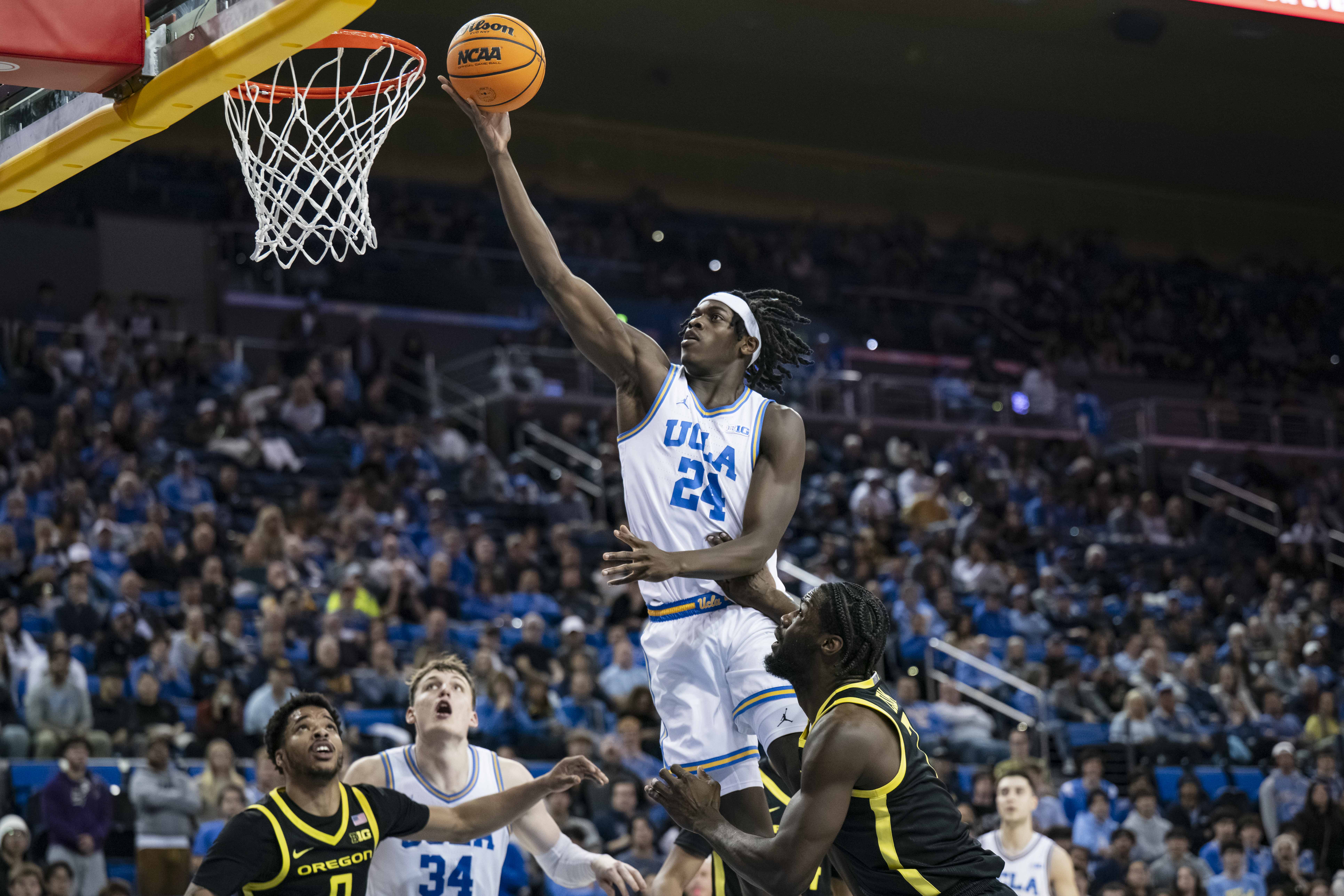
Another player who just did not work out in Westwood.
Forward/center William Kyle III seemed like the perfect backup center to Mara when he joined the Bruins in the 2024 offseason.
Kyle was coming off a breakout year at South Dakota State, where he averaged 13.1 points, 6.6 rebounds and 1.6 blocks per game and earned Summit League Defensive Player of the Year recognition.
He had proficient athleticism, allowing him to dominate in transition, in the two-man game and on the interior. Kyle also had all of the intangibles to anchor the Bruin defensive unit, giving UCLA size and position to grab rebounds, block shots and protect the rim.
But it felt like Kyle was never given a shot in Westwood.
He played just under 10 minutes a game and looked uncomfortable in the minutes he logged for Cronin. Mara playing the majority of the season off the bench definitely did not help either. With senior forward Tyler Bilodeau starting at the four, Kyle was the third center to check in to the game, giving him little opportunity to prove himself.
And Kyle made the Bruins pay for their lack of usage.
At Syracuse, the center dominated in his first season with the Orange, starting in all 32 games he played in. He averaged 8.4 points per game on a 66.1% field goal percentage, leading the team in rebounds with 7.1 per game and adding 2.5 blocks per game – putting him on the mid-season watchlist for Naismith Defensive Player of the Year.
There was no way Cronin was going to retain Kyle after minimal playing time in Westwood, but his performance at Syracuse makes people wonder why he couldn’t perform at UCLA.
Dylan Andrews:
2024-2025 at UCLA: 6.9 ppg, 3.4 apg, 1.6 rpg, 24.8 minutes per game
2025-2026 at Boise State: 12.5 ppg, 3.2 apg, 2.5 rpg, 29.3 minutes per game
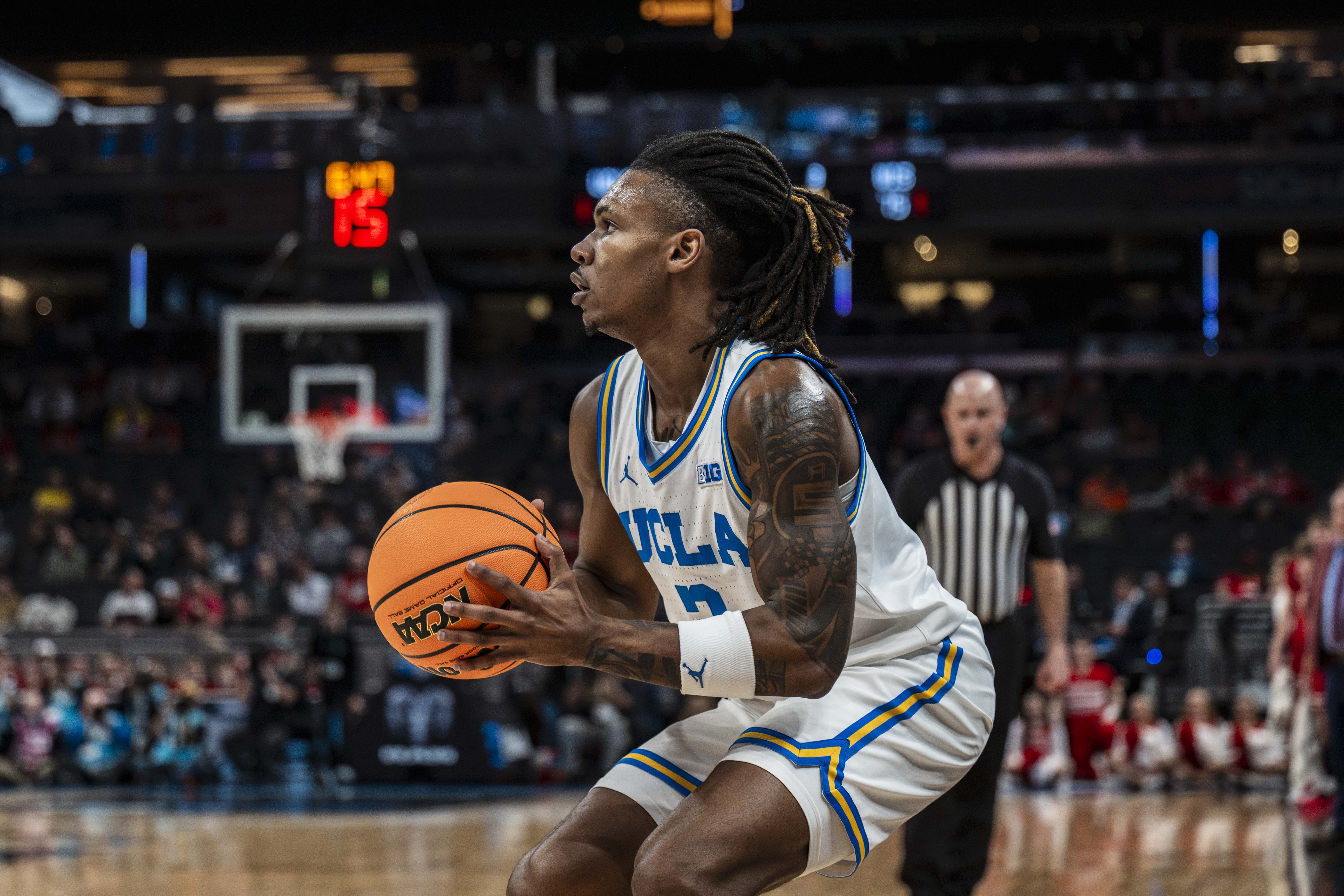
There was no way Dylan Andrews was staying at UCLA.
The guard played three seasons at UCLA, with his best year coming in his sophomore season, where he led the Bruins in scoring with 12.9 points and 3.7 assists per game.
But Andrews’ tenure in Westwood took a dive during his junior season, with him averaging 6.9 points despite starting 29 games and playing 24.8 minutes per game.
Andrews always struggled with efficiency, shooting 39.5% from the field and 32.4% from beyond the arc during his sophomore campaign at UCLA, but his shooting splits somehow decreased during his junior season – a year many expected Andrews to take a jump.
And with the emergence of sophomore guard Trent Perry and the addition of Dent, it seemed like Andrews’ time in LA had come to a close.
Andrews came back to his sophomore peak at Boise State, averaging 12.5 points, 3.2 assists and 2.5 rebounds per game, but continued to struggle with productivity – going 38% from the field and 31.3% from beyond the arc.
While his rebounding mark represented a career-high, his 2.1 turnovers per contest did as well.
Andrews was always a solid defender who could be a formidable pass-first guard, but his struggles scoring the ball always seemed to hold him back.
Sebastian Mack:
2024-2025 at UCLA: 9.6 ppg, 1.7 apg, 2.1 rpg, 20.9 minutes per game
2025-2026 at Missouri: 7.0 ppg, 0.6 apg, 1.3 rpg, 16.3 minutes per game
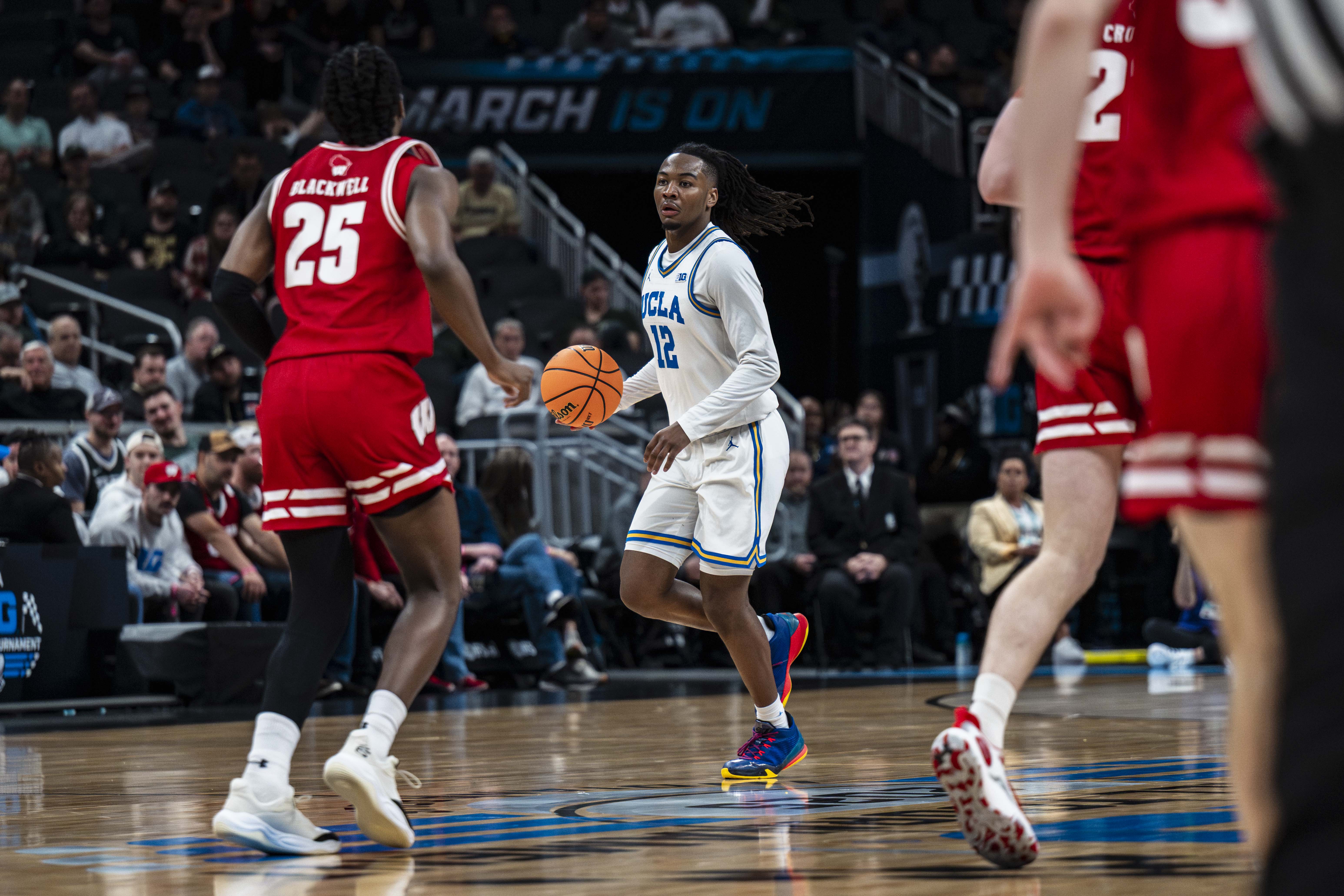
Sebastian Mack and Andrews looked to be the backcourt of the Bruins’ future after the 2023-24 season.
The duo ranked first and third on the team in scoring, averaging 12.1 and 12.9 points per game, respectively.
But just one year later, both players took a back seat.
At UCLA, Mack played primarily as a sixth man, averaging 9.6 points, 2.1 rebounds and 1.7 assists per game. Despite coming off the bench, Mack was often on the hardwood in the dying embers of closely contested matchups.
His tenacity, physical approach and ability to draw fouls while slashing toward the rim gave the Bruins an underappreciated guard who often came up clutch.
But, like Andrews, the sophomore jump of Perry alongside the addition of Dent meant that Mack had little future in Westwood.
There was hope that Mack could see a production jump in a new location on a fresh team, but Mack’s year in Missouri did not pan out as planned, and he finished the season with the worst stats of his collegiate career.
Mack played in just 18 games, starting in nine, averaging a career-low seven points, 0.6 assists and 1.3 rebounds per game.
Injuries and limited playing time defined his junior season with the Tigers, and his scoring inefficiency followed him to Columbia, Missouri, where he shot 40.7% from the field and 27.3% from beyond the arc.
And just one year after leaving UCLA, Mack has entered the transfer portal again.
Devin Williams:
2023-2024 at UCLA: 1.4 ppg, 0.7 rpg, 3.3 minutes per game
2025-2026 at FAU: 7.5 ppg, 5.2 rpg, 1.3 apg, 2.6 bpg, 23.8 minutes per game
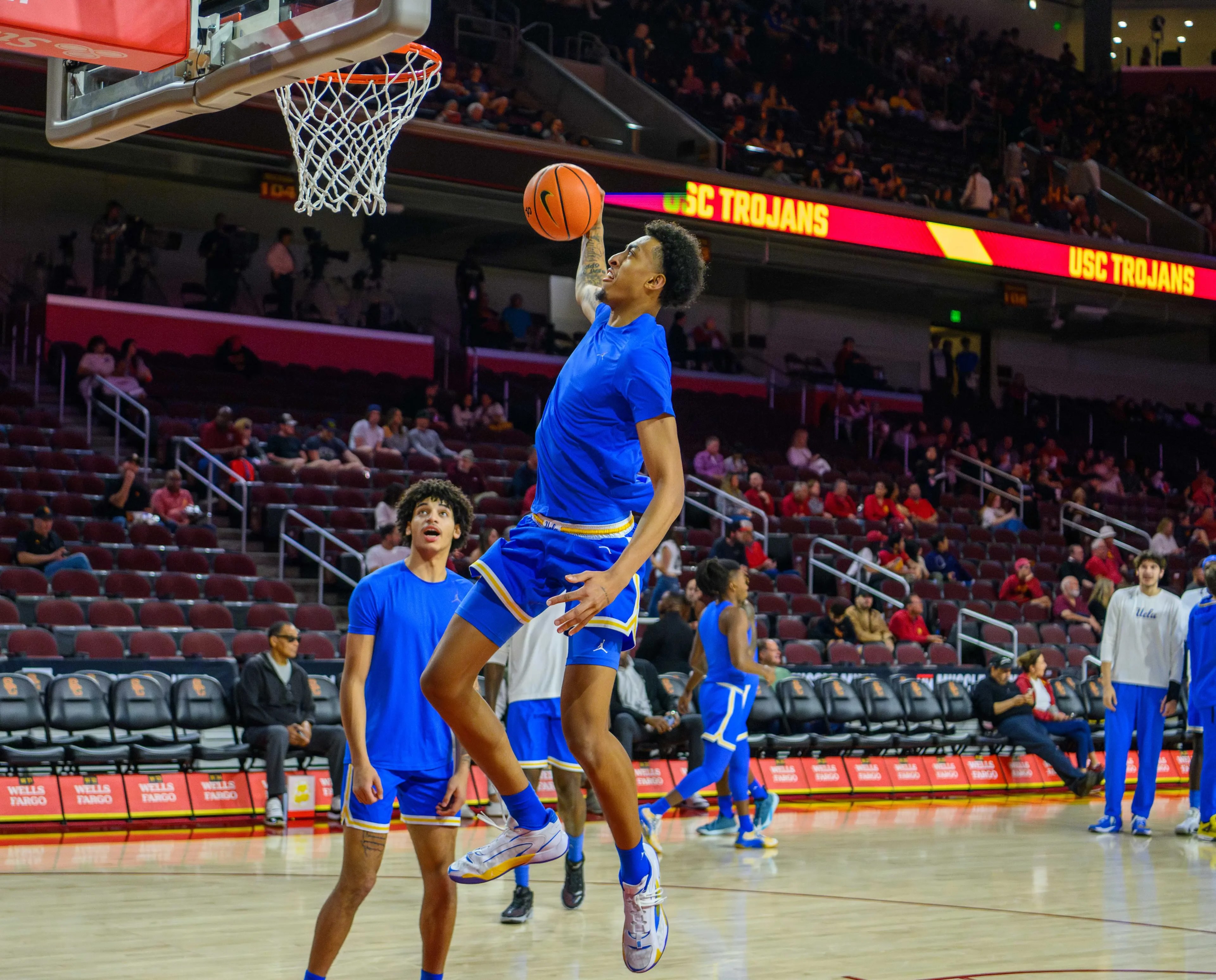
Forward Devin Williams never lived up to his four-star recruit status at UCLA.
Williams played just 3.3 minutes per game during his freshman season at UCLA, and did not log a single minute of action during the 2024-25 campaign.
Naturally, Williams entered the portal and found a solid role at Florida Atlantic, where he started in all 33 games he played in, averaging 7.5 points, 5.2 rebounds and 2.6 blocks through 23.8 minutes per game.
Williams showed potential on Cronin’s 2023-24 squad – a team that garnered the worst record in the Cronin era – but struggled to find playing time on a reloaded team that added Bilodeau, Kyle, junior guard/forward Eric Dailey, senior guard Skyy Clark and now-former Bruin Kobe Johnson.
And after finding a serviceable role at FAU, dominating on both sides of the interior and scoring at an efficient 51% field goal shooting percentage, Williams is in the transfer portal again, most likely looking to join a Power Four team where he can serve a similar role.
Dominick Harris:
2024-2025 at UCLA: 1.1 ppg, 0.6 rpg, 7.3 minutes per game
2025-2026 at Loyola Chicago: 1.4 ppg, 0.6 rpg, 6.3 minutes per game
Guard Dominick Harris looked like a strong addition when Cronin got him through the portal as one of the team’s last transfers.
Harris was one of the top shooters in the country during his one season at Loyola Marymount, averaging 14.3 points per game on 44.8% shooting from beyond the arc – all while taking six 3-point attempts per game.
Harris also brought two years of experience at college basketball juggernaut Gonzaga.
But the Murrieta, California, local struggled to get off the bench in Westwood.
Part of the reason was because of his inability to defend, a crucial tenet of Cronin’s coaching philosophy. He also faced a shooting slump at UCLA, going 2-for-18 from deep in his time as a Bruin.
Shooting struggles and defensive limitations kept him on the bench, and with limited playing time, he had little opportunity to prove himself.
Harris’ struggles seemed to follow him to his fifth year of collegiate basketball at Loyola Chicago, where he played in seven games and started two, while averaging 1.4 points through 6.3 minutes per game.
However, injuries riddled his season at Loyola Chicago, limiting his opportunities, and just like Mack and Williams, he has entered the transfer portal, looking to join his fifth team.