UCLA Physics and Astronomy Department to suspend admission to biophysics major
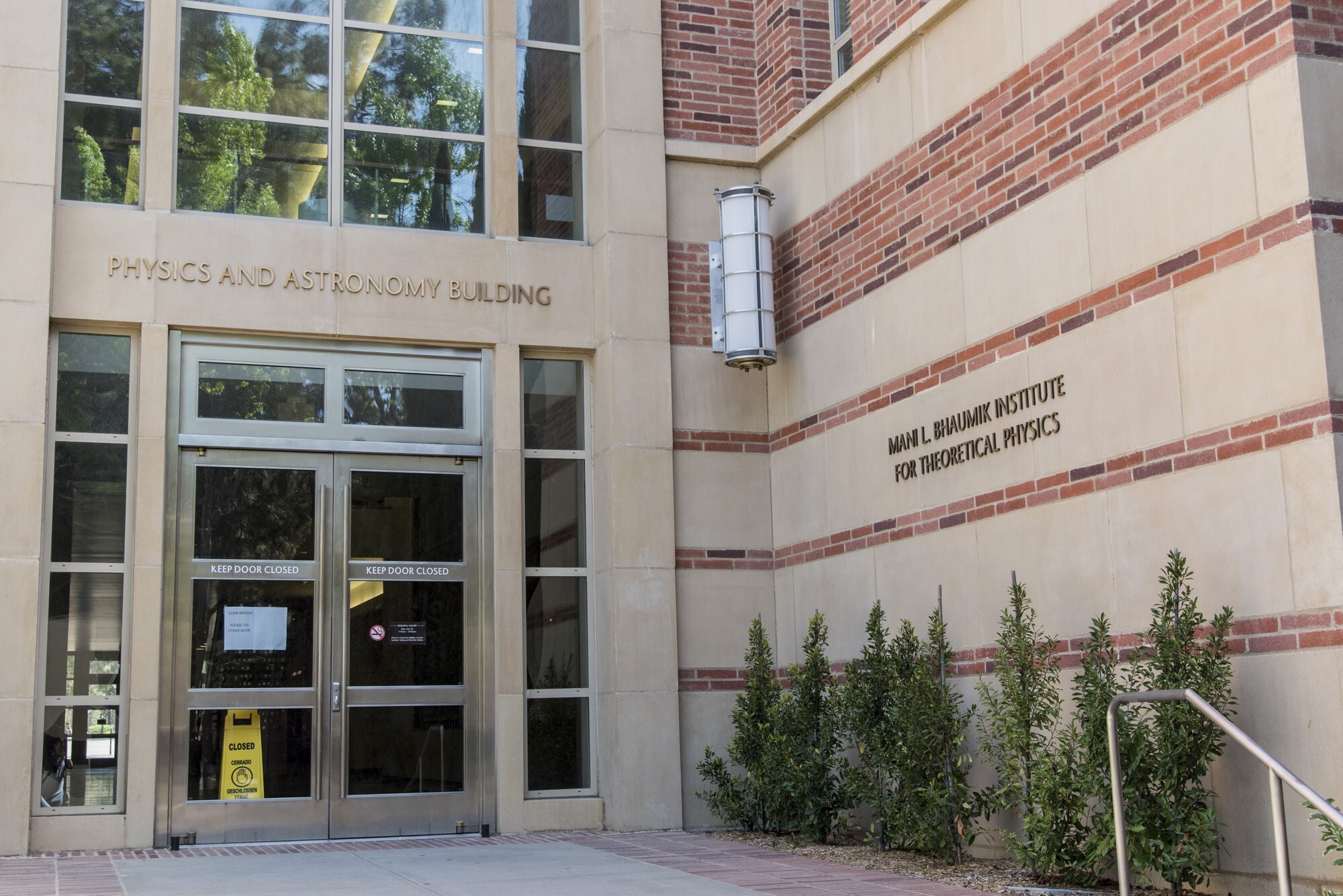
The Physics and Astronomy Building, which houses the department of physics and astronomy, is pictured. The department will suspend admission to the biophysics major for continuing students next fall and is seeking to eliminate it entirely. (Daily Bruin file photo)

By Reese Dahlgren
April 13, 2026 3:42 p.m.
This post was updated April 14 at 11:08 p.m.
The department of physics and astronomy will suspend admission to the biophysics major for continuing students next fall and is seeking to cut the program entirely in fall 2027, an advisor announced in a Monday email.
Admission to the major will be suspended effective fall 2026 for continuing students and fall 2027 for newly admitted students, said Mary Tran, the department of physics and astronomy’s lead undergraduate advisor, in a Monday email to students. Tran added that the department is submitting a proposal to eliminate the major altogether, effective fall 2027.
Current biophysics students – as well as incoming first-year students who have already declared the major – will be able to continue the degree program, Tran said in the email. She added that the department will support students in the major to ensure timely degree completion, including by continuing to offer biophysics-related courses for the foreseeable future.
“During the Biophysics BS program phase-out, the department will continue to support our Biophysics majors and ensure timely degree completion,” Tran said in the email. “We expect to continue to offer biophysics-related courses in the foreseeable future.”
Stuart Brown, the chair of the department of physics and astronomy, said the major has faced low enrollment levels and challenges finding professors to teach classes. He added that biophysics faculty surveyed other college campuses and realized many others did not offer biophysics as a standalone major.
“If we decided to close it, which would give us a little bit more flexibility in the teaching, then it wouldn’t have to be a loss for any of the students,” Brown said. “We could still offer those courses as we could, and that is our intention going forward.”
He added that biophysics coursework overlaps with standard physics and other department courses, so students still have the opportunity to learn the same material.
“From a pedagogical point of view, nothing is lost,” he said.
Students currently enrolled in the major will only have one curriculum change: a two-quarter sequence of lecture classes – Physics C187A and Physics C187B – will be combined into one course, Brown said.
Students in the major were notified of the decision in an April 3 email, said Henry Fairbanks, a third-year biophysics student.
“Overall, it’s a bummer,” he said. “It’s definitely a bit disappointing that they couldn’t find a way to maintain it despite the obvious problems of attrition and devoting too much resources to it.”
Fairbanks added that the fact that the major classes are small – sometimes seven students per class – is something he loves about it.
“I love the fact that I know everyone with the major,” he said. “I love that, and it’s a bit disappointing, but I’m hopeful that they’ll continue offering the courses as electives to physics majors, and I’m hoping that they’ll provide avenues for people interested in biophysics to continue being able to pursue it.”