Opinion: Diverse classrooms lead to diverse viewpoints, enriched learning opportunities
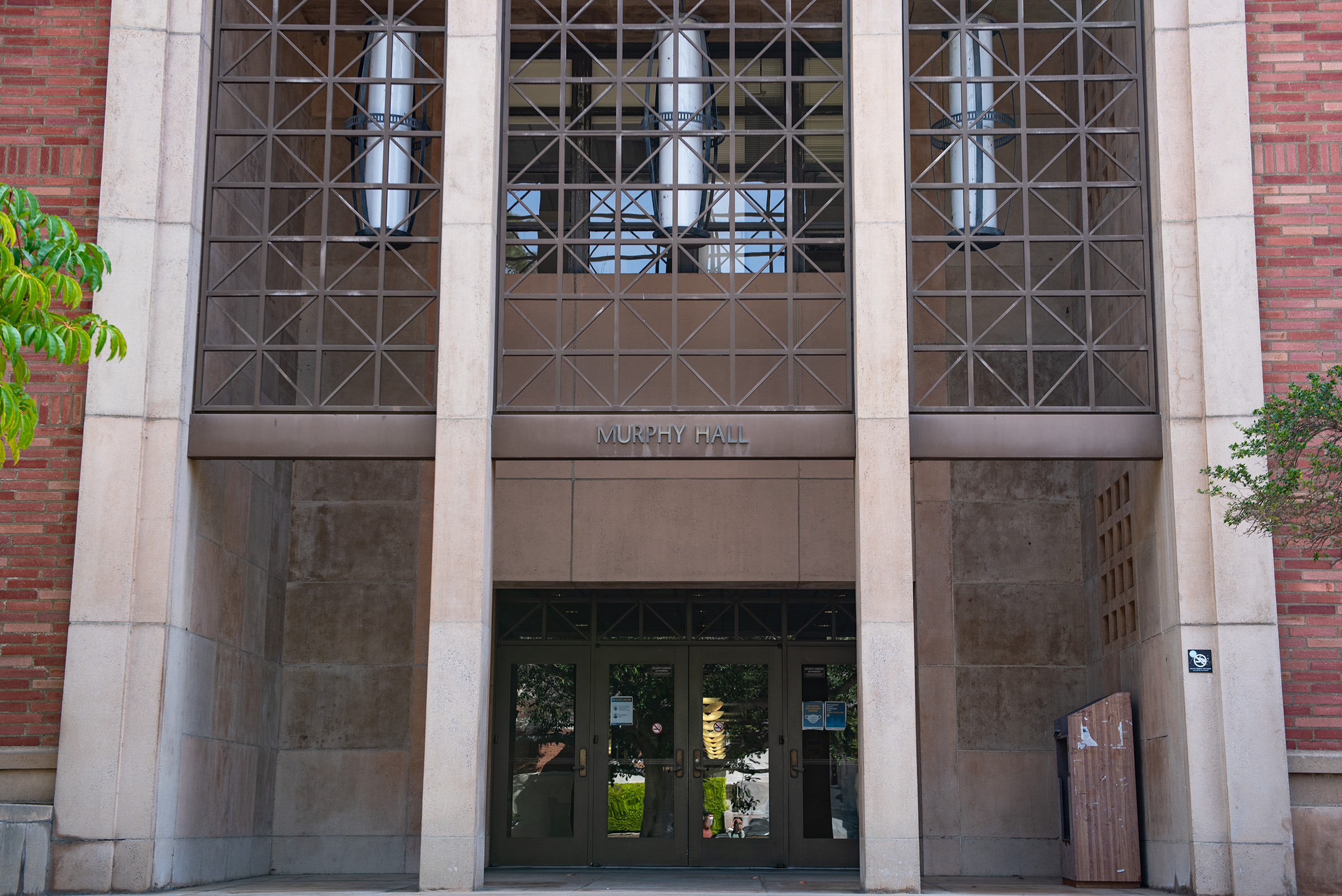
Murphy Hall is pictured. Students should be leading voices in advocating for diversity, equity and inclusion in the classrooms, writes Rana Darwich. (Daily Bruin file photo)

By Rana Darwich
April 7, 2026 2:50 p.m.
When learning to write an argumentative essay, students are introduced to the dreaded counterargument. Students are told they must state an argument they don’t believe in so that they can refute it in their next paragraph.
This signals that your writing is credible, you have the ability to see the other side and that your opinion is nuanced. The counterargument is almost never the most worthwhile part of the essay.
If the UC continues to deprioritize diversity, classrooms will feel the same way.
Without diversity, professors and students create artificial diversity by reconstructing viewpoints that are missing from the room, trying to approximate experiences they have never lived.
As such, diversity, equity and inclusion must remain a part of the classroom. Students need to be the voices that advocate for DEI most. When policymakers argue for certain policies, they make decisions on our behalf. It’s our education that is directly impacted. We need to be the ones to fight for it.
UC Berkeley clinical law professor David Oppenheimer, author of the recent book “The Diversity Principle,” said diverse classrooms generate educational and intellectual value.
“A diverse classroom is one in which there are more ideas generated, in which students often think harder and are more likely to be challenged,” Oppenheimer said.
UCLA students recognize the value of different perspectives when reflecting on a world without diverse classrooms.
“We would be in a silo of information,” said Anthony Sanchez, a first-year graduate student studying public health and public policy.
Sanchez said he noticed the difference after moving from the University of Michigan, where he completed his undergraduate degree in a predominantly white classroom environment.
“Finding a Latino in the classroom was actually rare,” he said.
Sanchez added that, at UCLA, the range of perspectives has expanded his understanding of policy discussions.
Affirmative action has functioned for white people for centuries through Jim Crow laws and nepotism. You may have classmates who mention having a “grandpa who was a Bruin” or being a “second-generation Bruin,” while peers from different racial backgrounds have grandparents who, even if they could enroll at UCLA, were denied housing near campus through racial covenants, excluded from university facilities and barred from fraternities and sororities. Legacy is generational wealth, networks and proximity to power that were deliberately kept from some families and handed to others.
DEI didn’t create a system where people are rewarded or punished on the basis of their race – it corrects a reality in which de facto laws have effectively marginalized students of color for hundreds of years.
As the world grows more diverse and the problems we face grow more complex, the research that matters most will come from teams that reflect that complexity. DEI is part of what made UCLA an R1 research institution in the first place.
Ravinder Rai, a first-year UCLA graduate student in community health sciences, said she engaged in a class discussion about farm workers and pesticide exposure in California’s Central Valley. Rai said having a classmate who actually worked in the fields gave her unexpected insight.
“It’s really nice to be able to go back to her experiences and ask her, ‘Is this accurate to what you’ve lived?’” Rai said.
Having primary sources is important, but having different perspectives on experiences beyond those that are lived is enriching. Oppenheimer said the benefits of diversity do not discriminate by subject or profession.
“When you bring together people with different backgrounds and experiences, including people with different ages, religions, races, ethnicities, genders, disabilities, economic classes, they will make better decisions,” Oppenheimer said. “In a classroom, they’ll learn more and teach more. In a science lab, they’ll make more significant discoveries. In government, they will come up with more innovative public policies. And in business, they’ll make more money.”
Diversity changes the texture of discussion, but university decisions are threatening its future.
“Stand-alone diversity statements will no longer be permitted in recruitments,” Katherine Newman, UC provost and executive vice president of academic affairs, wrote in a letter to campus leaders in March 2025.
Oppenheimer said UC’s decision to stop requiring diversity statements in hiring is a change that affects more than paperwork, citing potential consequences of disallowing stand-alone diversity statements in recruiting.
“They stop getting answers,” Oppenheimer said. “But more importantly, they stop telling their faculty that self-examination on this question is of some value.”
A settlement proposal the Trump administration sent to UCLA last year demanded sweeping changes to diversity policies, including eliminating diversity statements in hiring and reviewing university programs tied to diversity, equity and inclusion.
Students hear the Trump administration frame DEI as a political issue about who gets opportunities. Yet, that argument fails to consider what DEI contributes to a classroom or why universities spent decades building these programs in the first place.
Debates about merit also rely on narrow measures.
“(People) assume, for example, that a test like the SAT or LSAT or MCAT or GRE is simply a test of merit,” said Oppenheimer. “It is equally, if not more, a test of parental income, a test of family wealth, a test of class status, a test of prior educational experience.”
Critics claim DEI initiatives weaken academic standards by lowering expectations in the name of equity.
“That’s not true,” Oppenheimer countered. “What diversity, equity and inclusion programs do is broaden the pool and require us to be more self-reflective. I think that means we raise our standards.”
Universities frame changes to DEI programs and requirements as minor adjustments. UC leaders said in a statement that the University’s values and commitment to its mission have not changed.
Oppenheimer said that the real concern lies elsewhere.
“I’m more worried about anticipatory compliance, where universities are reducing their commitment to diversity, than I am about renaming offices,” he said.
For students watching these shifts, the response cannot be silence. Universities are communities shaped by the people inside them.
“This is a time when all of us at the university – students, faculty, staff and leadership at all levels – need to be courageous,” Oppenheimer said.