Five things: Takeaways from UCLA gymnastics’ battle at Corvallis Regional Final
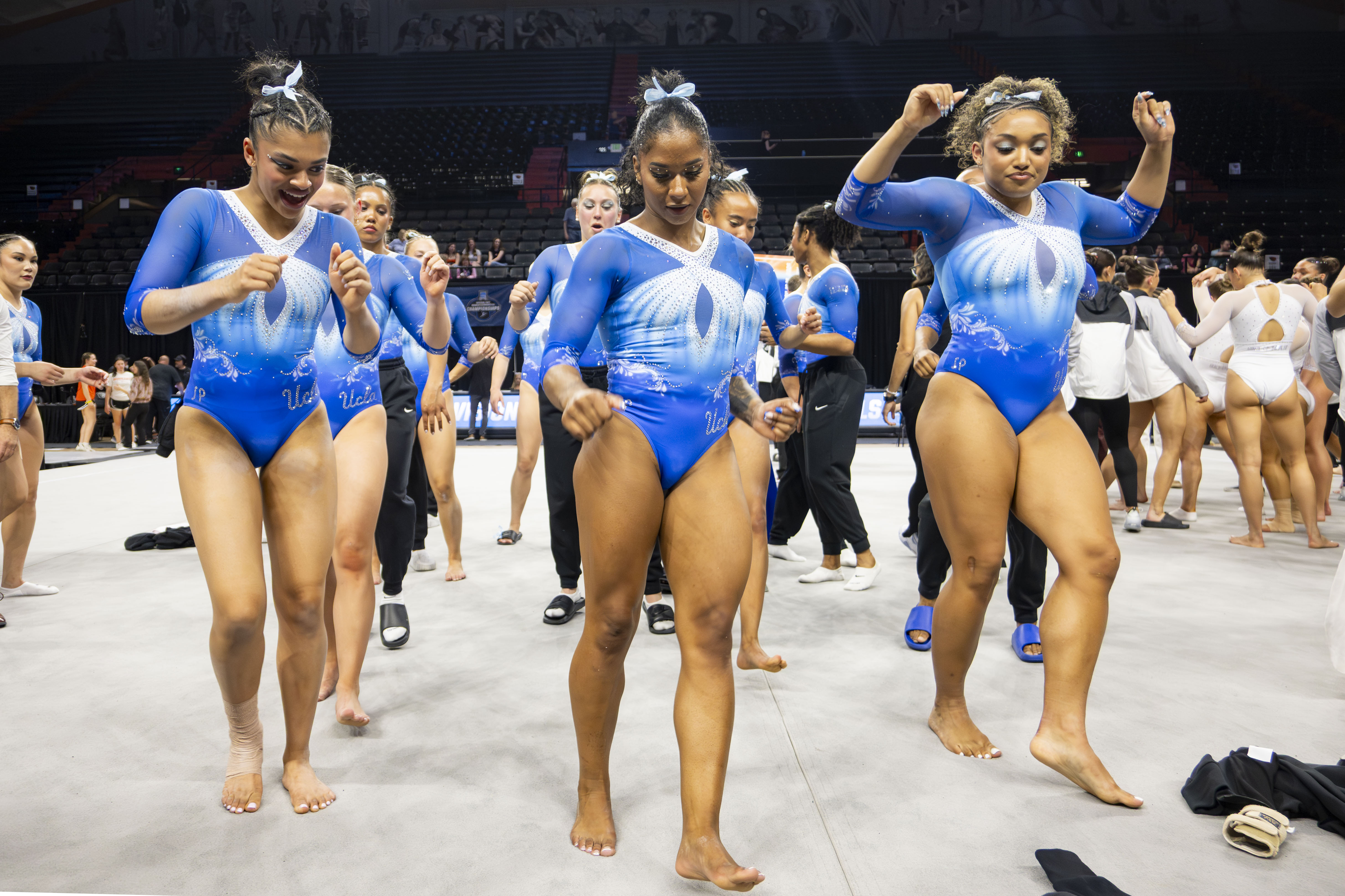
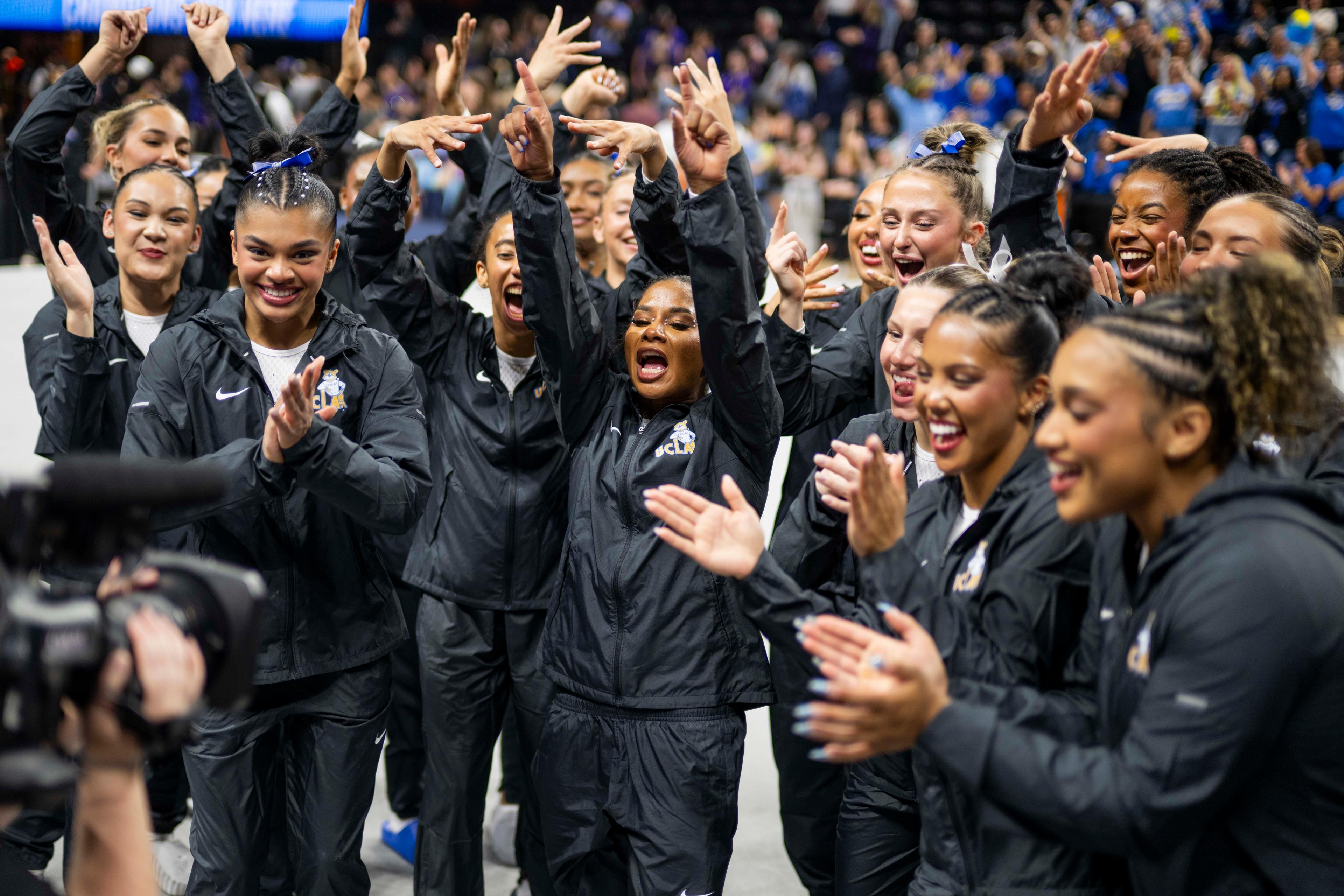
Members of UCLA gymnastics dance. The squad won its first regional since 2019 Sunday. (Andrew Ramiro Diaz/Photo editor)

By Finn Karish
April 7, 2026 4:22 p.m.
This post was updated April 7 at 9:43 p.m.
The Bruins are headed to Fort Worth, Texas. After a staggeringly tight battle with multiple lead changes, No. 4 seed UCLA gymnastics won Sunday’s Corvallis Regional Final and will advance to nationals alongside No. 13 seed Minnesota. The pair of Big Ten squads left No. 5 seed Alabama and No. 12 seed Utah behind in what was touted as the most difficult regional. Daily Bruin reporter Finn Karish gives his five takeaways from Corvallis, Oregon.
[Related: Led by Jordan Chiles, UCLA gymnastics wins regional title]
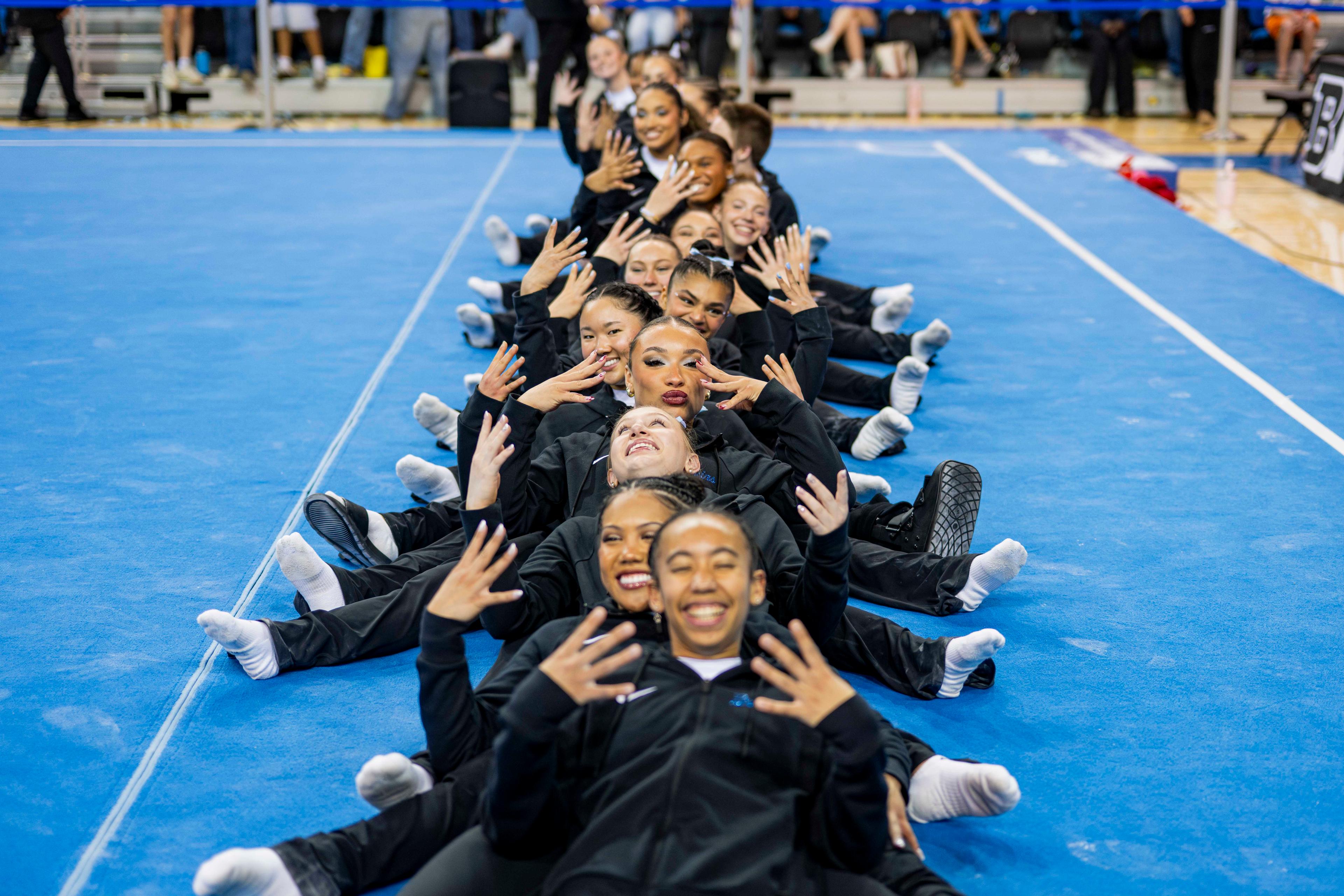
A floor party classic.
The competition was tight.
So much so that coach Janelle McDonald said it was one of the most competitive meets she had ever been a part of.
With only the top two squads advancing to nationals, the Bruins ended the night in Corvallis on floor, trailing their rival Red Rocks and tying the Golden Gophers. Only half a tenth separated the top three squads – the equivalent of a single unpointed toe.
What’s more, every squad but UCLA was closing on its highest-ranked event, while the Bruins finished with their lowest-ranked event on paper.
But any UCLA fan knows that calling floor its “worst event” is a complete misnomer.
And what followed was a classic UCLA showcase.
The squad only counted scores of 9.900 or higher, dropping a 9.875 from senior Ciena Alipio that would have counted almost anywhere else.
Sophomore Mika Webster-Longin bounced back from a rough start to the meet with a 9.900, a mark matched by junior Sydney Barros and freshman Ashlee Sullivan. Freshman Tiana Sumanasekera logged a 9.925, her fifth consecutive 9.925-plus score.
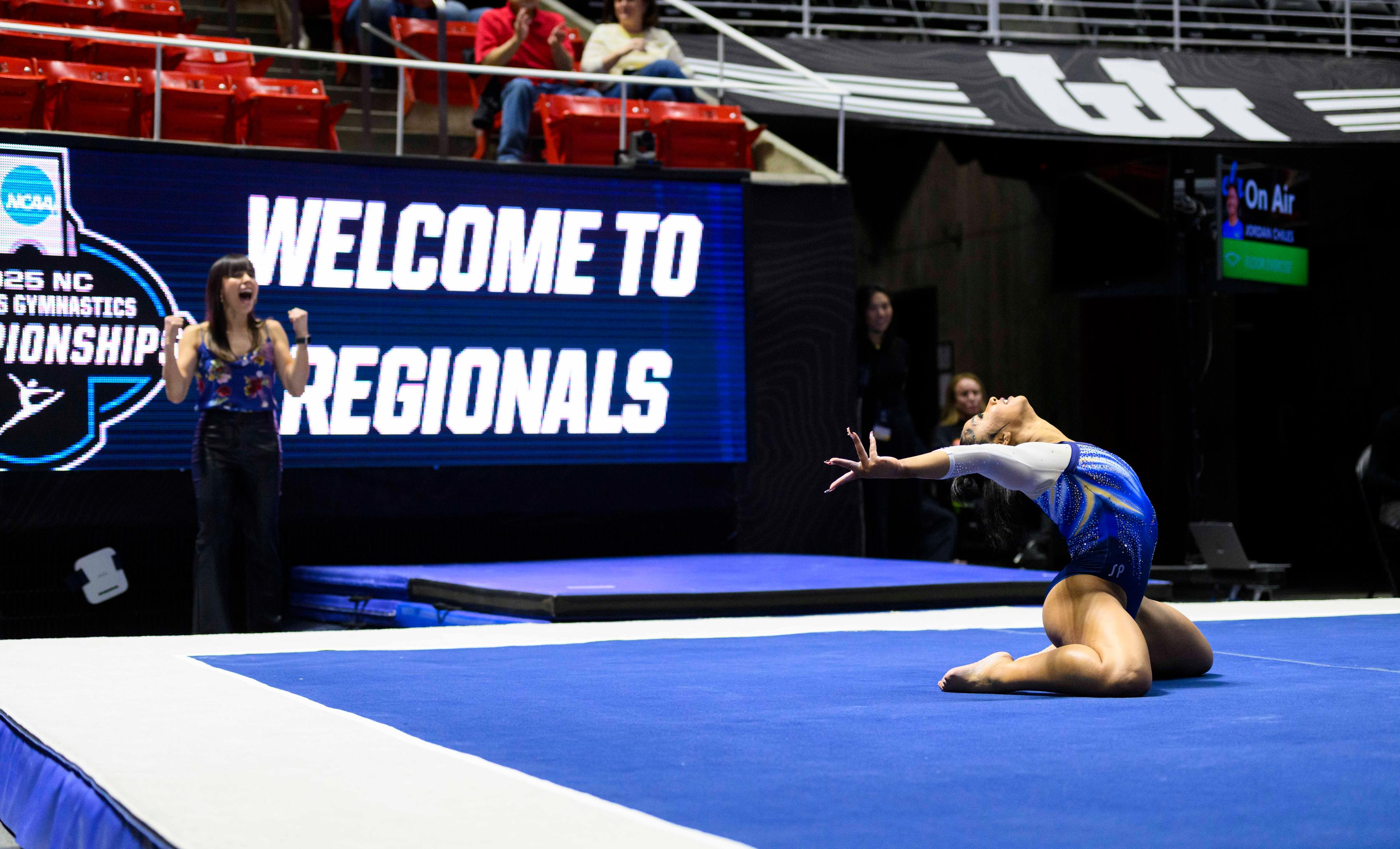
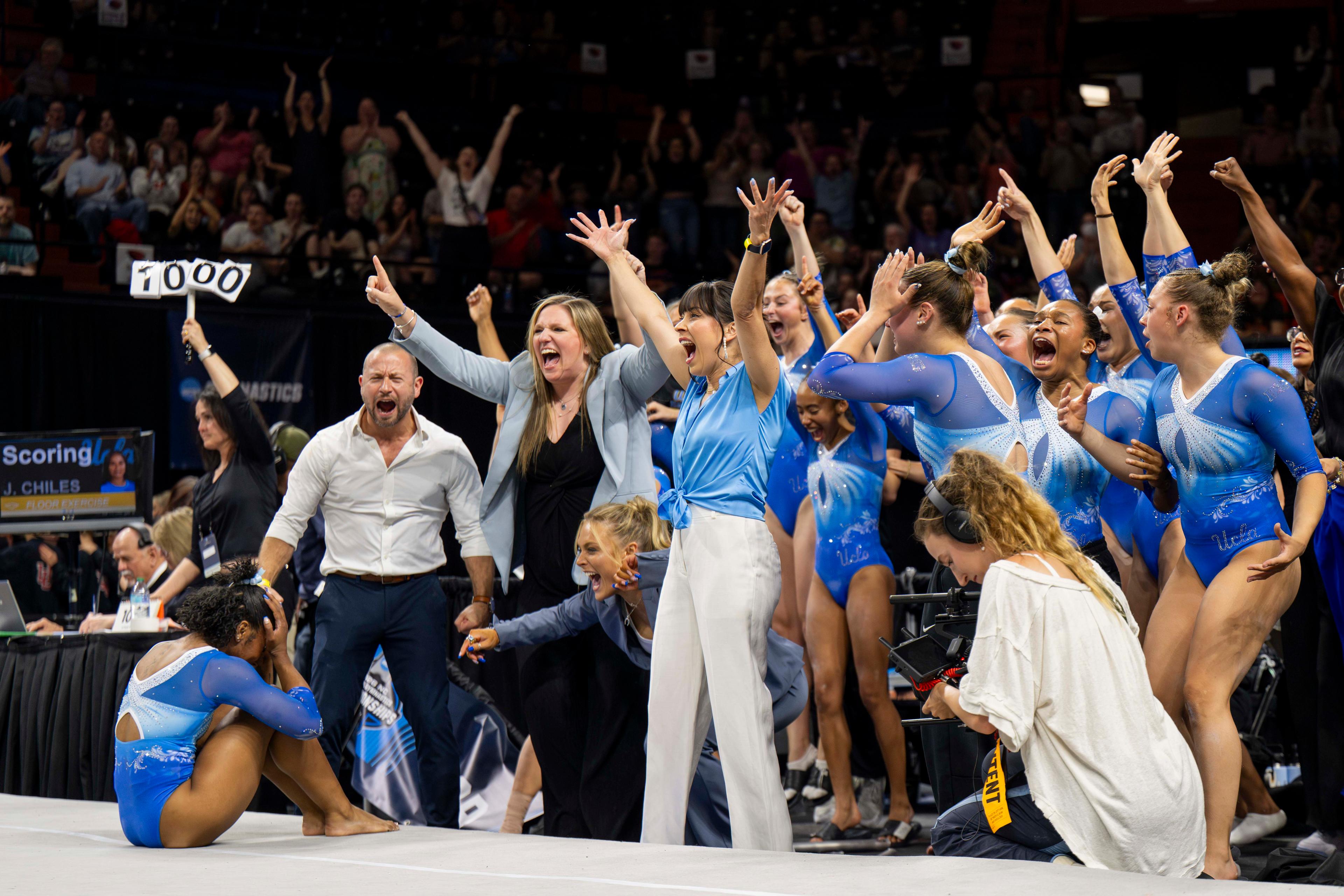
And almost inevitably, senior Jordan Chiles anchored the lineup with a perfect 10, her eighth of the season and a mark that clinched the Bruins’ first regional championship since 2019.
In a moment reminiscent of last year’s seven-tenths deficit comeback over Michigan State, one lesson always rings true – never count UCLA out when it has not had a chance to party.
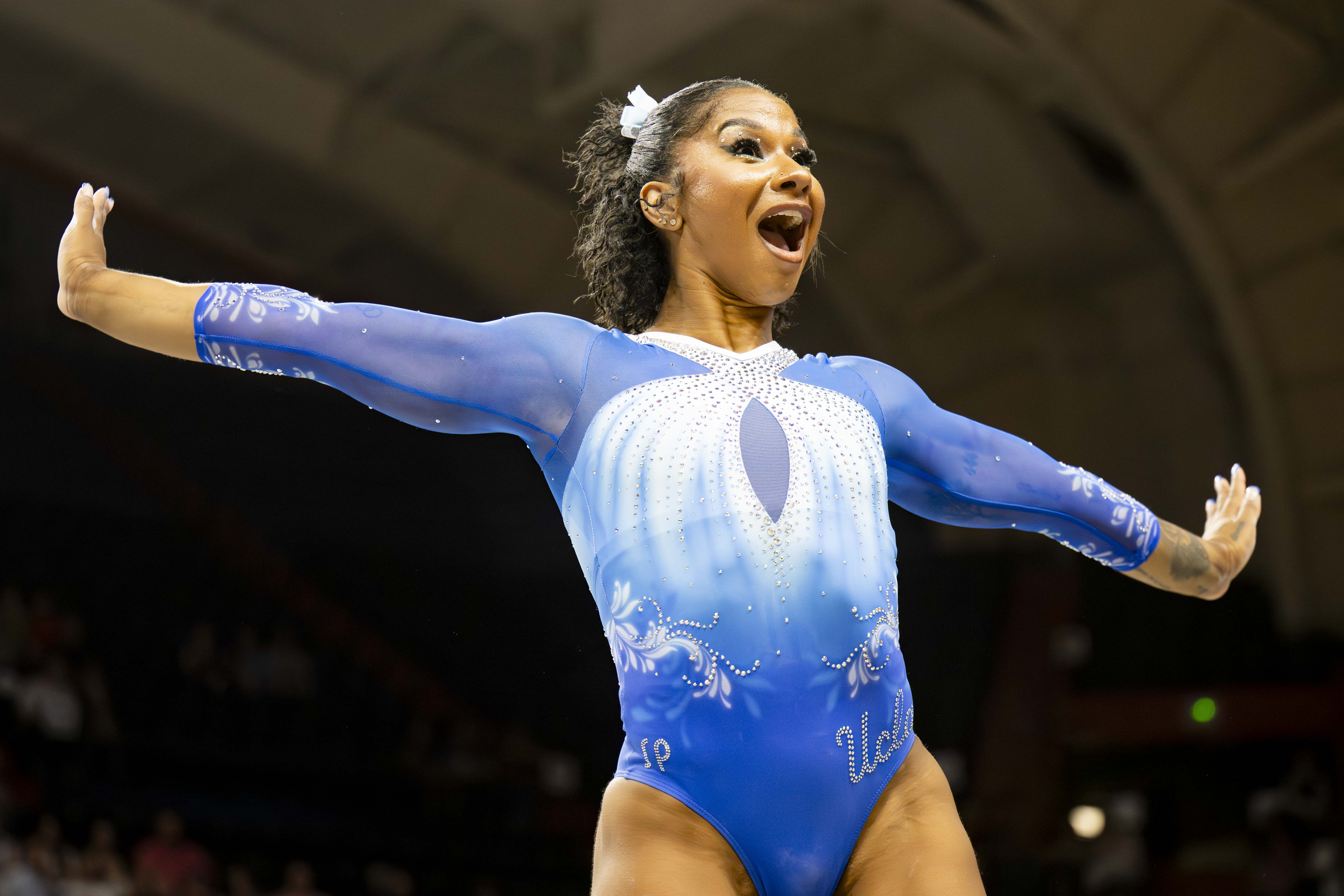
Jordis Eichman delivers.
Webster-Longin’s two dropped scores on vault and bars led to a mid-meet pivot in the beam lineup, thrusting Jordis Eichman into the spotlight.
The freshman had not appeared in the lineup since Feb. 22 and had posted an eight-tenths range of marks across all exhibition and lineup routines.
But the Colorado Springs, Colorado, local has also competed on the nation’s biggest stages.
Eichman has competed in the elite world since 2023, participating at the Xfinity U.S. gymnastics championships in August.
And once again, Eichman was cool under pressure, delivering a nearly full-stuck routine, taking a small hop on the dismount to earn a 9.800 – enough for the Bruins to drop a team-low 9.700 from Sumanasekera and ultimately secure victory by that same one-tenth margin.
Squad depth is crucial in high-pressure moments, and UCLA can count on every member of its squad to deliver when their name is called – Eichman proved no different.
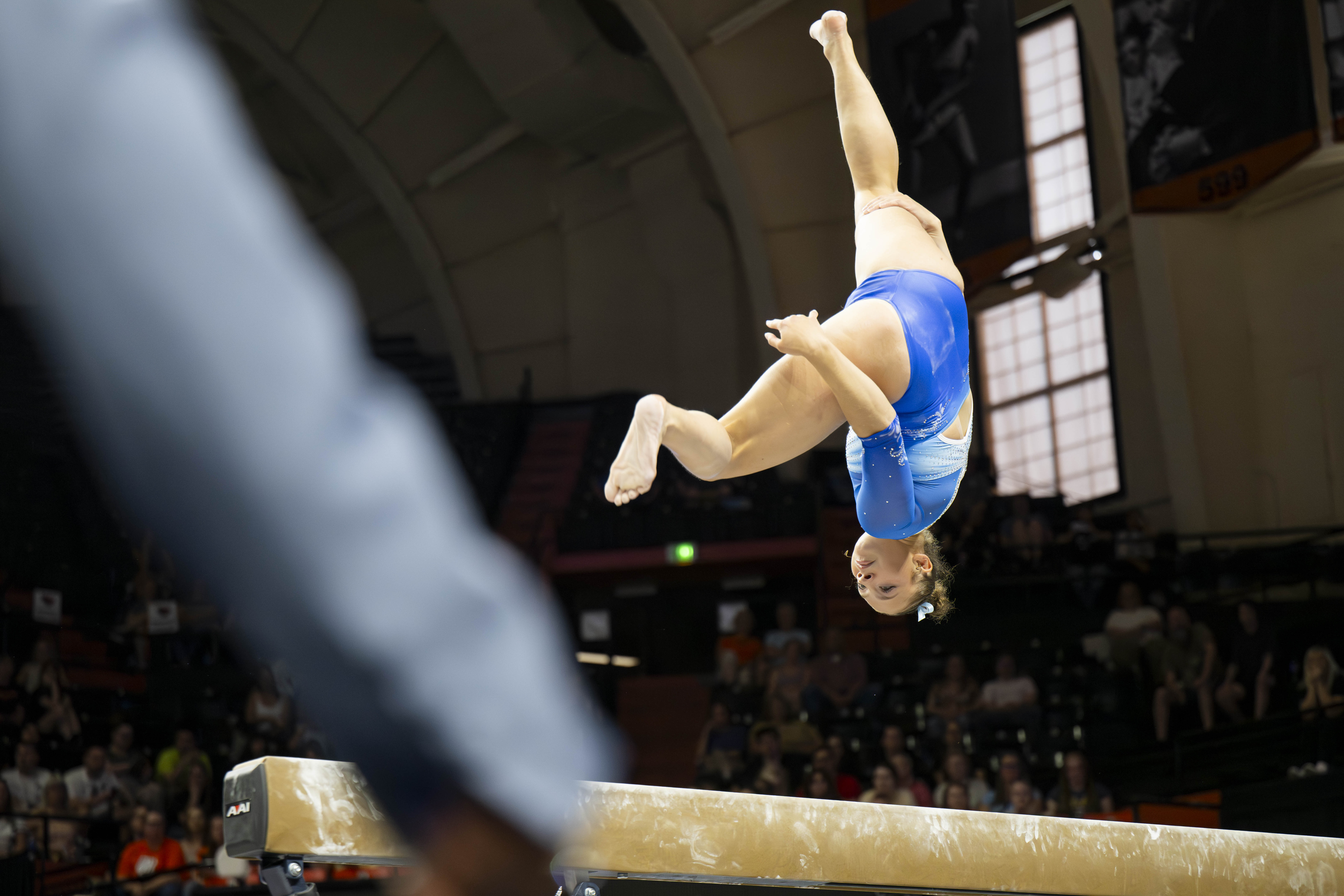
Clutch Katelyn Rosen.
Only two Bruins earned a pair of 9.900 or higher marks in the regional final: Chiles and Katelyn Rosen.
The junior stuck her Yurchenko 1.5 vault cold Sunday evening, earning a 9.900 that tied her career-high – her first time breaching 9.900 in more than two years.
But Rosen’s work was not over.
The Bruins headed to beam in second place, trailing the Golden Gophers by less than a tenth but leading the Crimson Tide and the Red Rocks by 0.075 and 0.125, respectively.
Safe to say, the meet was anyone’s for the taking.
And Rosen was set to lead off on beam, tasked with setting the tone for an event that demands it.
And once again, the junior tied her season-high with another 9.900.
Postseason has always been the time to shine for the Boerne, Texas, local, however.
Rosen earned a career-high all-around mark of 39.550 in the 2024 Pac-12 Championships. She also competed on three apparatuses in each round of the NCAA tournament last season – her only stretch of four consecutive meets doing so.
[Related: Aaron’s Answers: Without clutch Katelyn Rosen, UCLA would not have advanced to national final]
There is no better time to peak, and now Rosen gets to return to her home state red-hot.
Alabama’s exit – no squad is immune to the upset.
Alabama ended its season earlier than anticipated with a fourth-place finish at the Corvallis Regional Final, dropping from the No. 5 seed to an 9th-place national finish despite peaking at No. 3 midseason. The squad trailed No. 12 seed Utah by over three tenths by the end of the night, with neither team advancing to the NCAA Championships.
Coming into the postseason, seven out of the nation’s top 10 teams hailed from the SEC. But Alabama’s underperformance underscored a broader truth – no squad can ever be counted out, and none can ever be counted in.
This phenomenon was observed last year, as 2025’s No. 1-seed LSU and No. 3-seed Florida both failed to reach the final meet in upsets that shocked the nation. However, top-ranked SEC squad Oklahoma still took home the national title.
Five of the eight squads heading to Fort Worth are in the SEC. But only time will tell if the regular season dominance will translate to postseason results.
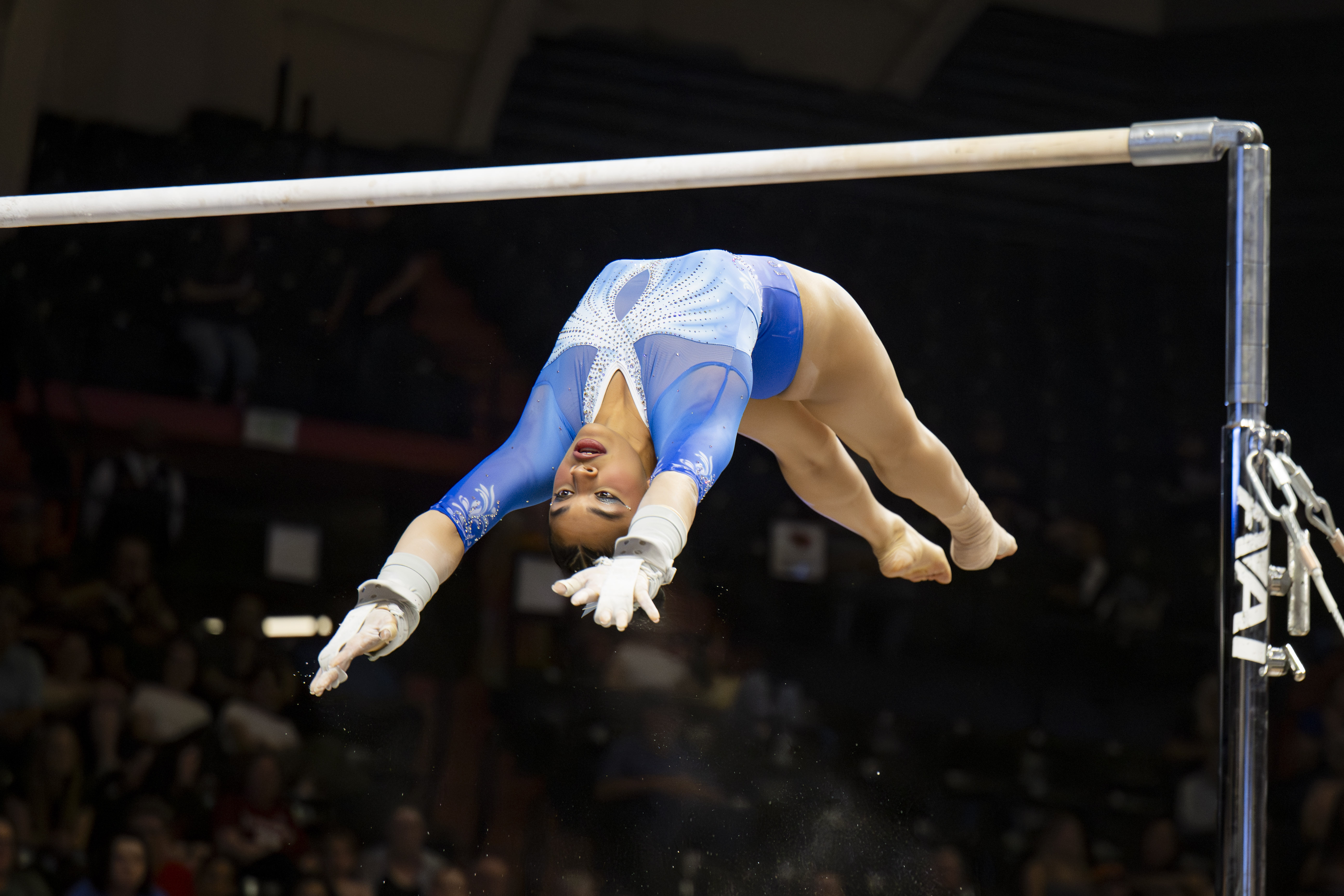
Bars inconsistencies.
In Friday’s regional semifinal, UCLA’s 49.225 on bars tied its season low from the first meet of 2026 on Jan. 3. In the regional final, the Bruins earned a 49.400, nearly identical to their NQS of 49.398.
By comparison, national championship contender Florida has only scored below UCLA’s season-best 49.575 four times, and not since Feb. 20.
LSU and Oklahoma, however, have shown similar variability to UCLA, with the Tigers earning their second-lowest bars score of the season in their own regional final.
Inconsistency is more common on bars than on other events like floor, as it demands high-risk routines. But reining in scoring variability could be the key to determining who will bring home the title in just a few weeks.