Behind the buzzer-beater: 1995 title team looks back on Tyus Edney’s legendary shot
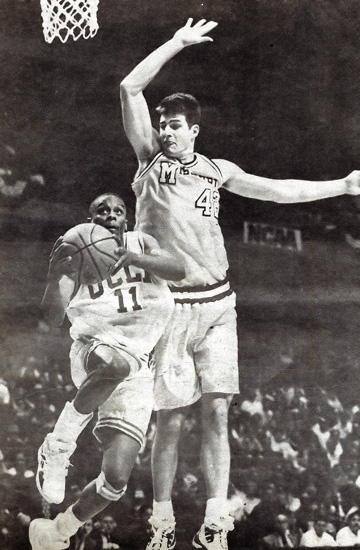
Former UCLA guard Tyus Edney rises for a layup against Missouri in the second round of the NCAA Tournament in 1995.(Daily Bruin file photo)

By Badri Viswanathan
April 7, 2026 12:41 p.m.
March Madness is often remembered by its buzzer-beaters. This year’s festivities were no different, with Connecticut guard Braylon Mullins drilling a 35-foot 3-pointer to topple No. 1 seed Duke in the Elite Eight. One such instance happened in the second round of the 1995 NCAA tournament, and it was authored by a Bruin.
Taco Bell Arena in Boise, Idaho, seemed to be where it would all end.
UCLA men’s basketball trailed 74-73 to Missouri with 4.8 seconds left on the clock and 94 feet to travel, giving the former one improbable shot to save its season.
All signs pointed to the Bruins heading toward their third consecutive March Madness exit before the Sweet Sixteen.
Guard Tyus Edney, forward Ed O’Bannon and center George Zidek had experienced the devastation of a first-round exit to No. 12 seed Tulsa the year prior.
And it sparked their fervor all year long.
But the senior-led squad was facing that same reality again.
“That game (against Tulsa) was what got the seniors really motivated,” said former UCLA guard Toby Bailey, a freshman on the 1995 team. “They were like, ‘We’re not losing on our last time around. We know how it feels to get put out.’ If that would have happened again, and we lost to Missouri in the second round, that would have been devastating.”
The Bruins needed a miracle to survive.
Then-head coach Jim Harrick had about a minute to draw up the possession that would decide UCLA’s season.
The then-seventh-year UCLA coach was first tasked with deciding who would take the last shot.
The answer seemed obvious – O’Bannon led UCLA with 20.4 points per contest, shooting 53.3% from the field and 43.3% from beyond the arc.
And he wanted it.
“Ed O’Bannon walked by and said, ‘Get me the ball,’” Harrick said.
But the Bruin head honcho remembered a similar play that had come up short.
In the tournament’s second round two years prior, Edney had stolen an errant inbound pass by Michigan’s Juwan Howard and raced toward the basket with six seconds on the clock with the game knotted at 77.
The point guard attempted an unsuccessful pass to O’Bannon and turned the ball over, resulting in overtime, where the Bruins fell 86-84.
Harrick was aware of the risk associated with a final-second pass and was not willing to play that hand.
It was a decision decades in the making.
While coaching at Morningside High School in Inglewood in the 1960s, Harrick watched Lakers point guard Jerry West travel the full length of the floor in under four seconds.
And while attending a professional practice, he observed a drill where the ball-handler was given six seconds to span the court and score.
At UCLA, Harrick implemented the drill into team practices once a week.
Edney was the standout.
“Nobody wanted to play against Tyus,” Bailey said. “He was so fast with the ball that if you got matched up against him, it was tough to keep him in front of you. … There were so many games where teams would try to press us, and he would singlehandedly break the press by himself. He was a one-man press break.”
So Harrick tasked Edney with pushing the ball up the court and scoring in under five seconds.
To Harrick, the plan was set in stone.
“I put my arm around Tyus when we walked out to halfcourt, and I said, ‘Do you have a crystal clear understanding of what I said?’” Harrick said. “He said, ‘Yes, you want me to shoot the ball.’ I said, ‘Absolutely right.’”
But as Edney stepped onto the orange-and-blue-accented hardwood for possibly the last time as a Bruin, he recalled being slightly hesitant.
“Part of me was like, ‘All right, let me figure out how to get open just to get Ed the ball,’” the former point guard said.
A murmur washed over the crowd.
The baseline official blew his whistle and handed the ball to then-sophomore guard Cameron Dollar.
Edney was positioned near the left elbow closest to the baseline. O’Bannon, Bailey and then-freshman forward J.R. Henderson began near halfcourt, pulling defenders away from Edney in the backcourt.
The 5-foot-10 point guard jabbed Missouri guard Jason Sutherland with his left forearm to create momentary separation and received the inbound from Dollar.
Edney turned upcourt and took three dribbles at an angle from Sutherland.
His mind was clear by then.
“My mindset once we got out there was, ‘I got to get up the court without getting stopped,’” Edney said. “It was led for me to go that way. Then it was instinct to try to get it up the court as fast as possible.”
By the time Edney reached halfcourt, 1.8 seconds had waned from the clock. Missouri guard Kendrick Moore shifted to the left and geared up to double Edney.
So Edney changed direction for the first time, performing a behind-the-back move that created a moment of space between him and the defenders.
“I could feel the defense trying to corral me to the sideline,” Edney said. “My instinct is always to play more in the middle of the court. And I knew that if I kept going that way, they were probably going to be able to get me to the sideline. The move was a quick change of direction to try to lose the defense, which it actually did.”
Edney pounced on the chance, taking two dribbles and attacking the paint hard.
“Once I saw the paint, I was going,” Edney said. “It didn’t matter who was there. I felt like I had the lane, and I saw it, and I tried to get to that spot as quickly as I could.”
Harrick and his coaching staff stood near the scorer’s table, captivated by Edney’s baseline-to-baseline dash.
“When you’re in the moment, you’re just watching the play,” Harrick said. “I knew he was prepared. I knew he knew what he wanted to do, and you have to leave it in his hands.”
Edney reached the middle of the paint with 1.2 seconds remaining.
Missouri big man Derek Grimm left Henderson to contest UCLA’s point guard at the rim. Despite being draped by three yellow jerseys, Edney took off.
“In four years of playing at UCLA, no one ever blocked his shot,” Harrick said. “And Missouri couldn’t either.”
The ball left Edney’s hands with 0.2 seconds left and floated toward the top right corner of the backboard’s shooting square.
Every fan, player and coach in the arena had their eyes glued to the ascending 29.5-inch leather sphere.
“It looked like it was slow motion,” Harrick said. “It was a magical moment.”
The horn sounded as Edney’s shot made contact with the backboard. The ball sat on the front rim for a fleeting moment before circling the net and dropping through.
It was an instance that felt much longer to its author.
“Strangely, once it was in the net, it seemed like it was just sitting there,” Edney said. “That’s when it felt like time slowed down.”
The scoreboard changed from a prop in UCLA’s nightmare to the center of a fever dream.
UCLA 75, Missouri 74.
The arena’s silence morphed into chaos.
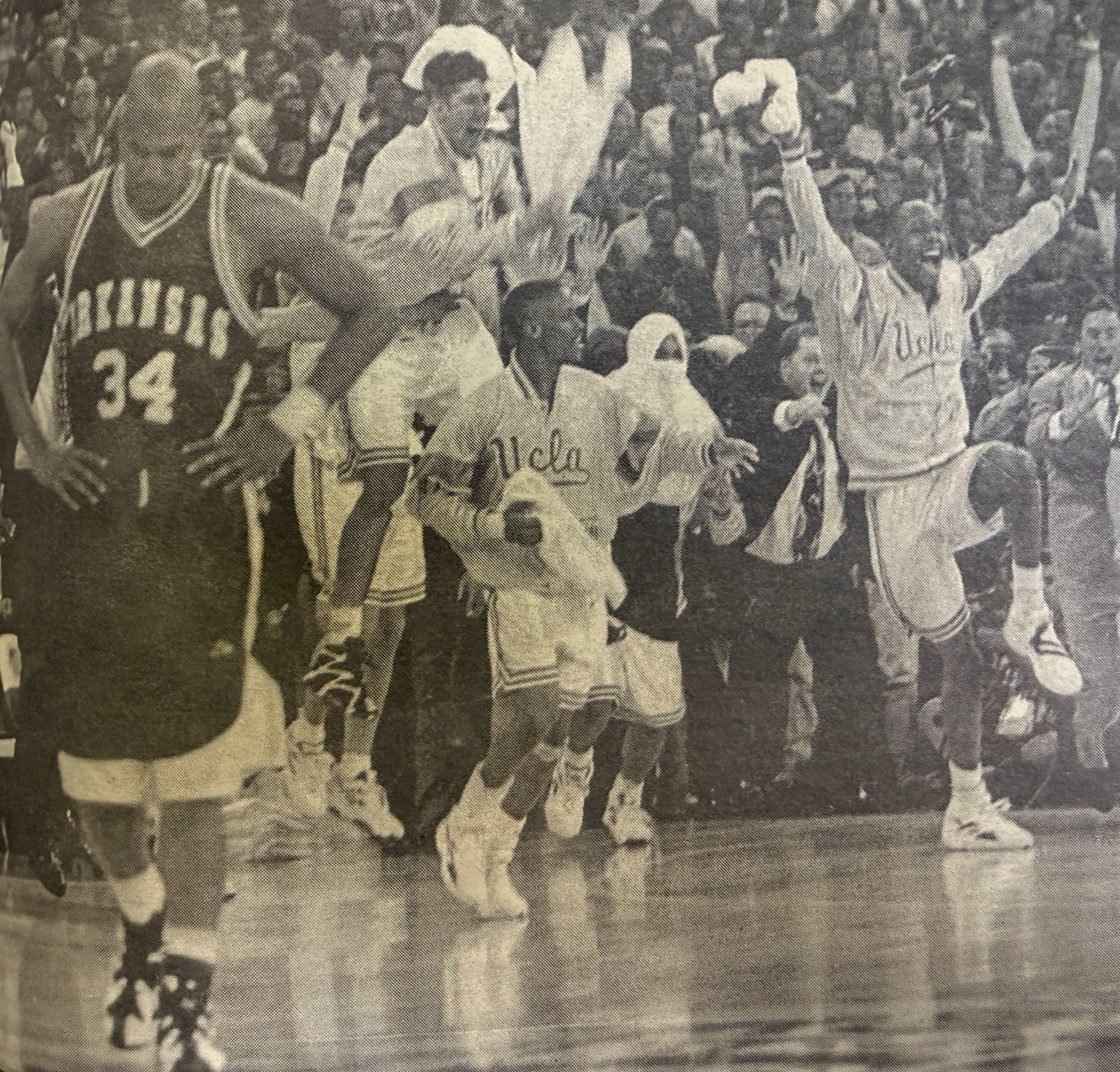
The squad that had been on the brink of elimination five seconds earlier rushed and serenaded its senior floor general on the hardwood.
The Bruins never looked back after that point, claiming double-digit victories in three of its next four tournament games en route to the national championship.
“After we won on Tyus’ 4.8-second shot, it solidified for us that this might be destiny,” Bailey said. “Every team going to the championship needs a game like that, where a little luck and fate gets in the way.”
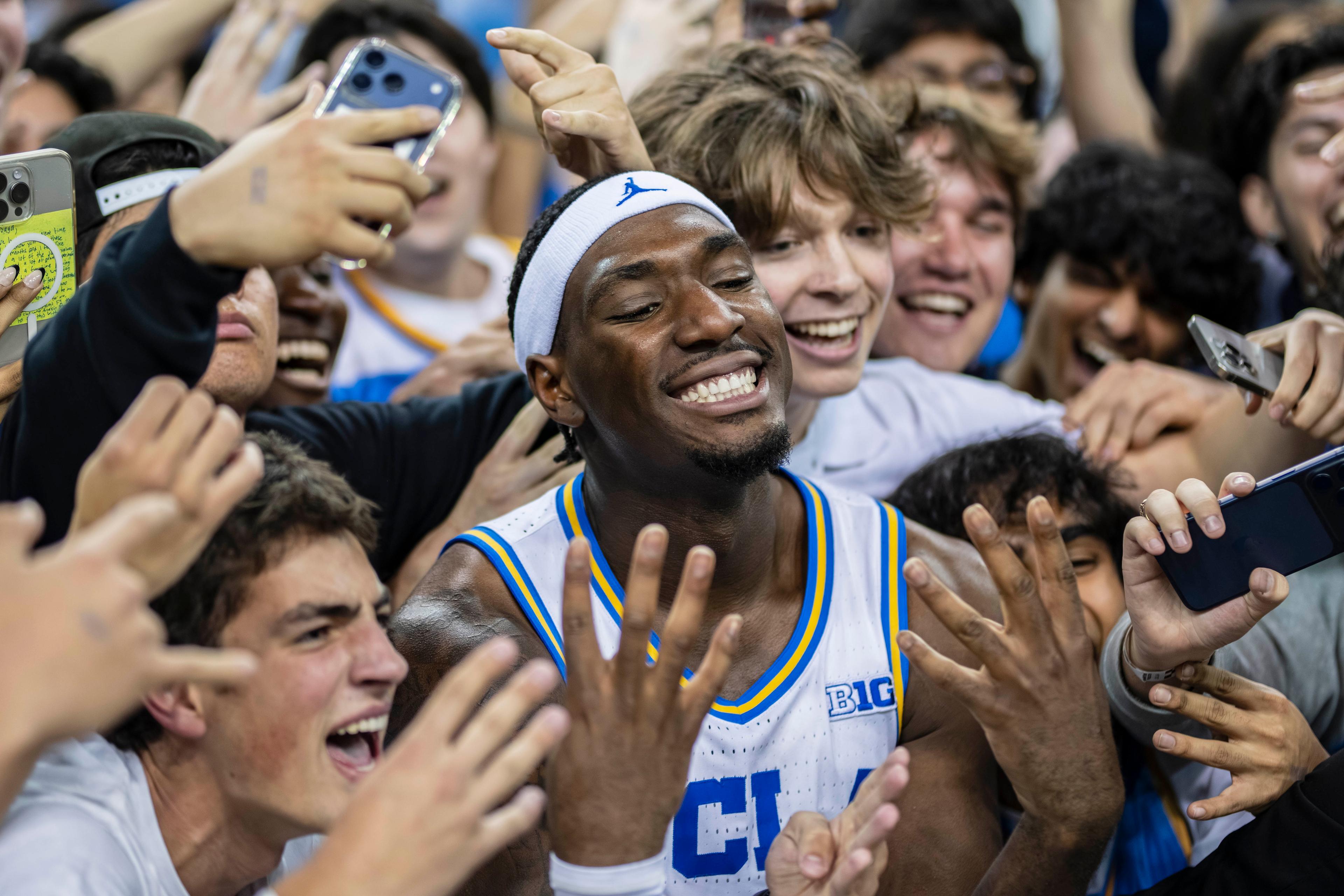
The shot’s impact and notoriety were especially amplified after UCLA secured the title, Edney said. It returned to prominence this year after UCLA senior guard Donovan Dent scored a similar buzzer-beater, traversing the court in just 4.9 seconds against Illinois on Feb. 21.
“You realize how much of a core memory that is and how much it impacted people’s lives,” Edney said. “Every year, even now, people are remembering. When Dent does what he does, and people bring up my shot, it’s exciting to see and hear. It feels like it’s appreciated and respected.”
That day in Boise, Idaho, could have marked the end of Edney and UCLA’s title hopes.
Five seconds later, it proved to be just the beginning.