Q&A: Dr. Gail Wyatt reflects on career, advocacy after receiving humanitarian award
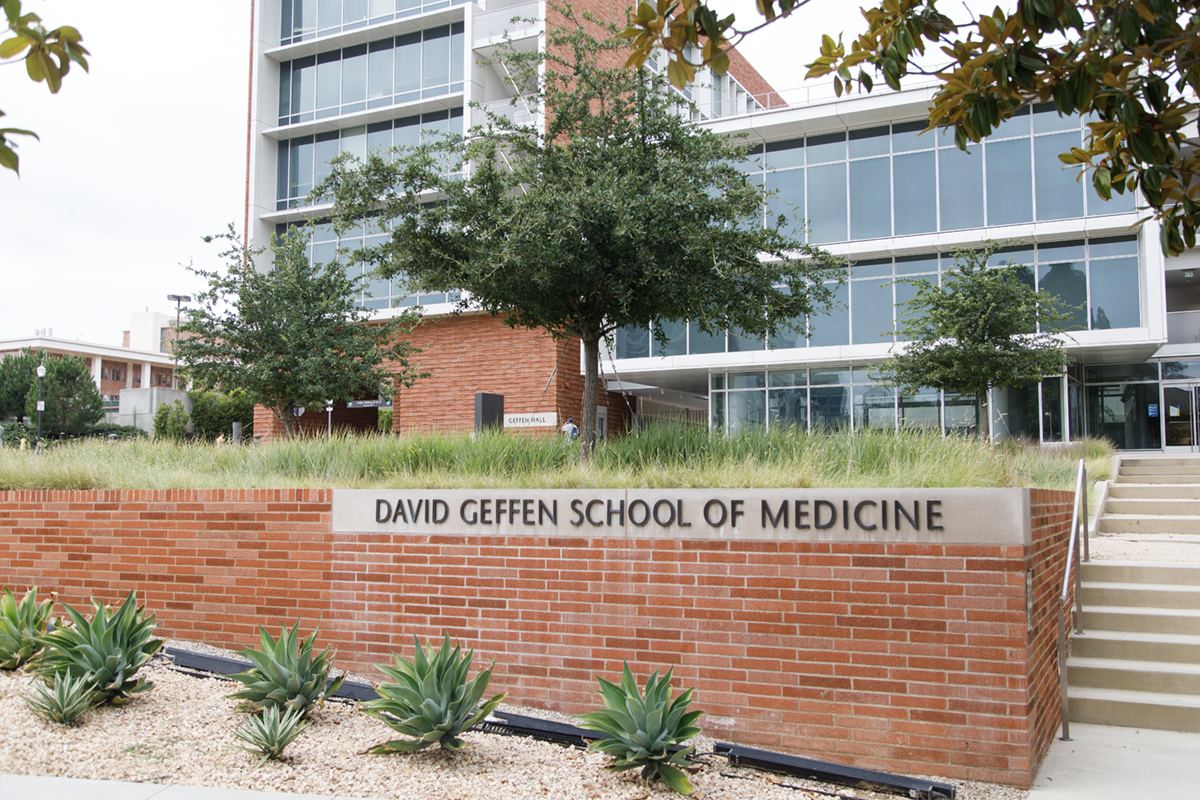
Gail Wyatt, who received the Association of Black Women Physicians’ Humanitarian Award in October, is a distinguished professor emeritus of psychiatry and biobehavioral sciences at the David Geffen School of Medicine, which is pictured. (Daily Bruin file photo)


Gail Wyatt, a distinguished professor emeritus of psychiatry and biobehavioral sciences at the UCLA David Geffen School of Medicine, received the Association of Black Women Physicians’ Humanitarian Award in October.
Wyatt – who earned her master’s degree at UCLA in 1973 – became the first Black person to be licensed as a psychologist in California in 1975 and the first Black person to serve as the David Geffen School of Medicine’s Dena Bat Yaacov Endowed Chair in Psychiatry. One of her latest accolades, the ABWP’s award, honors Wyatt’s advancements in the fields of women’s health and domestic violence prevention, according to a UCLA Health newsroom release.
Wyatt spoke with Daily Bruin reporters Calina Wiesner and Zoya Alam to discuss her award and work throughout her career.
This interview has been edited for length and clarity.
Daily Bruin: Congratulations on being awarded the Association of Black Women Physician’s 2025 Humanitarian Award. Could you tell us what initially started you on this path of medicine and becoming a healer?
Gail Wyatt: I was accepted into graduate school, and I finished in December of 1973. I had a part time job at the Semel Institute as an assistant professor. They had a quota in those days – they had to have (certain numbers of) minorities and women in each of the institutions. I don’t think they expected me to stay, but they satisfied the government’s quota so they could continue to receive federal money – so I was thrilled to be included.
I found out there was a career scientist award from the National Institute of Health. I applied for the award, and I was told it wasn’t for me because I wasn’t an MD. So, I called the office and asked them, and they said I could apply. I did – and I got it – and I’m the first person of color to get (the) scientist award. I had it for seventeen years. It allowed me to do research, train myself in research, and teach the rest of the time at UCLA.
That gave me a tremendous advantage, because my resume was full of publications. I just had the most remarkable experience interviewing sex therapists and researchers… I have about now 400 publications – all of them around sexual consent and how to ask questions when you’re talking about sexual abuse of men and women. This was something that just didn’t exist.
That’s why I stayed at the university. I was allowed to do what I could manage, and there were other students who wanted to learn how to get these awards I started to get. So I would spend time teaching them. They wanted to learn how to get licenses in psychology – I’m the first African American person to be licensed (psychologist) in the state of California. This just tells you that these things are not a given. We had to fight for them.
What I did was to teach others. Wherever I’ve gone and whatever I’ve done, that’s the story. Turn around, reach back, help somebody else – so they can teach more and we could have the diversity in the world.
DB: You have founded the Center for Culture, Trauma and Mental Health Disparities. Can you tell us the motivation for you to create this facility?
GW: There was a grant that offered us the opportunity to develop a center. We had four different research projects under this center, and all of them had to do with decision making, consent, sexual trauma, mental health, mental health trauma, and we had different populations that we included. Some were all men, some were all women, younger, some were men and women. The research was fascinating. After that grant was finished in five years, we continued the center on our own money.
DB: We know many research projects have faced federal funding cuts recently. Have any cuts affected you or your work?
GW: We lost people, we lost data and we certainly lost money and time. I’m not really sure where we’re going with the kind of research that’s expected to come out of such a severe and punitive way of handling the fact that we weren’t doing the work that is considered to be in the administrative agenda.
The mantra I want to share is: Keep going. Don’t give up. Don’t feel that what you want to do is not important… That does not mean there won’t be another opportunity for another administration to support what you want to do.
DB: When did you learn you were receiving this award? What did you feel at that moment?
GW: I felt very loved. I felt I was seen and was heard. I wasn’t just doing great things – but people noticed – and it mattered. That made me feel like I could get up the next day and keep going. Everybody needs to be celebrated.
DB: What is one piece of advice you would give students in STEM, especially female students?
GW: People are very, very distressed about many of the things that are going on, and they see that some people are being cruelly dealt with in our society. Do what you can to be the opposite. Be caring and loving.