UCLA researchers develop cell therapy for aggressive breast cancer treatment
(Ji-Tao Yuen / Daily Bruin)

By Danielle H. Cho
March 30, 2026 5:12 p.m.
This post was updated March 31 at 11:21 p.m.
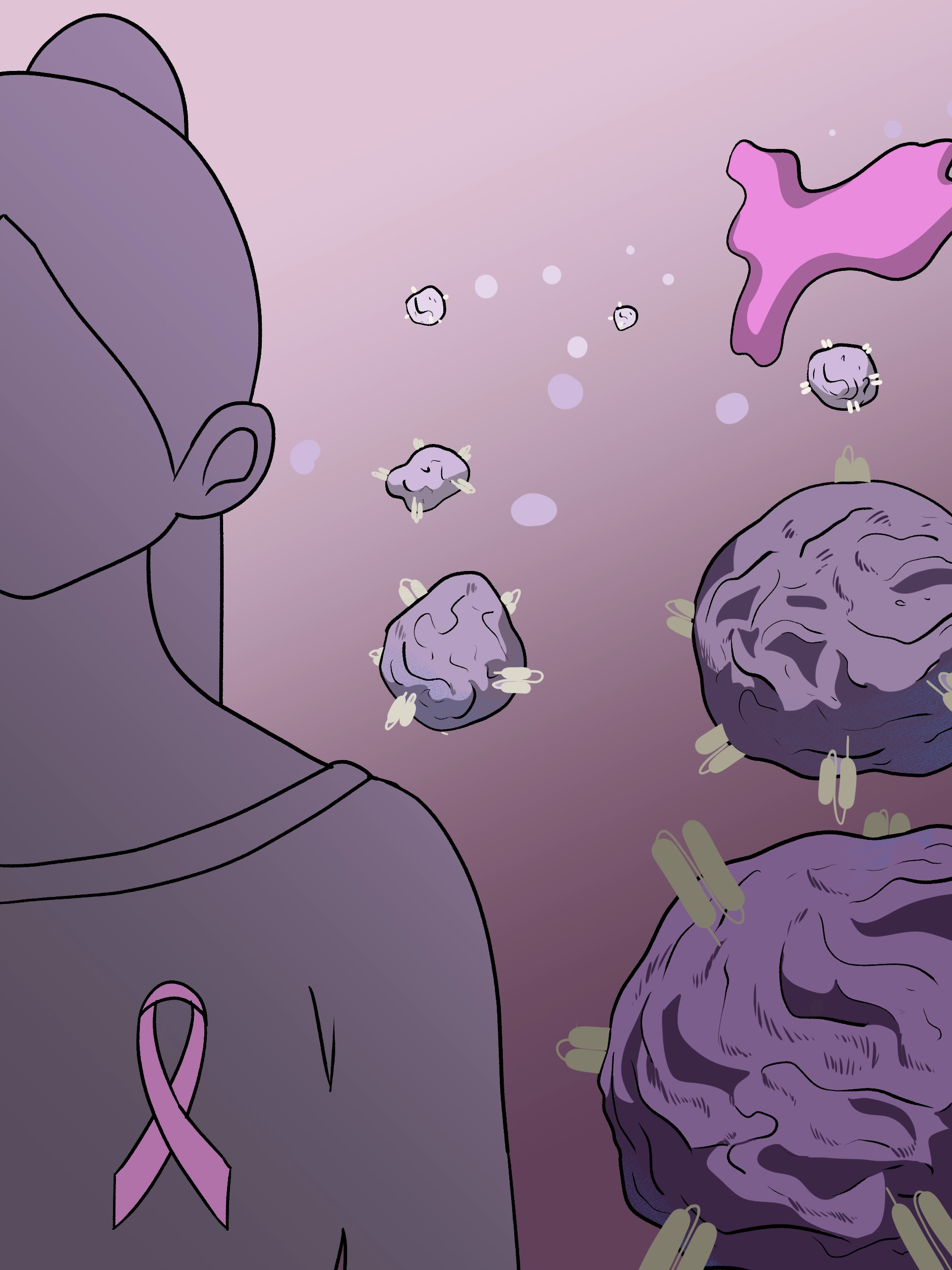
UCLA researchers developed a human stem cell-derived cell therapy for an aggressive type of breast cancer.
This study focused on modifying natural killer T – or NKT – cells, which are a specialized immune cell that quickly responds to cancer cells, according to the National Cancer Institute. NKT cells can directly kill tumor cells, said Yan-Ruide Li, a co-author of the study, which was published in the Journal of Hematology & Oncology.
When triple-negative breast cancer stays in the breast tissues, surgeries can be effective in removing the tumor, Li said. However, if the cancer metastasizes – or spreads to other parts of the body – it is difficult to treat because triple-negative breast cancer lacks targets that many advanced cancer therapies are designed to address, he added.
The study is a type of cancer treatment where researchers modified human immune cells to target and directly kill tumor cells, Li said.
Specifically, the researchers engineered the NKT cells to express a synthetic receptor called a chimeric antigen receptor, which recognizes a specific target on the triple-negative breast cancer, said Yichen Zhu, a co-author of the paper. After binding to its target, the chimeric antigen receptor triggers the NKT cell to kill the cancer cell that expresses that target, Zhu added.
As NKT cells are not common in the blood, Li said the researchers differentiated the NKT cells from human blood stem cells. Sean Shen, a co-author of the paper and a doctoral student, said the researchers added factors that would enhance the persistence of the NKT cells.
The CAR-NKT cells significantly extended the survival of mice used to model cancer that has spread beyond the area where it originated, Li said. The success of CAR-NKT cells suggests the therapy can track down and target tumor cells throughout the body, regardless of where the cancer has spread, Li said.
“Some of the CAR-NKT cells can target the tumor cells at multiple sites,” Li said. “(This) means they can be used to treat the metastasis cases, especially the patient at the later stages.”
The CAR-NKT cells can also target tumor cells through multiple receptors, not just the CAR that the researchers engineered the NKT cells to express, Shen said. The natural NK receptors of the NKT cells have their own ligands that enable them to also recognize and kill tumors, he added.
Additionally, the natural T cell receptor of the NKT cells target certain tumor-associated immune cells which create the highly immunosuppressive environment that has made solid tumors so hard to treat, Li said.
Currently, many cell therapies require the patient’s own cells to be used, Shen said. However, the CAR-NKT cells that the researchers developed can be stored and used by different patients, he added.
There currently are not any approved therapies by the Food and Drug Administration for CAR-T cells in solid tumors, Zhu said.
The researchers continue to work closely with clinicians as they look to get approval from the FDA for a clinical trial, which Li said they hope to conduct in two years.
“Our lab is currently actively pursuing the clinical path for our cells, and we hope to try that as soon as possible,” Zhu said.