Opinion: We must return to reading on paper to improve comprehension, embrace reality
(Nia Nguyen/Daily Bruin staff)

By Brooke Christensen
March 30, 2026 3:41 p.m.
This post was updated April 12 at 8:11 p.m.
I arrived at UCLA to embrace my future. But my professor sent me into the past.
My fall quarter English professor required we source physical copies of the novels we read in class. He even suggested we place our phones outside our room to limit distractions.
I was used to resources being digitally available, allowing me to select readings and scroll through computerized pages. I didn’t realize the value of his choice.
Technology is a useful tool that allows us to consume a breadth of information all in one place, but we students often aren’t comprehending and retaining the information we consume.
Students must prioritize using paper materials over digital ones, even if it isn’t required by the course. Learning on paper allows students to truly think about and absorb the course material.
“Reading on paper facilitates a slower, deeper kind of reading – reading that allows us to make inferences and think critically to engage in analytic thinking,” said Rebecca Gotlieb, an assistant researcher in the School of Education and Information Studies. “It allows for more empathic engagement with the individuals involved in what we’re reading, and that slower pace allows us to integrate what we know about the world – our background knowledge – to enrich the reading experience.”
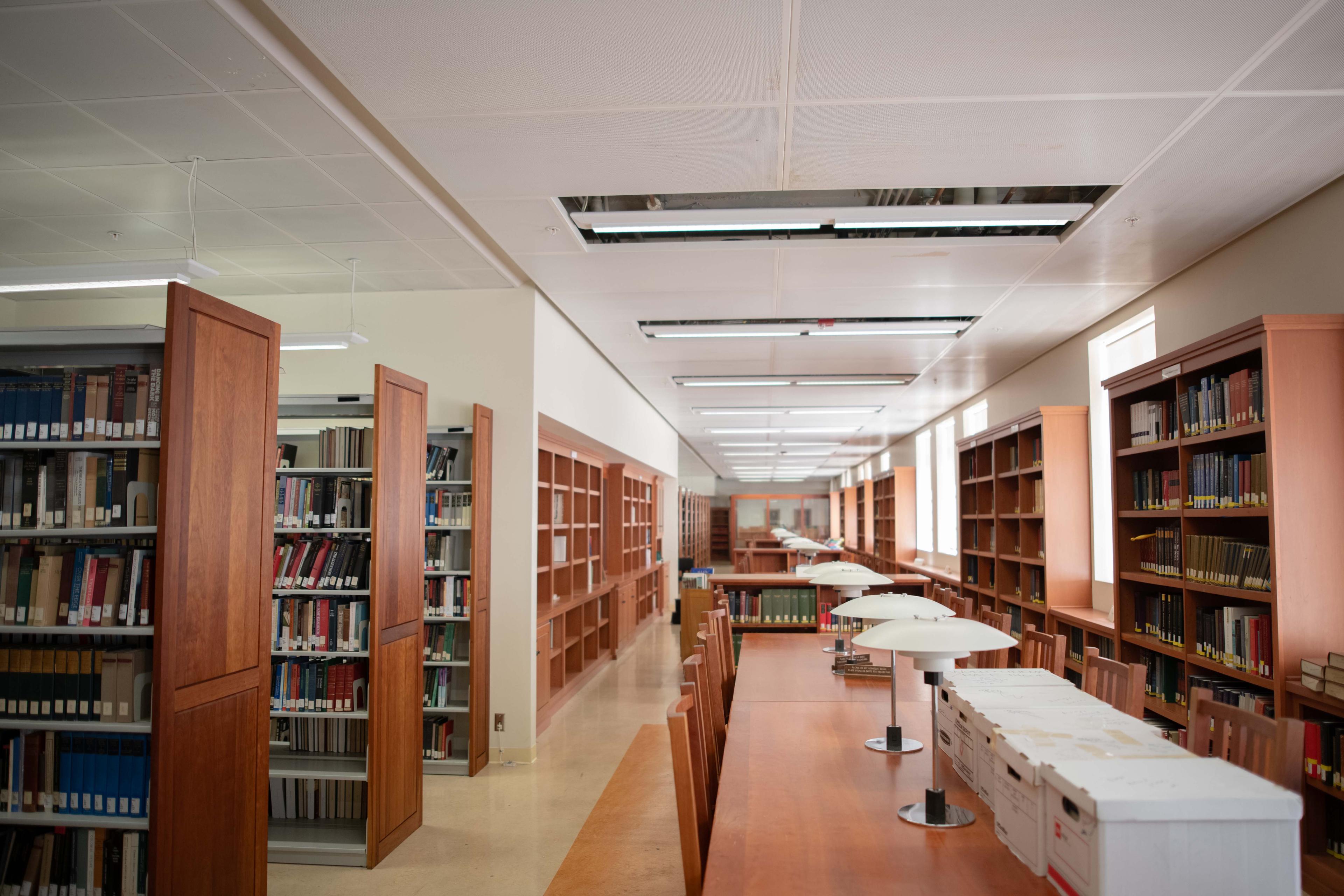
Interacting with a physical book, magazine or newspaper lets us consume with relish, instead of just inhaling.
When absorbing digital media, we often get distracted by the bright, active screen in front of us. Text messages pop up on banners, social media buzzes with exciting trends and notifications that our packages have finally arrived flood the screen.
Everything but our reading is keeping our attention.
“You can have a physical sense of the experience of reading,” said David Russell, an associate professor of English. “We can have our own questions and thoughts at our own pace or a different pace, which means we sometimes enable us to think in more creative ways.”
While reading digitally usually means reading at a faster pace, our brains can’t keep up with the surplus of information. Our minds need to digest the information we consume to have any chance of recalling it.
“In a society where the rapacious appetite for efficiency dominates, these efforts to immerse in the deeper reading processes can be sidelined, disrupted, or ultimately lost,” said Maryanne Wolf, a professor-in-residence at the School of Education and Information Studies, in an emailed statement.
Without establishing our own pace to consume material, students end up skimming the text. When we do this, we assume we absorb the information, when really we miss key points and themes.
Reading physical copies not only aids comprehension but also allows individuals to truly interact with the content.
Holding a book in your hand, flipping through the pages and getting a visual indication of your progress so you can create a mental map are all part of understanding. It allows for a sensory experience to develop. Research suggests this improves our mood and reduces stress.
“When you write notes in margins, when you color things, when you use highlighters and tabs, you get a lot more involved in the text,” said Olivia Aerin Lee, a third-year English student. “I find that helps with my own attention.”
Digital reading is more accessible and convenient than having to purchase a book or pick up the newspaper. The material is right at your fingertips.
It may be monetarily cheaper to read digitally, but this comes at a large intellectual cost. Your brain will not comprehend or retain the information at the same level as if you had the physical copy.
Moreover, some people will say there are environmental advantages to reading digitally instead of consuming paper, but all forms of consumption have their drawbacks. As we’ve learned from the AI debate, something that appears on your computer can still have an environmental cost.
[Related: Green in the Blue and Gold: AI holds frightening future for environmental health]
Beyond reading comprehension, we lose something deeper by abandoning the printed word.
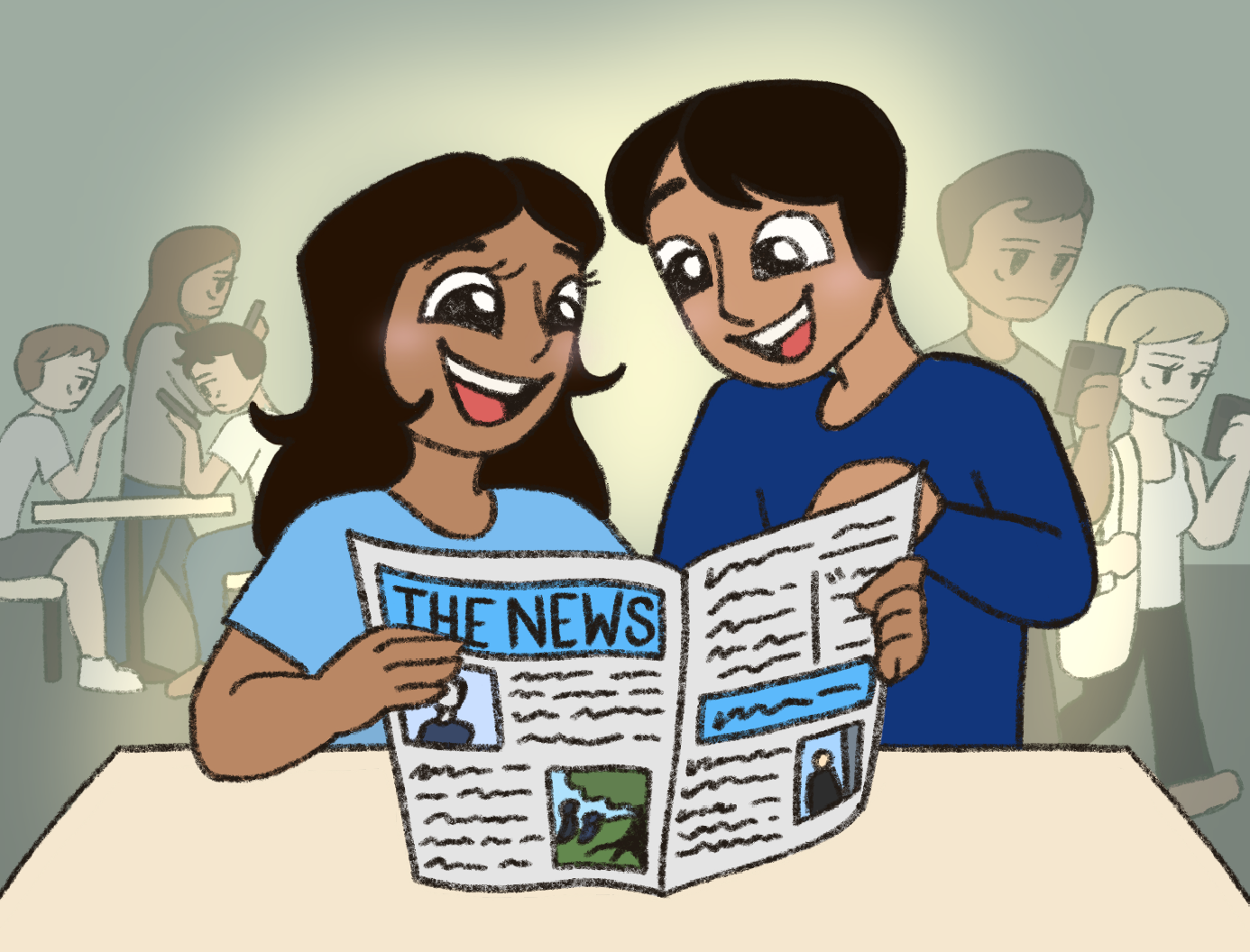
I’m a fan of older movies, where a common scene is a couple sitting at the breakfast table, reading the newspaper and talking to each other about the stories. This is a sight that has practically been erased in modern society.
It’s more likely you would see two people sitting next to each other in little digital bubbles that rarely involve the other person, limiting social interaction.
Students should not fall into this pattern.
Pick up a book, grab the latest newspaper – the Daily Bruin print edition is free on campus – sign up for a magazine subscription that interests you, listen to vinyl records, wear an analog watch, relearn cursive and use a fountain pen to journal.
“There’s something so novel and important about filling out a crossword puzzle physically, and that intention really makes a difference,” Lee said.
Students must enjoy the intentional process of consuming and interacting with the world. Analog alternatives like these may not be around forever and are already in rapid decline. Students should not wait. We should use these assets now.
If you’re consuming this digitally, do me a favor. Grab a physical copy of the Daily Bruin, and give it another read.