Opinion: Non-traditional lectures provide better learning experience for students
(Susanne Soroushian/Daily Bruin staff)

By Nury Salazar-Ibanez
March 10, 2026 12:46 p.m.
This post was updated April 9 at 9:19 p.m.
I am used to feeling like an audience member in my professors’ lectures.
Their passion for their research usually plays like a live YouTube video essay. Watching with attentiveness, I study to complete course assignments.
But Communication 1: “Principles of Oral Communication,” an introductory course on public speaking with Professor Brian Hurwitz, changed everything.
The course made me an active participant in my education rather than just a bystander, even when the professor did not demand it.
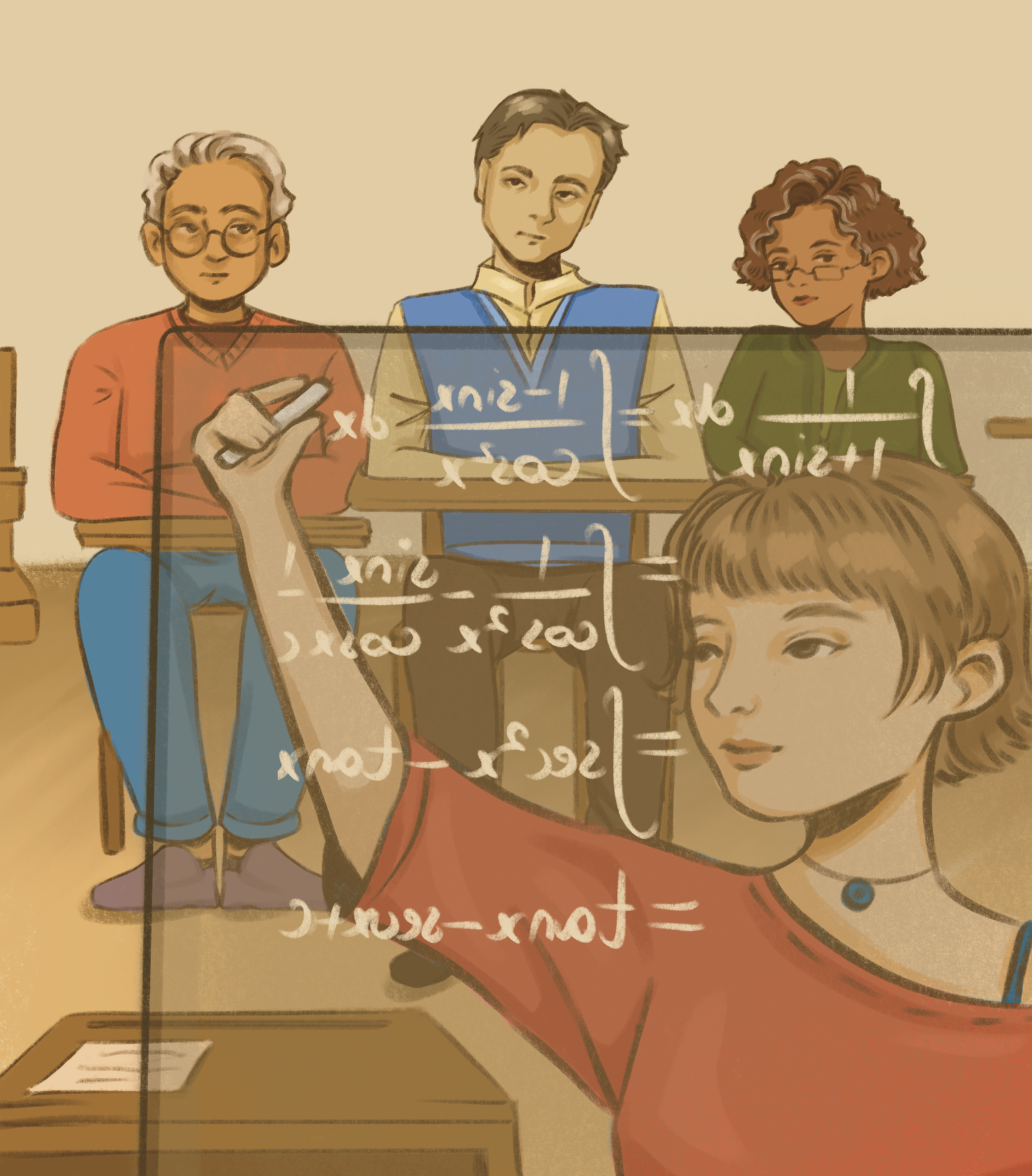
More professors should use a flipped classroom model, where students educate themselves prior to coming to class and constant collaborative practice in the classroom creates an improved learning experience. This can inspire students to engage with course material inside and outside of the classroom.
This model allows for the professor to base grading on improvement, foster peer-to-peer engagement in each lecture and grant creative liberty to all students.
Sometimes the rigor a student needs is not in the content. It is in the push for creativity and collaboration.
Erin Sanders O’Leary, UCLA’s vice provost for teaching and learning, said peer instruction during class is essential. It fosters the cognitive benefits of walking through problems together and understanding differing perspectives, she said.
Unpacking exercises with peers opens the opportunity to build mental and neural pathways so students can remember and use the concepts in various contexts, O’Leary said.
Peer instruction, not provided in a typical lecture-based class, is one thing that makes the flipped classroom model a prime structure for professors to use.
For each of Hurwitz’s lectures, the professor assigned students to a different group of peers to work together toward answering prompts. I communicated and worked with each of my peers. Doing so gave me the opportunity to listen to diverse perspectives.
My creativity thus overflowed in the artistic freedom of the class structure. Partnerships with my peers helped me feel more comfortable while public speaking.
William Purdy, a lecturer in the School of Education and Information Studies, said creating class engagement becomes easy when allowing students creative freedom to take ownership of their academic experience.
He added that his lecture structure depends on the course.
“I teach law- and education-related classes, and in those courses I might rely more heavily on a lecture format,” Purdy said. “However, in other classes – for example, policy-related classes – I typically depend on in-class activities, simulations, writing assignments, group work that helps students take active ownership of the concepts and put them into practice to solve some kind of problem.”
It can be difficult to apply a non-traditional approach to certain courses. Yet it is clear that, when made possible in a flipped classroom environment, students’ ability to take agency of their learning creates positive outcomes.
Purdy said it is fundamental for professors to assist students and not provide too much regulation in an institution like UCLA.
“(Students) should be given as much freedom and independence to explore problems and secure solutions for themselves,” Purdy said.
Brainstorming ways to make each speech unique to me made for a fun journey in my communications course. The rubric and instructions never criticized the content of the speech. Rather, they encouraged each student to think outside the box.
By implementing the flipped classroom model in this way, professors can ensure students practice thinking both creatively and critically.
Christopher Kinoshita, a second-year statistics and data science student, said he also finds this flipped style of learning engaging.
He added that he appreciated the speeches not being graded on content, but rather delivery.
The freedom to choose a topic or response that best represents oneself fosters boldness among students. Students can learn from creative risks when not penalized for doing so.
I enthusiastically booked the Powell Library Loop Booths to practice speaking out loud and would happily talk about my speech response with friends. I freely worked my identity into the course assignments.
Moving away from the traditional lecture style class allowed me to engage more with the class and grow my confidence in public speaking.
Professors must build on the skills of students by providing creative freedom and encouraging peer activities, even if not all students may be fond of them. Academic ownership makes students curious learners in academia.
After all, nontraditional lecture structures open doors and can be a student’s catalyst to success.