High demand, fast pace: Inside the Westwood apartment hunting process
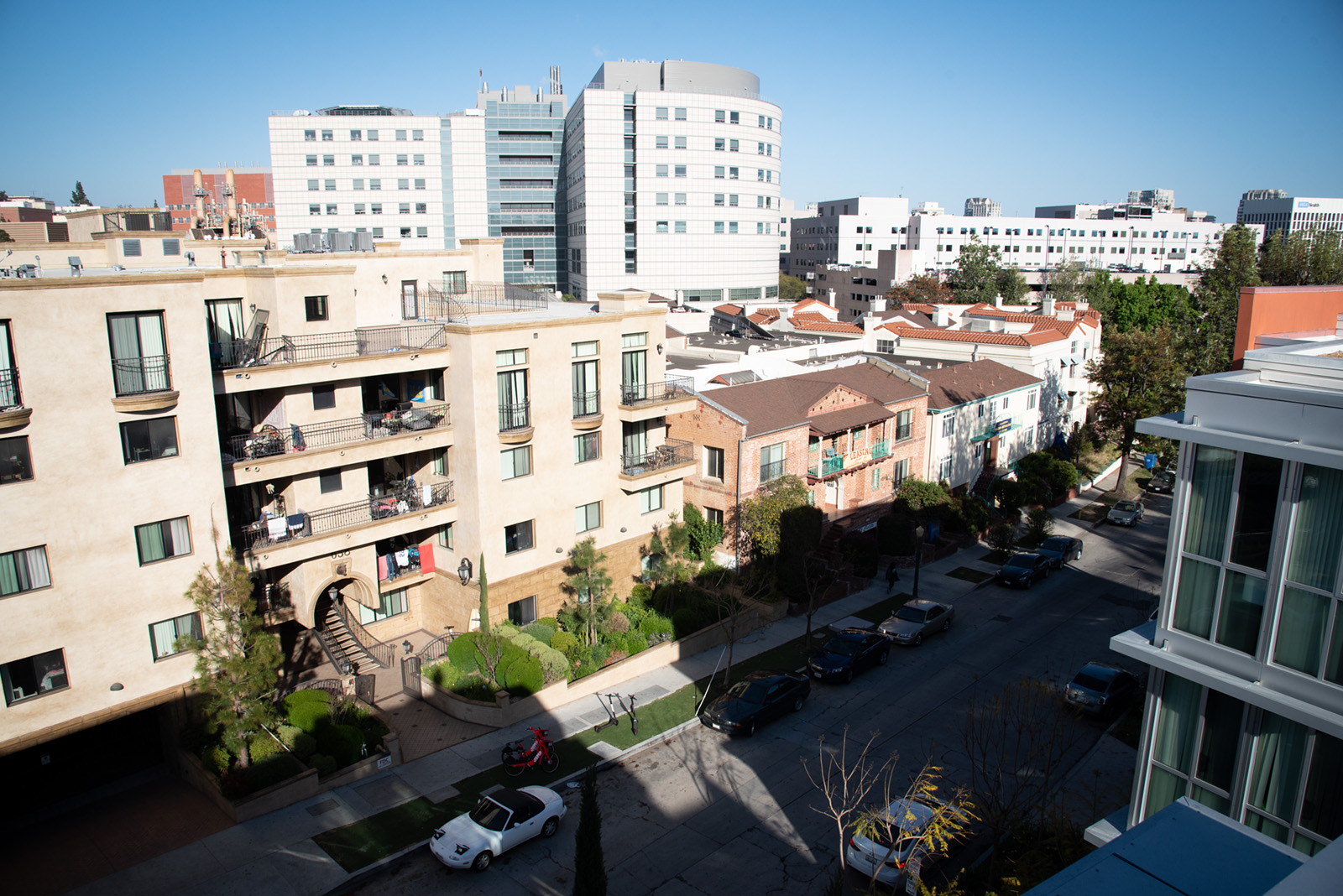
Student apartments in Westwood are pictured. Most students intending on living in non-university-affiliated apartments start their search in winter quarter. (Daily Bruin file photo)

By Cove Johnson Rabidoux
March 7, 2026 8:12 p.m.
The search for an apartment brings stress, competition and surprise for students and property managers alike.
Students planning to move into off-campus apartments typically begin their search during the winter quarter because of the high-demand market. For first-time renters, the combination of the area’s fast-paced market and high costs can make the process feel urgent and overwhelming.
With so many students trying for the same apartment units, the competition can feel intense, said Kaitlyn Wu, a third-year cognitive science and statistics and data science student.
“It’s kind of a bloodbath, especially when you’re looking in January and February for places to open” Wu said.
Wu said she and her roommates toured between 10 and 15 apartments while searching for a two-bedroom unit within their budget. Sometimes, the unit would be claimed immediately after the tour concluded, she added.
Local property managers said this high level of demand is expected. Many property management companies begin preleasing in January for the following school year, said Angelica Villegas, a regional manager at R.W. Selby & Co., a real estate management firm that owns Westwood properties such as The Atrium and the Midvale Apartments.
Villegas said she often sees waitlist deposits come in during this time. A waitlist deposit guarantees renters a unit but doesn’t specify which unit until later.
“By, I would say February, we know exactly who’s going to stay and who’s leaving,” Villegas said. “Then we start placing those waitlist deposits into units, so it actually happens very, very fast.”
Pressure from landlords exacerbates the stress and rush of the apartment hunting process, said Lauren Victoria Lopez, a second-year civil engineering student. She added that landlords sometimes pushed for a deposit right after a tour, telling her other groups were already interested.
“As soon as we tour, they’re like, ‘Okay, what do you guys think? Do you want to sign? Do you want to sign tomorrow?’” Lopez said. “Like, oh my gosh, let me discuss it.”
The speed of the market is only one part of the challenge. Rental pricing also plays a significant role and is often quite competitive.
Wu said price was a significant factor guiding her search. However, she said the most affordable apartment units were claimed almost immediately.
The average rental price for a one-bedroom apartment in Westwood is $3,223 per month, roughly 35% higher than the state average of $2,394 for an equivalent unit, according to RentCafe, an apartment search website.
Over the past decade, Westwood has ranked as one of the most expensive zip codes in California to rent property in, according to the Los Angeles Times. The neighborhoods surrounding Westwood – including Beverly Hills – consistently rank as some of the most expensive areas to live in the city.
These high prices result from landlords adjusting their rents in response to market demand, said Savas Sirikci, a UCLA Extension alumnus and founder of Zuma Housing, a property management company based in Westwood.
Sirikci said landlords can intentionally list units at high rates knowing they will fill up because of the area’s high demand. Operating costs, insurance premiums and mortgage rates may also influence pricing decisions, he added.
However, Lopez said this type of pricing strategy felt like the landlords were overcharging her and her roommates. She added that she was surprised to learn that many listings require tenants to earn three times the monthly rent. With the majority of UCLA’s on-campus jobs paying between $17.90 and $26.00 an hour, this is a threshold that most students cannot meet on their own. As a result, co-signers are often necessary.
“Who’s making that much money?” Lopez said. “As a college student, that’s a lot of money to have to make to afford this apartment.”
Beyond financial logistics, there are a myriad of factors determining rent prices in Westwood.
Location and building conditions also shape rental costs, Sirikci said. Units closer to campus or in newly renovated buildings generally command higher prices, while apartments farther from campus may offer lower monthly rates, he added.
Additionally, Villegas said prices vary between returning residents and first-time renters.
For example, a tenant paying $1,000 per month who renews may see a roughly 2% increase, while a new renter in the same unit could pay $1,200 or more, depending on upgrades and market conditions. This framework means students entering the market for the first time may pay hundreds more than returning residents in identical units.
“It all depends on what needs to be done,” Villegas said. “If you’re going in there to make all of those upgrades, you will see a difference.”
Apart from affording a unit, other factors of the apartment hunting process can create stress for students.
Wu said the transition from university housing to private leases introduces new terms and requirements, including renters’ insurance and utility setup, which can be difficult to understand.
For example, most apartment units charge an application fee to perform background checks and screen credit reports of potential tenants. While application fees are legal in California, Assembly Bill 2493, enacted in 2024, requires landlords to cap application fees at $64.50 and refund unused fees within seven days.
For students who are applying to multiple units, these fees can quickly add up.
Villegas said this inexperience creates a noticeable difference when working with first-time renters compared to more experienced renters.
“Those residents, we need to guide them from the moment they leave their deposit onto the moment they move in, and even after,” Villegas said. “We’re showing them how to set up utilities, set up their gas, set up their renters’ insurance.”
Wu, who works alongside property managers as the product manager at UniShack, a platform that helps connect students with local affordable housing, said property managers handle a high volume of inquiries. However, she also said sometimes there can be a disconnect between property managers and first-time renters.
“It’s not like they’re uncommunicative,” Wu said. “It’s just that their bandwidth is a little bit minimized due to the amount of traffic they’re getting.”
As a result, Wu said students should take a proactive approach, consistently following up with property managers and asking detailed questions. While discussing unfamiliar topics such as lease agreements can feel intimidating, she said clear communication is essential.
Both Villegas and Sirikci said asking property managers about utilities, bundled costs and lease terms upfront will help students avoid unexpected expenses later.
“The leases are so important,” Villegas said. “Read the fine print. Don’t just sign it.”
Students must also understand the timing of Westwood’s highly competitive market.
“Once you hit the end of February, beginning of March, that’s when it’s slowing down,” Wu said. “Most people have locked in housing that at least they’re satisfied with, so you might be left with something that’s a little bit out of your price range, a little bit further away.”
Because of this, Wu said she recommends having multiple options in mind rather than fixating on a single unit.
“Make sure you have a few backups just to go because you never know when somebody is going to snatch that place up, and then you’re left to hang,” she said.
Clearly defining your budget, preferred location and non-negotiables can also make the process more manageable, Sirikci said.
“You’re going to find the one eventually,” Wu said. “You just got to be on your grind.”