UCLA community remembers Black Panther students, calls to rename Campbell Hall
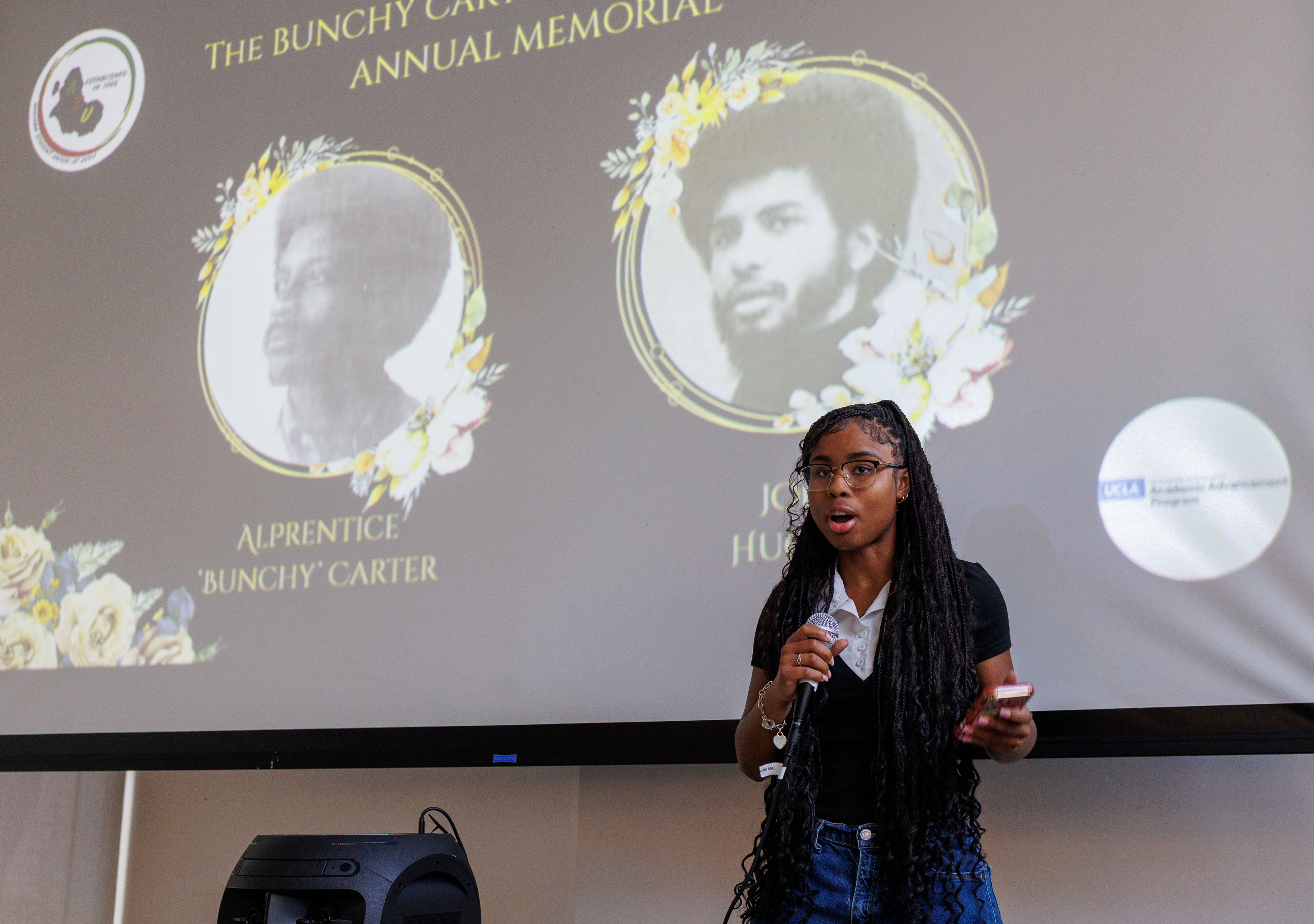
Leah Nelson, a second-year political science student, delivers a speech inside Campbell Hall. Community members gathered in the building on Feb. 25 to remember two students and Black Panther Party members who were killed there in in the 1960s. (Chenrui Zhang/Daily Bruin)


This post was updated March 5 at 9:51 p.m.
About 30 people gathered in Campbell Hall on Feb. 25 to honor two students and Black Panther Party members who were killed there in 1969 – and to call for the building to be renamed after the activists.
The memorial, which is co-hosted annually by the Afrikan Student Union and the Academic Advancement Program, recognizes Alprentice “Bunchy” Carter and John Huggins Jr., who were shot dead in Campbell Hall. Both were leaders of the Los Angeles Chapter of the Black Panther Party.
Claude “Chuchessa” Hubert, a member of the Black nationalist group US Organization, shot the pair of students amid the FBI’s COINTELPRO project. The project aimed to destroy organizations that the United States government considered radical or dissident – including the Black Panthers – in part by fueling tensions among Black activist groups, according to PBS News.
The Black Panther Party – founded in Oakland in 1966 – was a political revolutionary organization that aimed to protect Black people from police brutality. The socialist organization provided free breakfast programs, health clinics and other forms of mutual aid to Black communities, according to the National Museum of African American History and Culture.
Carter and Huggins were part of the High Potential Program, which is now known as the Academic Advancement Program. AAP provides students from first-generation, low-income and historically underrepresented backgrounds with resources like tutoring, counseling and mentorship, according to its website.
“Their lives have held such great and significant impact in terms of bringing together so many students and community members year after year,” said Paola Pérez, the assistant director for administration of AAP. “It’s such a tragedy to have experienced here, but such an honor to then have continued to create the opportunity of connection and community.”
AAP paused several counseling initiatives meant to support students from low-income and marginalized backgrounds in July, citing university budget cuts.
[Related: Academic Advancement Program to pause some programs, reduce staff amid budget cuts]
The memorial – which began at 5 p.m. – featured a screening of a documentary about the history of the Black Panther Party in LA, an audience discussion, student speakers and a candlelight vigil. Organizers provided food, including jambalaya and salmon croquettes, to attendees.
Maleeyah Frazier, the chair of ASU, said Carter and Huggins’ legacies are especially meaningful to her as a young activist. Frazier, a third-year education and social transformation and public affairs student, added that she believes UCLA administrators have failed to acknowledge the history behind Campbell Hall, as well as Carter and Huggins’ stories.
“This event is important for me to be involved in, not only as a chairperson for the Afrikan Student Union but also to make sure that we’re continuing to promote visibility on campus for Black students and allowing the universities to recognize events that happened on campus,” Frazier said.
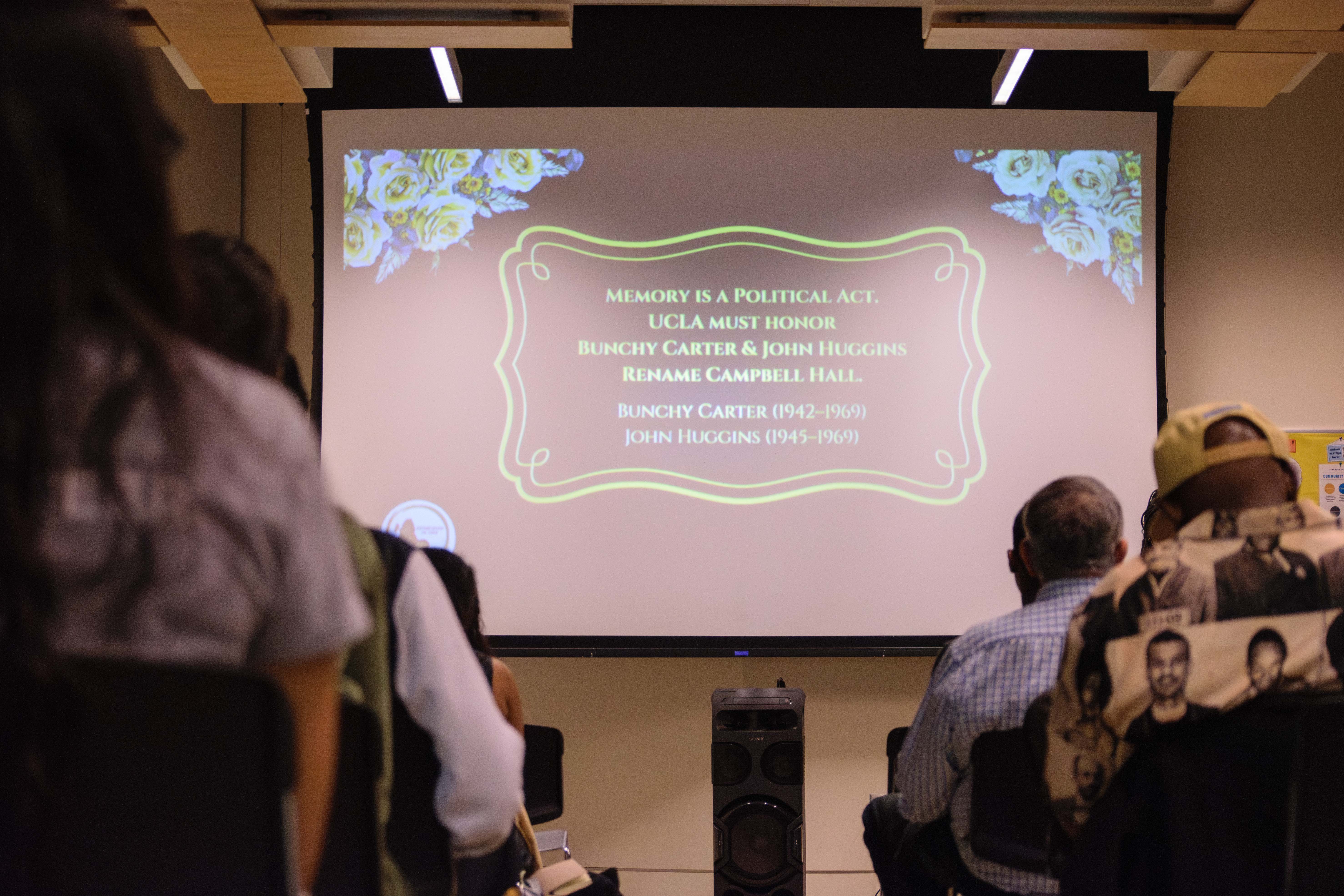
Event organizers called on attendees to sign a petition to rename Campbell Hall after Carter and Huggins. The building is currently named after Lily Bess Campbell, a former English professor and the first woman selected to deliver the UCLA Faculty Research Lecture.
UCLA community members have been asking UCLA administration to rename the building for five decades, according to the petition, which has garnered more than 5,000 signatures.
Rosalio Muñoz, a UCLA alumnus who attended the event, said he was in Campbell Hall when the Jan. 17, 1969 shooting happened. Muñoz, a Chicano activist, added that he was the president of the Undergraduate Students Association Council during the 1968-1969 year and worked with Carter and Huggins to create unity between Latino and Black students.
Muñoz said he believes then-Gov. Ronald Reagan opposed student organizers as a way to advance his political standing.
“The main target was Black, young and militant,” Muñoz said. “That’s how I see it, and it was vicious.”
Darius Fisher, a second-year business economics student who attended the memorial, said he believes it is important for Black students to educate each other about the parts of their history that are not included in formal curricula, like Carter and Huggins’ deaths.
“Hearing how they were brutally murdered in this hall, it was really just touching to me because that really could have been any of us at that time,” said Nehemiah Ogundeko, a UC Irvine student who attended the memorial.
Leah Nelson, a second-year political science student, said she recognizes the Black Panthers’ history as part of her heritage, especially as someone who grew up in northern California, where the organization was founded.
The event’s goal was to humanize Carter and Huggins’ stories, said Nelson, who oversees ASU’s public relations.
“We’re not just going to tell you that these people died here,” Nelson said. “We’re going to tell you what they fought for because at the end of the day, we’re not doing this memorial to highlight their death. We’re doing it to highlight that they lived, that they worked, that they’ve changed this community, that they pushed for change.”
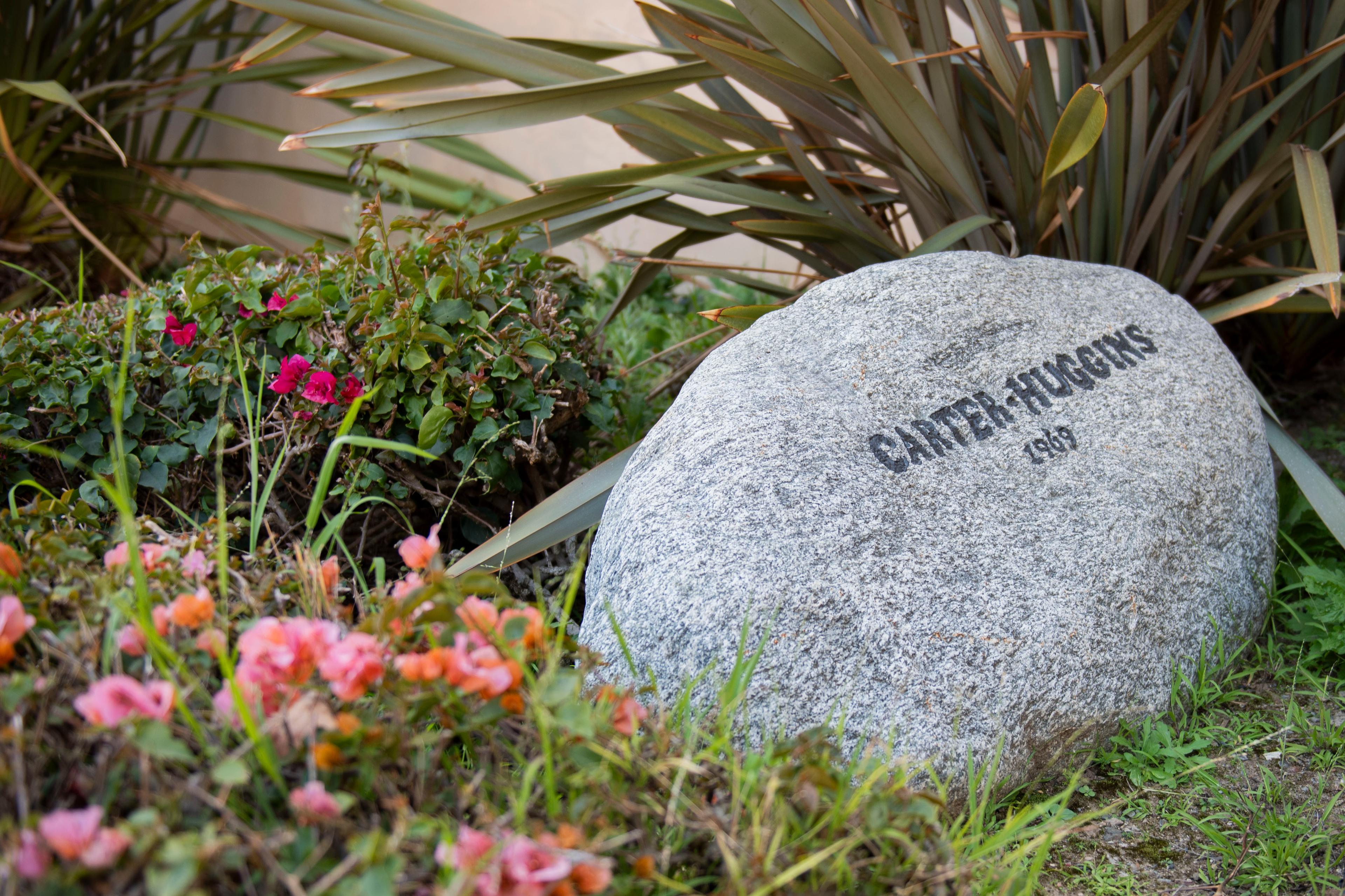
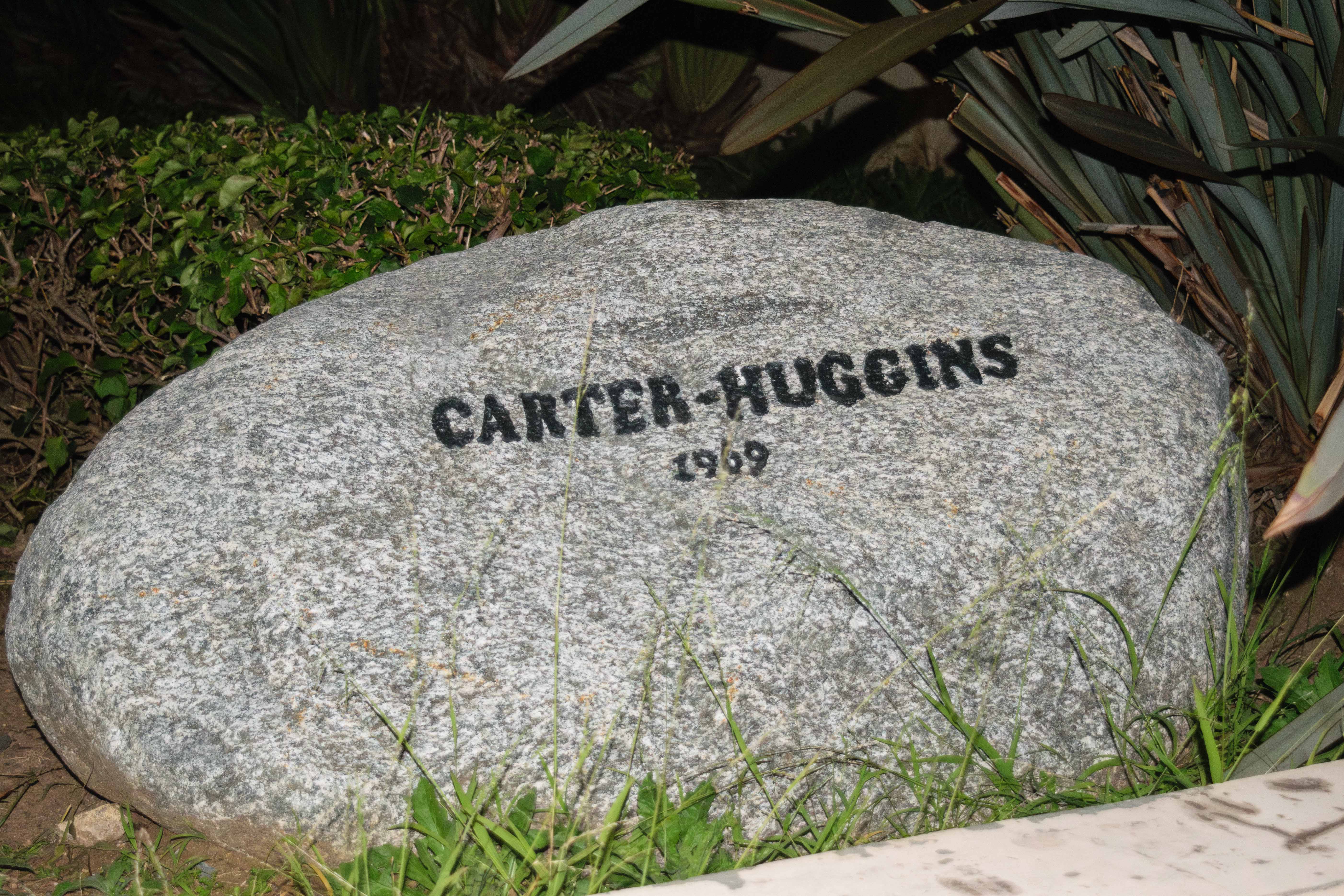
Attendees concluded the memorial by placing small candles around a rock outside Campbell Hall inscribed with Carter and Huggins’ names.
But Fisher said the rock is not enough to fully recognize the activists’ legacies.
“It starts with us educating each other – everybody as a whole, everybody as a community,” Fisher said. “You’re not going to walk inside of a lecture (and hear), ‘Oh, this is a history of Campbell Hall,’ that’s not what’s going to happen. It really just starts off with us.”