Opinion: Consumers must scrutinize greenwashing, advocate for true sustainability

A Starbucks latte is pictured. Sustainability is about net effects, not individual actions, writes columnist Caitlin Brockenbrow. (Karla Cardenas-Felipe/Daily Bruin staff)

By Caitlin Brockenbrow
March 5, 2026 1:24 p.m.
This post was updated April 12 at 8:15 p.m.
It is easy for corporations to wrap themselves in green marketing.
Green marketing, in a similar vein to greenwashing, is the promotion of a product’s environmental sustainability.
But many corporations’ environmental decisions are not what they seem.
This deceptive marketing, where a company acts as though an initiative is eco-friendly when it is not, is called greenwashing.
The best way to prevent this widespread issue from becoming an accepted business standard, however, is for consumers to be skeptical and scrutinize anything presented as “green.”
Starbucks reflected on its plans to eliminate single-use plastic straws last May, a move many applauded as an environmental win. That decision came amid growing criticism of plastic pollution in oceans and waterways. Starbucks claimed strawless lids and alternatives would reduce waste and support its broader sustainability goals.
This shift from plastic straws, nonetheless, exists alongside a switch to printing names and orders on stickers instead of using Sharpies. This operational change increased single-use waste. Some analyses found that the so-called strawless lids initially used more plastic overall than the original straw-and-lid combination.
That mismatch – a high-profile eco-friendly claim paired with ambiguous or even contradictory environmental outcomes – is the essence of greenwashing.
Sustainability is not about ticking one easy box. Rather, it is about net effects.
If a company promotes a positive step that fails to reduce harm meaningfully – or worse – masks ongoing environmental damage, it cannot truly be called green.
“It (greenwashing) preys on a lot of people trying to do what they feel is right,” said Naya Bender, the co-president of the Environmentalists of Color Collective at UCLA.
Bender, a fourth-year environmental science student, added that because of current extreme and increasing climate change issues, people are especially trying to be environmentally friendly, but ordinary consumers often have a difficult time getting around greenwashing.
Starbucks is not alone. Across industries, consumers scrutinize big brands for environmental claims that do not hold up under closer inspection. UCLA students similarly hold their school to a sustainability standard.
“At UCLA, I’ve seen it (greenwashing) everywhere,” said Brian Booher, president of the International Urban Sustainability Student Corps at UCLA, a student organization that researches foreign sustainability practices and brings them to Los Angeles.
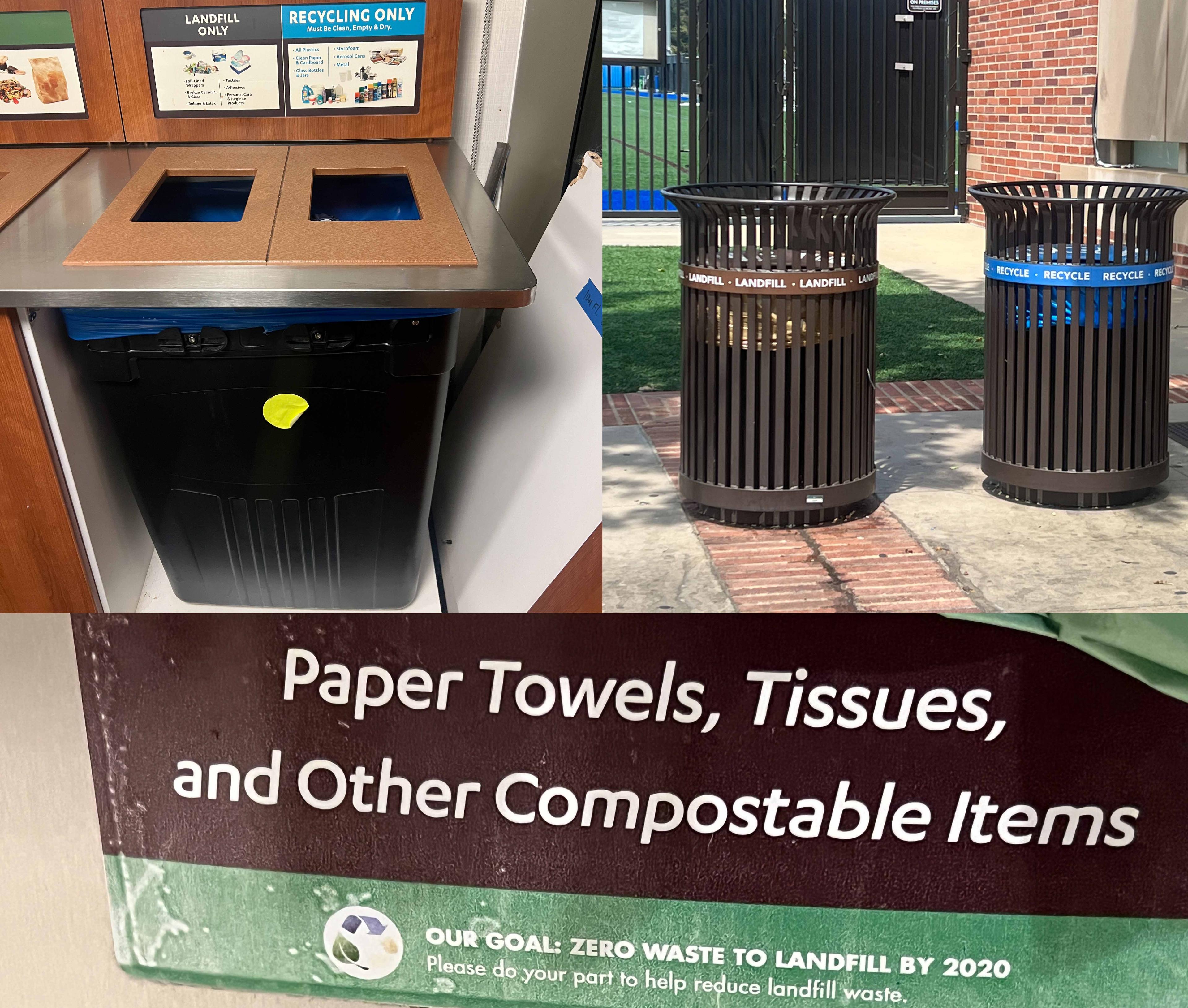
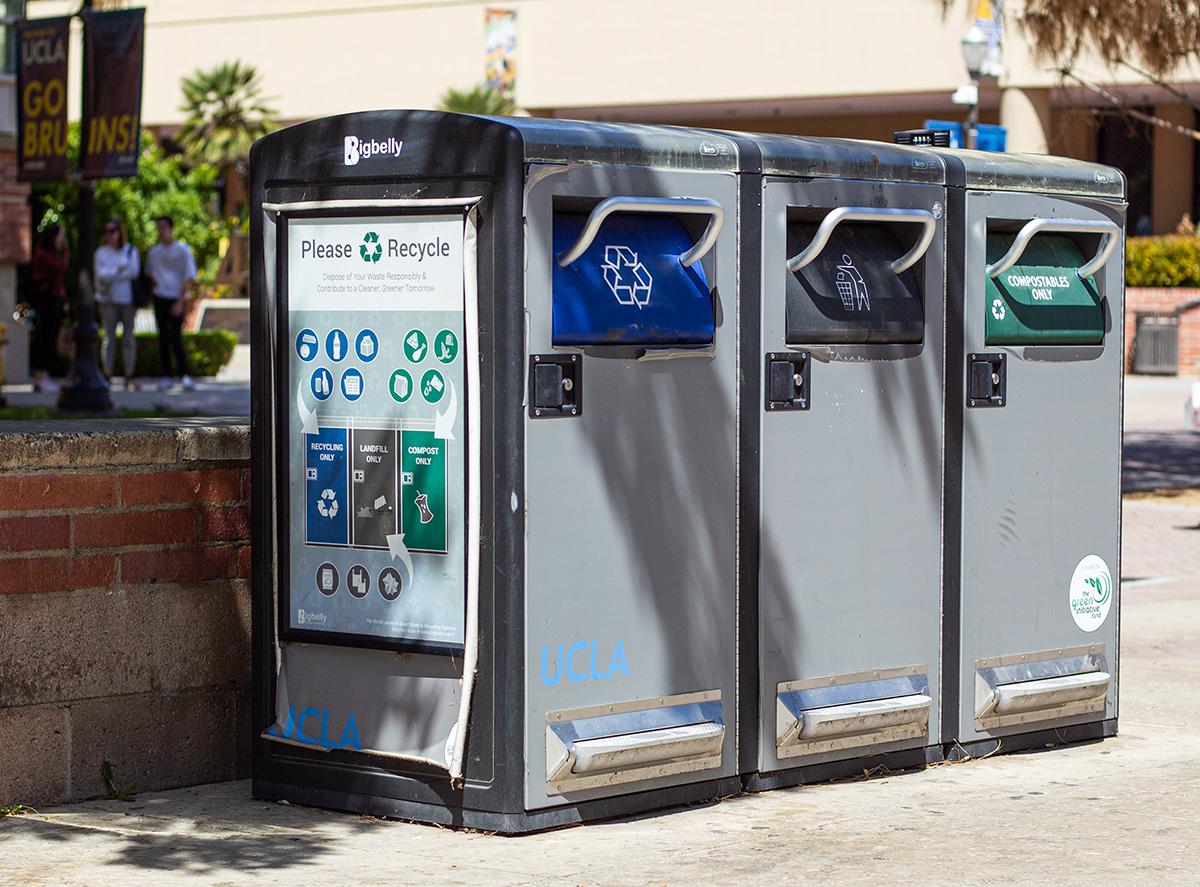
“People always complain about the waste bins, and they’re like, ‘UCLA boasts about how they compost, but then you see triwaste bins that have the same bag.’ We hear that a lot with what we do at IUSSC,” added Booher, a third-year environmental science student.
These objections are an important step toward diminishing greenwashing at the university. In criticizing UCLA’s sustainability practices, the student body holds much power.
“UCLA has a big role to play in reducing greenwashing, whether that’s through student-driven initiatives or through communications from a university level,” said Ria Mehra, a communications director for Sustainability Action Research, a student-led program that advances sustainability at UCLA. “We have so many projects, especially dedicated to plastic policy here at UCLA, and the one main thing I can think of is a bunch of the hill top shops or dining halls switched to either compostable or reusable wear.”
Mehra, a third-year environmental science student, added that this is a big way students pushed the university to be greener than it originally was.
Sustainability is cumulative. Reducing one source of waste while increasing another does not guarantee lower overall harm.
“You could say, maybe, ‘We reduce our carbon footprint’ or ‘We reduce our CO2,’ but you’re increasing your methane gas,” Booher said. “That isn’t necessarily more sustainable, but you’re making people think that you’re doing something sustainable.”
One good decision does not cancel out the bad. When companies announce green measures without clear, verifiable data on their impact, they erode consumers’ trust.
Transparency is not optional if sustainability claims are to have any value.
If brands want their green decisions to matter, they must commit to more than optics. Genuine corporate sustainability includes comprehensive reporting, honesty about trade-offs and long-term strategies that address core impacts instead of surface-level fixes.
At its best, sustainability is an ongoing process of improvement, not a marketing slogan. Consumers are ready to reward real progress, but they should not let companies off the hook for token gestures that mask bigger issues.
Today’s consumers are more informed and skeptical than ever. Social media exposes inconsistencies, fueling backlash and accusations of hypocrisy. Legal bodies are also starting to hold companies accountable for misleading environmental claims, signaling that selective sustainability actions may soon face real consequences.
There is, accordingly, a path forward.
“It’s really important to recognize nonprofits speaking to the people in power or students speaking to stakeholders at UCLA who have a lot of power to make actual change happen,” Mehra said.