Opinion: Reading between lines: Students should be taught value of literacy
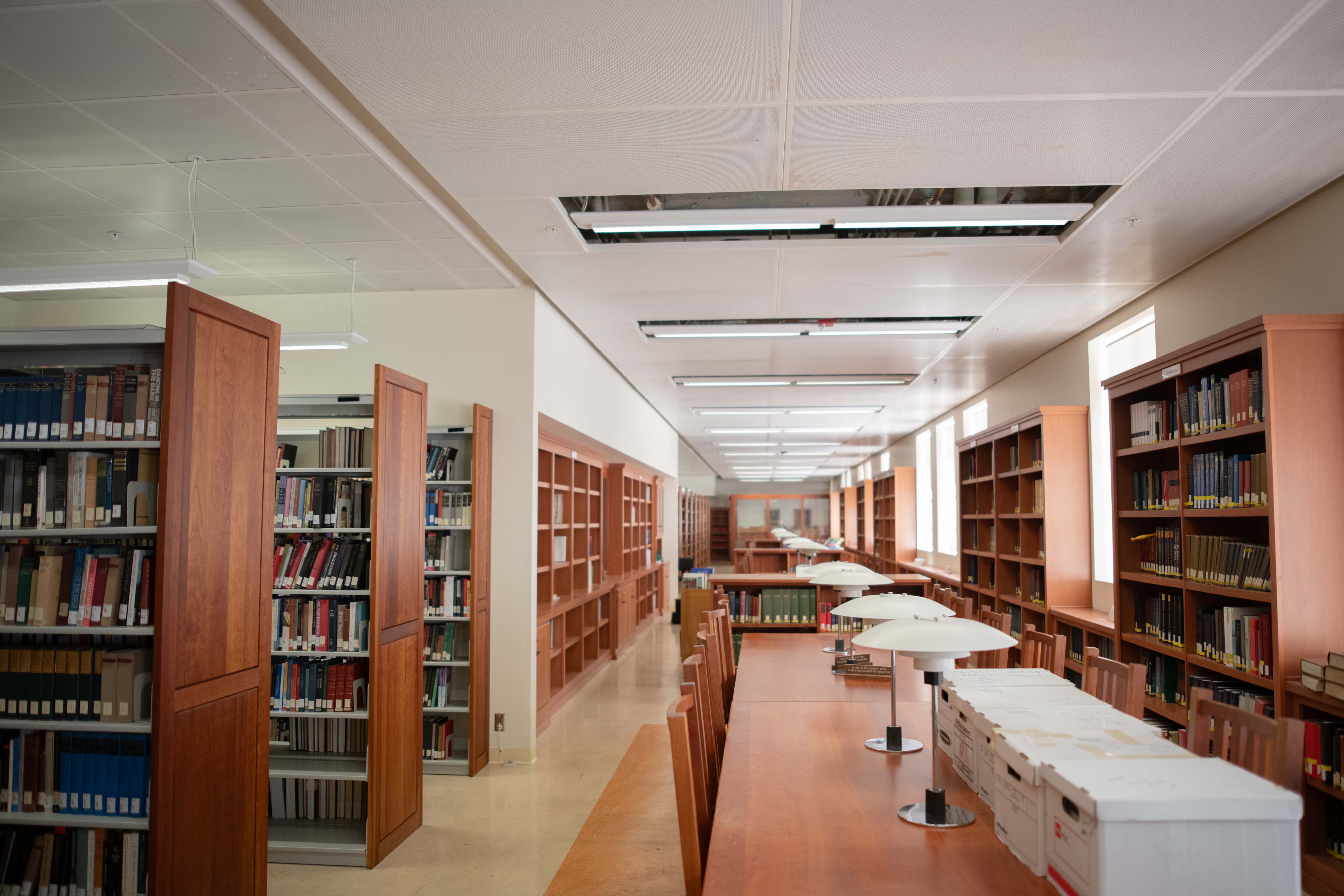
The Grace M. Hunt Memorial English Reading Room is pictured. Reading allows students to build empathy and better understand the world around them, writes columnist Gabrielle Do. (Michael Gallagher/Assistant Photo editor)

By Gabrielle Do
March 3, 2026 1:57 p.m.
This post was updated April 14 at 7:58 p.m.
Literacy is defined as the ability to read and write.
Researchers drown the public with copious amounts of harrowing studies, citing that younger generations can no longer read or write.
Concurrently, the general public points to tech, artificial intelligence and social media with a resigned sentiment that younger people are no longer literate.
It is true that we – especially adolescents – face an epidemic of deteriorating education across skill disciplines, despite rapidly advancing technology.
However, the current American education system continues to focus on how young people aren’t literate rather than building its teaching methodology around why literacy is important.
Education systems and individuals need to recognize the importance of literacy as a vast discipline reflected in real-world interactions, rather than just the hard skills of reading and writing.
Azriel Hu, a first-year anthropology and Chinese student, said she enjoys reading in school, even though many of her peers may not.
“I’m probably a bit more of an abnormal case, in that most kids want to go through it and don’t really want to go deeper,” added Hu, a member of the Bruin Book Club.
A common denominator among young people is a tendency to see reading as a chore rather than understand it as a tool that transcends basic ideas.
Reading allows us to connect deeper with knowledge.
“We want to capitalize on the strong feelings that young people have about the things they’re learning and the world around them and support them in thinking complexly about those things,” said Rebecca Gotlieb, a human developmental psychologist, educational neuroscientist and assistant researcher at UCLA.
Learning allows young people to connect to what they know in other domains and translate that into meaning for themselves and their communities, as well as possible futures and solutions, Gotlieb added.
Gotlieb said transcendent thinking absorbs the concrete specifics of the here and now and goes beyond that to make broader meaning of situations – connecting them with larger contexts, ideas, values and beliefs.
In an era of modern technology, where STEM is dominating the academic landscape and the arts and humanities continue to be defunded by government organizations, it’s increasingly important that students understand reading as a gateway to further fulfillment both inside and outside the classroom.
The Norman and Armena Powell University Librarian Athena Jackson said in an emailed statement that she witnesses students reading in UCLA’s libraries across campus every day.
“The humanities are always vital to learning in higher education,” Jackson said in the statement. “The richness, history, and currency of the discipline matter across all sectors of professions and adult life.”
Education should not constrain reading to purely phonetics. Real-world events can be understood through reading, not just historically, but in terms of understanding and feeling compassion for characters in ethical problems.
Academics in modern learning are faced with the expectation to coincide with the demands of an increasing amount of fast-paced media and technology. K-12 education is riddled with repetitive standardized testing and shallow analysis of important literature that often isn’t taught to invoke any meaningful curiosity.
The content we read matters.
It matters not just because of what level of vocabulary a student can use, but rather because of the meaning and richness we gain from diverse perspectives. Such differing viewpoints can then be reflected in the ways in which we interact with the world we live in and the communities we are a part of at large.
As people who benefit from the ability to connect to the world in beautiful and abstract ways, we must look beyond simple meanings.
We have the privilege of living in a democratic nation where our voices mean something. Consequently, we have a responsibility to teach and practice literacy as a deeper, transcendent ability reflected in the real world.
Literacy should not just be a skill to checkmark in a list of burdensome academic tasks.
Because, really, if we fail to teach students the value of literacy, how can we expect them to be literate in the book we call life?