Q&A: Kay Chung, UCLA dental student and TikTok content creator, reflects on her journey
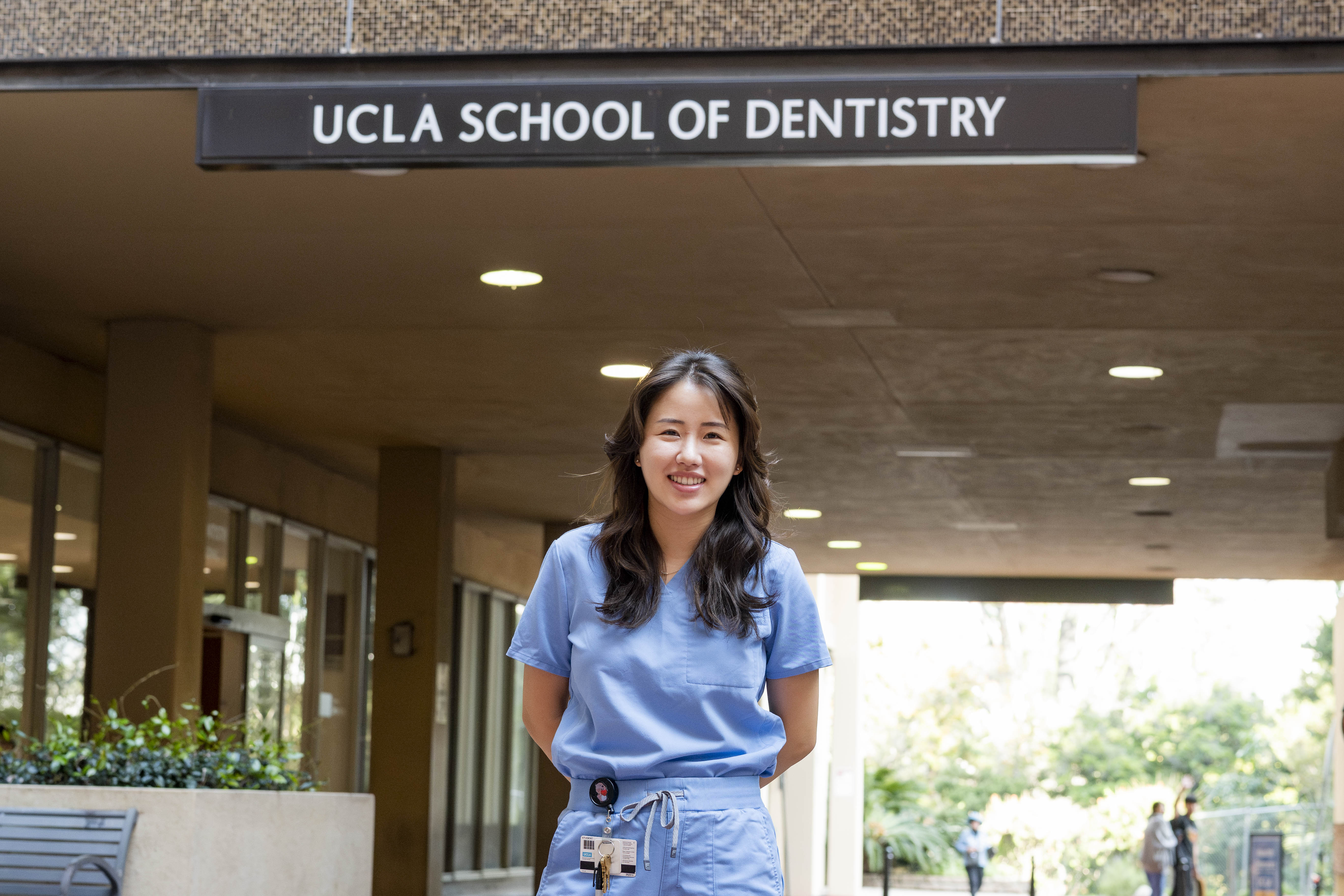
Kay Chung, a TikTok content creator, is a fourth-year dental student at the UCLA School of Dentistry who has amassed almost 2 million TikTok followers and is known for her videos that demystify the dental school experience at UCLA. (Purvi Singhania/Daily Bruin)

By Maanasi Kademani
March 3, 2026 7:15 p.m.
This post was updated March 4 at 12:07 a.m.
Kay Chung, a TikTok content creator and fourth-year dental student at the UCLA School of Dentistry, sat down with science and health contributor Maanasi Kademani to discuss her academic journey and her experience documenting it on social media.
Chung – who has 1.9 million TikTok followers – is known for videos that demystify the dental school experience, which have earned her 125 million total likes. Chung also served as student chair of the California Dental Association and will work as a prosthodontics resident at UC San Francisco next year following her graduation from UCLA this May.
This interview has been edited for length and clarity.
Daily Bruin: What was your journey to dental school?
Kay Chung: I found out pretty late. In my third or fourth year of college, all of my friends were volunteering at the hospital, so I was like, frick, I’ve got to do it too. I started volunteering at the VA (Veterans Affairs Hospital). I didn’t have much time because I was paying my tuition myself and working to support myself, so I would volunteer from 2 a.m. to 6 a.m. I noticed that a lot of the medications patients were taking caused a lot of oral issues, like xerostomia, or dry mouth, or digital hyperplasia or excess growth of gum.
Growing up, I really wanted to be a stand-up comedian. When I would see these patients, I would try to make jokes. They wouldn’t laugh, and I realized that a reason for that was because they were kind of insecure about how their mouths look. Talking to the head nurse, she said a lot of their teeth decayed during their hospital stay because it’s hard to get good oral care. It made me realize that the field of improving someone’s smile is also a form of comedy, in a sense. I could be a comedian that makes my patients smile.
DB: A lot of your content focuses on demystifying dental school, from the application process to your daily experiences. What was the most unexpected part of dental school that you feel more pre-dental students should know?
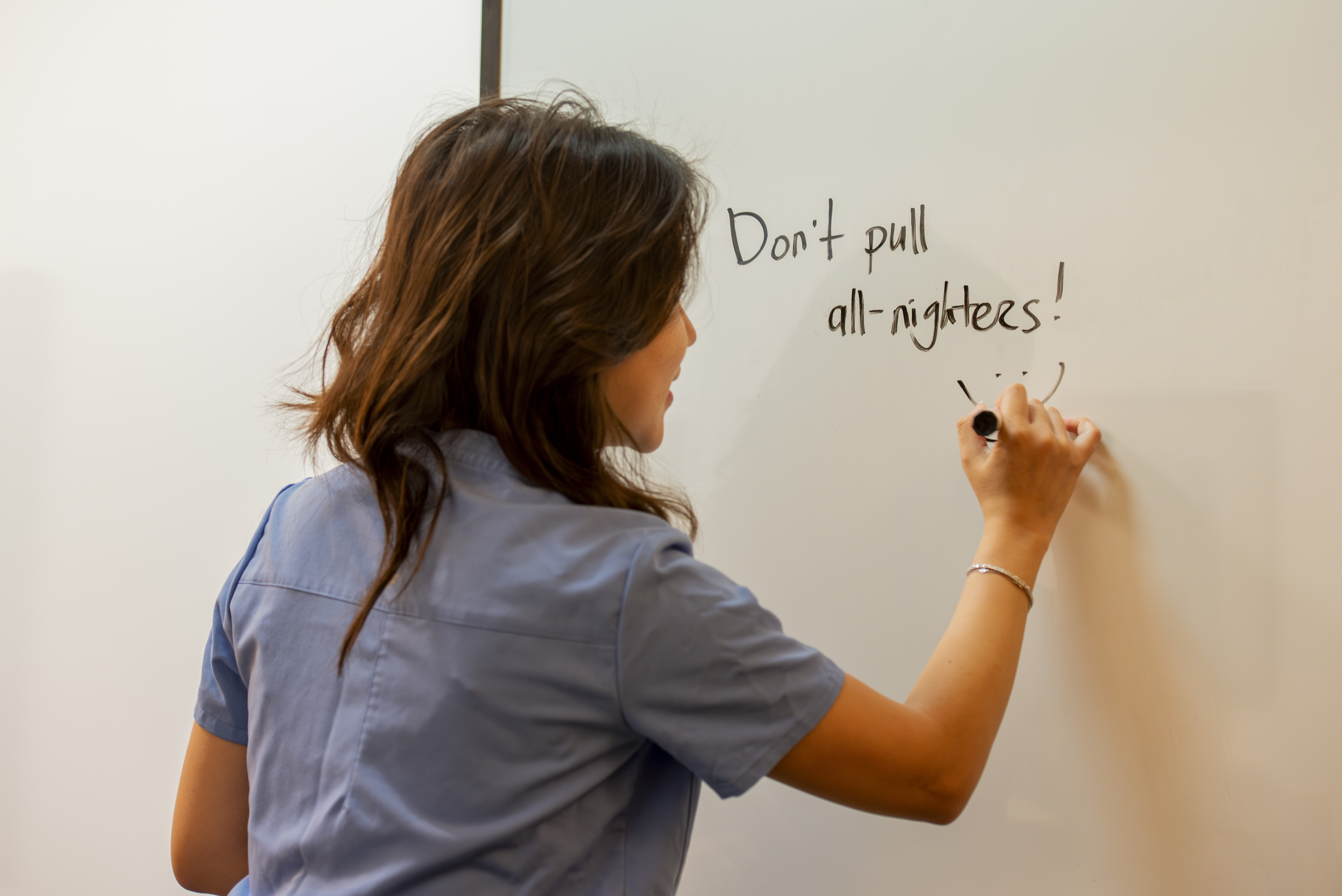
KC: People think dental school is so hard. If you have good time management, it’s not that difficult. Other creators say the same. I’m just a crammer. I’ve talked to a lot of dental students at different schools, and our program is heavier in didactics. We take a lot of academic classes, which is why our workload is a little higher, but you do not need to pull all-nighters.
DB: Ever since you started your study series, the #kaychungstudymethod has become highly popular, with many students recreating your all-nighters on TikTok. Do you have any advice for students who follow your method?
KC: I always say at the end of every all-nighter review, don’t do this. It works for me, but it won’t work for most people. I have test anxiety, and I don’t sleep much in general, so what’s another five hours? That’s the way I think, but it’s obviously unhealthy. The first research article (you find) will tell you not to pull all-nighters. The reason why I make study videos is to motivate you to study, not to motivate you to pull all-nighters.
DB: Many students resonate with your experience of academic and test anxiety. You’ve been very candid about the toll it has had on your mental and physical health. What changes do you wish to see in dental school education to better support student wellness?
KC: The biggest thing I see is that a lot of classes are all or nothing, so you either pass or you don’t. In dental school, we do competencies that test your ability to do something. There’s a lot of subjectivity. Two faculty may look at the same patient and have completely different treatment plans. That’s something that can’t be changed because dentistry is very subjective in general.
I wish it wasn’t as all or nothing because we’re on a pass/fail system, where if you fail one component, you fail the class. If you’re serving a patient, you want it to go well, so I understand that faculty wants you to take it seriously.
DB: How has your approach to studying changed over the past four years?
KC: It’s changed a lot.
In the first year, we all go through a very motivated phase, and then life hits you, and you don’t have time to balance everything. I prioritize my lab courses, so I would always be here over the weekend practicing. Year one, I was fine and didn’t pull all-nighters.
Then I failed a course. I made a video about it. I failed a practical exam on cleanings that caused me to fail the class. You couldn’t tell in my videos, but that affected me the most mentally in my life, and I was depressed. I couldn’t sleep. I couldn’t eat.
That was when I started getting test anxiety. In order to get to a place like (UCLA), you’ve probably never failed before. That was the first time I’ve ever failed in my life. I couldn’t really sleep and would pull all-nighters because of the test anxiety.
At the end of the day, you either do well or you learn something, right? I learned a lot from that experience, where failure is a part of life. You have to move on. I used to relive that moment constantly, but I also became really good at cleanings after that, so I am so grateful for that experience.
DB: What has been your most rewarding experience of dental school thus far?
KC: It was my first denture patient. She was a young mom – her kid was not even 10 years old. She got her dentures done at a for-profit corporate dental chain, and they were made very poorly, so she came to UCLA. We have this great program where, if you need dentures, you can come every week for 10 weeks, and we make you a free pair of dentures. She lived really far away in Mammoth, so she would drive the night before and sleep in the garage. She was a joy to work with.
The day we delivered her dentures, she cried, and we all cried. That moment was the most transformative I’ve had. In dental school, we’re usually doing fillings or crowns, and people don’t usually look at their fillings and start crying. But delivering those dentures to her was the highlight that changed my life and made me want to pursue a residency in prosthodontics. I will never forget that moment.
DB: Do you have any advice for someone who wants to pursue dental school and also build a content platform at the same time?
KC: In terms of going to dental school, the number one thing you should focus on is growing your emotional intelligence. A lot of people in health care, including myself, focus on the pursuit of getting this position and don’t invest in our human connections or human relationships.
You should experience everything there is in life. You should experience arguments, compromises, fights with friends and what it’s like to communicate and negotiate. At the end of the day, in a lot of health care positions – whether they are medical or dental – the biggest thing is communication. Grow that and nurture that. I truly believe that if you put your mind to something and you want it bad enough, you can achieve it. So regardless of that, you should focus on the relationships you have with people. People remember how you made them feel, not necessarily the procedure you did.
For content creation, anybody could do social media, but there should be something about your content that is very uniquely you. You need to pinpoint what that is, and that’s the hardest part – figuring out what draws people to you. Finding what makes you unique, capitalizing on that and making sure to show your strengths is what makes you successful on social media.
DB: Congratulations on getting into your top-choice residency program! Do you have any plans in mind for the future of your content?
KC: I know I’m going to be a lot busier, but I want to continue making content. For me, it’s a good pastime and I enjoy doing it. When I make a really good video, it’s very exciting. I can’t lose sight of the fact that at the end of the day, I’m here to become a dentist or a prosthodontist. I’m not here to be an influencer, per se. I want to continue to make content, but I’m going to have to go to residency and experience it before I see if I have the time to continue. I hope I can create more content, but I don’t want to compromise patient care.