UCLA Police Department budget breakdown reflects difference in weaponry

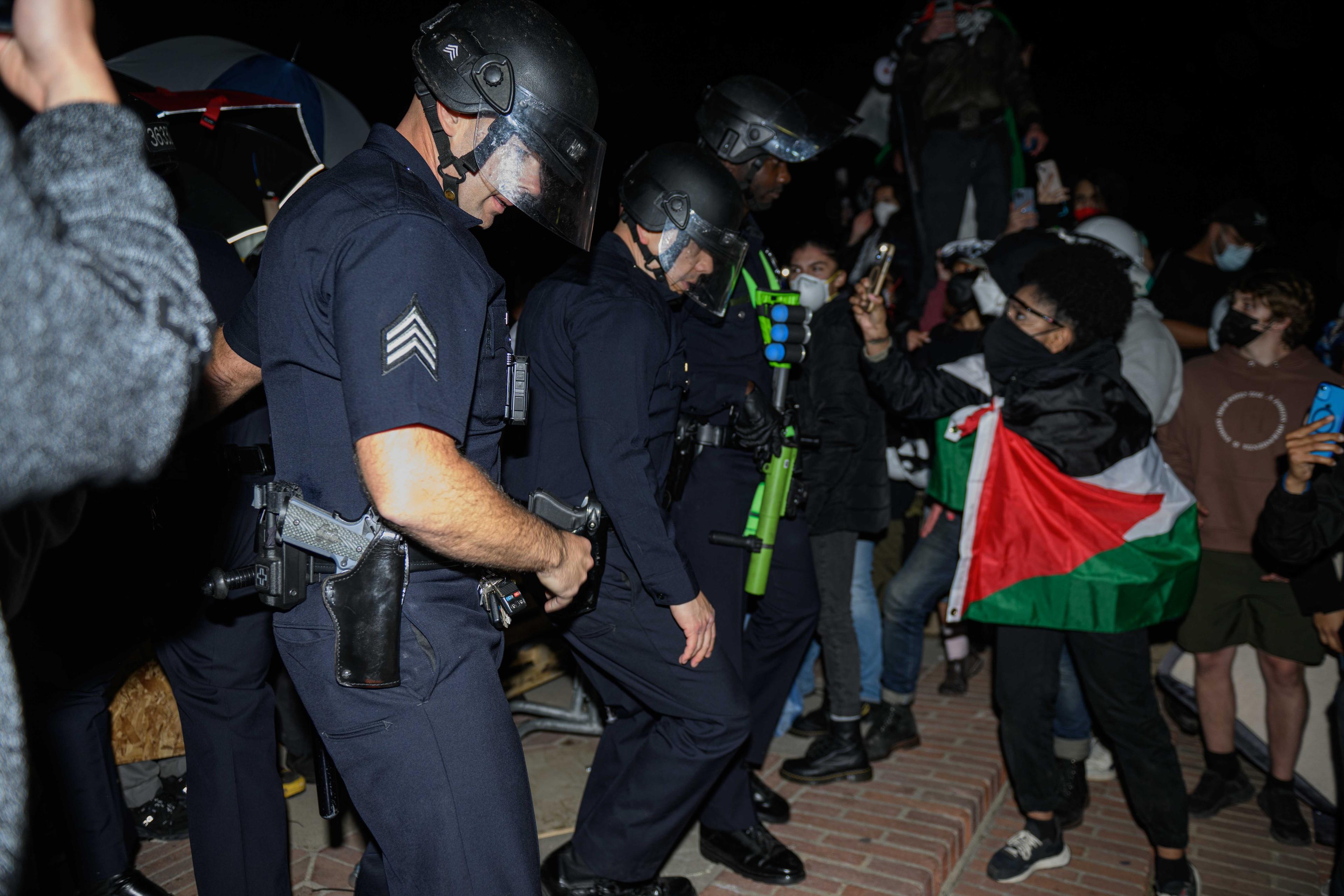
(Andrew Ramiro Diaz/Photo editor)


The UCLA Police Department has the smallest stock of lethal weapons in the UC, but the largest stock of less-than-lethal munitions, according to data obtained from the university.
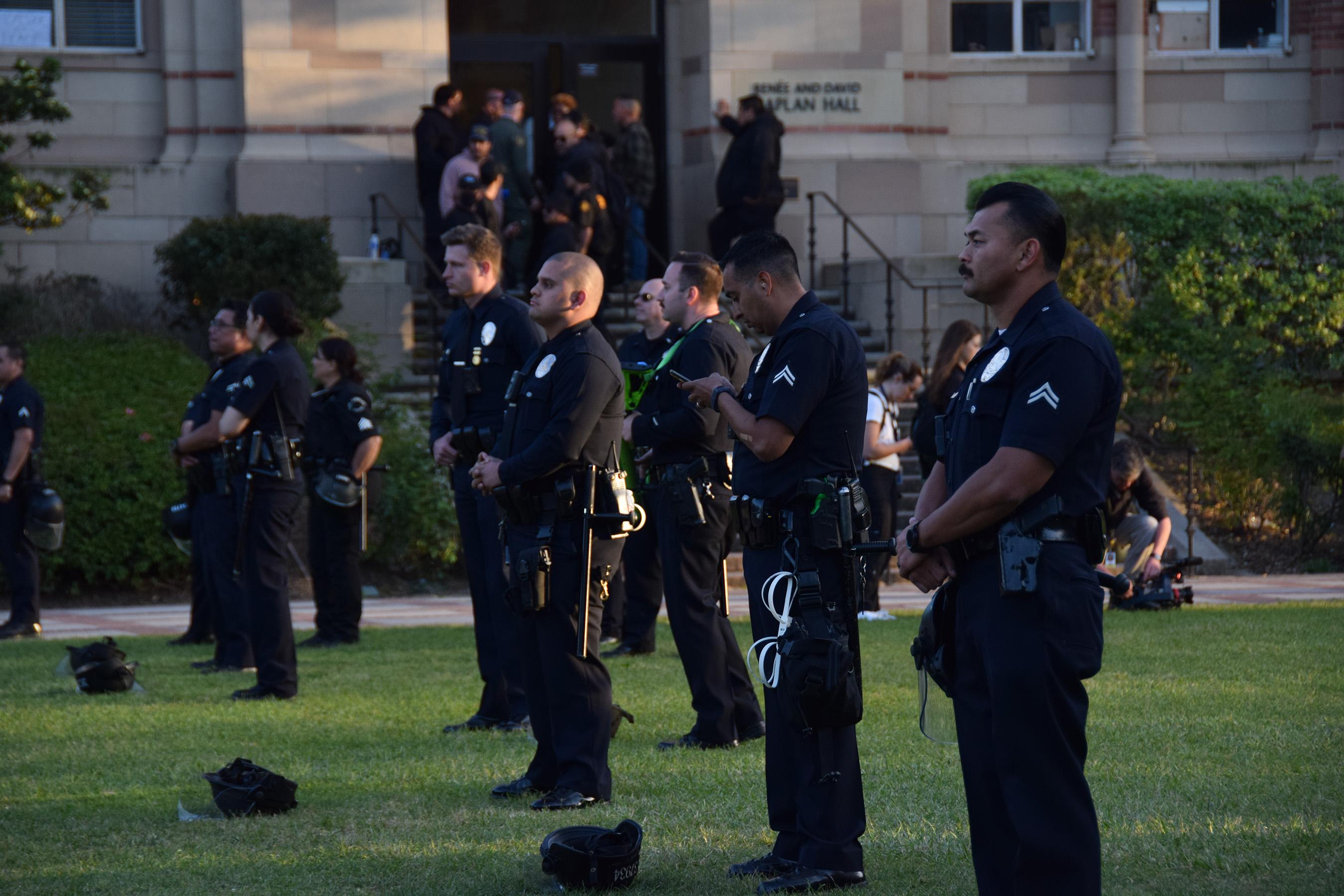
The UCLA Police Department, which consists of sworn officers, serves as the primary law enforcement agency of UCLA’s campus and surrounding community. The university police department deals with the most calls within one mile of campus, although homicide and other threat-to-life investigations are handled by LAPD. UCPD can also request aid from other local police departments when extra or specialized resources are necessary, according to documents obtained by the Daily Bruin.
[Related: Law enforcement leadership structure at UCLA faces scrutiny in wake of encampment]
A Breakdown of the UCLA Police Department’s Budget
To maintain normal functions, the department relies on an annual budget to support its operations. A UCLA spokesperson said in an emailed statement this budget follows a standardized budget approval process implemented across the entire campus. The chart below shows how the department’s annual budget is broken down by expense categories over the past seven fiscal years.
Based on the data, the vast majority of the budget is spent paying employees, with costs increasing. This reflects the labor-intensive nature of policing. However, the department’s budget for supplies, equipment, and other operating expenses, shows a different pattern. It dips sharply between 2020 and 2023, before rising again as campus activity returns to normal levels post-pandemic.
As the chart shows, the non-compensation budget fell from roughly $3.7 million in 2019-20 to about $2 million in 2021–22, marking the lowest point in the seven-year span. This decline started in 2020 and ended in 2023, directly aligning to the COVID-19 pandemic’s timespan. The restrictions on travel and in-person meetings significantly limited the physical presence of students, faculty and staff on campus. Therefore UCLA implemented cost-saving strategies to reduce travel and utility costs.
A Closer Look at 2024-25 Non-Compensation Budget
As UCLA transitioned back to in-person instruction in 2022, the non-compensation budget increased back to pre-pandemic levels. In the most recent year, 2024-25, the department’s projected non-compensation budget reached its highest level in the seven-year period of around $3.9 million, and the final approved budget was around $3.8 million.
“Overall non-personnel spending has increased over the past five years, driven primarily by inflationary pressure across equipment, technology, and service contracts,” said Scott Scheffler, UCPD’s administrative bureau captain. “The department’s operational needs have remained consistent, but the cost of goods and services has risen across the UC system and the public-safety sector.”
The non-compensation budget is composed of six categories: materials and supplies, equipment, information technology, communications, travel and general services. The broad category of general services comprises miscellaneous spending such as vehicle rentals, contractor and hiring services, insurance, training, custodial, facilities and maintenance and other operational needs.
UCLA PD’s 2025 Equipment Inventory
California Assembly Bill 481, which was signed Sept. 30, 2021, by Governor Gavin Newsom, aims to increase transparency surrounding the use of equipment classified for military use to foster trust between police forces and their local communities.
Below is a breakdown of the lethal weapon inventory by UC campus. This category, as defined in the Regents approval document, covers specialized firearms and ammunition of less than 0.5 caliber.
In 2025, UCLA Police Department had zero firearms and ammunition – far below other campuses. The campus with the next lowest inventory was UC Berkeley, with 5,024 units.
The following bar chart shows the less-than-lethal inventory by campus. This include munitions containing tear gas and OC but excludes pepper spray.
Analysis of less-lethal munitions shows UCLA PD has the largest stock of less than lethal equipment among the UCs, comprised of 3000 FTC Pava Capsaicin Rounds and 41 Def-Tec 40mm Direct Impact Munitions, Model #6320 (OC).
FTC Pava Capsaicin Rounds – known as “pepper balls” – can be fired from longer distances and break glass. Def-Tec 40mm Impact Munitions are pellets, approved for use at distances greater than five feet, that deliver blunt force alongside a chemical irritant. These munitions can incapacitate people and are intended for crowd control, providing a less lethal option.
Part of the explanation may be the department’s adjustments following pro-Palestine protests in Spring 2024. In an emailed statement, a UCLA spokesperson said UCLA has made enhancements intended to keep campus safe following the protests.
[Related: UC Regents approves UCLA police department request for less-than-lethal munitions]
Scheffler also said the UCLA Police Department’s inventory represents their strategy of attempting conflict resolution without lethal force. Additionally, different items are needed in different quantities, he said.
Ellena Wang, a second-year biochemistry student, said she feels very aware of UCLA PD patrolling campus on bikes, even during weekends. When asked about her perspective on UCLA PD’s emphasis on less-than-lethal equipment, she said she feels it could lead to less overall violence than if they had lethal weapons.
“Our goal is to ensure officers have immediate access to less-lethal equipment across the fleet so they can address threats and de-escalate dangerous situations with reduced reliance on higher levels of force,” Scheffler said.
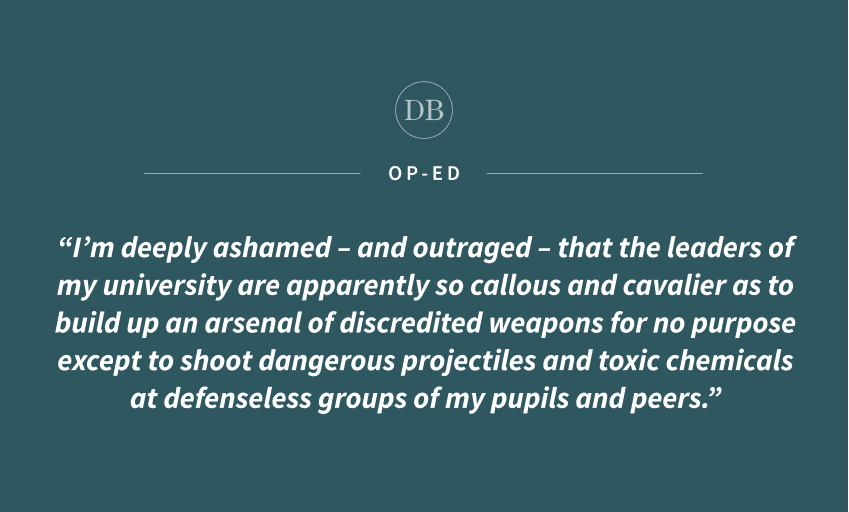
Michael Chwe, a political science professor at UCLA who studies communication networks and group coordination, said that regardless of less than lethal designation, weapon deployment can still cause serious harm. He referenced the June 10, 2024, incident in which UCLA Police shot a student in the chest with a 40mm projectile weapon. This lead to a heart contusion, bruised lung and 2-day hospitalization, according to the Los Angeles Times.
Chwe said he believes many parents are unaware campus police are using such equipment. He spoke of plans to start a petition aimed at raising awareness and prompting collective action regarding its continued deployment.