UCLA students launch Catalyst newsletter to expand STEM career pathways
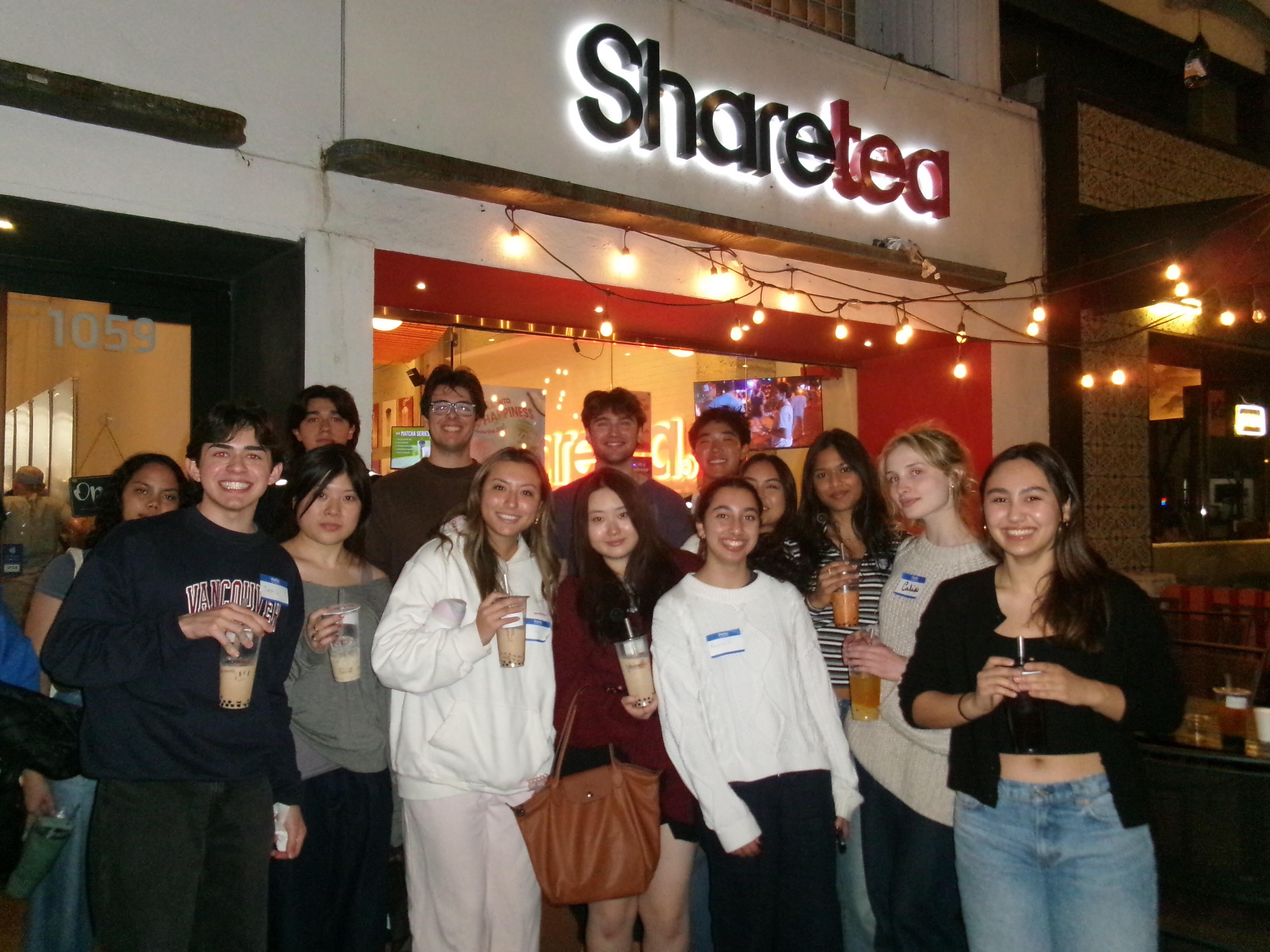
The team behind Catalyst is pictured at one of its socials. (Courtesy of Catalyst)

By Kyan Wang
Feb. 19, 2026 12:41 p.m.
Third-year psychobiology student Misty Aldrin said she started Catalyst – a quarterly science newsletter – with two of her friends to guide undergraduate STEM students through industry and academia.
The newsletter’s first issue, published Jan. 3, featured students’ research on scientific topics, such as the blood donation process, how to get involved in research opportunities and bioethics.
The first issue of Catalyst primarily featured articles geared toward pre-health and pre-med students, according to Catalyst’s website, but the team hopes to branch out into stories on other career paths in its next issue, said Calia Godtland, a co-founder of the newsletter.
Godtland, a third-year neuroscience student, said she often felt limited to just a pre-med track as a STEM major. She added that she and Aldrin want to highlight how STEM can apply to other career paths, such as entrepreneurship or law.
“At UCLA, there is a huge gap just between what potential career opportunities STEM students have and the ones that they stereotypically are known to go for,” said Tobias Burgett, Catalyst’s outreach director.
Aldrin said she recruited writers and board members by flyering on Bruinwalk, speaking to classes about the newsletter and posting on social media.
Micaela White, a writer for Catalyst, said she published a profile on Dr. Daniel Geschwind, the director of the UCLA Center for Autism Research and Treatment, because of her interest in research on autism spectrum disorder.
“I chose to write about my specific researcher, which was Dr. Geschwind, because I have personal experience with profound autism,” White said. “I have two brothers who struggle with ASD, and I’ve seen, sort of firsthand, the lack of services and long-term supports and resources available for individuals, as well as families who are affected.”
Burgett, a third-year economics student, said the club is also looking to expand to other college campuses.
The newsletter, Aldrin said, is focused on writing full-length stories, rather than relying on short social media posts that lack complete context.
“It’s hard to talk to a professional and interview them properly … and then put that into a short social media post or video,” Aldrin added.
The Catalyst team is currently working on its next issue, which Aldrin said should come out March 27. Burgett added the club is looking for corporate sponsors for the newsletter and is starting a crowdfunding campaign with UCLA Spark.
The newsletter’s writers, Burgett said, had more time to work on their articles for spring quarter’s issue, given that the club now has established workflows. Burgett added that he believes Catalyst’s first issue helped establish the outlet’s credibility.
“Having articles available with a variety of careers you might be interested in and the steps that led these influential people on that pathway can be really helpful to people,” Godtland said. “Especially people who don’t come from backgrounds where access to people in these careers is easy for them.”