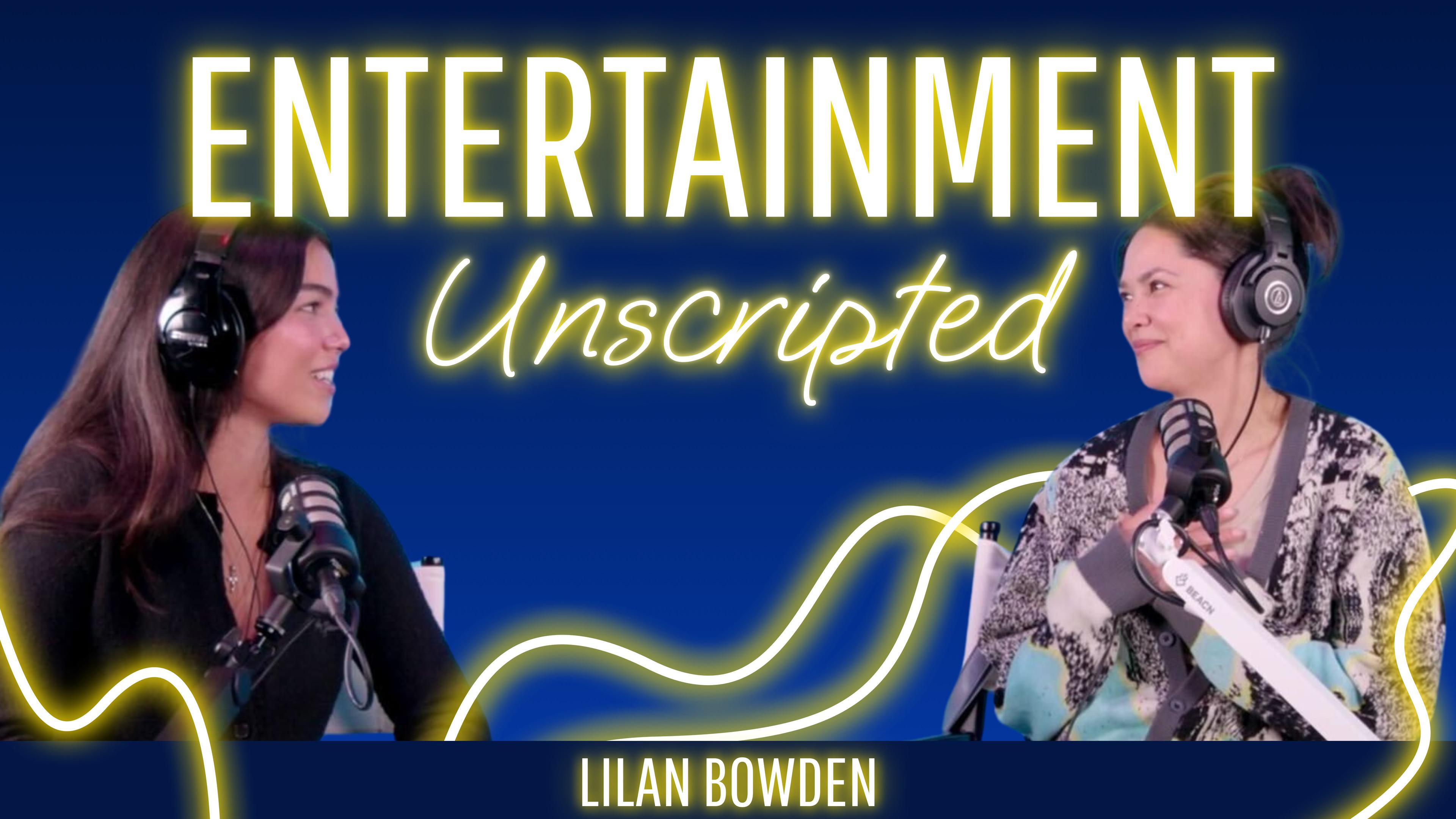
Entertainment Unscripted: Gilmore Girls star Keiko Agena


By Mia Fernandez
Feb. 17, 2026 2:51 p.m.
Listen to Keiko Agena share her story, from working with small theater companies to starring in Gilmore Girls, and the wisdom she has gained along the way through persistence and gratitude.
Mia Fernandez: Hello everyone, and welcome back to Entertainment Unscripted. My name is Mia Fernandez, and this is a series where I sit down with individuals in the media and entertainment industry to discuss their work and the field overall. I have a very special guest today. You might know her from a little show called Gilmore Girls. Well, she’s done a lot more than just that, please enjoy my chat with Keiko Agena. Keiko, welcome to Entertainment Unscripted. So happy to have you here again.
Keiko Agena: Thank you. Thank you so much, Mia. I’m glad to be here.
MF: Of course. Before we get into everything, can you just quickly introduce me to what your path into the media and entertainment industry was?
KA: Sure, absolutely. So I got into theater when I was very young. I was 10 years old, and my mom had always got us into after school activities. I was in a mime class randomly, and I liked it. At the end of the mime class, because it was all kids, we went as a group to audition for this play. It was called “The Best Christmas Pageant Ever,” and I think everybody got a part. I think it was basically, if you were available to do it, they just signed you up. And by the end of doing that process, I don’t know how many weeks it was, I just knew that I wanted to do this. This seemed more fun than anything that I had done before, and I just fell in love with it, and I sort of stayed in love with it through my childhood years, and then I ended up in Los Angeles and different moments along the way, but that was the beginning of it. That was the beginning of being interested in it. So I started at a pretty young age.
MF: You grew up in Hawaii. What was the discourse? What were the opportunities like in Hawaii for media and entertainment?
KA: So in Hawaii, there weren’t very many opportunities, especially when I was there. So I was born in ‘73 and I left when I was 17, I guess, to go to college. So during that time there wasn’t really anything that I knew of that filmed there. I didn’t have any examples, certainly, of making a living at it there. I think things have changed now. Certainly there are television shows that do shoot there. I think even now, it is a little bit challenging, if you’re only based in Hawaii, to purely make a living acting, or being a filmmaker.
MF: Right, and in college you studied drama. Is that correct?
KA: But I only went for one year.
MF: Where did you go?
KA: So it was Whitman College. It’s in Walla Walla, Washington, and I was there for a year. I chose that school because they offered me a partial scholarship to go there. But then I ended up in Los Angeles for a summer and I met people that I really enjoyed what they were doing, and then I didn’t go back to college. But the people that I met in Los Angeles ended up being really influential and helpful for me.
MF: So having studied it for one year, how important do you think that is for one’s career? For aspiring actors to study drama.
KA: That’s a good question. Do you mean specifically in college?
MF: In any capacity.
KA: In any capacity. Well, I think that studying is really important for a lot of reasons. One, because I think it’s fun. I think that learning is fun. I think that’s the thing that just keeps all of us involved and engaged. I think it’s the curiosity that drives people forward. There are a lot of great classes that I’ve taken and continue to take. I think it gives you foundation, and it also is a way for you to meet like minded people. I’ve met a lot of people from classes.
MF: Build a community. It makes sense. And as a new actor, how do you even begin to search for those first roles, or how do you book your first auditions?
KA: That’s a good question. I always give this advice to people who are just starting out, and going to sound, how do I say this? I don’t know if people like this answer necessarily, but what I would say is try to be useful for one. It’s counterintuitive because I think that people can feel this intensity of wanting to work and wanting to further their career, but I think there’s a little bit of a danger in that to purely think of your career and trying to get things out of other people. Usually, I think it’s actually more beneficial to think laterally. Instead of thinking, “who is the person above me that I need to get the attention of to bring me up to that level?” Really, the people that you should look to to be a good person to, are the people that are just at the same level that you are. Yes, so the people that you actually know now, if you are doing this in any capacity, if you’re in class now, that is the beginning of your community. So look to those people to find things that are interesting to you, and look for the people that you like. I hope that if you’re interested in this art form, there are people that are inspiring you, and a lot of times, those are the people that are in your community. And in this way, how I describe being useful is, let’s say there’s another classmate that you just think they’re really talented. Find out what it is that they’re doing, find a way to be helpful to them in any capacity that they’re doing. I like to tell this story, but it’s true that there’s a friend of mine that was working on a short film, and I said, “What do you need? I can drive things, I can drop off props.” I don’t know what. I have no skills. Then they said, “well, we don’t really need anything, but the costumer feels really overwhelmed. That’s the one thing.” I cannot sew. This is not a skill of mine, but I said, “Yes, completely, absolutely, I will do that.” I spent time doing that and helping her just to not feel stressed, and to just do any little menial, tiny, little task that I could do to help, to be useful in a real way. Because this is an important thing that I think maybe people don’t really get a sense of, is that there are a lot of elements to working with people professionally. Part of that is talent. Definitely. It’s, “is somebody talented?” The other part of it is work ethic, and the other part of it is what temperament you have. A lot of things you cannot find out from, certainly just a conversation where someone’s trying to explain who they are. You can find out talent if you actually see them, like in a class or in a workshop or something like that. But the other side of that, the temperament side and the work ethic side, that you really can show to people in many different ways that are really very much as much a part of this whole thing as showing them what you can do as a performer or producer or director. This business is a collaborative business. It always has been. It will continue to be one so work on those skills. If you look for them, there are always opportunities for you to be useful to someone that you appreciate and like.
MF: That makes sense. That was great advice, actually. The work ethic, specifically, reminds me of your story of the costumer, because it’s almost like paying it forward. And like you said, building the horizontal ladder and kind of growing at the same level together. Actually something that Lilan taught me as well, is that you really need that community to be able to thrive. And if you don’t have the community, if you don’t have the human connection, it’s not going to be as satisfying.
KA: Yes, absolutely. And Lilan, who you mentioned, I love Lilan. I mean, Lilan, I treasure her. We got to spend some time together. We taught improv classes in Edinburgh, and got to perform with her. And I still get to perform with her through Asian AF and it’s just a pure pleasure in my life, getting to know those people and that’s the thing, too. If you don’t trust what I’m saying, listen to any biographies. Listen to what their stories of, if you hear how they got to where they are, there’s always a story of this person was my roommate. If you look into it, it is true. Not to say that everything it’s all relationships, but if you’re only focused on looking above, there are better ways to go about it.
MF: Yeah, that makes sense. To bring it back to actors who are just starting out, actually, another thing Lilan taught me is that when you first start, agents aren’t looking for aspiring actors. They’re looking for people with a couple credits or some experience already. So at what point in your career did you find those roles on your own, and at what point did you transition to an agent if you took that path?
KA: How I got my first agent was that I was down in Los Angeles for the summer, and I needed a job, and so I opened up at that point, there was the yellow pages, the phone book, the literal phone book. I went to the Ts for theaters and I called all of the theaters. I cold called, and I said, “Do you need someone?” The college was paying, I think, 40% of whatever I was getting paid. So I thought that was attractive to people. What I did find, I had to call them twice, because they didn’t return my call the first time, but I called them twice. It was a tiny little theater company. It was called Incline the Theater Company. They didn’t even have a real theater, but it was a group. For them, they got to pay me, I think it was $6 an hour, and the college paid me $4 an hour, so I got paid $10 an hour. I stamped envelopes and I filed papers and I did office jobs, and I just learned how to be around them. But that was my entryway to those people. Those people really changed my life. I found my Meisner teacher through that group. One of the actors in that group, their agent was looking for younger people, and he only knew me because I was there at that small, little, tiny theater. He didn’t have an office. It was basically him in his living room with his headshots on his kitchen table. That’s how small that opportunity was but it was a first opportunity and it was an important opportunity. Was that your question? I don’t even remember. How I found my own opportunities, or something.
MF: Yeah, was this the summer after your first year of college that you mentioned?
KA: Yes. So it wasn’t that first summer, I think where I found that agency. I think I was with that theater company for a while, probably at least a year. I interned with them. I did a play with them. One of the plays, I actually got to act in it, and that’s how I met the director, who ended up being my Meisner teacher. But it happened shortly after that, I think, that I met that very small agent.
MF: Okay, and so when you’re going out for auditions, and let’s say they send you the sides, how do you even begin to shape the character? What’s your personal process?
KA: Oh, my gosh. That’s my favorite question. How do I shape my process? I love it. So, when you finally do and they are very, very rare. Auditions, even for myself, are very, very rare. So when you get them, most of the time you have three days. So unfortunately, for most projects, it’s a very condensed, intense cramming type of process but I have a way now, and it’s constantly evolving, of how to best use those precious three days or two days to get camera ready. Nowadays it’s all self tape but I have a memorizing process that I start with that is ever evolving. Then I break down the script and my approach and my daydreaming work that I do that is based a lot off of the Meissner technique that I learned, and also different things that I’ve learned over the years. I actually have a little, I was looking at it today because I was adding some notes to it, but I have a series of very small notebooks that I’ve that I started in ‘92 when I first took my very first class. And every so often I’ll go back and I will make the very important notes to myself about process in that book, and so I have detailed notes for myself about
what works for me. Also in that book, what I find helpful as well is that because it’s from ‘92 there are a lot of ups and downs. There are a lot of very low moments. There are celebratory moments. Because you can look at the whole process, it’s easy to kind of maybe continue on, because you’re like, Okay, well, I remember that low point but then it’s all relative. Just hang in there.
MF: Are these notebooks just your thoughts in general? Or are they by character?
KA: Those notebooks are very special to me, because I don’t go into them often. So they are not by character necessarily, but they are sort of like boiled down, bullet points actually number them. I think right now I’m up to number 600, around number 600 as far as like, boiled down things to remember and things to think about for myself. But I, when I’m working on a character, I will do a lot of warning pages about it, which is just like a lot of journaling. Or I’ll have notebooks and notebooks of things that I will long hand write down, of a lot of questions that I have, and a lot of ways that I will answer them. And then also, because I’m working on a part right now that will, I think my first day of shooting is going to be on the ninth so throughout my day, I will stop, and I’ll kind of run that scene a little bit in my mind and kind of test out the waters and check what my point of view is about that person, or what is the circumstance that I have, and all of those things, sort of over and over, in different arenas.
MF: I see. Interesting. And you mentioned a couple times a word, I think it’s Meisner. What
is that?
KA: Oh, great. So Meisner is sort of like a method acting. It’s one of the types of method. It’s the basis of my study because that’s the teacher that I took back in ‘92-‘93, or something like that. So I took a two year course, but it’s a method that is very, the principles are a lot about taking everything off of the other person, and it’s a lot more listening and reacting off of the other person, and finding unique and surprising things in the moment. So a lot of times, it could be very, for better or worse, sometimes wildly different. It’s very exploratory. At least the way I do it.
MF: Yeah, I’ve never heard of it. I didn’t even know there were different types. Very interesting. Can you talk to me a little bit about the dynamic between an actor and a director? How, I mean, maybe it varies, but in your experience, how much input can an actor provide? How does that dynamic even maybe influence the actor’s performance?
KA: Oh, that’s a great question. So most of my experience, my professional experiences, is in television, and in that scenario, it’s very specific. So in television, the director changes every episode or every block. So if you are a series regular, or even if you’re recurring, you’re actually on set for longer times than necessarily the director does. So the directors have to change because they have to prep that episode, and then after that episode is done, they have to edit that episode. So you wouldn’t be able to have, you know, or most times, you don’t have one director do the whole thing. So because, also in television, we don’t have a lot of time, and we don’t have rehearsals that a lot of films do, the actor has to do a lot of preparation. So you do a lot of preparation on your own, and you direct yourself a lot for the self tape, and then you’re really going off of that. If that’s successful, then that is the preparation that you’re bringing when you’re coming in to do the role. That’s the expectation that you will deliver similarly to what it is that you do. On the audition. So the director, a lot of times, a good director is there to help bring out what it is that you’re already coming to set with. We’re not doing a lot of exploring necessarily, just for time, because you don’t have a lot, most of the time, you don’t have a lot of time.
MF: And I imagine too, if you’re on the set, you were chosen because the director, yes, agrees with the direction that you’re taking the character,
KA: Yes, and he or she has a lot of other things that they’re working on to make sure that everything is working on the day. You are part of it. You’re an important part of it, but there are a lot of other things that they are making sure are working.
MF: Have you ever been in a situation where you disagreed with the director, or maybe even a writer or a character storyline, and how did you approach that situation?
KA: I think that I ask a lot of questions. I think a lot of actors do because sometimes I just need clarification. So if they’re asking something that I don’t understand, or I don’t understand how to deliver it, or I don’t understand why, I just need to ask questions. I have noticed, and I won’t mention which show it was, but they were very experienced actors, they were series regulars, and how they approached it is they would say, maybe when they disagree with something like, “Let’s maybe put this on the table.” I noticed the director would do the same thing. It wasn’t a critique, but they would just bring things up for discussion. But that’s how they would say it. Yes, to politely bring things up.
MF: Do you think the dynamic shifts maybe based on how experienced the actor is? Maybe somebody who’s more seasoned gets to have more input in a way, or if there’s a hierarchy of some sort.
KA: There is, I think, because of a lot of reasons. So, yes. For a series regular, depending on the show, if the show is popular, if the series regular is popular, there are going to be those kinds of dynamics. And if you are recurring on a set, you’re coming into someone set, if you’re a day player on the set, if you’re co-star, all of those things. There are certain types of etiquette and energy to be aware of. I just think a lot of that, for me, is just that everybody’s always against the clock. Or at least that’s the way I think of it. So maybe if you’re very important to the storyline, then you maybe can spend half an hour discussing certain things, because it’s that important. But you can’t spend half an hour if you’re maybe less essential to the storyline.
MF: Can you recall, like any specific storylines that you disagreed with or even ones that you really enjoyed?
KA: I really had a lot of fun on Prodigal Son. I love that show. I really had so much fun on that show. I got to do that for two years in New York. I do remember, and this is one of those things where I’m like, “Oh, I was too much of an actor in this moment.” But there’s this ridiculous, I don’t mean that it was ridiculous, but it’s a little bit of an extreme. She’s a medical examiner where there is a top of a champagne bottle lodged in this person’s neck. Ridiculous and gory, and kind of fun. But I am reacting to the fact that there’s a chance that the top of that is going to explode out because of bodily gasses and all of this, right? And I’m very serious, I’m very intense about it. But I remember I brought up the fact that where my positioning, where my blocking was, didn’t make sense unless I was right in front of the thing that I was scared would happen. The director was trying to make the prettiest shot, of course, with the best background. And now that I think back, if anything, I’m more of a writer than a director, and I’m not thinking visually. I’m thinking more of what, what the character needs. But sometimes you have to be flexible, because the director is trying to also make it look good and interesting, and wants to put you in the best possible place instead of the hallway, why don’t you have this gorgeous background in the back of you. So that’s one of those things where, after the fact, like, two days later, I was like, “Oh, you can be flexible a little with that kind of stuff.
MF: I’d say that’s a difficult, champagne in the neck, that’s a difficult situation no matter what. So funny. Little bit of a broader question. What is something that you learned while already experienced for a while in the industry that you hadn’t even considered before entering it.
Maybe something you didn’t expect?
KA: I will share a couple things. One thing that I did expect that I might want to share just because if there are younger people, and take this a good way or bad way, but when I was in high school, my acting teacher said that only 2% of actors make their living acting. I learned that, or I heard that, at a very young age, and I know that that’s a true fact. The reason why I say that is important, as far as expectation, is just that it helps you, if you know that going in, that you can have a good expectation set for how difficult the business is. That’s not to be a star, that’s just to feed yourself. That’s the statistic to not have another job. So I think that’s important as far as having my expectations, and that has always been my expectation or desire is just to be able to feed myself doing this thing that I love. Something that surprised me, I think, was this thing about directing, and also when I was writing, I worked with someone to write a pilot, is to think of the other side of it that I really until very late in my life, kind of selfishly, I guess I just thought from the actor’s point of view. It’s good because I protected my character and everything that I did, I can back up, but it’s a lot harder to be on the other side of that, and to think of the whole story and people who are working very hard to make that whole thing happen. So that has been something later in life, I’m like, Oh my gosh, I want to be more grateful and aware of all of the people that are trying to make this impossible thing possible.
MF: Yeah, it’s true. There’s so many roles. I feel like every day I’m learning new roles on set, behind the scenes, in production, development like that aren’t talked about just because, of course, the actors are the ones on screen. But there truly is so so much
KA: Yes and the reason why it’s so difficult for things to be great or good is that one of those things is not working right, and it falls apart. Every part of it is essential because you’re trying to create this fantasy or believability.
MF: And that’s taking me back to, again, to the horizontal ladder Resisting a hierarchy on set and and maintaining the community, so that it can be cohesive and come together to create what everybody wants to create.
KA: Yes, I think so.
MF: And do you feel like there was ever a specific moment that you can recall where you maybe finally felt satisfied with your career, and even if it was just putting food on the table, or if it was like reaching maybe a higher level of stardom. Just any specific moment.
KA: I think there have been certainly celebratory moments. I think when I got Gilmore Girls, I certainly celebrated. I have had to learn how to celebrate, actually, very recently, in this past year, I realized that I didn’t do that because with everything, there’s always the next thing to be worried about. So when you get the audition, when you get the callback, you have to get the job. You have to pass the first read. When you get the pilot, the pilot needs to get picked up. There’s always this waiting period and what I realized in this past year is that you have to kind of choose times and reasons to celebrate because you can always be worried about something. It’s a practice, actually, that I’m just now starting to do. And so I celebrate now. I celebrate little things like, I love improv, and I keep doing it. We had a great show last night so that makes me happy.
MF: Where did you perform last night?
KA: Oh, yes, I performed at this theater. It’s Tamlyn Tomita and Daniel Blinkoff’s theater. It’s called Outside In. It’s in Highland Park, and it’s a new space. We’re doing a show called Breaking Bread right now. I don’t know when this airs, but it’s an improvised, hour and a half long show where we actually eat on stage. It’s a holiday meal. The entire thing is improvised, but there’s a little bit of structure to it. It was fantastic and I love the people there.
MF: That sounds like a lot of fun.
KA: This is a new thing. This is a new space where I’m building community and getting to know them, because they are new theaters and so a lot of the people in this show, I haven’t worked with before. I’m learning to trust them, and we’re creating something together. It’s fantastic. Such a good feeling to do that.
MF: Yeah, so with improv shows like that, do you perform multiple nights? Do you do Breaking Bread multiple nights?
KA: Well, this particular show is different, because usually improv, you just show up and you just do improv. Sometimes you have a team, and so you might rehearse with that team. But this show, because of the format, we rehearsed as a group for two months, I think beforehand. I think that might be right. Now it’s a rotating cast, so we won’t have everybody every show. We’ll have different combinations every show. It’s an eight person cast, and I think maybe we have 16 people. So it’s a different crew, but we all know each other.
MF: What does rehearsing even look like for a show like that?
KA: It’s a very good question. Some of it is games and just getting to know each other. And then some of it is running the format of it, because each improv style actually has different pitfalls. So a 15 minute improv set is going to be very different than an hour and a half improv set. You have to learn the timing of different things and when to wrap things up because actually in improv, you do have agency and how you kind of are sculpting the narrative as a group. So you have to sort of feel certain timings and when to have things have a peak, and things like that. And little traps that you can get into. In our particular show, there are secrets, and so we had to practice that of how you deal with different secrets and what types of relationships to build with people.
MF: Yeah, interesting. I always remember, this does not compare, but I took a theater class in middle school, I think.
KA: Yes.
MF: And I always remember the one thing that stuck with me is my teacher always said, you have to create a game with the audience.
KA: Yes, yeah.
MF: Okay, since you agree, how do you apply that in your shows?
KA: Well, our show, so there’s something called the game of the scene, which is you try to figure out what is funny or what is working within the actual show, and then just kind of repeat it and play with it. But in our show, also we have something that is called Secrets. So the audience comes in and they write out secrets, and then we pick the best or the host of the show picks the eight best. They pick which actor is going to have that and only that actor looks at what the secret is, like they just got fired from their job, and they’re trying to keep it a secret, and it’s a family reunion. And so that’s sort of a nice game that we have with the audience. So the audience knows what everybody’s secret is, but the actors don’t know. We could be in a scene, and I don’t know what it is you’re trying to hide, but it all kind of blows up probably by the end or it influences how we react to each other. Maybe my secret is that I’m having an affair and we’re married. There are fun things that the audience can kind of be in on.
MF: That sounds a lot of fun. It creates, I feel like, a more holistic performance where the audience is part of it too, which is really fun. Since we’re talking about improv, I’m actually going to skip ahead a bit if I can find it. So you’ve written a book called, No Mistakes: A Perfect Workbook for Imperfect Artists. Love the title. In an interview you did with Life Hacker in 2018, you said that it was partially inspired by improv and how embracing mistakes can lead to finding your creative voice. So I’m curious, can you expand a little bit about how you apply this ideology to your current life?
KA: Oh, sure. So I’m sure people know there’s a lot of failure in the business that we do, and I think that’s part of being successful, is being able to weather that storm and still be willing to be open and available when you get knocked down. So that’s part of my opinion about mistakes and failure in general. The thing that I think about mistakes is a lot of times, we have the people that we idolize, and we’re like, “Oh, I love that actor or that producer or that director.” Then we look at ourselves, and then we put them next to each other, and we see all of the things that are wrong in ourselves, because we are not that. We try to carve them out of ourselves, and we try to mold ourselves into that person. It’s a different philosophy to really start to find ways to embrace the different wonky bits that are you because, again, if you watch documentaries, I always find it fascinating when you learn who that person is trying to be. The person that you admire has a hero that they’re trying to be, but actually, the reason why you love that person that’s your hero is because of the flaws that they have that they couldn’t be that other person. They’re their own unique thing in the effort they had of trying to be that, but accepting who they are, they created the artist that you love. The earlier that you can find acceptance and try to guide yourself and look inward, the better off you’re going to be in the long run. And it’s a long road of self acceptance, but I think that’s the road everybody’s on.
MF: Yeah, embracing uniqueness. What mistakes do you think maybe in your career have taught you the most or you feel you value the most because of what they taught you?
KA: I have this long, very long love hate relationship with improv. I was just telling someone the other day, I keep trying to quit, but I can’t quit. I just find myself getting back into it. I’ll give you a real life example that I’m going through right now. I personally love, they’re usually guys that are very technical and very quick and have a lot of facts that type of improv, like speed improv, very logical.
MF: Like as scene partners?
KA: When I’m watching. I’m always impressed when I see that. For the longest time, and I still have this is, when I try to force myself into being that style, I always find myself lacking, and it’s taking 20 years, but I’m starting to find my own voice, that I’m not naturally that type. I’m way more emotional. I have a slower pace. I have different attributes that I bring. But a lot of times a heartbreaking moment will come, which happened last night, that maybe other people wouldn’t have. So it’s trying to find that acceptance and that’s the type of improviser that I am, and then kind of go into it instead of trying to avoid it.
MF: Yeah, I see. And it still doesn’t take away the fact that you can enjoy the quick and witty and intelligent performances as well.
KA: Yes, and sometimes you will balance off of each other very well, if you can appreciate but find a way to play with that but not expect that of yourself, or try to make yourself into that person.
MF: Yeah.I think, too, you said something in the interview about obsessing over your mistakes in a positive way. I can see through those examples how that does end up, in turn, shaping your creative voice.
Going broad one more time, what has been some advice that you’ve received has really stuck with you and helped guide you in your career?
KA: That’s good. I don’t know. I guess that, it sounds terrible advice, but it was advice that 2% of actors thing, because it did help me. There’s a quote, and I don’t know why I’m going back to high school, I guess that’s when it all happened. But there was an Uta Hagen quote that said, “All tedious research is worth one inspired moment.” So that. Just work hard, and just be open to things happening. What I’ll say, my friend Sarah Claspell, she’s a wonderful improviser. She teaches all over the world, and she has this game scene in improv and she said, “Yeah, the idea you have is dumb. It’s okay. We all have dumb ideas. All the ideas are dumb. Just do it.”
MF: Do it anyway.
KA: Just do it anyway.
MF: I love that. The first one that really reminded me, too, how you said taking the moments or taking the time to celebrate the small moments. What was the quote again? One inspired moment?
KA: “All tedious research is worth one inspired moment.”
MF: That’s a good one. And where is that from?
KA: That’s from Uta Hagen. She was a famous teacher, an acting teacher, and when I was in high school, that was one of the books we read. Her book was called Respect for Acting and that was definitely a book that I read when I was going to the Mid-Pacific Institute, when I was a wee person.
MF: Back in high school.
KA: Back in the day.
MF: I also would like to know, from your perspective, how do you think the industry as a whole has changed? You can speak on TV. You can speak on entertainment, however you feel changed since you first started?
KA: Well, a lot has changed. I mean, a lot of times I get asked, because as an Asian American person, the roles that have been available to us are so different than when I was younger, in a great way. I mean, it’s kind of mind blowing and fascinating, the things that have happened, I think the industry as a whole is changing a lot because I think studios, like the idea of studios, is changing a little bit. I think maybe, and I’m not an expert on this, so I’m just watching the same videos that y’all are watching, but it seems like people are talking about these sort of mini studios. About people just kind of producing stuff themselves, and instead of having to sell a script for someone else to produce, just kind of doing it and then selling the show. So maybe piggybacking on the things that we were talking about earlier, lateral thinking is getting together and doing whatever it is, because you’re going to learn by doing. I think that’s another piece of advice. I don’t know who said it, but that you only actually learn by doing. So I would say just be softer with yourself. Do it, and then figure out what it is that you learned after the fact and not try to always think into the future about how it is that you want to do it or be it. Just do it and then learn afterwards.
MF: That’s the same, do it if it’s dumb, do it even if it’s a mistake. Do it anyway.
KA: Do it. Just do it. And be kind. Be kind to yourself and be kind to the people that you’re working with. That goes so far. Be nice to work with.
MF: And it’s so easy to be nice.
KA: It is. It is easy to be nice.
MF: To bring it to your specific shows that you’ve done, you’ve mentioned Prodigal Son, which is more like drama, right? And you’ve done The Residence, that’s a bit more comedy mystery. Gilmore Girls of course. Do you prepare differently for the different genres and are you drawn to any one specifically?
KA: That’s a good question. I think that in general my preparation is pretty similar. I think that for better or worse, I think maybe for better, I sort of prepare the role that I would like to play. It might not fit your genre perfectly, and if it doesn’t, then that’s okay. Someone once asked me, a young person asked me, “How do you not get trapped, or how do you not get typecast?” And I say. “Don’t.” You’re in charge when you send in the tape. So if you don’t want to be like that, then don’t. You’re creating that character, so make sure when you send the tape, that’s the way that you want to do it and that’s how you protect yourself.
MF: It’s so simple when you say it like that because I do hear people getting typecast, but now that you mentioned that.
KA: I don’t know. It’s kind of like, if they send you a dumb teenager role, and you don’t want to be a dumb teenager, then play it differently. Then make them decide whether or not they want that. If you send that in a way that doesn’t work for their project, they’re still casting agents. They’re still going to see it. So maybe you’re not right for that dumb teenager role, but maybe you’re right for their sarcastic substitute teacher that they’re casting next week. I don’t know, Also it’s like, for me I think I’m lucky in that I would rather be starving, and this still might happen, starving and working someplace else, than doing acting in a way that I find hurts my soul. That would hurt too much.
MF: Yeah, that makes sense.
KA: I don’t remember what the question is, but I hope the answer was okay.
MF: Honestly, I don’t either. I got lost in the answer because it was so wonderful, but I think you answered it.
You’ve also done some voice acting. I’m curious specifically, how do you convey emotions differently in voice acting versus on screen acting?
KA: I will tell you the truth. Voice acting for me is not something that comes easily to me. I get a lot of auditions. God bless CESD because they stick with me. I get a ton of voiceover auditions. One of my best friends in the world, his name is Will Choi, he does Asian AF with me, he does much better with voice over acting because he likes being in the booth. He likes using his imagination, reacting to things and forming his voice to fit what he imagines would come out. But because of, I think maybe my interest, and because I was Meisner trained, I don’t like that, actually. I like having a person that I’m looking at and that I’m responding to in the moment, not my imagination necessarily. So I struggle with voice. I mean I do my best. I still send in the auditions but it’s a little harder for me to work off of something that I’m just imagining instead of a real person.
MF: So in your experiences, has it always just been you in the booth by yourself, or have you had those instances where you’re going back and forth with another voice actor?
KA: I think I did a Kim Possible I feel like. Is that the thing I did a long time ago? I forget what it was. There was a time where I actually responded off of people and I did something that was like a radio play. Actually, something else I did, I don’t think it’s out, so I can’t say what the project was, but thankfully, maybe because they knew I was an actor and they treated people that are less voice over actors differently, they always had somebody either in the booth reading with me. It was great.
MF: Even if they’re not being recorded.
KA: Yes and they had the one time where they had a really important character. They had us both there at the same time, so he was on one microphone and I was on the other. So much easier for me to do. Way way better.
MF: I can imagine. And you mentioned a second ago, Asian AF. Can you tell everybody a little bit what that is?
KA: Oh sure. So Asian AF is an Asian American variety show, and we just celebrated our nine-year anniversary. His name is Will Choi who started it all those years ago, and he actually just announced it, but there’s going to be a festival to celebrate its 10 year anniversary. It’s going to be a four day festival, I think, next year. It’s going to be hours and hours of improv and variety shows and stand up comics. I love it. I’ve met so many amazing improvisers, a lot of comedians and actors.
MF: How important is it to create a community that’s culturally centered?
KA: Oh, you know, if I’m being really honest, usually I sort of ride on the coattails of people who are much better than me. I’ll put Will, and even Sarah and all of these people but I’m getting better at getting in there and getting my hands dirty and doing more of the producer roles. I always have benefited from amazing people in the community who have done that. I just actually taught a class. I recently started teaching classes specifically for Asian people. And that was the number one thing that I asked, “Well, why did you come to this class?” And that’s something that they said. They said, “I wanted to be in a room where I…” maybe they could let their guard down and feel comfortable. And so I think it’s still, even now in 2025, I think it’s still important for people to have that space, just a little breathing room.
MF: Yeah, definitely. Okay. I’m going to start to round us out here a little bit. Do you mind if we finish talking a bit about Gilmore Girls?
KA: Sure.
MF: Okay, lovely. First, can you tell how you even got that role?
KA: Sure. So I was working on Felicity at the time. I had a small, tiny recurring role on Felicity, and I got the audition for Gilmore Girls. The very first audition, I went in and there were so many girls there. I remember going up to the table and looking, because you have to sign in, and it was just pages and pages with Lane Kim. I was just like, “Oh my god, I’m never gonna get this.” I was 10 years older than the character. I was like, “Don’t worry about it.” I read the script. I was like, such a good script. I was kind of pissed that I wasn’t going to get this because I was way too old and they weren’t going to pick me. But then I got to the second round, and then I had never tested before. So testing is when, and I didn’t even know what I was doing, but I was like, “Okay, I’ll show up.” They told me where to show up. I was like, okay. So I should go in. And I didn’t realize you walk in, it’s getting smaller and smaller, they’re weeding people out. You walk in, and it’s like a room full of people. I had never auditioned before within a room full of people. I didn’t realize that that was the studio. So all the studio execs kind of come down for the test. Then I guess I got through that one, and then you’d go again, and I was like, “I don’t even know why I keep coming back here.” And then there was a network audition and it’s the same thing, you walk into a room. I just thank God I was distracted with something else, because I didn’t overthink it, and I know for a fact, if I didn’t have that distraction with Felicity, I would have overthought it and overworked it. I think by the time I was down to the network tests and the studio test, I think it was just me and one other person because I think Amy, for some reason, may have liked the way I read it very straight. The writing was so good, I didn’t need to do anything to it.
MF: And when you took that role, did you know that it would be seven seasons?
KA: No, no because we were always struggling for an audience.
MF: Really?
KA: Yes because we were on the smallest network. I can’t remember which was first, WB or CW, but it was all the main networks, and then we were this tiny, little runt of a network, so we never had a lot of people watching the show. So every year, we didn’t know and when we got canceled, we didn’t even know we were canceled when we were filming that last episode. We were like, “I don’t know, maybe this is the end. I don’t know.” So we didn’t have a proper goodbye, really, on that show, until we had like a wrap up because of support from people in 2016 I think we came in and did another four episodes,
MF: A Year in the Life. Right. Okay.
KA: But it wasn’t until the show got on Netflix that I realized more people started watching it from Netflix, I think, really, than back in the day.
MF: That’s why it’s a bit interesting to hear you say that, that it was a bit of a struggle, because I’m in the generation that watched it from Netflix, so I only know it as something that me and my friends watch every Fall on Netflix.
KA: Yeah way more people watched it then than, I always say, than back in the day. For sure.
MF: And when you were building Lane’s character, how much of her personality and background were you provided, and how much freedom did you have to create that?
KA: It’s interesting. I think, because they are great writers, I think that it’s always whatever is on the page initially you as the actor are showing up and executing as best as you can. But I think that they are also watching what it is that you the actor is responding to and so it does sort of become a little bit of the writers writing to you a little bit. So it becomes this walk. You’re walking down this road together.
MF: A bit of a tag team.
KA: It is. You do influence them a little bit. And also, every week, I would rip that script open like, what happened? That was my “getting to watch the episode” is reading the script. You’re thumbing through like, what’s gonna happen? I want to know. I’m invested in these people.
MF: How did you feel first reading the script and envisioning the story, versus when the episode was ready and if you watched the episodes back? How was that experience different?
KA: That’s a good question. I know when I read the script, I was blown away because I teared up. There are moments in the writing where you feel for the struggle right off the bat. It’s emotional and it’s so quippy and quick. I had never read a script like that. I do remember when we were filming, Alexis and I were in the very first scene on the very first day. I think they time us because they’re trying to fit all of the scenes, and then they came back to us and said, “Yeah that was great, you guys did great. Can you just do it a little faster?” I’m like, “I don’t know, it’s pretty fast already.” And they kept going and kept going “That’s great, that’s great, just a little bit faster.” Because we didn’t know, the whole “Gilmore pace,” which sort of became the thing, you know, we’re like, “oh, okay, I guess that’s this show.” Because of all the writing, you have to get it in so we had the speed. So I didn’t have any idea. And it was just fun to see the characters and how they really are.
MF: And now that’s the whole thing. Gilmore Girls is fast. There’s a saying I think. Something talk fast.
KA: Oh yes.
MF: It’s escaping me right now.
Life’s short, talk fast?
KA: Maybe. Is that it?
MF: I think that might be what it is, which is true. It’s good. I love that quote.
KA: I remember the casting agents told all of the guest stars that were coming to do the show, you have to nail it. In the audition because you just have to be fast when you’re auditioning.
MF: That’s interesting. A little bit of a tangent, actually. Because you mentioned guest starring, how is it different when you guest star on a different show and have to keep up with their pace, maybe, versus when you’re, like Lane, a recurring character and people have to come into your set and keep up with your pace.”
KA: I love when you get to be a series regular on a show. I have to admit, that is my happy place, because it just feels like your home, your safe space. You’re always respectful, but there’s another layer of respect when you’re going into someone else’s space, because you don’t know that set. And every set has a different rhythm. I remember I went to Shameless and when you walk on set, what they have are mini sides. When you do the first rehearsal, you take your sides because people are still kind of getting used to everything and you’re still looking at your lines. And that was the first show where there were no sides anywhere. I was like, “oh, where’s my sides? I didn’t get them in my dressing room.” They were like, “This show doesn’t have sides.” I was like “oh, okay.” I was already a nervous person to be on that set, but that was just a certain rule that they had on their set. You have to adjust to the methodology of whatever set you’re on.
MF: Yeah, interesting. Okay, quickly, back to Lane’s character. Was there any specific storylines with her that you disagreed with or that you wish played out differently and then oppositely, any of your favorites?
KA: Well, not that I wish it had played out differently, but I do remember, I don’t know if it was the end of the second season, but Lane goes off to Korea. She’s like shipped and I do remember I was trying to be cool about it, but after we read that at the table read, other actors came up to me, and they’re like, “Are you leaving? Are you leaving the show? I was like, “No, I don’t think so. I don’t think I’m actually leaving. I hope not.” And then I went up to Amy and I was like, “I’m not leaving the show, am I?” And she was like, “yeah, right, you’re leaving the show.” And she’s always sarcastic so I wasn’t relieved. I was like, “I don’t think I’m leaving the show.” So I was very happy that my nervousness was for no reason. You know what I was, and I get this question asked a lot, but I was really heartbroken when Adam Brody left to do The OC. Because Dave Rygalski is the name of Helen Pai’s actual husband, who my character is based off of. So I was like, they’re trying to build this whole relationship with this person.
MF: Yeah, that one I hear about a lot. A lot of discourse with that one.
KA: The OC!
MF: I know. I’m curious, though, do you know why the role just wasn’t recasted?
KA: I wonder if they did recast a role. I don’t know. I don’t know. I never knew.
But then we had Todd, which is great.
MF: That was a fun storyline too, actually. So you did the show, you did A Year in the Life, I know that you go to Warner Bros to do the tour every year. Did you know that when you signed up for the show it was going to be a bit of a lifelong commitment?
KA: No no, but it’s great. I love it. Because my mom and sister like to go so I went last year. They have a festival thing at Warner Brothers. That was the first time I went. And then, yes, and then they have another one this year. I don’t know. I hope they do it every year.
MF: I hope so too. I actually went last year and it was great.
KA: Did you?
MF: Yeah, it was awesome.
KA: It’s kind of cool. I hope they keep doing it. I don’t know.
MF: I think it’s popular.
KA: It looked crowded.
MF: When I went it was crowded. We had to wait in a big line for Al’s Pancake House.
KA: I don’t know. I don’t get money from it.
MF: Hopefully. For the fans.
KA: For the fans.
MF: So following this show, what was your experience like getting auditions or jobs? Do you feel like it was helpful or was it maybe a hindrance in some instances?
KA: You know, it’s really interesting because I think it was both. I think definitely having worked on a show and being a series regular is always going to be helpful. So that is a yes, but I will say that for a long time, it was hard for me, because I was on that show for seven years, to break myself of the habit of the acting style of that show, which is not appropriate for every audition. And I do think that I wasn’t a natural fit for a lot of parts that were available for that. It’s not only that I’m Asian American, which is also a difficult thing, but it’s also the kind of 20 year olds that are available for most actresses. I’m not that young, hot lawyer or whatever it is. There were certain slots, especially at that time. So there were just not a bunch of them. There have never been a bunch in my career. It kind of comes in waves and certain things. So, yeah, it was still challenging. It’s always challenging to work. Any working actor that you talk to, I don’t think people know the amount of auditions you go on that go nowhere.
MF: Yeah because we only see the ones that make it.
KA: Right. Exactly.
MF: One last question regarding Gilmore Girls, and actually it’s regarding the video I accidentally played earlier. So it was the interview with Band with No Name Films 10 years ago, and you said that as a child you didn’t necessarily feel like you were missing out on the Asian American stories, but that when you got older, you felt like a little bit more excited seeing those stories on screen. And although Lane is Korean and you’re Okinawan, did that experience growing up influence the way that you played Lane or the way that you hoped she would be perceived?
KA: Oh, that’s interesting. You know, I was pretty blind to it. I think when I was there playing the character, because my mindset always was, you know, I’m working today, and that’s all I can be assured of, is that I’m working today. I don’t even know, really, you never know if you’re actually in the next episode. So it’s just day by day. And I think that’s just how I always thought of it. So I had no time in my brain to think about what it meant or really enjoy it. That’s why, like last year, I literally tried to celebrate things. But now, oh my gosh, I feel like the world is different for Asian people, for Asian performers of any kind. It was so different when I was a child, certainly when Lane was in the early 2000s. I love it. Oh my gosh. I love seeing the variety of roles that are available, not just for Asian people but just for people who are different and not just cookie cutter. And I don’t know, I mean, maybe I’m an optimist about things. I know it goes up and down, but I think it has to keep getting better.
MF: Yeah, I think it’s good to be an optimist, and it’s good to celebrate, like we’ve been talking about, even if it does dip down or regress a little bit, but we celebrate what we have. Couple final questions just to finish us here. Moving forward, any projects you’re really excited about, or any creative endeavors that you want to explore?
KA: Yes, so I don’t think I can name it, but I did just get a part on a show, and then we’re going to film until, I think at this point, like mid May. So I’m very excited about that. It’s also a part that’s a little bit older for me, which I enjoy, something with a little bit of gravitas to it that I can sink my teeth into. I am really excited about working at Outside In. I will be, it’s not finalized, but I think I will be teaching there so I’m able to bring in some of those tools that I learned from such a young age into ways to share that with people. I was having lunch with someone the other day who does a lot of improv and she pitches shows and things like that. She asked me, “Why do you still do improv?” I told her the truth, and she shares this herself, is that when it is done well, the most beautiful moments that I’ve ever experienced have been improvised moments. And there’s these little gems. There’s a lot of things that don’t work and a lot of things that are bad, but when it does, it just makes me choke up, and I think it’s gorgeous. So getting a chance to kind of find those little avenues really, really excites me.
MF: It’s the moment of inspiration and all the research.
KA: Yes, yeah.
MF: I think that was it. One final thing. Any words of wisdom, any advice you can give to people looking to enter the industry, either as an actor or just in general.
KA: Yes, Mia and I say it’s easy to be kind.
MF: Yes, it’s easy to be kind.
KA: It’s easy to be kind so just do it. Just go out there, be kind, do stuff, learn. That would be the advice.
MF: Awesome, love it. Just thank you for being here. Truly, I learned a lot, and it was so lovely to get to know you more. And if you want to learn from more lovely individuals like Keiko, make sure to continue to tune in to Entertainment Unscripted. You can listen to it on Apple Podcasts, Spotify YouTube, dailybruin.com, and follow @dailybruin and @dailybruinpodcasts on Instagram to be the first to know when a new episode premieres. Thank you so much for watching. Thank you, Keiko.
KA: You’re welcome. Bye