Chesney looks to solidify depth chart following roster reset, transfer additions
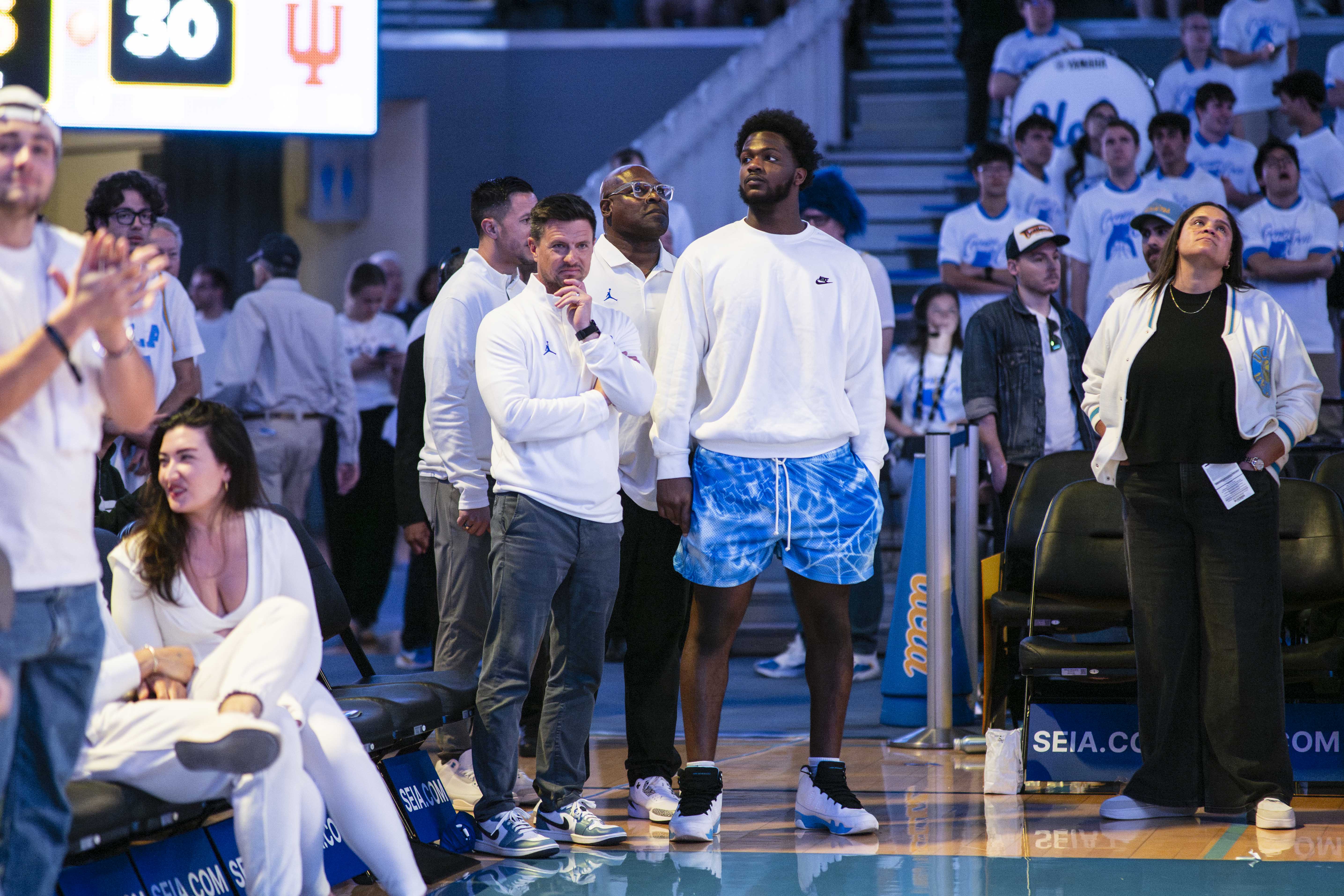
UCLA football coach Bob Chesney (left) and new UCLA defensive linemen Sahir West (right) stand on the sideline at Pauley Pavilion. (Aidan Sun/Assistant Photo editor)

By Connor Dullinger
Feb. 4, 2026 7:44 p.m.
This post was updated Feb. 7 at 11:41 p.m.
Bob Chesney stipulated the four pillars he intended to build his program on in Westwood.
Competence, connection, character and chemistry.
He used those principles in the selection process of the 2026 UCLA football staff.
[Related: ‘This is the team of the future’: Bob Chesney has 4 Cs for football success]
After crafting the group of leaders who will spearhead the Bruin head honcho’s mission, Chesney used the same philosophy to craft his roster through the transfer portal.
And when 24 players departed the program through the portal and 25 graduated, Chesney had his hands full in rebuilding the Bruins’ depleted roster that lost starters in all three phases of the field.
But the new UCLA football coach did more than add some pieces here and there – he completely retooled the roster, bringing in an entirely new team in Westwood.
The Bruins added 44 players through the transfer portal, but with many of the new additions either coming back from injury or lacking tape due to limited playing time, it is too early to tell how the depth chart will shake out come September.
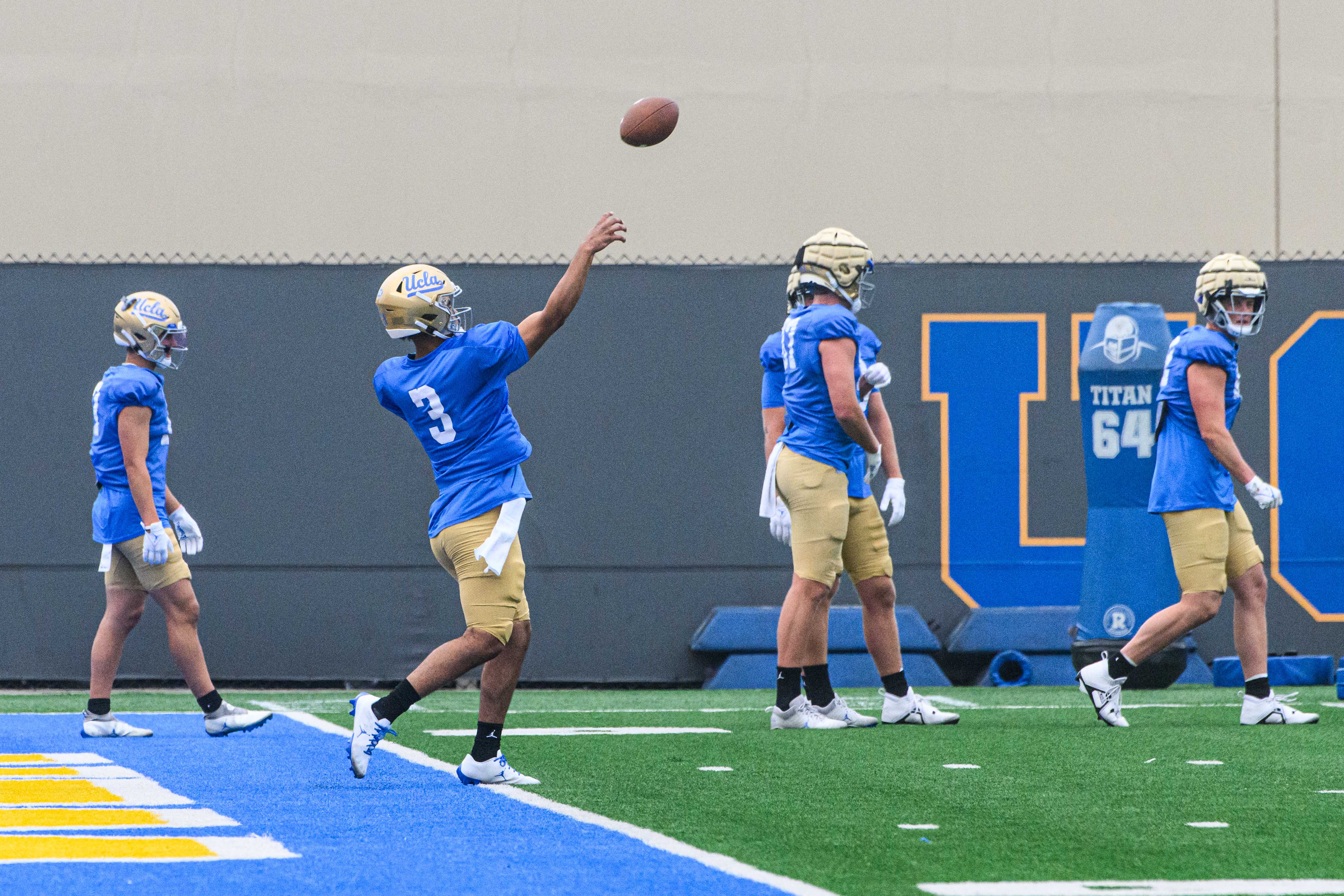
Chesney’s inability to solidify a depth chart in January is not a problem, though. Being a first-year head coach at a new school means spearheading a project with question marks – unknown information and a lot of operating on the fly.
But there are positives that come with a lack of depth chart expectations and limited solidified starters on a team chock-full of talent.
Positional battles breed competition.
Iron sharpens iron.
Complacency is not an option.
There are very few guarantees in the vocabulary on snaps, starts and opportunities, and when that’s the case, every player’s A-game comes out. And with more than six months until the Bruins first game under a new regime, time is on their side, giving every player the chance to earn their keep.
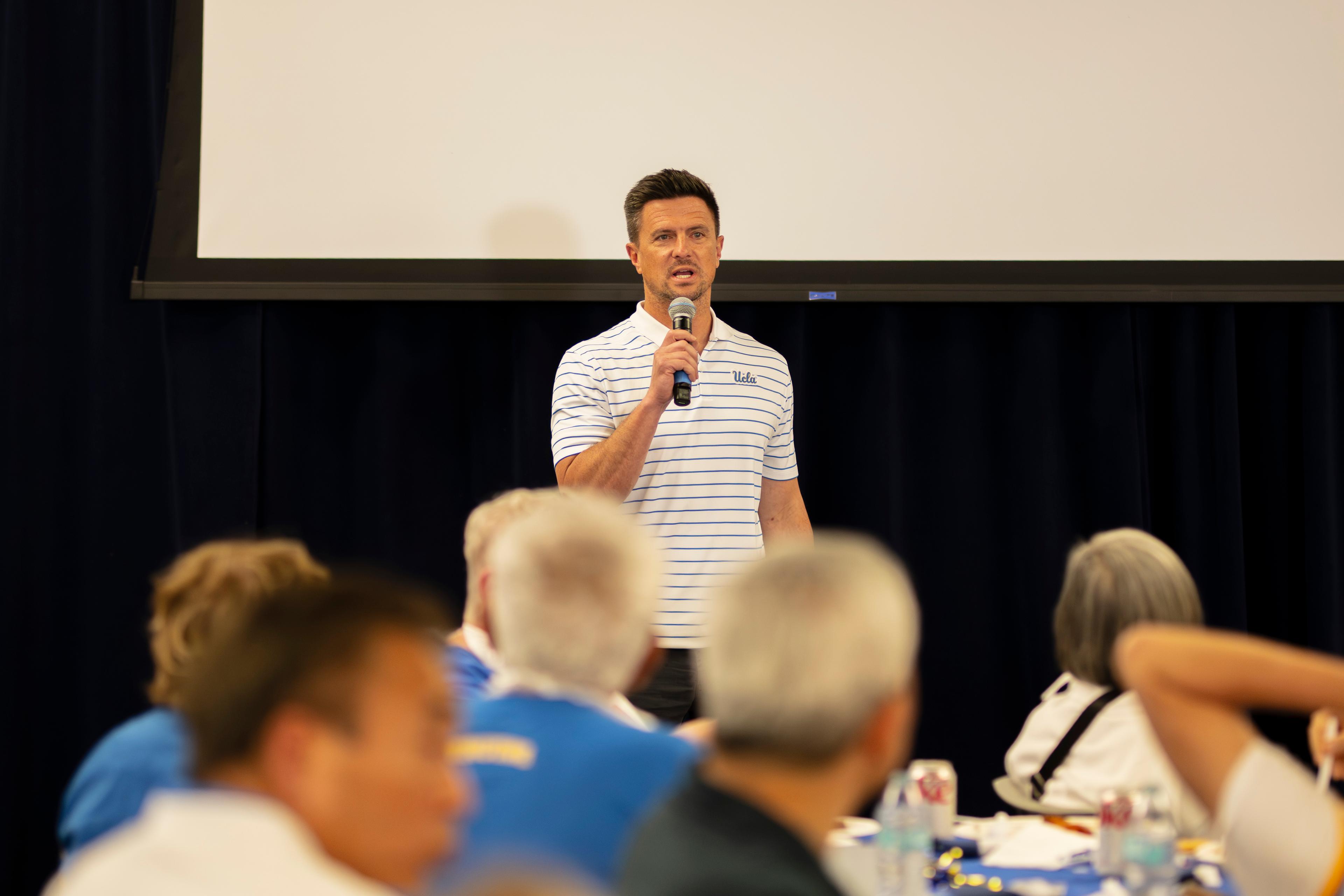
“The depth charts are all different,” Chesney said Jan. 31 at the James West Alumni Center. “Here’s the issue with year one: There are still 60 guys on our team, maybe more on our team, and we have film on a portion of them, but a lot of the other guys did not yet have their opportunity to play, so there’ll be battles that will happen, and I don’t think there’s anybody giving away starting spots on January 31. Those all have to be earned, and they have to be earned through the winter.”
Positional battles are likely to occur along both sides of the Bruin trenches, given the loss of all four starters across the Bruins defensive front and the addition of eight defensive linemen through the portal. UCLA also retained just two starters on the offensive line but brought in eight new faces through the portal.
The Bruins’ secondary and wide receiver room could also see extensive position battles as the defensive back room retained starters, specifically redshirt sophomores Cole Martin and Rodrick Pleasant, and junior Scooter Jackson while also bringing in five new faces – the majority of whom are premier talent that headline the Bruins’ offseason acquisitions, including safeties Ta’Shawn James and Tao Johnson, and cornerbacks Dante Lovett and DJ Barksdale.
Meanwhile, just one starting wide receiver will return for next season in junior Mikey Matthews, while Chesney added six wide receivers – and four tight ends – through the transfer portal.
One position that will most certainly stay the same is the one under center.
Redshirt sophomore quarterback Nico Iamaleava is returning for another season in Westwood, following a down year where he was consistently pressured and sacked and lacked formidable threats on the outside.
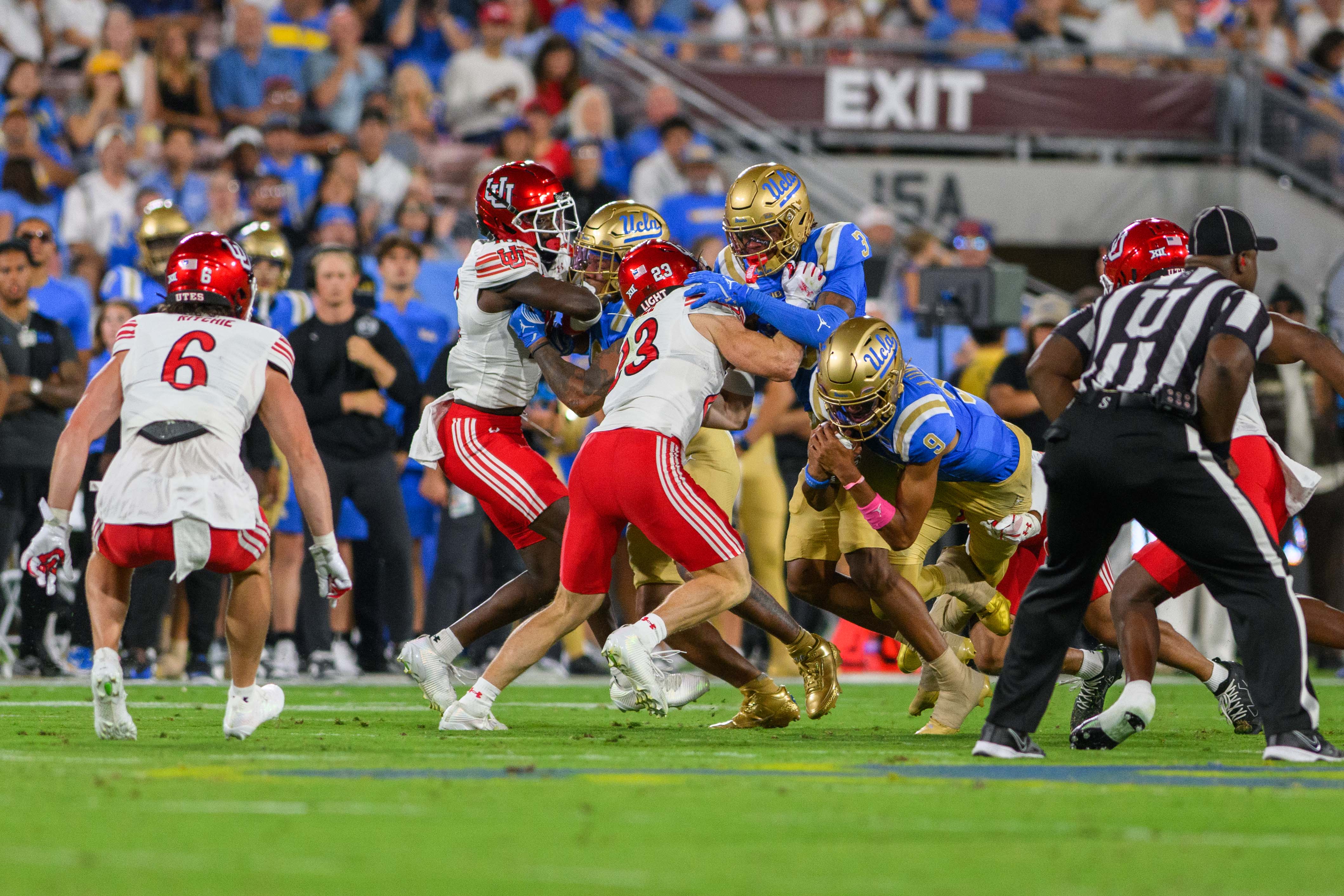
“We did a really good job of bolstering our offensive line with players that have played meaningful snaps in meaningful games right across the board,” Chesney said. “Having a few more running backs, having a few different receivers, a couple of tight ends kind of sets the stage where it doesn’t have to be a one-man show. When you drop back and you’re taking a lot of heat, receivers aren’t open, and you’ve got to run – that’s a hard life to live.”
When asked about the most challenging part of coming to a Power Four school with an athletic history of excellence like UCLA, Chesney said recruiting and competing with the upper echelons of the Big Ten and the SEC would be his toughest tasks.
But he added that while recruiting remains a difficulty, he has been successful in attaining and developing talent wherever he has been – most recently taking James Madison to its first-ever College Football Playoff in December.
“The product we put on the field, the way we develop our players and what we do and how we do it put us in the spot where we (JMU) were in the 12-team playoff,” Chesney said. “Notre Dame wasn’t, Clemson wasn’t, Florida State wasn’t, UCLA wasn’t and USC wasn’t. We were always doing more with less. Now we have the opportunity to do more with more.”
But at the end of the day, Chesney has yet to coach his first UCLA game.
And what happens in the next year, six months, or even the next few weeks matters little to him because being a head coach of the Bruins is about more than winning the big picture – it’s about winning the day-to-day battles.
“This job entails so much that if you look too far ahead, you lose sight of what is directly in front of you, and it’s about just accomplishing the day’s work to the best of your ability,” Chesney said. “In the end, you’ll say, ‘What about next year?’ We all have 24 hours in the day, and a couple of them should be for rest, so there’s a bunch of hours in there that separate you from everybody else. And that’s really the question, not what this next year looks like. What do these next 12 to 15 hours look like?”