Pulitzer Prize winner, former chair of UCLA History Daniel Walker Howe dies at 88
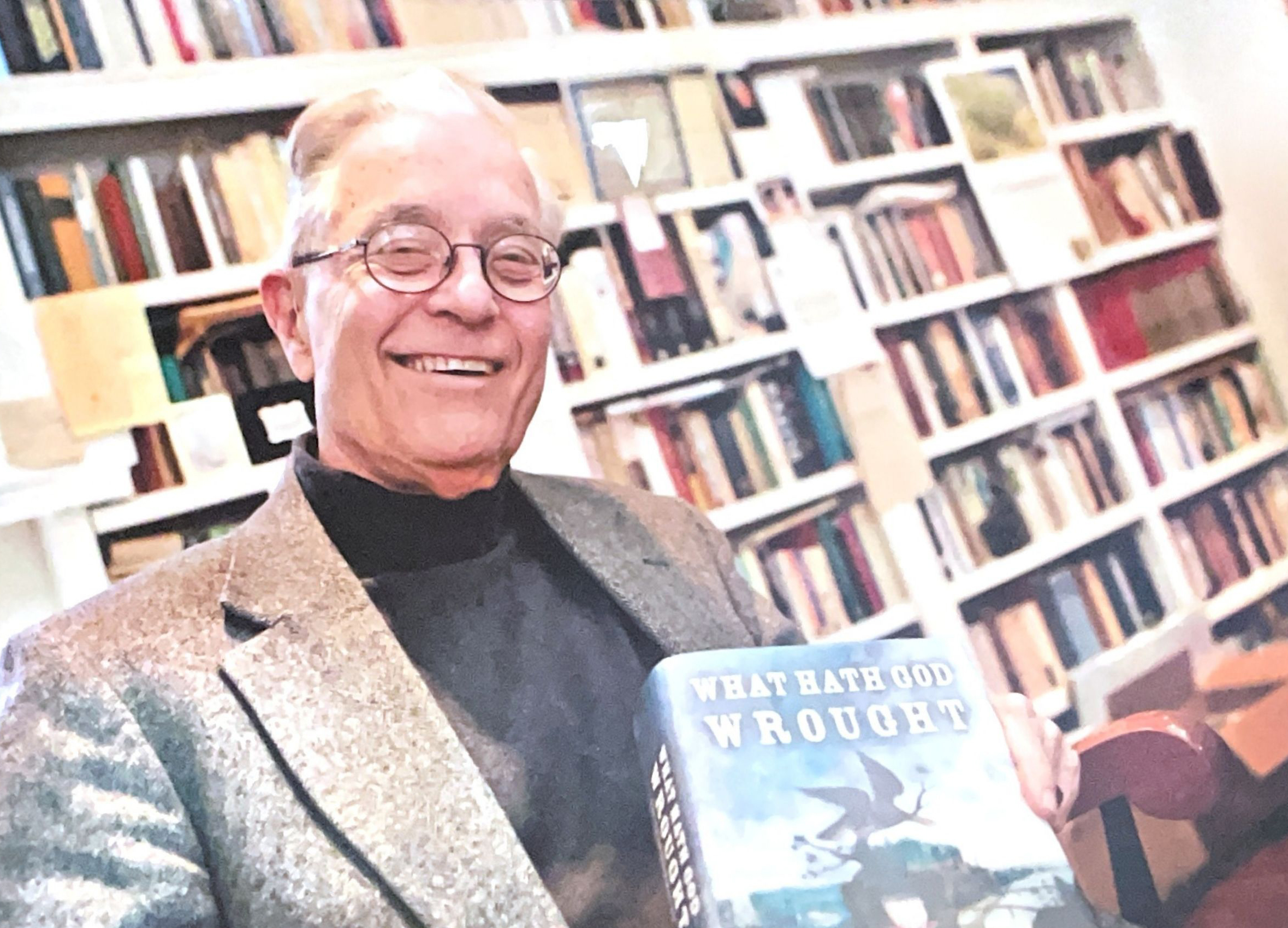
Daniel Walker Howe, the former chair of UCLA’s history department and a Pulitzer Prize winner, died Dec. 25 at 88 years old. Howe – a historian of 19th-century religion – studied religious movements and their impacts on American culture. (Courtesy of the Howe family)

By Zachary Turcios
Feb. 1, 2026 9:25 p.m.
Daniel Walker Howe, the former chair of UCLA’s history department and a Pulitzer Prize winner, died Dec. 25. He was 88 years old.
Howe was a faculty member in UCLA’s history department from 1972 to 1993 and served as the department’s chair from 1983 to 1987. He taught undergraduate classes and served as a graduate student mentor, said Joan Waugh, a professor emeritus in history.
A memorial service for Howe was held on his birthday, Jan. 10, at St. Alban’s Episcopal Church in Westwood.
Waugh, who was Howe’s student, said he was a historian of 19th-century religion who studied religious movements and their impacts on American culture. Howe prioritized mentorship and gave Waugh individualized support – including through providing reading lists and writing critiques for her, she said.
“One often thinks of religious history and a text on religious history as being boring, but actually, when you combine it as he did – with cultural and social analysis – it just became really fascinating to me and important in so many ways,” Waugh said. “He did that beautifully.”
Howe maintained a strong relationship with his family at every step of his life, Waugh said.
“Despite his busy life and his many honors and travels, they were his center – his wife and his children and his six grandchildren,” she said. “It was somewhat inspirational to me to know that you could have these deep ties and affections and loyalties and dedication.”
Howe was the Rhodes Professor of American History at Oxford University in the 1990s – after which he won the Pulitzer Prize in 2008 for his book, “What Hath God Wrought: The Transformation of America, 1815-1848,” which discussed the technological, social, political and cultural development of the United States between 1815 and 1848.
Stephen Aron, a professor emeritus in history who got to know Howe after he retired, said “What Hath God Wrought: The Transformation of America, 1815-1848” made an impact on how people viewed the 19th-century Jacksonian Age – an era influenced by the politics of U.S. President Andrew Jackson, who advocated for democratic reforms.
The book, though, shifted the focus from Jackson as a force in the rise of American democracy, Aron said. Instead, it highlighted his predecessor, U.S. President John Quincy Adams, and the Whig Party – which formed in the 1830s in opposition to Jackson – as the more influential figures, Aron added.
“Howe really flips the script in really trumpeting the Whigs as the driving force of the period, Jackson’s opponents – and in particular, John Quincy Adams– as in some ways, the great hero of the study,” Aron said.
Kevin Terraciano, a former student of Howe’s, said Howe helped build UCLA’s history program into one of the best in the country. The UCLA Department of History is currently ranked No. 6 in the country, according to the U.S. News and World Report.
Terraciano, the current Robert N. Burr Endowed History Department Chair, added that Howe’s professionalism made him stand out from other faculty. Howe – who often wore a tie and suit jacket to class – had the ability to hold students’ attention without notes and with precise lectures, Terraciano said.
Howe often broke out in songs from early U.S. history in class, Terraciano added.
“He could just sing off the top of his head,” he said. “It was really impressive – the way he would fill the room with such a great voice.”
Terraciano said professors like Howe inspired him to develop a genuine interest in history.
“I fell in love with history because I had professors like Daniel Howe,” Terraciano said.